
Standard brake pads
For most everyday cars.
New quality aftermarket pad set and fitting on one axle. Any separate wear sensor or extra hardware is itemized.
AED 250–500per axle, fitted estimate
Brake service in Al Quoz
Squealing brakes, a shaking steering wheel or a pedal that feels different? Find out what needs attention before paying for parts. Standard brake pads start from AED 250 per axle, fitted and including VAT.
At My Car Repair Dubai, we inspect the brakes, replace worn pads and discs, and investigate warning lights or changes in the pedal. The initial inspection is free, and repairs start after you approve the quote.
A sinking pedal, suspected fluid leak, smoke from a wheel, sharp pulling or a red brake warning that stays on after releasing the parking brake needs immediate attention. Do not drive to test it. Call +971 50 608 7150 and ask about car recovery.
Plan the repair
For most everyday cars.
New quality aftermarket pad set and fitting on one axle. Any separate wear sensor or extra hardware is itemized.
For cars with larger or higher-cost brakes.
Pad set and fitting on one axle. Specialized performance systems can cost more.
Two discs and one pad set.
Quality aftermarket parts and fitting on one axle. Larger, genuine or performance brake systems can cost more; carbon-ceramic brakes are quoted separately.
One confirmed faulty sensor.
New replacement sensor, fitting and fault verification. Wiring, wheel-bearing assemblies and ABS modules are separate repairs.
Fluid replacement and bleeding.
Specified brake fluid, replacement and bleeding. Hydraulic fault repairs and unusually complex procedures are quoted separately.
For a caliper that can be repaired.
Labor and suitable repair parts for one caliper, including bleeding when the hydraulic circuit is opened. A damaged caliper may need replacement.
All estimates include the stated parts, labor and 5% VAT. We confirm the parts brand, any required sensor or hardware, parking-brake procedure and final total. Additional repairs need your approval.
Send your make, model, year and the symptom for a quote that fits your car.
Start with the symptom
A noise or warning helps narrow the inspection. It does not identify a failed part on its own.
Check pad wear, disc surfaces, fitting hardware and caliper movement.
Book an inspection for persistent noise. With grinding and reduced braking, stop safely and call.
Check for uneven disc thickness and side-to-side movement as the disc rotates, then inspect its mounting and nearby components.
Tell us whether it happens during everyday braking or a hard stop. ABS can cause pedal pulsing during an emergency stop; repeated shaking needs inspection.
Compare wear and brake operation on both sides; inspect calipers and hydraulic components.
Sharp pulling, smoke or strong wheel heat calls for stopping safely and arranging help.
Investigate fluid loss, air and hydraulic faults before choosing a repair.
Do not rely on a fluid top-up or keep driving if the pedal sinks or stopping power drops.
A warning that remains after the parking brake is released can indicate a brake-system problem.
Stop safely, follow your handbook and call before moving the car.
The anti-lock function may be unavailable even when conventional braking remains.
Check the handbook and call for advice. Any abnormal pedal, red warning or reduced braking means stop safely.
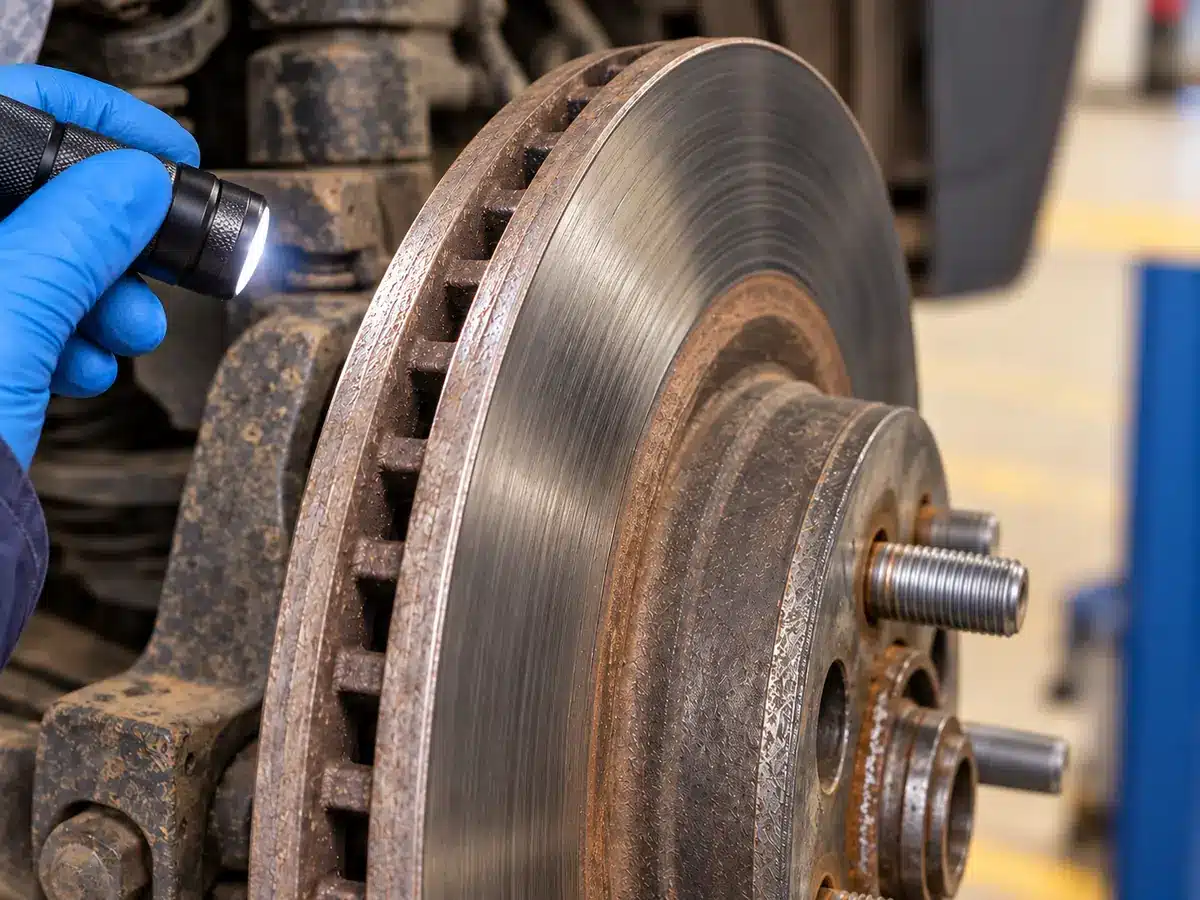
Replace what needs replacing
The decision should follow the measurements and your vehicle’s specifications, not an automatic package.
Pad replacement alone may be suitable when discs remain within thickness and condition limits, with no related fault that would damage the new pads.
Discs at or below minimum thickness, cracked surfaces or serious damage need replacement. Replace the pair on that axle and fit new pads with them.
Skimming is only an option where the manufacturer permits it and the remaining thickness and condition allow it. It is not a default step with every pad change.
Findings before parts
We offer a free initial inspection before brake service. If the fault needs further diagnostic testing, we explain which tests are needed and agree any charge first.
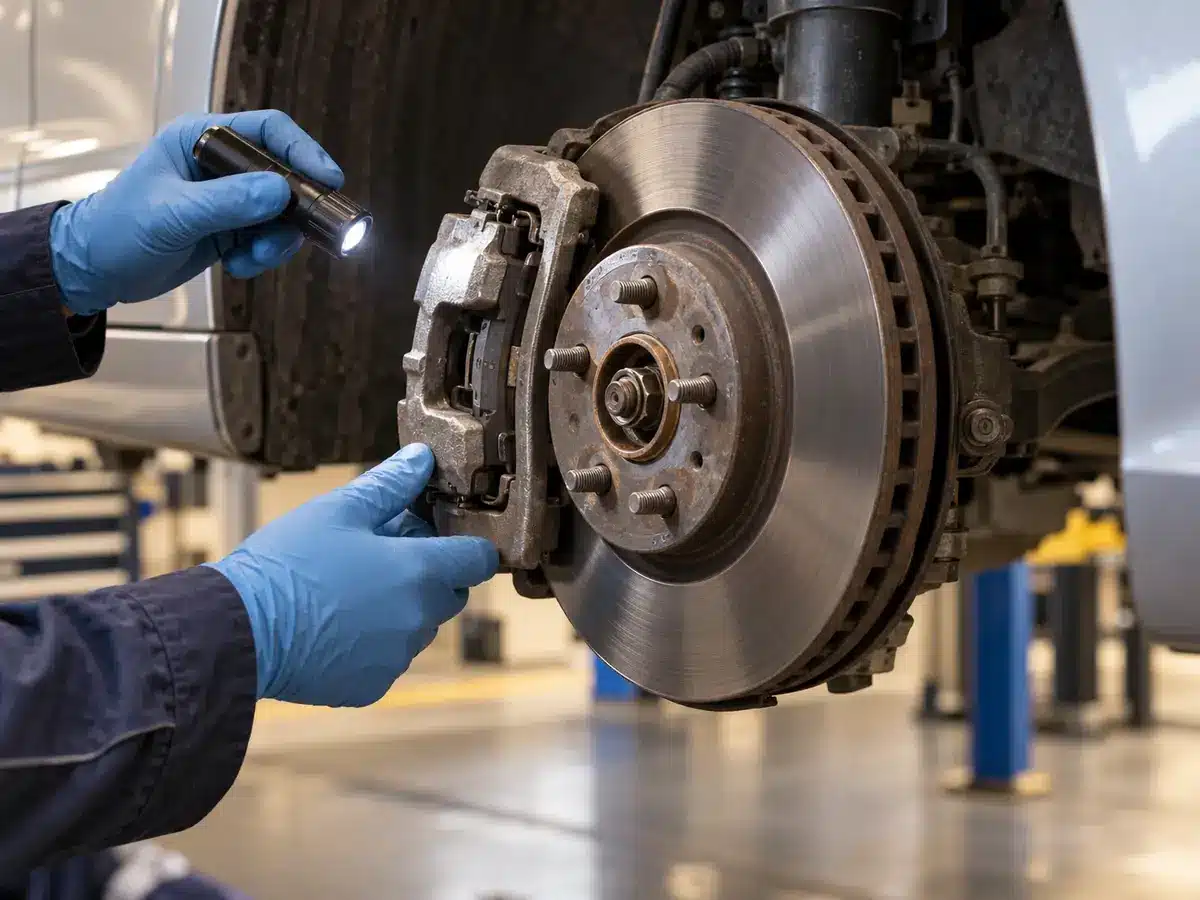
Check pad wear, disc surfaces, calipers, hoses and visible leaks. Uneven wear can point to a fault that new pads alone will not solve.
Compare disc measurements with vehicle limits and assess pedal response. Warning lights or hydraulic symptoms may need further diagnosis.
Review the recommended repair, parts options, labor and estimated time. You approve the work before repairs start.
Recheck brake operation and the original complaint. At handover, we explain how to let the new pads and discs settle against each other, following the fitted parts’ bedding-in guidance.
Choose with confidence
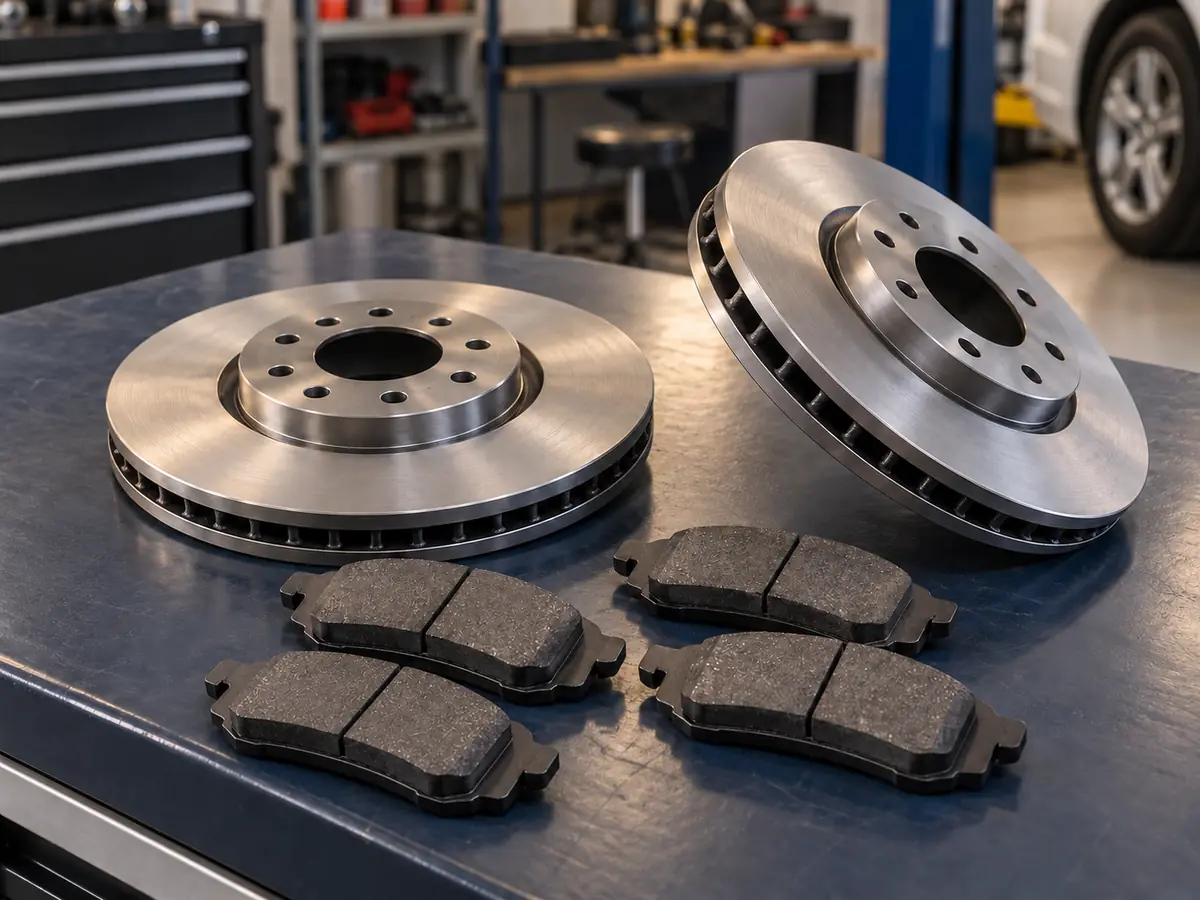
The model badge alone may not identify the brakes. Engine, year, axle and optional brake packages can change the correct part. The VIN and fitted brake specification help identify the right pads, discs and wear sensors.
Genuine parts may be available for your car. The quote identifies the correct parts, their availability and the applicable warranty terms before approval.
Suitable parts from an original-equipment supplier or an aftermarket manufacturer may offer a different price. We identify the brand and specification so you know what is being installed.
Electronic parking brake? We identify the parking-brake system before starting. Rear brake work may need a service mode, adjustment or calibration, which we include in the agreed quote when required.
Hybrid or electric car? Regenerative braking does not remove the need to inspect discs, pads and hydraulic brakes. Follow the vehicle-specific service requirements.
Beyond pads and discs
A pad change will not fix every brake problem. Any additional repair appears separately in your quote, with the parts, labor and reason for the work.
On a floating caliper, seized guide pins can cause uneven wear and overheating. Cleaning and suitable lubrication may be enough when the guides are serviceable; damaged components need replacement. The piston and its protective seals also need checking before deciding which repair is appropriate.
Brake fluid replacement is maintenance. Follow the vehicle’s specified interval and fluid requirements, even when the pads still have life left. A reservoir top-up does not replace old fluid throughout the system.
A leak, sinking pedal or loss of braking needs diagnosis and repair, not just a routine fluid change. The quote should distinguish that repair from fluid replacement and bleeding. ABS warning-light repairs are also priced after the fault is identified.
Allow enough time
A straightforward pad job often takes around one to two hours when parts are available. Inspection, seized components, extra repairs or ordered parts can add time. We confirm the estimate for your car.
Visit or arrange pickup
Find us at 39, Al Quoz, Dubai. Call before visiting to discuss the symptoms and availability. Pickup and drop-off can be requested by arrangement; a car with unsafe brakes needs suitable recovery.
After the repair
Follow the bedding-in advice for your new parts. Contact us if noise persists or braking feels abnormal. A sinking pedal, sharp pull or loss of stopping power needs immediate attention.
Before you book
Not unless it says so. A per-axle quote covers the front pair or rear pair. Check whether sensors, hardware, fitting and VAT are included before comparing prices.
An amber ABS light alone may leave conventional braking available, but anti-lock assistance may be lost. Follow your handbook and get advice. Stop safely if a red warning, unusual pedal or reduced braking accompanies it.
No. Discs that meet the vehicle’s thickness and condition limits may remain. If the discs need replacement, new pads should be fitted with them.
Not necessarily. Air, a leak or another hydraulic fault can cause the same symptom. Diagnose the cause first. Do not keep driving with a sinking pedal or weak braking.
No. A warning identifies a system fault, not the failed part. Diagnosis should establish the cause before a sensor, wiring repair or module replacement is recommended.
There is no mileage that fits every car. Driving conditions, brake specification and wear matter. Follow the maintenance schedule and replace according to inspection findings and the manufacturer’s limits.
It can be. The system may need a service mode, diagnostic retraction or adjustment after repair. Share the exact model so the correct procedure and parts can be confirmed.
Call with your location, model and symptoms. Pickup is available by arrangement. Tell us if a wheel is locked, the parking brake will not release or the car is a hybrid or EV so suitable recovery can be discussed.
Speak to our team
Share your car’s make, model and year, then tell us about the noise, warning light or pedal change. We can discuss the next step and arrange an inspection.