Fine circles visible in sunlight
Light wash marks often respond to polishing
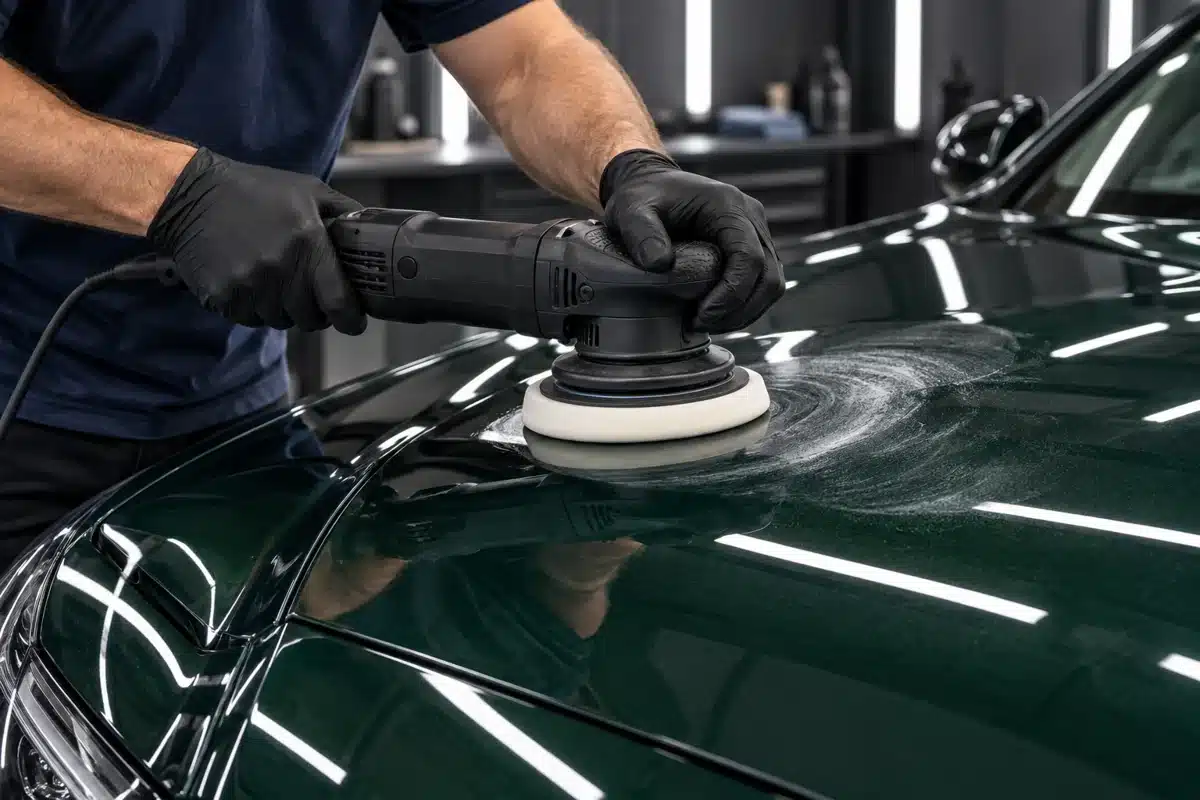
Fine swirls in an otherwise sound glossy finish may improve with a single-stage machine polish. More pronounced marks may need a cutting stage followed by refinement.
What we check: depth, paint condition, previous repairs and how the surface responds to a test area. The aim is a worthwhile improvement while preserving the finish.
Haze, flat reflections or water marks
First separate contamination from paint damage
Water spots may be mineral deposits on the surface or marks etched into the clear coat. Cleaning removes deposits; any remaining damage needs a separate assessment before polishing.
What we check: whether suitable cleaning restores clarity or correction could improve the remaining haze. Light oxidation may improve, but peeling or failed clear coat cannot be restored with a polish.
A distinct groove, chip or exposed color layer
Some damage needs a paint repair
Polishing cannot replace missing paint. A deep scratch, stone chip or exposed primer may need a touch-up or panel refinishing. Trying to remove the whole mark can take away too much surrounding clear coat.
Next step: send a close-up and a wider panel photo. We can discuss paint repair and respray options after assessing the damage.