
Your coolant change is due
The service schedule calls for replacement, with no warning lights or unexplained coolant loss.
Due for a coolant change, or unsure what fluid is in your car? A routine flush and refill costs around AED 250–800 including VAT. We select the correct coolant, remove trapped air and check the system before you leave.
A coolant flush removes old fluid and contamination before the system is refilled. If your car is losing coolant or overheating, we check the cause first.
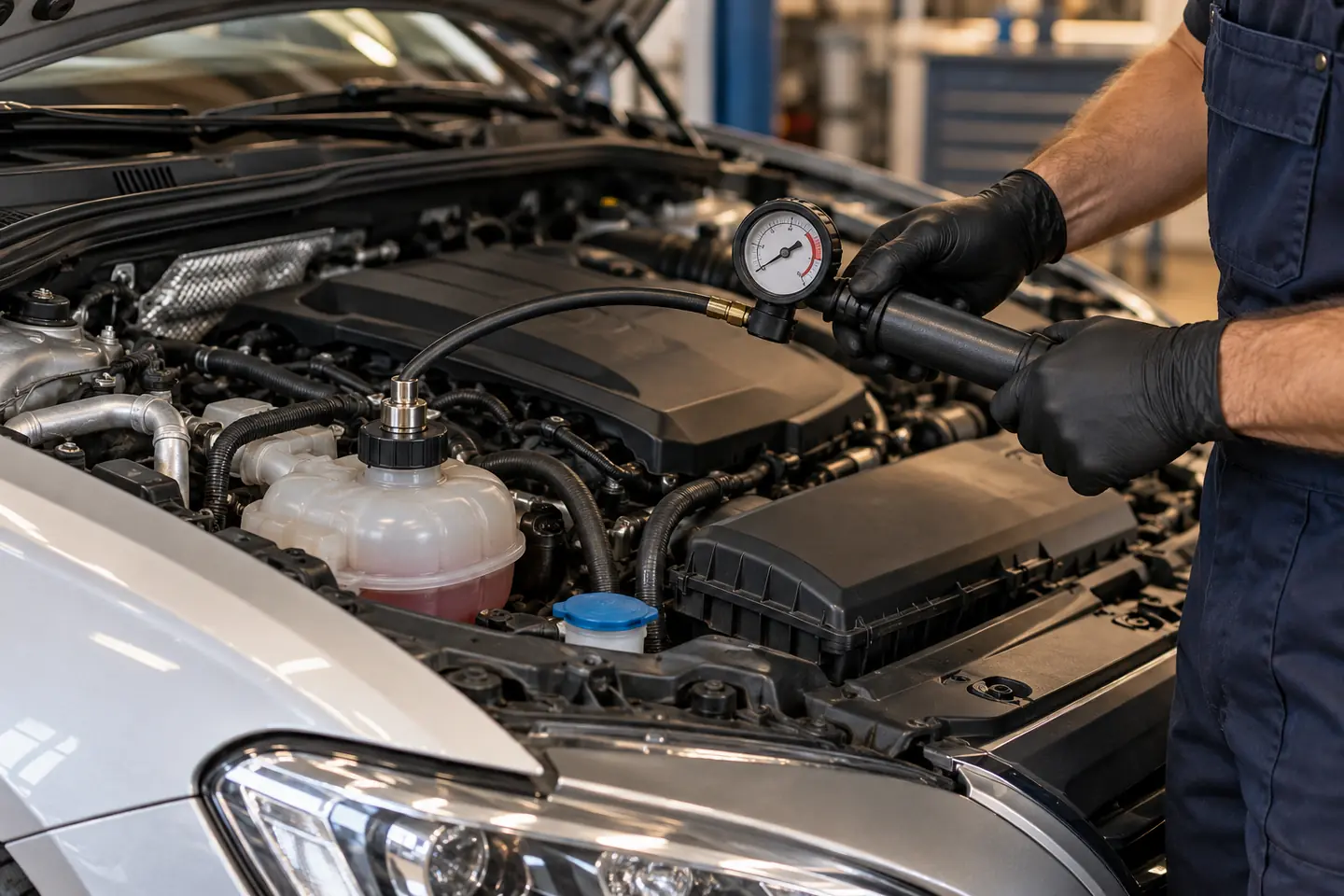
A scheduled coolant service and an overheating fault need different approaches. Tell us what you’ve noticed so we can recommend the work that makes sense.
The service schedule calls for replacement, with no warning lights or unexplained coolant loss.
You have an unknown service history, mixed products, or visible contamination in the reservoir.
The level falls again, there are dried deposits around a hose, or fluid collects under the car.
A temperature warning, steam, or repeated overheating needs diagnosis. A flush alone may leave the fault unresolved.
Allow around AED 250–800 including 5% VAT for a routine coolant flush and refill in Dubai. Send your model and year for a quote for your car.
Correct coolant, routine flushing, refill, bleeding and final checks. For systems with standard capacity and straightforward access.
For higher coolant capacity, additional access or a more involved filling procedure. We confirm the total for your model.
Fresh specified coolant and labor for a scheduled change that does not need extra flushing. We check the manufacturer’s procedure first.
These estimates include coolant, labor and 5% VAT. Leak diagnosis, replacement parts and heavy contamination cleaning are quoted separately. We confirm the coolant, quantity, method and total before you approve.
That repair may already include draining and refilling the coolant. We show which fluid and labor are included so you do not pay twice for the same work. Extra flushing is recommended only when the condition or vehicle procedure calls for it.
The job starts with your vehicle’s requirements and the condition of the system. We explain whether it needs a routine change, a flush, or a repair first.
Check the required specification, fluid condition, reservoir, accessible hoses, and visible signs of leakage.
Drain the old coolant. Flush or clean the system when the agreed service and vehicle procedure require it.
Fill with the correct coolant and follow the model’s bleeding procedure.
Check for visible leaks, verify temperature behavior during testing, and recheck the level when appropriate.
These jobs are different. The best choice depends on why the coolant needs attention, not simply on choosing the biggest service.
Adds compatible coolant to bring a low level back within the specified range. It does not renew old fluid or fix a leak.
Drains the accessible coolant and replaces it with fresh fluid. Some old coolant can remain in the engine and heater circuit.
Uses additional flushing steps to remove more of the old fluid or contamination before the correct refill.
“Radiator flush” is often used for this service, but coolant also circulates through the engine and other cooling passages. Cleaning the fluid circuit does not repair a damaged radiator.
Pink, blue, green, or yellow is not enough to identify a compatible coolant. We check the specification for your model, year, and engine before choosing the refill.
Mixing unsuitable products can reduce protection or leave deposits. Ready-mixed coolant already contains water and should not be diluted further. Concentrate needs the water quality and mixture specified for the product and vehicle. The final concentration matters, including any water remaining after flushing; adding more concentrate is not automatically better protection.
BASF’s coolant guidance explains why color alone cannot tell you which product to use.
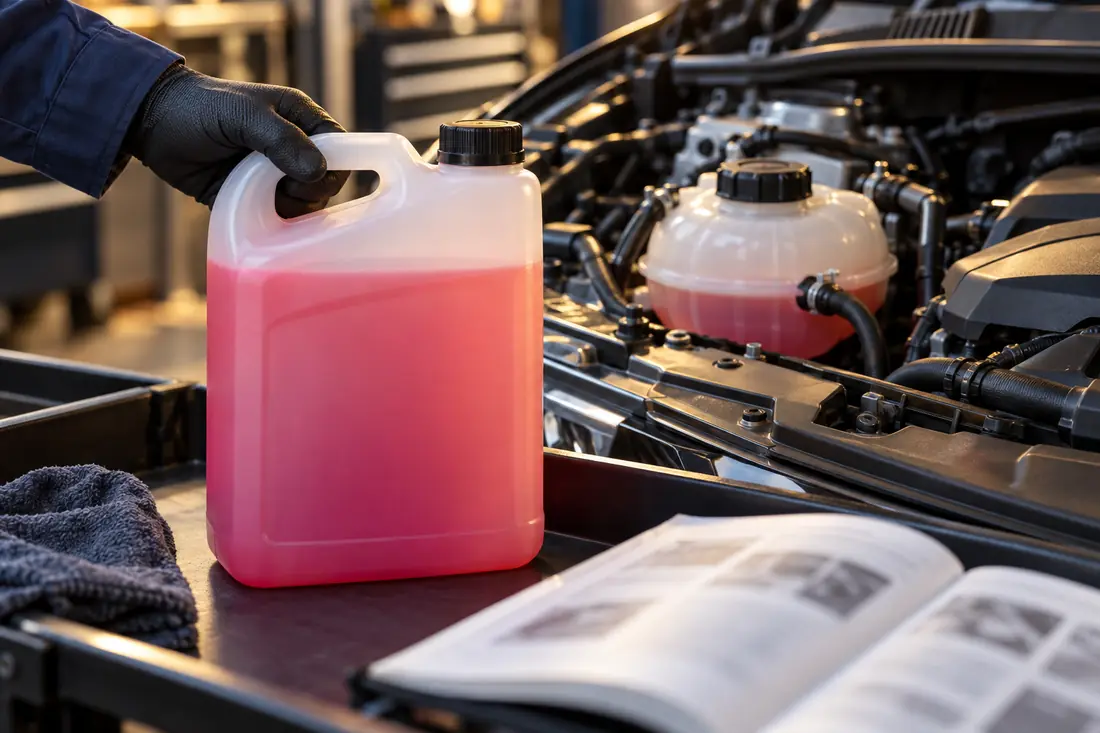
We confirm the specification and mixture. A previous invoice or coolant bottle photo can help if you have one.
The exact method follows your car’s cooling system. Proper filling and bleeding matter just as much as draining the old fluid.
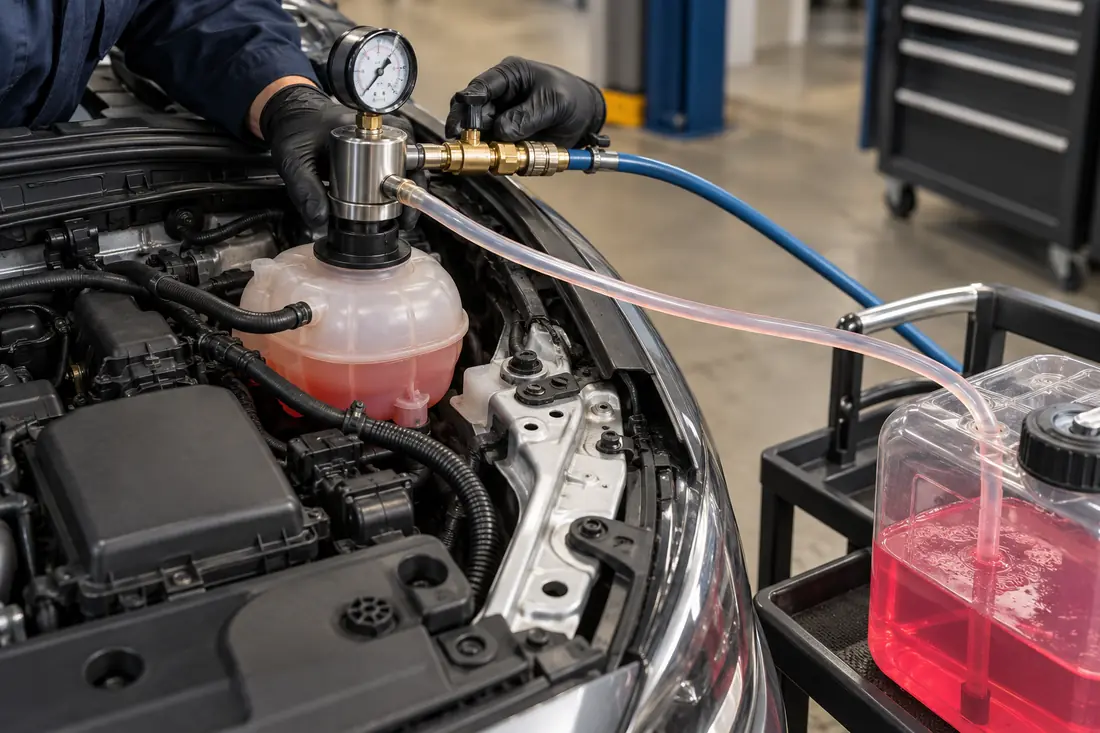
A vacuum refill can help reduce trapped air where the vehicle’s procedure calls for it. Other systems use bleed points or a specific electric-pump routine.
Check the fluid and accessible components safely. If there is unexplained coolant loss or overheating, agree on the diagnosis before proceeding.
Select the required specification, check system capacity, and confirm the service price.
Remove old coolant. Any flushing or cleaning steps must suit the vehicle and the condition found.
Introduce the correct coolant mixture and follow the model-specific process for removing air.
Check temperature behavior and visible connections during testing, then recheck the coolant level at the appropriate temperature.
A routine flush and refill commonly takes around 1–2 hours once the car is cool enough to work on. We confirm the expected collection time after checking your model and the job.
Arriving with a hot engine? Allow extra time for it to cool safely.
More involved bleeding or a fault? Diagnosis, cleaning, and repairs can extend the visit.
Call ahead with your model and year so we can advise on timing and coolant availability.
Fresh coolant cannot seal a leaking hose, restore a failed pump, or make a stuck thermostat work. Repairing the fault first helps avoid paying for repeated refills.
Tell us when the problem happens and whether any work was recently done on the cooling system.
Visible leaks, cap problems, or less obvious coolant loss need investigation. A pressure test may help locate the source.
Coolant level, circulation, thermostat operation, fans, and other faults may need checking. Stop driving if the engine overheats.
Find the source of contamination before cleaning. A routine flush alone will not stop oil entering the system again.
Have warning lights or an intermittent fault? Ask about vehicle inspection and diagnostics. If the car cannot be driven safely, arrange car recovery in Dubai.
The brand alone does not tell the whole story. Engine type, model year, and cooling circuit design can change the fluid and the service method.
Different engines within the same model range can have different coolant requirements. Tell us the model and year. We confirm the engine, coolant approval and quantity before the service.
Some systems need an electric pump cycle or diagnostic procedure during filling. The correct sequence helps clear air pockets that can affect circulation and temperature control.
These vehicles may have separate circuits for the engine, battery, or power electronics. They do not share one universal coolant-change schedule. Call with your exact model so we can confirm the circuit, service requirements, and whether we can carry out the work.
If a radiator, hose, pump, or thermostat was recently replaced, bring the invoice if available. It helps establish which coolant was used, whether the system was bled, and what needs checking before another fluid change.
Use the interval in your vehicle’s service schedule and the requirements for its coolant. There is no single mileage or two-year rule that suits every car. Antifreeze performance can remain acceptable even as corrosion-inhibiting additives deteriorate, so a freezing-point reading alone does not establish how much useful life the coolant has left.
Dubai’s heat makes a healthy cooling system important, but it does not replace the manufacturer’s schedule. If the history is unknown, start with a specification and condition check instead of guessing from the fluid’s color.
Keep the invoice showing the coolant used and the service date. Add the next due date or mileage to your regular car service plan.
We explain the service and any remaining concern so you leave with a clear picture of your cooling system.
My Car Repair Dubai operates from 39, Al Quoz, Dubai, through AMF AUTO SERVICES LLC. Call before visiting so we can confirm the work and a suitable time.
Workshop location and contact details ↗Unsure which service your car needs? Call us and describe the symptoms.
Call 050 608 7150 ↗A routine coolant flush and refill is typically estimated at AED 250–800 including 5% VAT in Dubai. The coolant specification, system capacity, and work needed affect the total. Contact us for a quote for your model.
A flush may help if contaminated coolant is part of the problem. It will not repair a leak or a faulty pump, thermostat, or cooling fan. We diagnose overheating before recommending the work. Stop safely and switch off the engine if it overheats.
No. A drain and refill may be suitable for scheduled maintenance. Wrong coolant, contamination, or a manufacturer’s procedure may call for flushing. We check before recommending the work.
Color is not a reliable compatibility guide. Use the coolant specification approved for your vehicle. If the existing product is unknown, have it checked before adding another type.
Water alone does not provide the corrosion protection of the correct coolant mixture. Use the specified coolant and dilution for normal service. If the car is overheating or losing fluid, stop and call for help instead of continuing to refill and drive.
A flush cleans the inside of the coolant circuit. It does not clean dirt from the outside of the radiator fins, repair a leak, or guarantee that a blocked or damaged radiator can be saved.
A routine job commonly takes about 1–2 hours once the system is cool enough. Extra cooling time, complex bleeding, diagnosis, or repairs can make it longer. Call ahead to check the likely timing for your car.
The level may need rechecking after air has cleared, but a continuing drop can indicate a leak or another fault. Arrange an inspection. Do not open a hot cap, and stop driving if a temperature warning appears.
Call for advice or send your model and year on WhatsApp. We’ll help you understand the work, the cost, and when to bring the car in.