
A damaged patch
Local coating repair
For a scrape, exposed edge or isolated worn area. Prepare the patch and renew the finish where the surrounding protection is sound.
Focused work on the damageUnderbody protection · Al Quoz
Protect exposed metal from moisture and road wear. Our Al Quoz workshop prepares the underside, renews damaged protection and helps you choose between local repairs, wider coating and cavity rustproofing.
Local repairs or wider protection · Quote before work · Pickup by arrangement
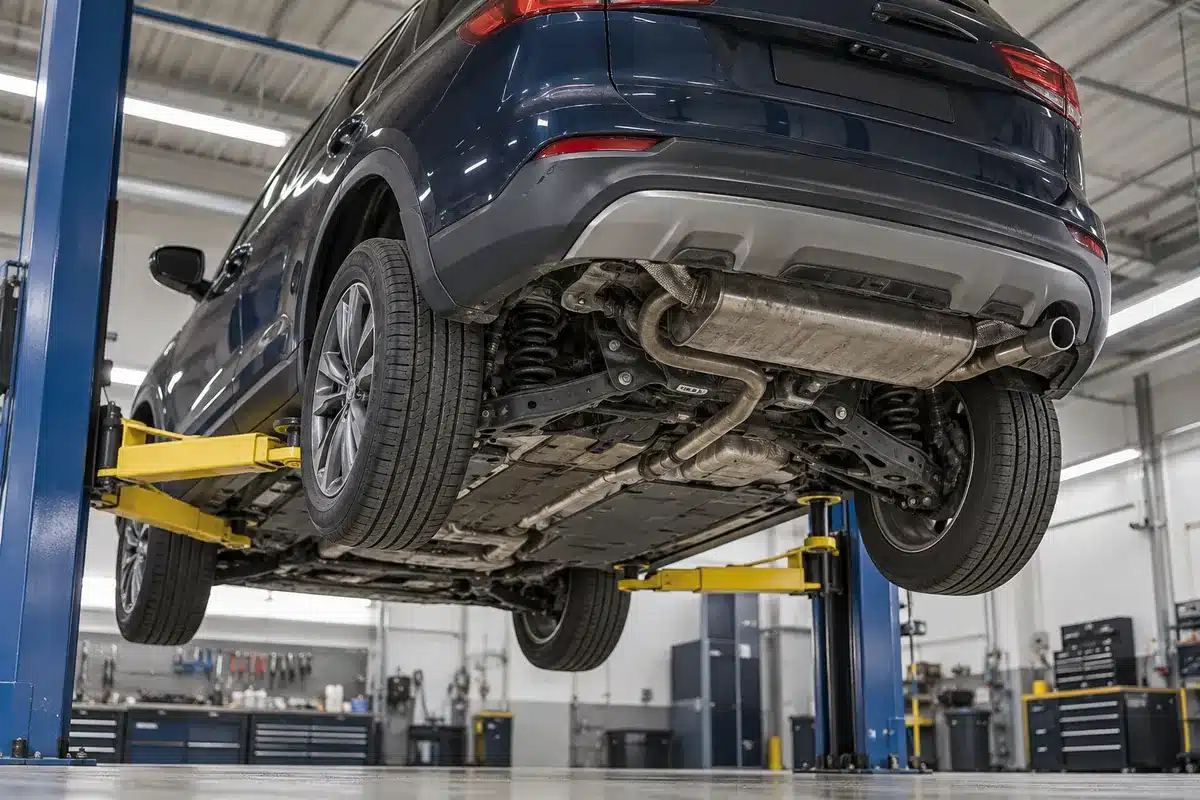
A suitable coating protects prepared metal from moisture and contamination.
Stone-chip and abrasion-resistant products help protect their intended surfaces.
Repair damaged patches while retaining sound, compatible factory material.
Guide estimate · One car
AroundAED 500
Preparation, vehicle size and coverage determine your final quotation.
Guide estimate, not a fixed package. Confirm the final total, VAT and inclusions in your written quotation.
A damaged patch
For a scrape, exposed edge or isolated worn area. Prepare the patch and renew the finish where the surrounding protection is sound.
Focused work on the damageSeveral exposed areas
For suitable floorpan, chassis and wheel-arch surfaces needing broader protection. Coverage and access are planned together.
Protection across agreed areasEnclosed metal sections
For applicable internal sections such as sills and accessible chassis cavities. Product availability and access are checked for your car.
Internal treatment quoted separately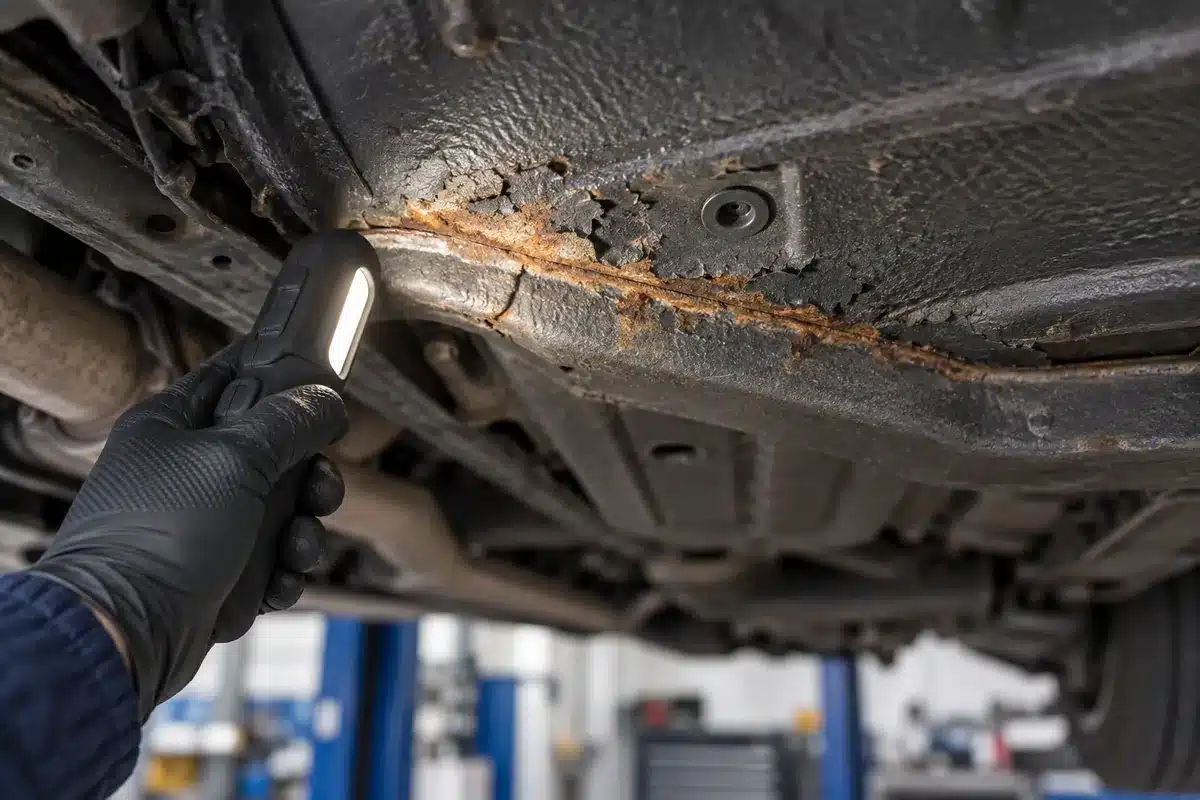
Loose underseal needs preparation before a new layer can bond to the surface.
Scrapes and stone chips can leave gaps in otherwise sound protection.
Staining, bubbling or flaking near a joint deserves a closer look at the metal.
An underside impact can damage the coating, a shield or both. Check the area before recoating.
The metal and existing coating need inspection before treatment. A fresh dark finish cannot show whether corrosion was removed or whether weakened metal was repaired.
The original finish is firmly attached and the metal beneath is suitable.
Keep compatible protection in place and focus on any damaged edges.
Local rust or loose coating needs preparation before the new finish.
Assess the depth, prepare the area and use the appropriate treatment system.
Flaking, perforated or weakened metal changes the job.
Assess repair or replacement first. A coating cannot restore lost metal strength.
Rust converters are preparation products, not a replacement for welding or sound metal. Flood damage and fluid leaks also need their own repair assessment.
“Full undercoating” means agreed coverage of suitable areas. It does not mean spraying every part beneath the car.
Suitable exposed metal and damaged protective finishes beneath the vehicle.
The agreed metal areas, including access behind liners where included.
Separate cavity treatment where suitable access and the vehicle construction allow it.
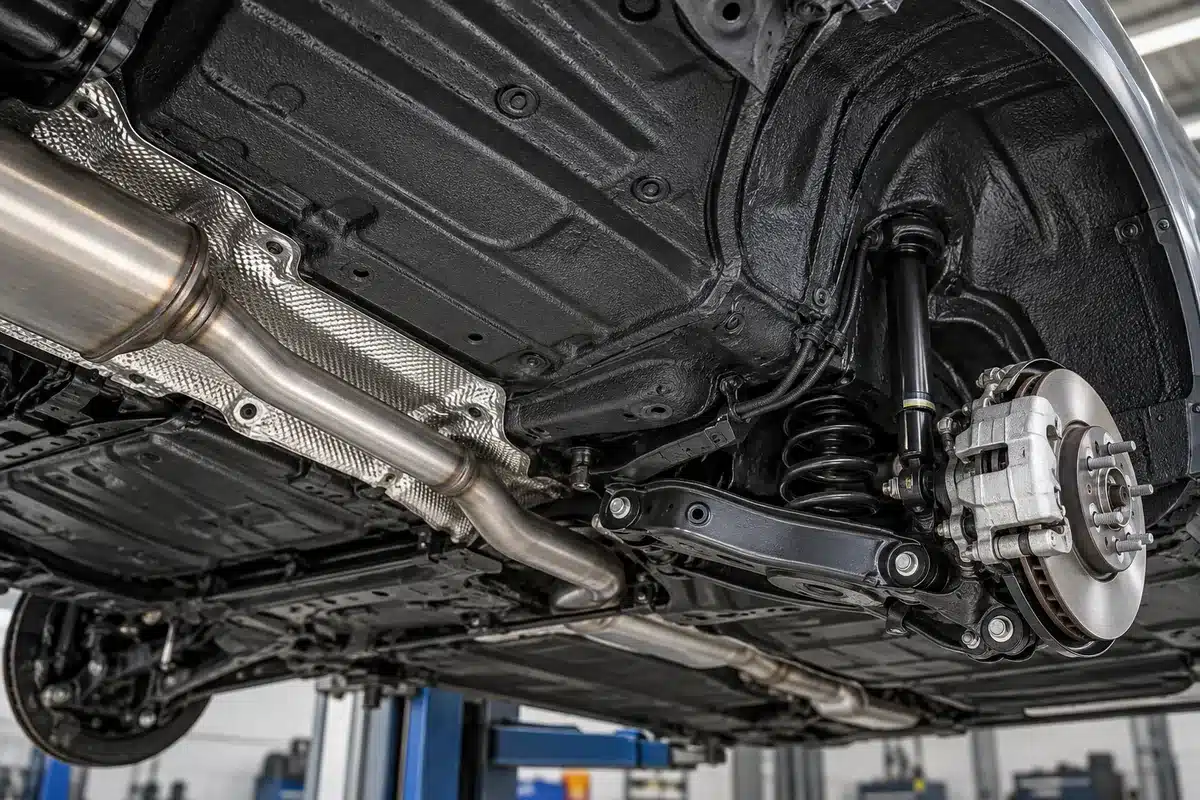
Brakes, exhaust components, moving parts, sensors and drainage openings need protection from unsuitable coating. Covers and service points remain accessible for future maintenance.
Suitable exterior underbody and wheel-arch surfaces needing flexible stone-chip protection.
Texture, paintability and drying time depend on the exact product, not simply the word rubberised. Some undercoatings accept refinishing paint and others do not. Match the coating to the prepared surface and any finish being retained; a thick new layer cannot make loose coating or weakened metal sound.
Appropriate non-visible underside areas, depending on the coating system.
Often leaves a dark film. Check compatibility and whether later overpainting is allowed.
Suitable enclosed panels and structural sections reached through the correct access points.
Some products remain soft and non-hardening. They serve a different purpose from exterior underseal.
Prefer a particular 3M or other branded product? Mention it when requesting your quote so suitability and availability can be confirmed.
Removes dirt and road deposits. It is part of care and preparation, but leaves no replacement protective coating.
Adds a compatible finish to prepared underside surfaces. Cleaning, drying and repair needs come first.
Protects applicable enclosed sections with a product intended to reach them. Exterior spraying does not automatically treat the inside of a sill.
The condition of your car matters more than its location alone. An intact factory finish may need only a check or a local repair.
Salt and moisture make damaged protection worth checking. Keeping the underside clean and attending to exposed areas are useful parts of corrosion care.
Check wheel arches and low underside areas after abrasive use or ground contact. A coating helps protect its intended surfaces; damaged undertrays still need their own repair.
Road dirt can collect around covers and seams. Cleaning and drying those areas come before coating, especially where the existing finish is lifting.
Cleaning, surface preparation and drying give the coating a suitable base. Spraying is only one stage of the job.
Check the existing finish, corrosion, contamination and any repairs needed.
Remove dirt and grease from the treatment areas and address active leaks.
Allow surfaces, seams and accessible recesses to meet the product’s requirements.
Remove loose material and use compatible rust treatment or primer where required.
Mask excluded components and apply the selected system to the agreed areas.
Check coverage and refitted covers, then explain drying and washing instructions.
If cleaning reveals a larger repair, we explain the additional work and cost before proceeding.
New paint on the outside is only part of finishing a repaired section.
Welding, panel replacement and seam repairs can disturb the original corrosion protection. Finishing the repair means considering the joint, exposed surface and accessible inner section.
When repairing a damaged floor or sill, we can discuss which protective stages belong with the repair and which additional undercoating would be useful.
The repair system determines the required surface preparation and compatible primer.
Appropriate seam sealer protects the joint; it serves a different purpose from underbody coating.
Underbody coating and cavity treatment restore their respective areas where required.
Bring the previous repair invoice if available. It helps identify finishing already included and avoids paying twice for overlapping work.
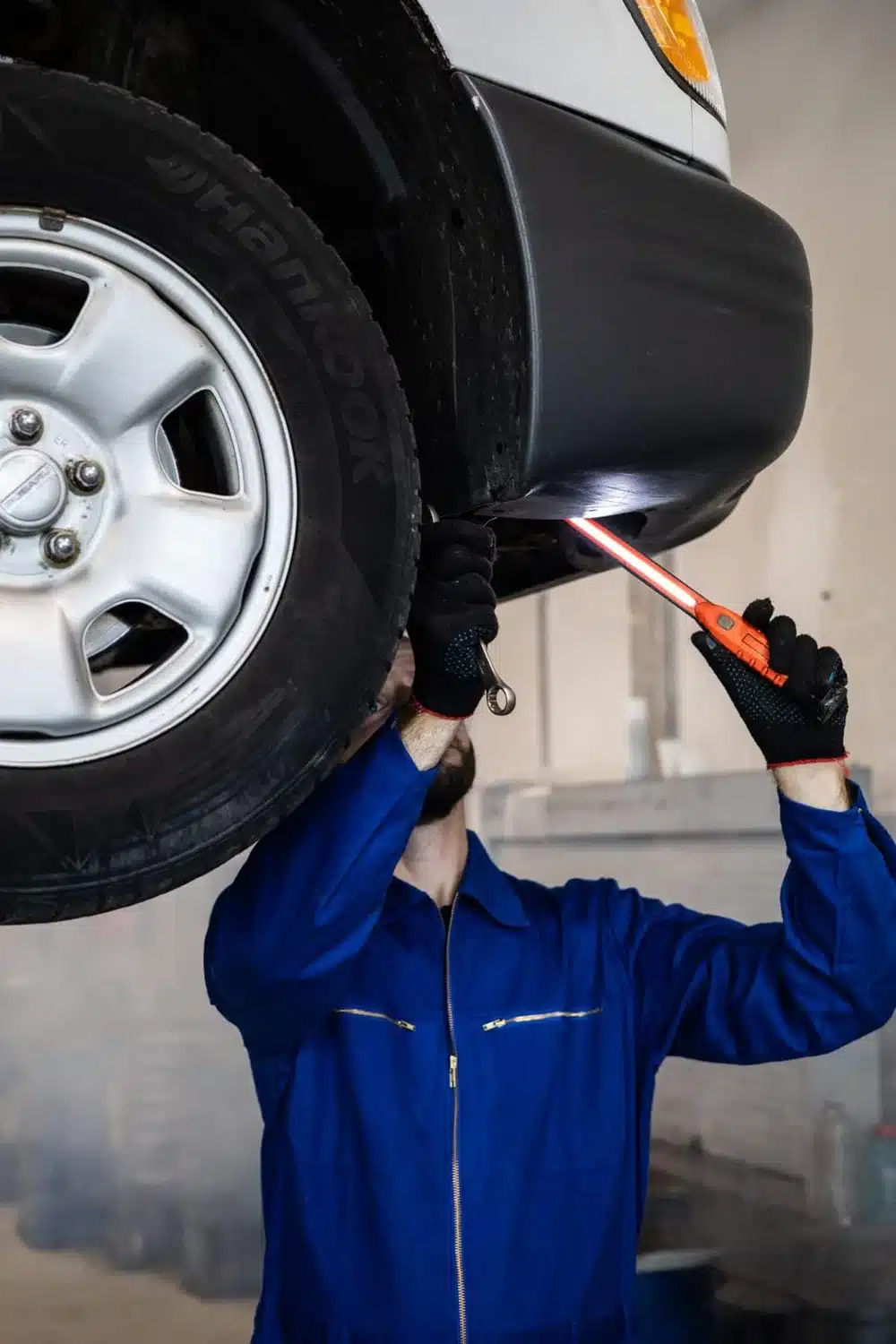
Look beyond the fresh finish
Road-salt exposure, old repairs and earlier coatings can change the preparation needed. A recently blackened underside still needs its metal condition checked.
An inspection before buying helps you separate routine protection from repair costs. Bring any available repair or treatment records; you do not need them to start an enquiry.
Keep sound factory protection where appropriate. Manufacturer guidance and warranty conditions apply, especially around battery housings, cables and cooling equipment.
Access, cleaning, surface work and application all count towards the visit. Repairs and extensive stripping can add time.
Touch-dry, ready to drive and ready to wash are different stages. Collection follows the actual product and work completed.
Follow washing and chemical-use instructions. Keep drains clear and check damage after underside contact.
A damaged patch may need local renewal while surrounding protection stays in place. The product and its condition determine further treatment, rather than an automatic yearly replacement.
The product, preparation, exposure and damage all affect service life. Use the treatment’s inspection advice and the condition of the finish to plan renewal. Any warranty has its own coverage and maintenance conditions; it is separate from a general lifespan estimate.
Yes, if it is sound and compatible with the new treatment. Loose, contaminated or lifting areas need preparation. The inspection determines how much can stay, rather than automatically stripping the whole underside.
Some products have sound-damping properties, but results vary. The main purpose here is surface protection. A new rumble, vibration or mechanical noise needs its own assessment.
No. Undercoating protects suitable underside surfaces. Ceramic coating and paint protection film concern exterior paintwork; cavity rustproofing reaches applicable enclosed sections. One treatment does not cover the areas served by the others.
Surface rust may be suitable for preparation and protection. Deep corrosion, holes or weakened mounting areas need a repair decision first. We assess the condition before recommending the treatment.
Speak to our team
Share your car’s make, model and year, and tell us what you want protected. We’ll discuss the treatment and arrange an assessment at our Al Quoz workshop.
39, Al Quoz 4, Dubai · Pickup by arrangement, subject to availability.