A car battery jump-start supplies temporary electrical power so a vehicle with a discharged starter battery can start. Use it only when your owner’s manual permits it, the battery has no visible damage, and the equipment matches the vehicle. A click or a dark dashboard is a clue to investigate, rather than proof that the battery needs replacing.
If you are beside moving traffic or cannot identify the correct connection points, arrange roadside assistance. Getting the car into a safe position takes priority over opening the bonnet.
Check when a jump-start is unsafe
Do not attempt a boost if the battery is swollen, cracked, leaking, frozen or unusually hot, or if there is smoke, a strong unusual smell or damaged wiring. Keep away from the equipment and arrange assistance. Do not lean over the battery or inspect it with a flame.
A battery can release flammable gas. Eye protection, insulated clamps and careful cable handling matter even when the vehicle is switched off. Remove metal jewellery and keep children away from the engine bay. Do not place a spanner or another metal object across the terminals.
- Read the jump-start section for the vehicle’s exact model and year. Some cars use designated remote posts instead of direct battery connections.
- Check the required voltage and permitted power source. Do not connect a 24V supply to a 12V vehicle or assume every modern low-voltage battery is 12V lead-acid.
- Confirm that the assisting vehicle may be used as a donor. A vehicle with an accessible battery is not automatically suitable.
- Keep cables away from fans, belts and hot components. Electric fans can start unexpectedly.
- Do not improvise if the manual, connection labels or equipment instructions are unclear.
For a conventional car, use the overview below together with its manual. For hybrids, EVs and unfamiliar electrical systems, read the vehicle-specific section before making any connection.
What the starting symptoms actually tell you
Note what happens when you request a start. The difference between a slow crank, no crank and an engine that turns normally but does not fire helps decide whether a boost is a sensible next step.
| What you notice | What it may mean | Next step |
|---|---|---|
| Slow cranking or repeated clicking | Insufficient available current, a poor connection or a starting-circuit fault | Check safe jump-start eligibility and arrange battery and connection testing. |
| One click with no engine rotation | A battery, cable, ground, solenoid or starter problem | A sound alone does not identify the failed part. Avoid repeated attempts. |
| Engine turns normally without starting | The problem may involve fuel, ignition, immobiliser or another control system | Repeated boosting is unlikely to resolve a fault outside the power supply. |
| Remote key has a short operating range | The key’s own battery or communication may be affected | Check the key instructions before assuming the car battery is discharged. |
Headlights and screens need less current than a starter motor, so working accessories do not prove the battery can crank the engine. Equally, a successful boost does not prove the battery is defective. A discharged but serviceable battery and a battery that has lost starting capability need different treatment.
Prepare the vehicle and equipment before connecting
Park safely, select Park or the manual’s specified neutral position, and apply the parking brake. With two vehicles, leave enough space to work and ensure they do not touch. Leads must reach without being stretched across moving components.
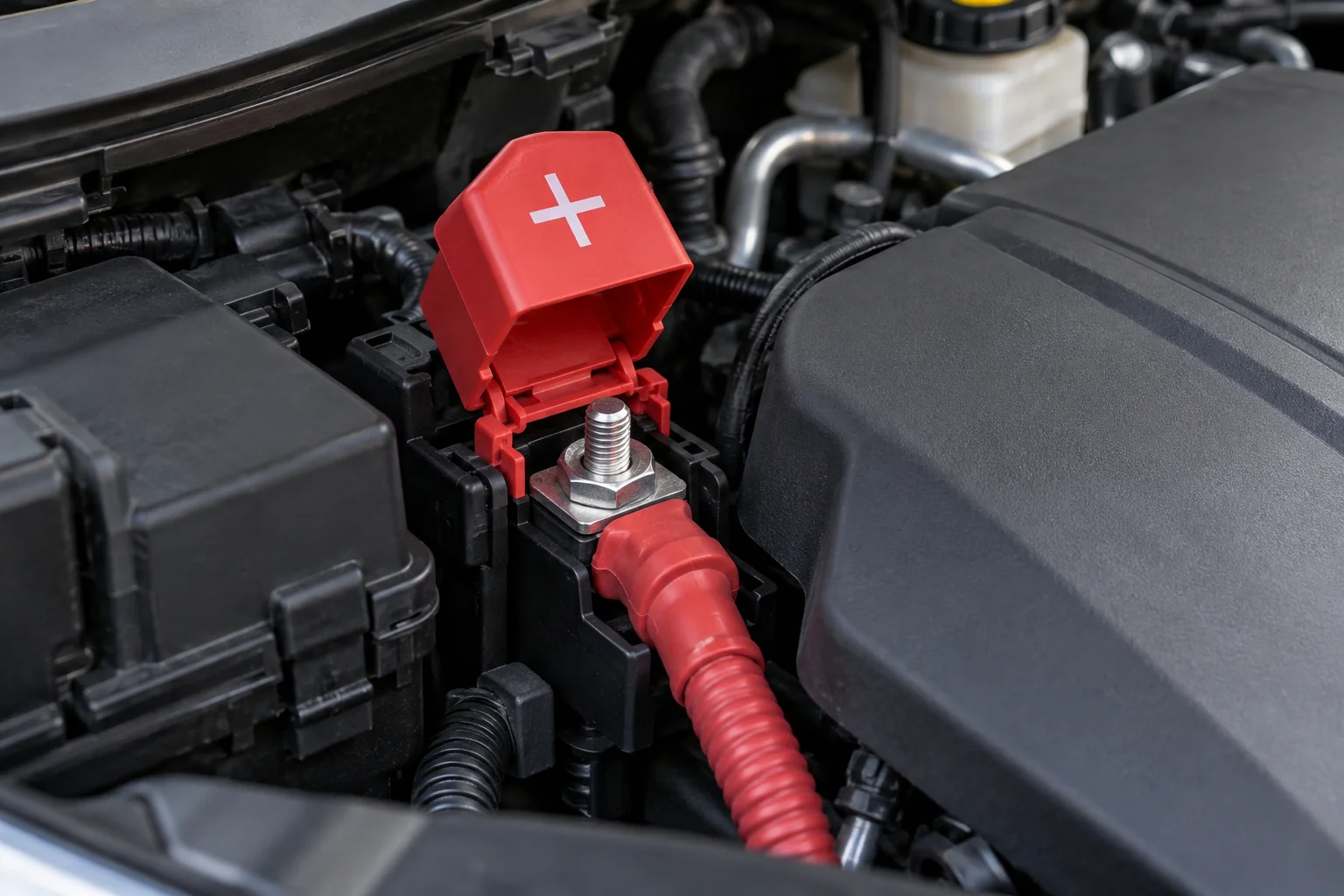
Switch off the ignition and follow the manual’s instructions for electrical loads. Identify positive and negative markings rather than relying only on cable colour. A battery under a seat or in the boot may have approved jump points under the bonnet. Do not remove unrelated covers or disconnect the vehicle battery to improvise access.

Inspect the leads for damaged insulation, loose connections and worn clamps. Choose equipment rated for the vehicle and engine according to its manufacturer. Cable thickness and advertised peak current alone do not establish compatibility.
Keep the key accessible, as a depleted battery or restored power can affect the alarm and door locks on some vehicles. If access is blocked, use the manual’s emergency entry procedure rather than forcing the bonnet or connecting power to an unverified point.
How to connect jump leads when permitted
This connection overview applies to conventional 12V negative-earth vehicles whose manuals permit cable boosting. It does not override model-specific instructions. Both the recipient and donor manuals must allow the arrangement.
The donor is the vehicle supplying power. The recipient is the car that needs help starting. Negative-earth means the battery’s negative side is connected to the vehicle’s metal structure. This is why the final negative connection can use a manufacturer-approved ground point. Do not apply this overview to a positive-earth vehicle or an unidentified electrical system.
Follow the four approved connection points in order
This overview applies only to a conventional 12V negative-earth system when both vehicle manuals permit this method. Use the exact approved terminals and ground points. A vehicle with different instructions, voltage or battery requirements needs its own procedure.
- Recipient positive. Attach the red clamp to the discharged vehicle’s designated positive terminal or jump post.
- Donor positive. Attach the other red clamp to the donor’s designated positive point. Keep the clamps clear of surrounding metal.
- Donor negative. Attach the black clamp to the donor’s specified negative connection.
- Recipient approved ground. Make the final black connection at the point shown in the recipient’s manual, away from its battery. Do not choose an arbitrary bracket, fuel-system part or painted surface.
Keep the vehicles from touching and keep cables clear of fans and moving parts. The connection order does not replace the preparation, donor-engine and starting instructions in the manuals.
Follow the manual for the starting attempt
Donor-engine operation, waiting time, cranking limits and pauses differ between vehicles. Follow the specified procedure instead of choosing a universal idle time or repeatedly turning the key. Stop if a cable heats up, a clamp moves, the equipment shows a fault or the battery changes condition.
If the engine still will not start after the permitted attempts, arrange diagnosis. More attempts cannot correct an incompatible power source or a mechanical, fuel or immobiliser fault.
Remove the leads in the specified order
After a successful start, follow the manuals for any required waiting period and whether the engines should remain running during removal. Do not switch off the revived car purely to see whether it will restart while you are still stranded.
For the conventional connection order described above, disconnect in reverse order.
- Remove the black clamp from the recipient’s approved grounding point.
- Remove the black clamp from the donor’s negative connection.
- Remove the red clamp from the donor’s positive connection.
- Remove the red clamp from the recipient’s positive connection.
Keep the clamps separated and away from metal throughout. A clamp still connected at the other end can remain electrically live. Removing one connection does not make every loose clamp safe to touch to the bodywork.
Check that all equipment is clear before closing the bonnet. Manufacturer procedures may include additional instructions, as shown in the Ford EcoSport owner’s manual example. Use the manual for your own vehicle.
Using a portable jump starter without guessing
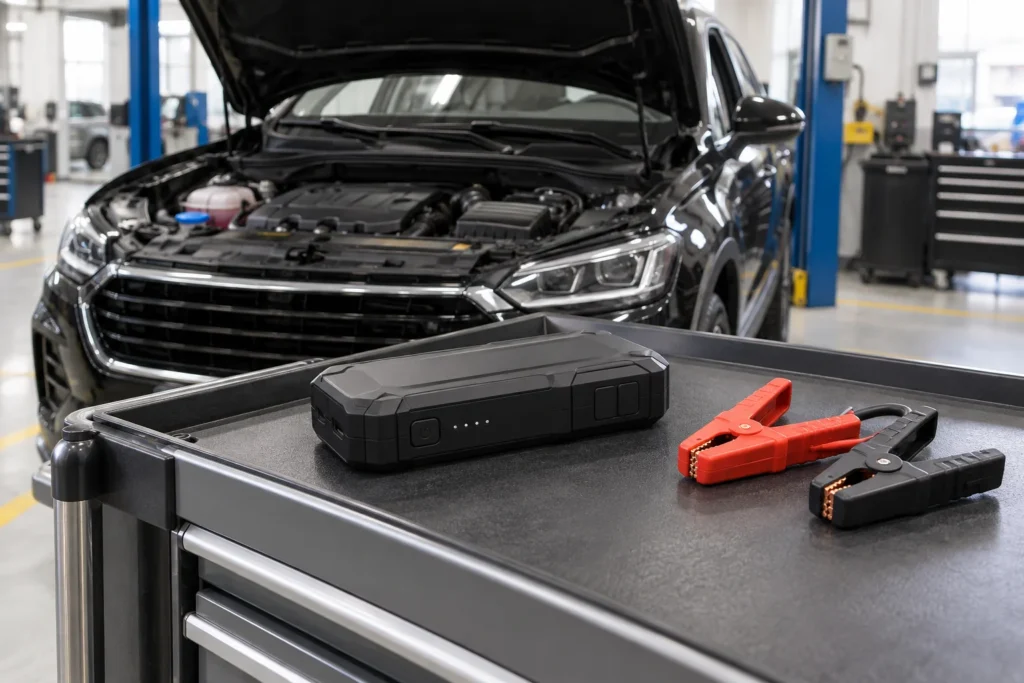
A compatible portable pack can supply starting power without a donor vehicle. It is convenient, but it is not a guarantee against damage. Its permitted battery chemistry, voltage, engine capacity and operating temperature must suit the vehicle.
- Check the pack’s charge and physical condition before use.
- Connect at the vehicle’s approved points with the pack in the state specified by its instructions.
- Check its indicators before enabling boost. Follow the device’s instructions if it reports reverse polarity, temperature or another fault.
- Respect its attempt limits and cooling intervals, as well as the vehicle’s cranking limit.
- Switch off and remove it in the specified sequence once external support is no longer needed.
A normal phone power bank is not a car jump starter. Also avoid bypassing a pack’s safety detection to force a deeply discharged battery to start. Manual override modes can disable protections and require knowledge beyond an ordinary roadside restart. NOCO’s manual override guidance explains that this mode disables its spark-proof and reverse-polarity protection. That warning is specific to the equipment described, and other packs have their own restrictions.
Store and recharge the pack within its maker’s temperature limits. A car parked in Dubai sun is not automatically a suitable storage location. Do not use a swollen or damaged lithium pack. Keep the device instructions with it so another driver can check its restrictions.
Hybrids and EVs need their own procedure
On a hybrid or EV, low-voltage support may allow control systems to wake up. It does not recharge the high-voltage traction battery. Never attach jump equipment to orange high-voltage cables or traction-battery connections.
Check the fitted low-voltage battery type and the exact model instructions. Some systems use lead-acid batteries, others lithium-ion, and connection points or permitted support supplies can differ. A generic 12V pack is not automatically approved for every system.
Successful recovery may mean a hybrid enters READY or an EV wakes up, rather than a conventional engine cranking. Follow the displayed warnings and manufacturer procedure before moving it.
For example, Tesla’s Model 3 jump-start instructions identify specific low-voltage support points and prohibit using that vehicle to jump-start another car. Do not transfer those instructions to another model or battery configuration.
For a mild hybrid with a 48V system, identify the approved low-voltage support procedure. Do not connect ordinary jump leads to 48V equipment. If you cannot establish which system you are looking at, leave the connection to a qualified technician.
What to do after the car starts
A restart resolves the immediate lack of starting power. It does not establish how much charge remains, whether the battery is healthy or why it discharged.
Do not assume a short drive or a few minutes of idling fully restores the battery. Recovery depends on its condition, depth of discharge and charging system. Arrange suitable charging and testing rather than relying on a fixed driving time.
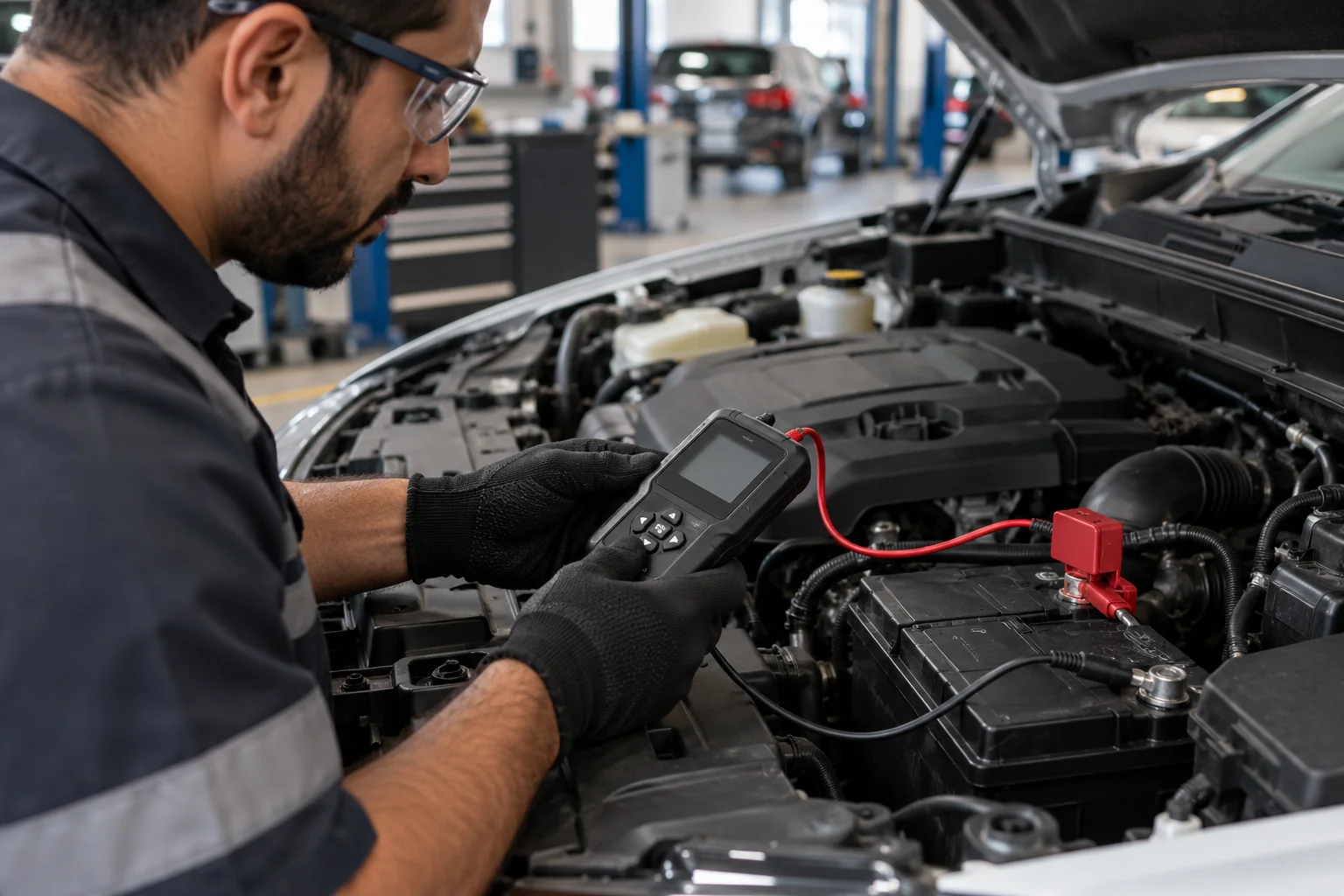
- Battery charge tells you how much electrical energy is available now.
- Battery health assesses its ability to provide the required starting performance.
- Charging and connection checks investigate whether the vehicle replenishes charge and delivers current correctly.
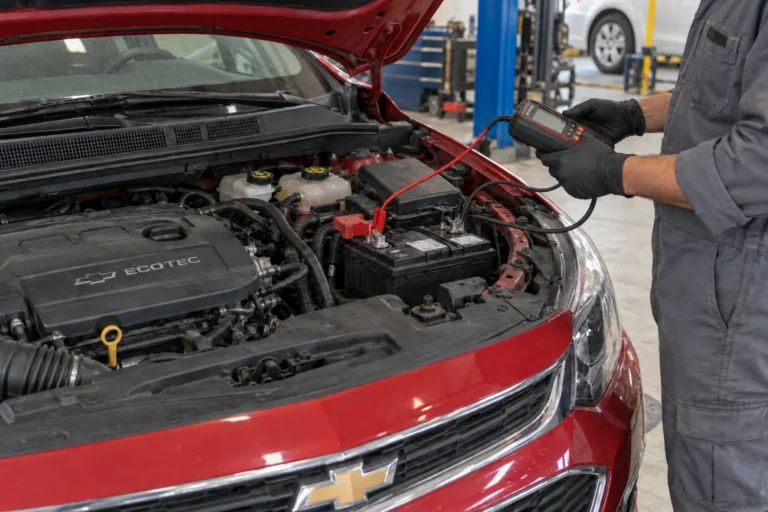
A voltage reading alone does not settle all three questions. Battery testing needs the correct settings for the fitted technology. AGM means absorbent glass mat, while EFB means enhanced flooded battery. Both are lead-acid technologies used in suitable applications, including start-stop systems, but their testing and replacement requirements still depend on the vehicle.
A low-charge result may require charging and retesting before deciding on replacement. The test should distinguish insufficient charge from lost starting capability. VARTA’s explanation of battery test results also describes the limits of basic testers when assessing start-stop batteries.
If a charging warning stays on, the engine stalls, lights become unstable or a burning smell appears, stop safely and seek assistance. Do not keep boosting a vehicle that repeatedly loses power. Do not disconnect a battery terminal while the engine is running as an alternator test.
If testing confirms that the battery can no longer provide the required starting performance, battery replacement needs to match the vehicle’s specified technology, capacity and fitting requirements. A successful boost alone does not justify buying a new battery.
Why the battery may need another boost
Leaving a light on can discharge a serviceable battery. Repeated trouble can also involve an ageing battery, poor connections, inadequate charging or an electrical load remaining active while parked.
Heat can accelerate battery ageing, but Dubai weather does not identify the fault in an individual car. Short trips and long periods without use may leave less charge available. Record how long the car was parked, whether accessories were left connected and whether the battery is recent.
Keep these details for the technician. Battery and charging tests can form part of electrical fault diagnosis, with parked-current checks if the discharge recurs. Replacing parts from the sound of the starting attempt alone can leave the original fault unresolved. Detailed drain testing and starter repair are separate from the immediate restart.
Common questions about restarting a flat battery
Can a jump-start damage the car’s electronics?
Incorrect polarity, an unsuitable voltage or the wrong connection points can damage the vehicle. A protected pack still needs to match the battery and be used as instructed. Read the vehicle and equipment manuals before connecting, and stop if you cannot identify the approved points.
Can I jump-start an automatic car?
Many conventional automatic cars permit an electrical jump-start, subject to their manuals. An automatic gearbox does not by itself prevent cable boosting. Do not push-start the car as a substitute.
Can I jump-start a car on my own?
A compatible portable pack may let you restart without a donor vehicle. You still need safe access, clear instructions and the correct connection points. If any of these are missing, arrange assistance.
Can a completely flat battery be boosted?
It depends on the battery’s condition and the equipment. Some packs will not enable boost when voltage is too low. Do not bypass that warning or assume the battery is recoverable. It may need controlled charging, testing or replacement.
Should I push-start a manual car instead?
Do not assume a manual transmission makes push-starting suitable. Manufacturer restrictions, the fault and the surroundings matter. This guide does not recommend rolling or pushing a vehicle to start it.
How long should I drive after a jump-start?
There is no fixed time that guarantees full recharge or another successful start. Follow the vehicle guidance and arrange battery and charging-system checks. A severely discharged or damaged battery needs more than a short drive.
Does needing a jump mean I need a new battery?
No. It may have discharged because a light was left on or because of another fault. Charge, test and investigate as appropriate. Replace it when its condition and the vehicle specification justify replacement.
How much does a jump-start cost in Dubai?
The charge depends on the location, vehicle, access and whether the visit includes only a restart or also testing, replacement or recovery. Confirm the total, VAT and included work before agreeing. A replacement-battery price is not a jump-start tariff.
Discuss the next step if your car will not start
Tell our Al Quoz team your model, year, location and what happens when you try to start. Ask which checks or assistance are appropriate, what the visit includes and what it will cost.