When you search for a car electrician near you in Dubai, choose someone who can investigate your vehicle’s symptoms, explain the tests and give you a clear estimate before replacing parts. Distance matters, especially when the car will not start, but the nearest workshop is only useful if it can handle the fault and your exact model.
A clicking starter, an overnight battery drain and a window that stops working need different checks. Describe what happens first. Then ask whether you need mobile assistance, recovery or a workshop appointment, and what the initial diagnostic charge covers.
Decide whether your car should be driven
Before choosing a garage, check the warning message and how the car behaves. A failed interior lamp is different from a charging warning while driving. Dashboard lights indicate problems in particular systems. They do not all mean the battery or engine computer has failed.
| What you notice | What to do next |
|---|---|
| Smoke, visible sparks or a burning electrical smell | Stop safely and switch off if safe. Move away if there is smoke or fire and seek emergency help. Arrange recovery rather than repeated starting attempts. |
| Charging warning while the engine is running | Stop in a safe place and request assistance. The car may lose electrical supply. Follow the vehicle handbook instead of assuming a new battery will solve it. |
| Engine stalls or steering and braking change | Move to safety as conditions allow and arrange assistance. Do not continue a journey to test whether it happens again. |
| No start while safely parked | Describe whether the engine cranks, clicks or stays silent. Confirm the appropriate assistance before attempting a jump-start. |
| One window, lock or accessory stops working | Arrange a circuit check. Assess whether essential visibility, lighting or vehicle security is affected before driving. |
Read the exact message in the owner’s manual. A flashing engine warning, an airbag warning or combined brake warnings deserves its own assessment. Clearing the light does not establish that the system is safe.
Do not disconnect a battery while the engine runs to test the alternator. Do not bypass a fuse or fit a higher-rated fuse to keep a faulty circuit working.
Understand what an auto electrician actually checks
An auto electrician investigates the vehicle’s electrical supply, circuits and electronic controls. “Car electrician” and “auto electrician” are commonly used for the same kind of work. The title alone does not tell you whether a technician can diagnose a complex network fault, program a replacement module or work on a high-voltage vehicle.
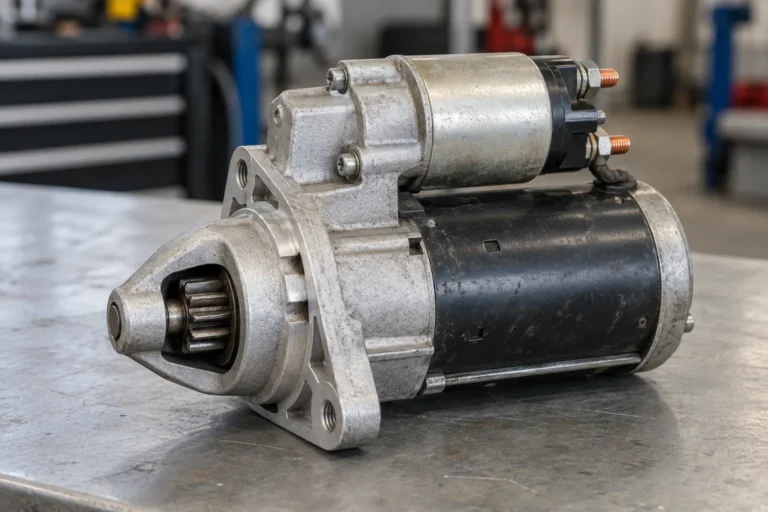
For a conventional petrol or diesel car, the battery supplies starting power. The starter motor cranks the engine, while the alternator supplies electricity and charges the battery when the engine runs. Fuses, relays, cables and earth connections distribute and protect that supply.
Modern vehicles also have several control units. Engine management, braking, airbags, body functions and security may use separate modules that communicate with one another. A fault can involve a component, its power supply, a connector or the communication network. A sensor-related code is a starting point for investigation.
- Slow cranking or clicking may call for battery, cable, earth and starter-circuit checks.
- A battery that goes flat after parking needs assessment of battery condition, charging and parked electrical consumption.
- Flickering lights can involve the lamp, its driver or control circuit, supply voltage or a poor connection.
- A failed window or door lock can involve a switch, motor, wiring, fuse or body control function.
- An AC problem may require electrical checks alongside refrigerant, airflow and mechanical diagnosis. Weak cooling alone does not identify an electrical fault.
A workshop that handles both mechanical and electrical diagnosis can be useful when symptoms cross those boundaries. An engine that cranks normally but will not start, for example, may need fuel, ignition or mechanical checks as well as electrical testing.
Ask how the workshop will diagnose your fault
When comparing workshops, ask what they plan to check for your complaint. “Computer diagnosis” can mean anything from reading engine codes to testing a particular circuit. A clear explanation matters more than a long list of scanner brands.
Battery and charging checks need separate answers
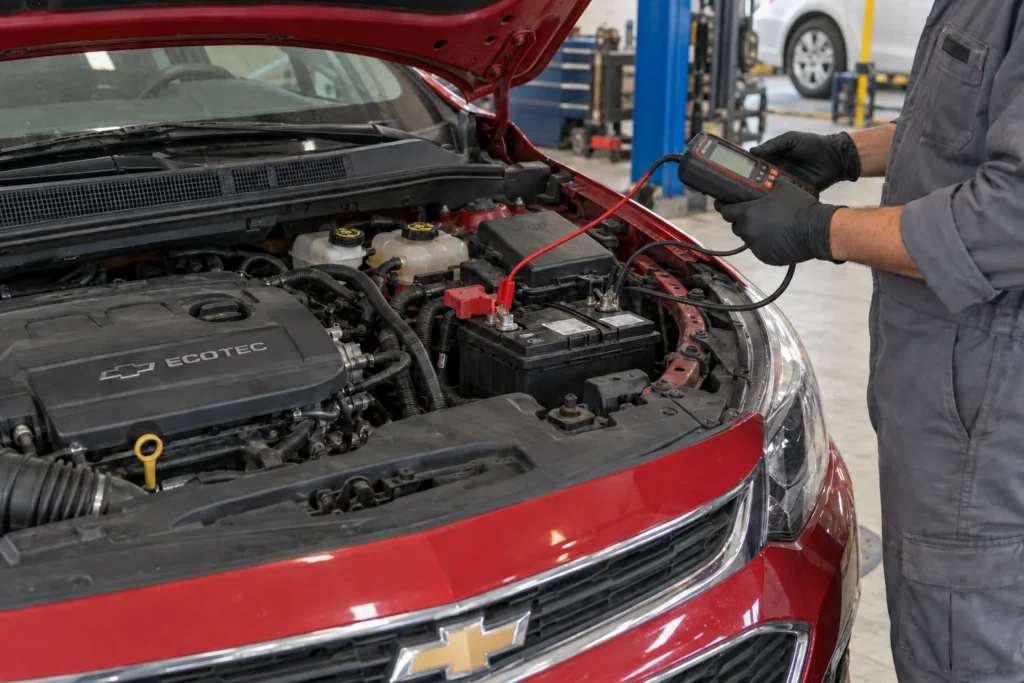
A useful assessment distinguishes battery charge from battery condition. A discharged battery may be rechargeable, while a deteriorated battery may fail a suitable condition or starting test. Terminals and cables also need attention because a poor connection can interfere with starting or charging.
Ask whether the charging system will be tested if the battery has repeatedly gone flat. On a conventional car this includes the alternator and its associated circuit. The readings must be interpreted for the vehicle and test conditions. A single universal charging-voltage figure does not cover every smart charging system or powertrain.
Replacing a battery can restore starting temporarily while leaving a charging or drain problem unresolved. The useful question is what caused the discharge and whether the proposed repair addresses it. Battery age helps provide context, but it does not replace testing or establish a fixed lifespan.
Fault codes should lead to circuit testing
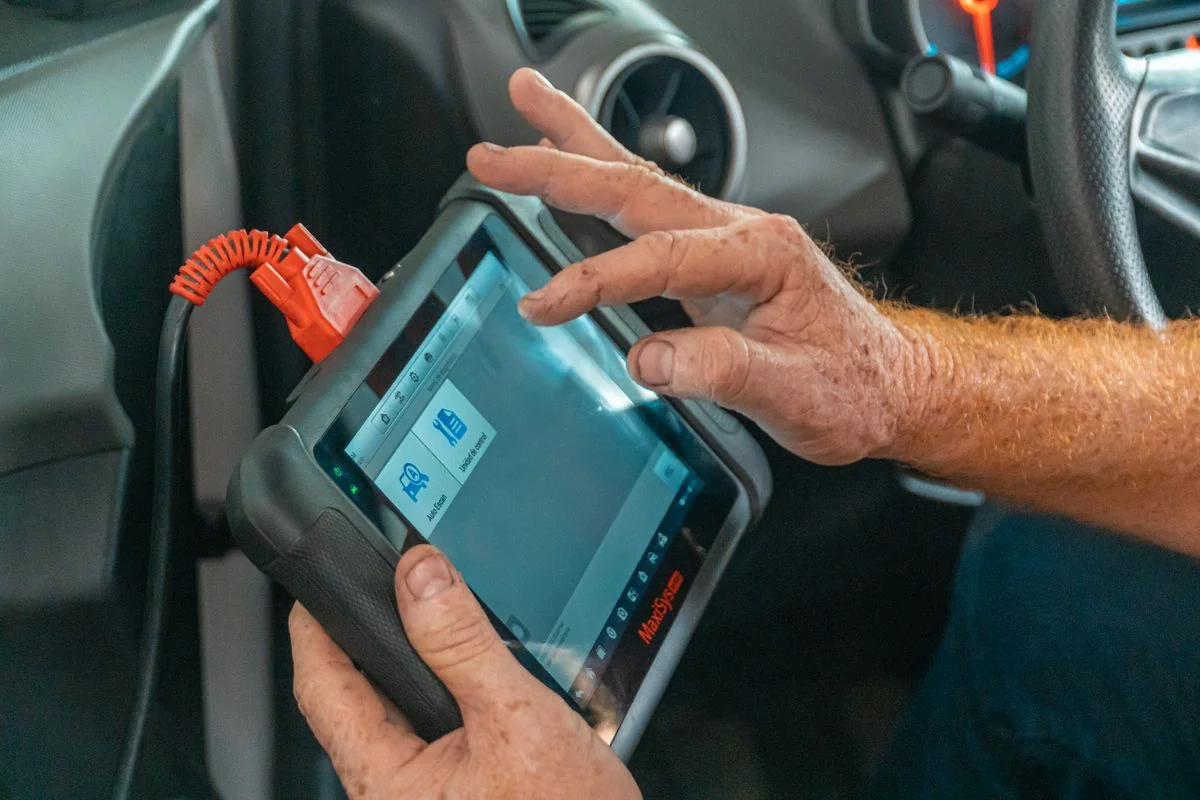
Ask whether the scanner can access the system involved. An engine-code reader may be useful for an engine warning, but its coverage may not include the body, airbag, brake or security modules needed for another complaint.
The technician may review stored codes and live readings alongside the circumstances in which the fault occurred. Targeted tests can then check power, earth, signals or wiring. A voltage-drop test measures unwanted voltage loss along a cable or connection while the circuit is operating. It can reveal resistance that a visual inspection misses.
If a module will not communicate, its supply, earth and network connections should be considered before replacement. Coding or programming may be needed for some replacement components, but it is a vehicle-specific procedure. A scan, a code clear and a software update are different jobs.
Parked battery drain may require longer monitoring
Some systems continue operating briefly after you switch off and then enter a lower-power sleep state. Battery-drain testing needs to account for that shutdown sequence. A current reading taken immediately after parking can give the wrong impression.
Opening a door or operating the key can wake systems again. An intermittent drain may need a longer recording period to catch an unexpected wake-up. Ask how long the workshop wants the car and whether it needs to remain locked and undisturbed.
Share details of dashcams, trackers, alarms, audio equipment and recent accessory installations. These details guide the investigation. They do not prove an accessory caused the problem.
Choose between mobile help and workshop diagnosis
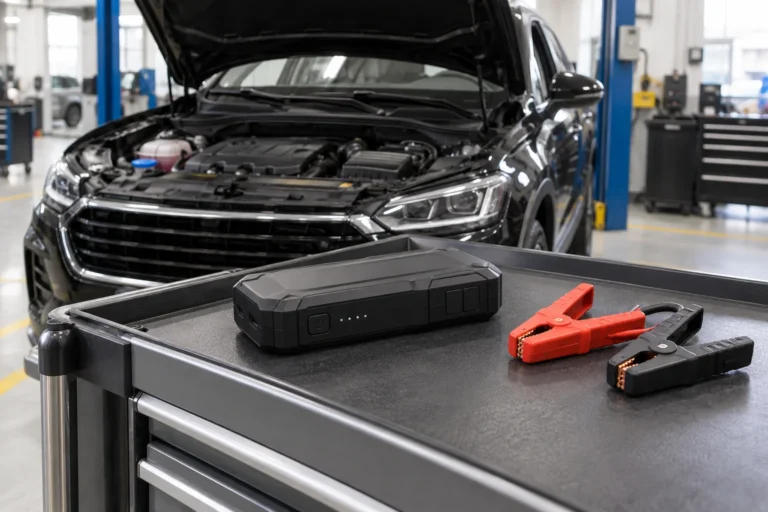
Mobile assistance can be practical for a safely parked car that will not start, especially when the initial task is assessing the battery or providing appropriate starting assistance. Confirm the provider’s scope for your vehicle, the location and the symptoms before booking.
Ask what happens if the first checks show a wiring, charging or starter fault that cannot be repaired on site. Access under the car, safe lifting, parts availability, stable power for programming and time for monitoring can all influence where work is practical. A mobile visit cannot guarantee that recovery will be unnecessary.
| Your situation | What to confirm |
|---|---|
| Car safely parked at home or work | Whether the provider can perform the required initial checks, what access is needed and whether the callout charge is separate. |
| Car repeatedly goes flat after parking | Whether workshop monitoring is needed and how long the car may need to stay. |
| Smoke, damaged wiring or a stalled car | Recovery arrangements and safe transport. Avoid another jump-start as a substitute for assessing the fault. |
| Module replacement or programming is proposed | Model compatibility, power support, access requirements and whether the work will take place at a workshop. |
For a location in Al Quoz, Jumeirah, Dubai Marina or another part of Dubai, give the exact parking position and access restrictions. Basement height, security access and whether the car can move matter more than a broad claim of citywide coverage. Confirm the appointment and arrival arrangements directly.
Compare electrical repair quotes on the same basis
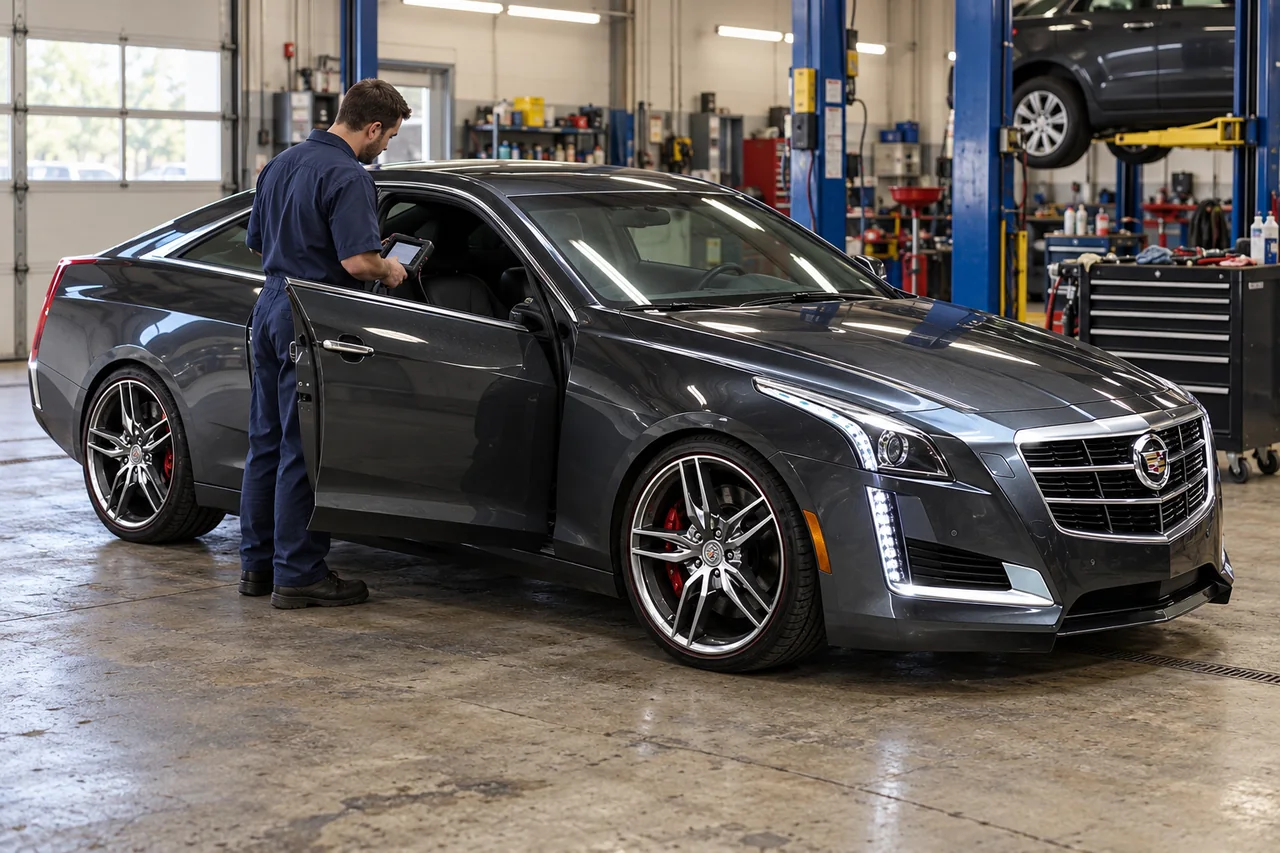
Before booking, confirm the workshop’s address, contact details and experience with your make and fault type. Ask to see a recent comparable diagnostic job with identifying customer details removed. A fault-code screenshot alone does not show that the cause was tested. Look for the complaint, measurements, diagnosis and final verification in the explanation.
The diagnostic fee and repair price cover different work. Reading codes is a smaller task than tracing an intermittent harness fault or monitoring an overnight drain. Ask what the initial fee includes, what result you will receive and when further testing needs approval.
A quote for alternator work also needs a parts description. Repairing a connection, rebuilding a suitable unit and fitting a new alternator have different scopes. Comparing their totals without the parts and labour details can be misleading.
- Identify the proposed tests and any time limit on the initial investigation.
- Separate diagnostic labour, repair labour, parts and programming where applicable.
- Check the part number or specification and whether the part is new, rebuilt or used.
- Confirm whether callout, recovery, collection or further testing adds a charge.
- Ask for the total payable amount and whether VAT is included.
- Get the applicable parts and labour warranty terms in writing.
The cost of electrical repairs depends on the fault, the parts required and access to the affected components. Use planning estimates as a starting point, then confirm a current written quote for your car before approving work. Battery specification and the test findings can change the final amount.
If the workshop offers to credit a diagnostic charge against an approved repair, ask which work qualifies. The same applies to collection offers or discounts. A headline offer is only useful when its conditions and the final bill are clear.
| Quoted task | What to confirm before approving it |
|---|---|
| Code reading | Which systems are scanned, whether you receive the stored codes, and whether any testing beyond the scan is included. |
| Initial circuit diagnosis | The affected circuit, agreed diagnostic labour limit, measurements supplied and approval point for additional work. |
| Intermittent fault or parked battery drain | Monitoring arrangements, how the fault will be reproduced, vehicle storage requirements and how further diagnostic time is authorised. |
Share the details that help reproduce the problem
An intermittent fault may disappear by the time the car reaches the workshop. A short description of its pattern can be more useful than a guess about the failed part. Record observations only when safely parked.
- Make, model, year, engine or powertrain and any relevant import specification.
- Whether the engine cranks normally, turns slowly, clicks or does not respond.
- The exact warning message and a photograph, if you can take one safely.
- Whether it happens after overnight parking, a short stop, rain, washing or a longer journey.
- Recent battery replacement, accessory installation, accident repairs or water entry.
- How often it happens and whether anything changes before the fault appears.
Avoid clearing codes or disconnecting the battery simply to hide a warning before the appointment. That can remove useful fault information or change the conditions the technician needs to investigate. Tell the workshop about any reset or jump-start already attempted.
For key recognition or immobilizer work, ask what ownership documents and keys the provider requires. Confirm support for the exact vehicle before assuming a key-fob battery change or reprogramming will fix the no-start.
Hybrid and EV faults need appropriate expertise
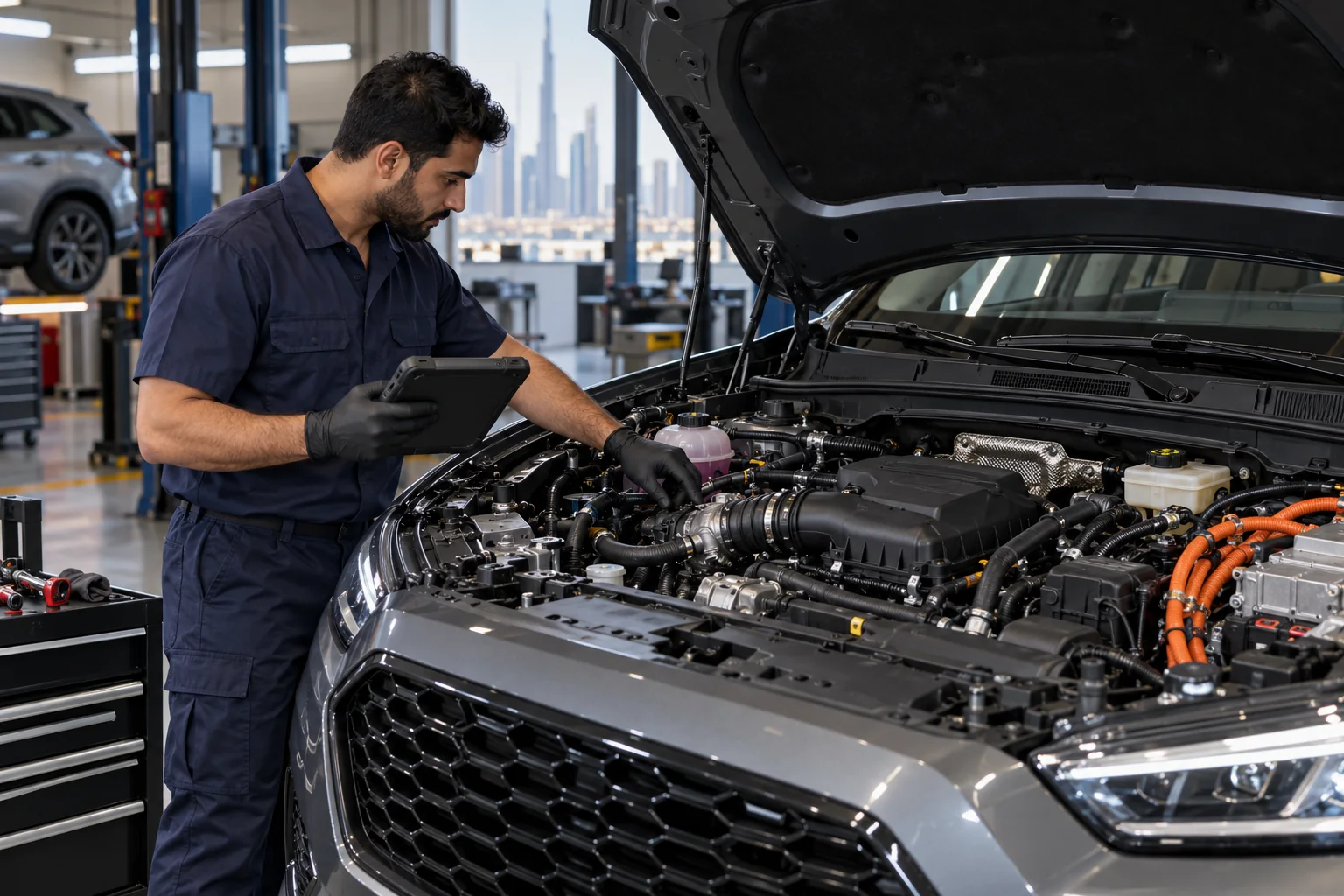
Hybrid and electric vehicles have low-voltage systems as well as high-voltage equipment. A low-voltage supply problem can affect control functions or starting readiness, so a car that will not enter its ready state does not automatically have a failed traction battery.
Ask the workshop to distinguish the system involved and confirm its training, tools and procedures for your model. Experience replacing conventional starter batteries does not establish competence to open a high-voltage battery or repair charging equipment.
Keep away from damaged high-voltage cables, connectors and components, particularly after an accident or water exposure. Do not use a conventional-car jump-start procedure without checking the vehicle’s own instructions. For a Model 3, Tesla specifically warns owners against disassembling high-voltage components.
Check the repair against your original complaint
Before collecting the car, ask what the tests found, what was repaired and how the affected function was rechecked. A replaced part or a cleared warning is not the whole explanation. The original complaint should guide the confirmation.
For an overnight drain, ask whether parked consumption was checked again after shutdown. For a starting fault, ask whether the battery, supply connections and starting operation were reassessed. For a window, light or lock, check the affected function before leaving.
An intermittent problem may require further observation if it could not be reproduced. Get a clear record of the checks completed, any remaining uncertainty and what to do if the symptom returns. Keep the invoice and written warranty terms with the vehicle records.
Questions to ask before booking an electrician
How do I choose a car electrician near me?
Confirm support for your vehicle and the system involved, ask how the fault will be tested, and agree the initial charge. Check the workshop location, transport arrangements and written repair terms. A nearby provider should also have the right diagnostic capability.
Does clicking prove that the starter has failed?
No. Battery condition, cable resistance, earth connections and the starter circuit can produce similar symptoms. The battery and supply circuit should be assessed before a starter replacement decision.
Why does a new battery keep going flat?
The cause may be insufficient charging, excessive consumption while parked, a connection problem or the battery itself. A replacement battery does not correct an unresolved drain. Ask for separate battery, charging and parked-current checks as appropriate.
Can a mobile electrician fix every fault?
No. The practical scope depends on safe access, equipment, parts and the testing required. Initial battery assistance may be possible on site, while extended drain monitoring, complex wiring work or programming may need workshop facilities.
Is clearing a warning light a repair?
No. Clearing codes removes recorded information. The underlying cause needs investigation and an appropriate repair. If a warning remains or returns, ask for reassessment rather than another reset alone.
Can an alternator be repaired instead of replaced?
Sometimes. The decision depends on the confirmed fault, the unit’s design, available repair parts and the proposed warranty. Ask the workshop to compare the applicable repair and replacement options. A belt or cable fault may not require alternator replacement.
How long should electrical diagnosis take?
There is no single duration. An accessible connection fault and an intermittent parked drain need different investigations. Ask for the initial testing allowance, expected time with the car and an update before further chargeable work.
Discuss the next step for your electrical fault
Share your model, year and what stopped working with My Car Repair Dubai in Al Quoz. Ask the team to confirm the initial checks, charges and whether you should bring the car or arrange assistance.