A good custom car seat cover design starts with the vehicle’s restrictions, then the fit, material and appearance. Before choosing colours or stitching, check whether your owner’s manual permits an accessory cover at all. Seats can contain airbags, occupant sensors, heating and ventilation, so a tidy-looking fit is not proof of compatibility.
Once the vehicle permits a cover, choose a design around how you use the car. Daily commuting, children, work clothing, pets and outdoor activities create different cleaning and wear needs. In Dubai, handle the actual material sample and discuss heat exposure rather than assuming a colour or a “premium” label guarantees a cooler seat.
Check whether your vehicle permits seat covers
Read the seating and airbag sections of the manual for the exact model and build year. A supplier’s “airbag compatible” label does not override a manufacturer prohibition. Seat-mounted side airbags need their intended deployment path, and coverings or extra padding can affect that path.
For example, the Tesla Model Y airbag instructions explicitly say not to use seat covers because they can restrict deployment. Ford documentation also warns about covers not released or approved by the manufacturer. These examples show why a general recommendation for every car would be misleading.
If the manual allows an accessory, ask the supplier for documentation covering your precise seat configuration. A claim about breakaway stitching on another vehicle is insufficient. Do not remove an airbag label, cover a deployment seam or accept an assurance based only on the fitter’s experience.
Seat covers should also leave the belt buckle, head restraint, adjustment controls and child-seat anchor access usable as intended. Where an occupant sensor is fitted, check the manufacturer’s instructions about modifications and additional layers. If the requirements cannot be confirmed, stop at the compatibility decision before ordering a design.
Choose between a removable cover, repair and retrim
These options are often advertised together, but they involve different work. A removable cover sits over the existing upholstery. A repair addresses a local defect. A retrim replaces upholstery panels or the seat’s covering and may involve removing the seat. Ask what the supplier actually means by “custom”, “skin fit” or “leather seat cover”.
| Option | What it does | Question to ask |
|---|---|---|
| Removable fitted cover | Adds a separate layer over the original upholstery | Does the vehicle permit it and can all seat functions still operate? |
| Local upholstery repair | Addresses suitable cosmetic damage to an existing section | Is the damage away from airbag seams and is the original material repairable? |
| Panel replacement | Replaces a damaged or worn section | How closely will the colour, grain and stitching match? |
| Complete retrim | Replaces the seat’s upholstery covering | What material, seat functions and safety requirements are included? |
A cover does not repair collapsed foam, a broken adjustment mechanism or a damaged safety seam. If the original seat has a local defect, compare an appropriate repair with the proposed covering. Our upholstery repair options explain the difference between repairs, panel replacement and retrimming.
For a leased car, check the agreement before altering original upholstery. A removable accessory may still be restricted by the vehicle manufacturer. Neither a retrim nor a new cover guarantees a higher resale price, especially if it hides damage or changes the original specification.
Design choices that suit the cabin
Start with the dashboard, door trims and carpet colours. A seat design usually looks more coherent when it repeats one or two existing tones. Ask to see a sample beside the car in daylight, since showroom lighting and a phone screen can make the same material look different.
Solid colours for a quiet finish
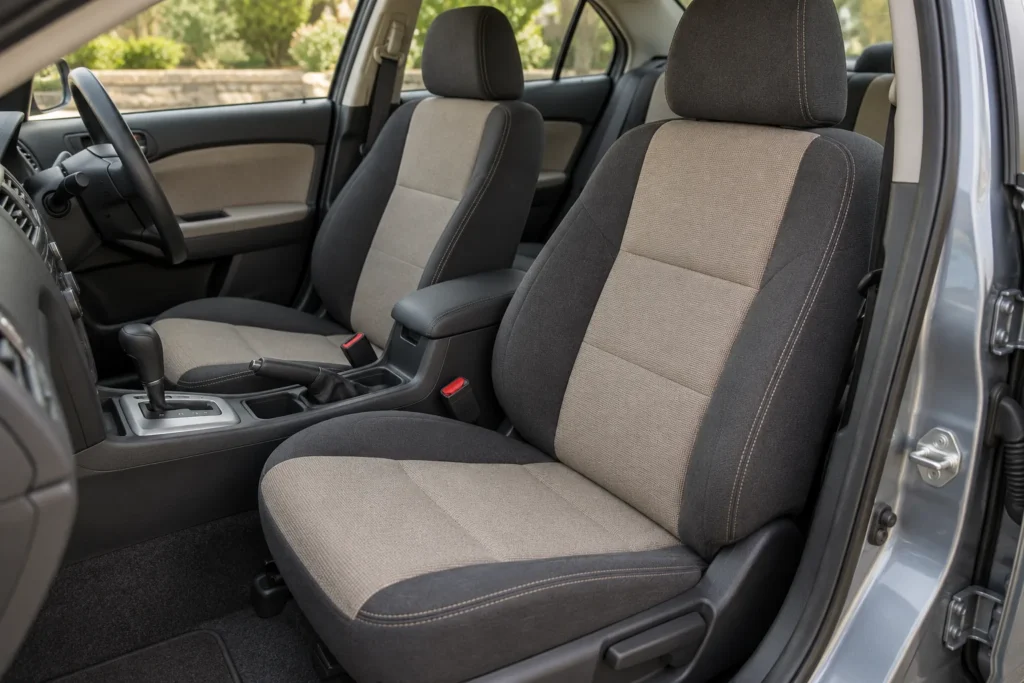
A single colour is useful when you want the seat shape to remain the main feature. Black, grey, beige and brown are common choices, but the right shade depends on the cabin and your cleaning habits. Dark material can show pale dust. Light material can show marks and dye transfer. Neither is maintenance-free.
Two-tone panels for controlled contrast
A contrasting centre panel can make the design more individual without changing every cabin surface. Keep the contrast deliberate and ask where the colour boundary falls on the actual seat. A pattern that looks balanced on a broad seat may look crowded on a narrow one with pronounced bolsters.
Quilting and contrasting stitching
Diamond quilting and contrasting thread can add detail, but extra stitching does not by itself establish durability. Ask about thread, backing, seam construction and how the pattern follows the seat. Decorative lines must not change a required airbag seam or interfere with an approved deployment path.
Check the intended stitching colour on a physical sample. Small differences become more visible when repeated across front seats, head restraints and a rear bench. Ask whether the rear-row pattern will align when the split seat is folded or returned to its normal position.
Compare the actual material, not only its name
“Leather”, “vegan leather”, “premium fabric” and “waterproof” can cover very different products. Ask for the material specification, backing and care instructions. A synthetic material is not automatically environmentally preferable, and a perforated surface does not prove that the finished seat will ventilate properly.
| Material | Why consider it? | What to check in a sample |
|---|---|---|
| Woven fabric | A textile feel and a wide range of textures | Cleaning instructions, staining, backing and how it feels against clothing |
| Genuine leather | A leather finish with a particular grain and feel | Which panels are leather, coating, colour matching and suitable care |
| Synthetic leather | A leather-look finish in different colours and textures | Product specification, surface feel, crease behaviour and cleaning limits |
| Neoprene-type material | May suit an approved removable accessory for particular uses | Exact water-resistance claim, drying, heat comfort and fit |
| Microfibre or suede-look textile | A softer tactile finish | Stain treatment, wear appearance and compatibility with the intended seat |
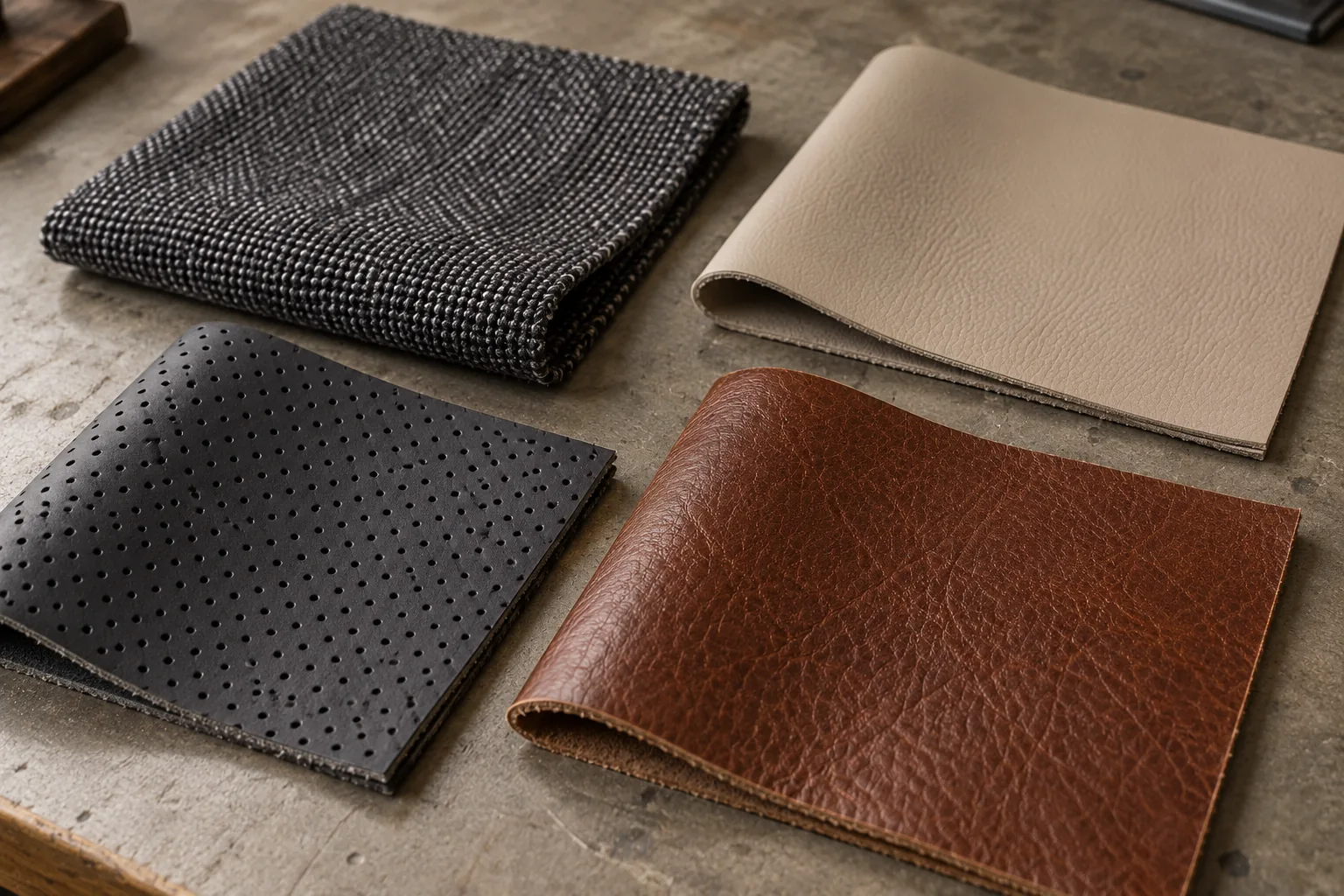
Do not apply a genuine-leather conditioner to every leather-look product. Coated leather, synthetic surfaces and textiles can need different care. The label and written care instructions should determine the products used, rather than a generic leather-care recommendation.
Ask what a water-resistant claim covers. Surface material, stitched seams and the finished assembly may behave differently. Do not assume a cover protects the seat’s electronics from liquid or that a wet seat can be used normally without inspection.
Dubai heat and everyday comfort
Compare materials after the car has been exposed to your normal parking conditions, where practical. Colour alone does not establish how comfortable the complete seat will feel. The surface finish, layers, backing, cabin temperature and whether the seat has ventilation all matter to the decision.
Perforations are holes in a material, rather than a guarantee of airflow through the finished seat. A new layer can obstruct ventilation even when it has visible holes. For heated or ventilated seats, require specific manufacturer compatibility and preserve the original function. Do not add an electrically heated accessory merely because it is advertised alongside custom covers.
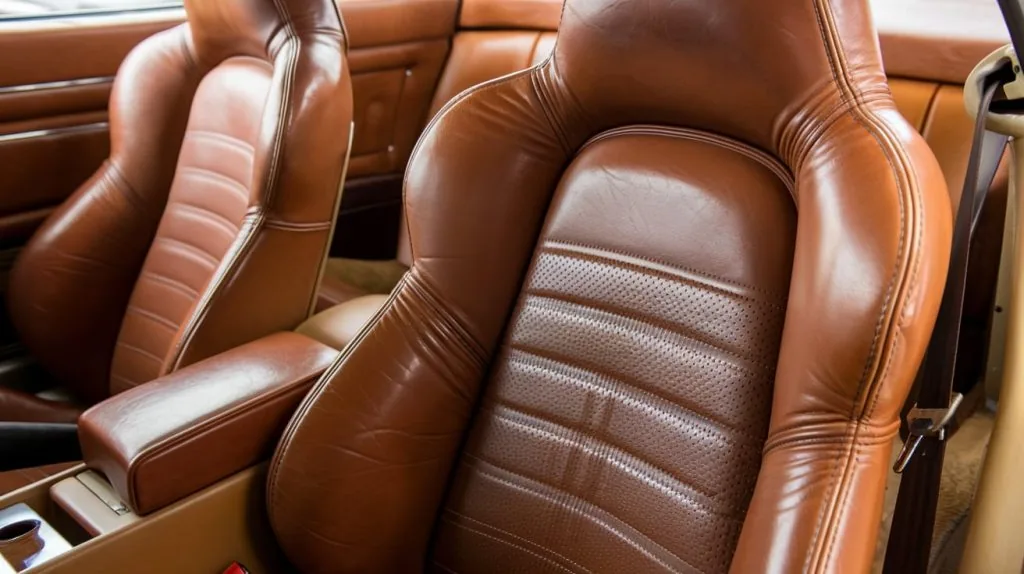
Consider how you enter and leave the car, not just how the seat looks in a photograph. A thick covering can change the feel of a bolster, slide under movement or make adjustment controls harder to reach. Extra padding should not be presented as a proven treatment for fatigue or back pain.
If a supplier offers stain or cleaning demonstrations, ask permission before testing the sample and follow the product instructions. Keep the approved sample or its product reference with the order. That gives both sides something concrete to compare with the delivered material.
A custom fit needs more than the model name
Send the make, model, year, trim and clear seat photographs. Two cars with the same model badge can have different seat shapes, head restraints, equipment and rear-row layouts. State whether you need only the front seats or every row. A five-seat quote does not automatically include a third row.
Identify split-folding benches, removable or integrated head restraints, armrests, lumbar controls, belt routing and access to ISOFIX points. Photograph the seat backs and lower sides as well as the seating surfaces. The supplier should confirm which parts of the seat are included and which must remain uncovered.
A fitted cover must allow the approved seat movements. Check that a folding bench can latch properly and that a rear armrest or access panel remains usable. Buckles should not disappear beneath fabric. Do not place improvised straps around under-seat wiring or let loose material obstruct adjustment mechanisms.
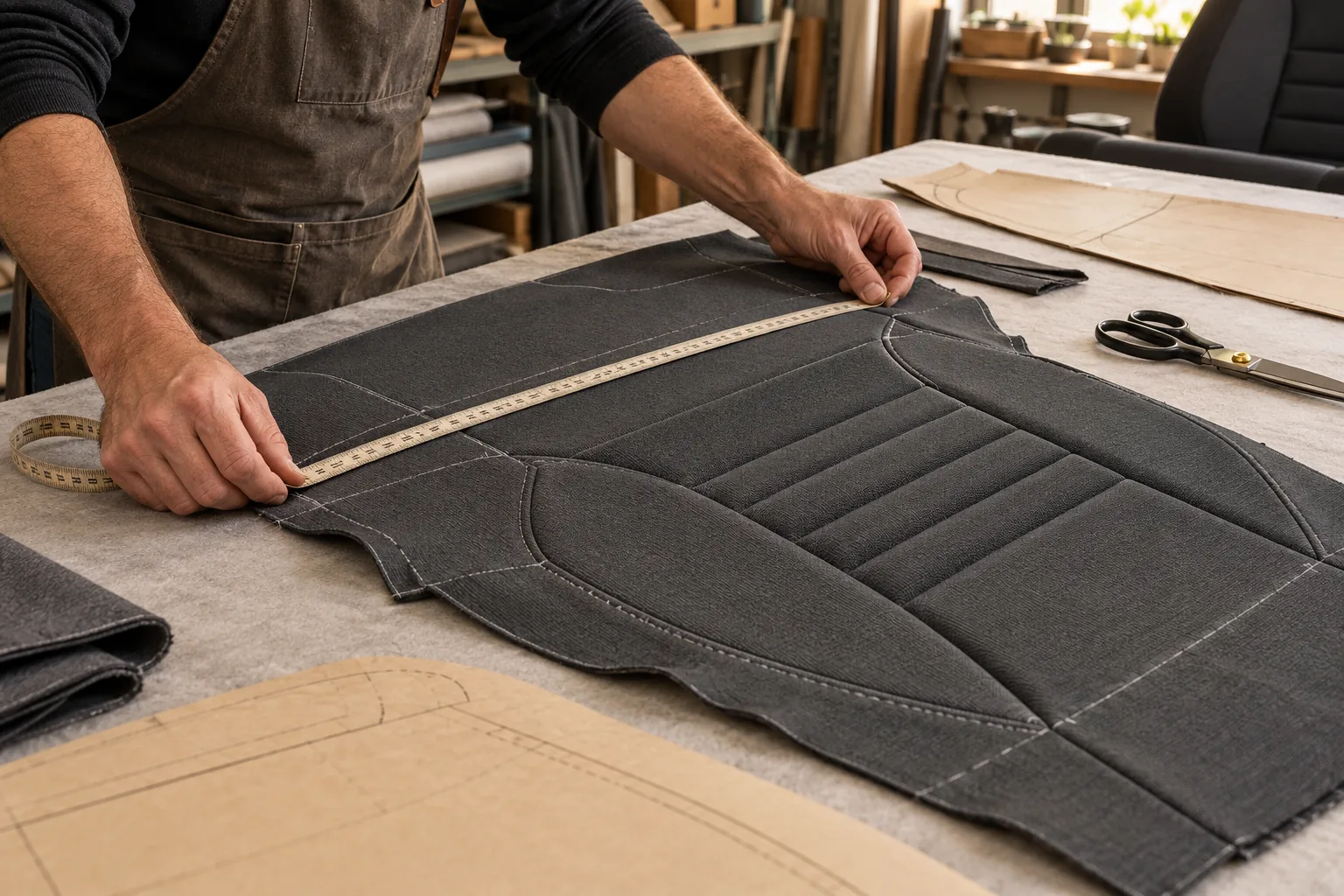
For any retrim involving seat removal, ask who handles disconnection, reinstallation and any vehicle-specific checks. A general sewing service is not automatically equipped for seats containing safety equipment. The job scope should explain how original functions and the manufacturer’s requirements will be preserved.
What determines the price?
The number of seats, material, pattern complexity, seat shape and amount of original upholstery work affect the quotation. Ask whether the price is for removable covers, panel replacement or a complete retrim. Without that distinction, two prices may refer to entirely different jobs.
Custom removable covers need a quotation for the particular vehicle and permitted product. We have not verified a universal Dubai price range for that category. The following published MyCarRepairDubai figures are alternatives for upholstery work, including 5 per cent VAT. They should not be described as removable-cover package prices.
| Upholstery work | Published starting price or range | Scope to confirm |
|---|---|---|
| Suitable local leather repair | From AED 310 | Cosmetic damage away from airbag seams |
| Fabric panel replacement | AED 390–440 | The panel, matching and any underlying damage |
| Synthetic-leather panel replacement | AED 590–640 | Material, panel size and matching |
| Single-seat synthetic-leather retrim | AED 620–1,000 | Complete seat covering and any separate foam work |
| Single-seat genuine-leather retrim | AED 1,500–3,000 | Leather specification and the included panels |
Confirm the current scope before approving work. Foam repairs, unusual seat layouts, head restraints, armrests and additional rows may change the total. Ask for an itemised written quotation identifying material, labour, VAT, fitting, exclusions and the warranty on the actual work.
Before paying a deposit, agree on the sample reference, colour, pattern, number of covered parts and expected completion. Ask what happens if the supplied material or fit differs from the approved order. Written details make the decision clearer than a promise of “luxury custom seats”.
Inspect the finished work and keep it clean
At collection, compare the material and stitching with the approved sample. Inspect the seams and edges with the seat in its normal position. Look for bunching, loose corners or sections that move when you sit down. A close fit should not be obtained by concealing a buckle or restricting a control.
Test the seat adjustments, head restraints, armrests and rear-seat folding with the fitter present. Confirm belt and child-seat anchor access, and check that there are no new alerts after any seat removal. If a safety requirement or permitted accessory specification has not been met, resolve it before using the covering.
Follow the material’s care instructions for routine cleaning. Remove loose grit before wiping, use a suitable product and test it on an inconspicuous area. Avoid soaking the seat or spraying liquid into switches and openings. If a removable cover is washable, check the washing and drying limits and refit it only as instructed.
Inspect an approved removable cover periodically for movement, worn attachment points or trapped dirt. A cover can conceal damage as well as protect a surface. Keep its documentation and the job invoice so future cleaning or repair work can use the correct material and fitting information.
Frequently asked questions
Are custom seat covers safe for seats with airbags?
There is no universal answer. Check the manual for your exact vehicle first. Some manufacturers prohibit covers. Where an accessory is permitted, require documentation for the precise seat configuration. Generic airbag-compatible stitching is not enough to override the manufacturer.
Can I fit seat covers to a Tesla Model Y?
The Tesla Model Y owner’s manual says not to use seat covers because they can restrict side-airbag deployment. Follow that instruction instead of a supplier’s general compatibility claim.
Which material stays coolest in Dubai?
No material label or colour guarantees a cool seat in every car. Compare the actual samples under your normal parking conditions and check the complete covering’s effect on any seat ventilation.
Does perforation mean a cover works with ventilated seats?
No. Visible holes do not prove that air can pass through all layers or that the product is approved for the seat. Confirm model-specific compatibility before ordering.
Is a custom cover cheaper than retrimming?
Compare quotations for the actual work. A removable accessory, a local repair and a complete retrim have different scopes. Published upholstery prices cannot be used as a fixed price list for removable covers.
What should I send to get an accurate quotation?
Send the make, model, year, trim, number of rows and clear photographs of the seats, sides and backs. Include the preferred finish, seat equipment and any damage, after checking that the vehicle permits the proposed accessory or work.
Discuss the seat finish before ordering
Send your make, model, year and seat photos to our Al Quoz team. After checking the vehicle requirements, we can discuss suitable upholstery repair or retrim options and the work involved.