Hail dents can often be repaired without repainting when the paint is sound and the panel is suitable for paintless dent repair. Cracked paint, badly stretched metal or damaged glass need a different approach. The right repair can vary across the same car, so assess the bonnet, roof, boot lid and glass separately.
If you have just found the damage, start with safety and photographs. Keep away from broken glass, record the affected areas and contact your insurer before authorising work if you intend to claim. A roof covered in small dents can look alarming, but its appearance alone does not tell you whether it needs replacement.
Check glass and safety before planning repairs
Inspect the car only when the storm has passed and it is safe to go outside. Cosmetic dents in an otherwise intact bonnet or roof are different from a damaged windscreen, loose glass or a panel that no longer closes properly. Prioritise anything that affects visibility, secure closure or keeping water out.
- Arrange assistance if broken glass, an obstructed view or loose bodywork makes driving unsafe.
- Keep passengers away from fragments on seats or around window openings. Do not reach into a broken sunroof.
- Tell the workshop if rain entered through damaged glass or if warnings appeared after the storm.
- Check that the bonnet and boot are securely latched before moving the vehicle. A dent beside a latch needs closer assessment.
Hail damage and water exposure can happen during the same storm. If the car was submerged or water reached electrical equipment, report that separately. A cosmetic dent estimate does not assess water damage, and a vehicle with suspected water ingress needs advice before it is started or driven.
A dent with intact paint does not automatically become urgent because it is visible. Broken coatings, damaged glass and water entry deserve earlier attention. This distinction gives you time to arrange a considered assessment of cosmetic damage without overlooking a more immediate problem.
Record the damage before changing the car
Take photographs before attempting repairs, applying a cover or removing loose material, provided it is safe. Begin with a view of the whole vehicle and each affected panel, then take closer pictures of individual marks. Keep the original files rather than only compressed copies sent through messaging apps.
Record the date, approximate time and location of the storm, together with where the vehicle was parked. Save any relevant weather notification and note damage you already knew about. This helps separate the new hail impacts from an older door ding, stone chip or resprayed panel.
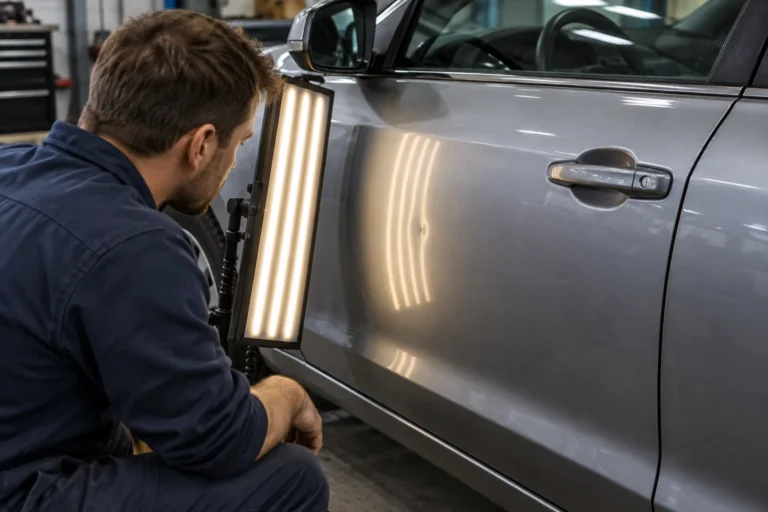
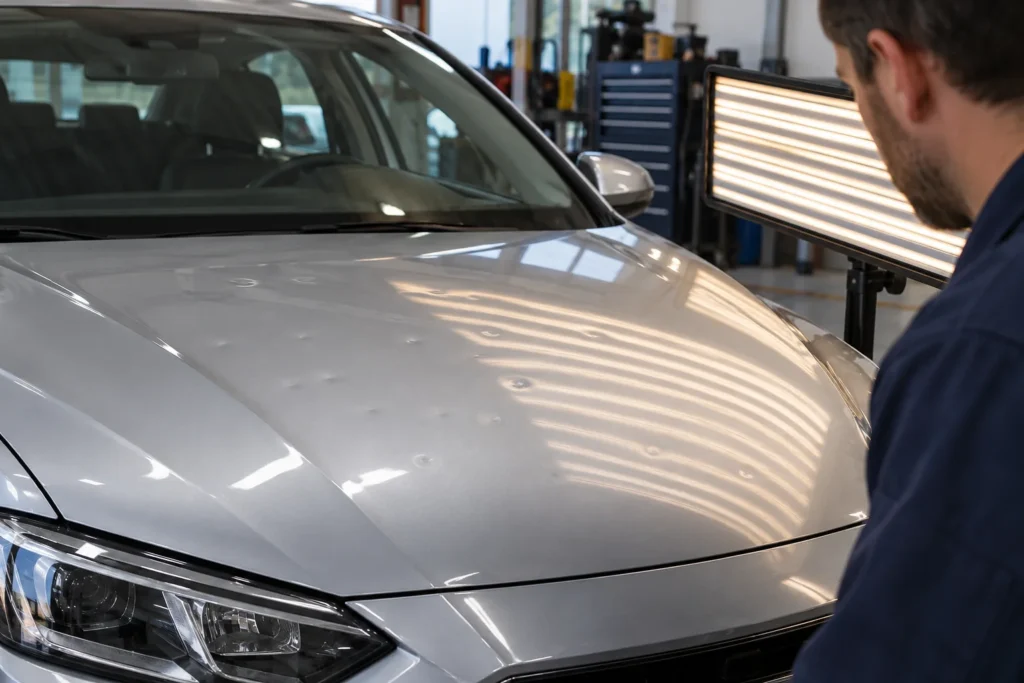
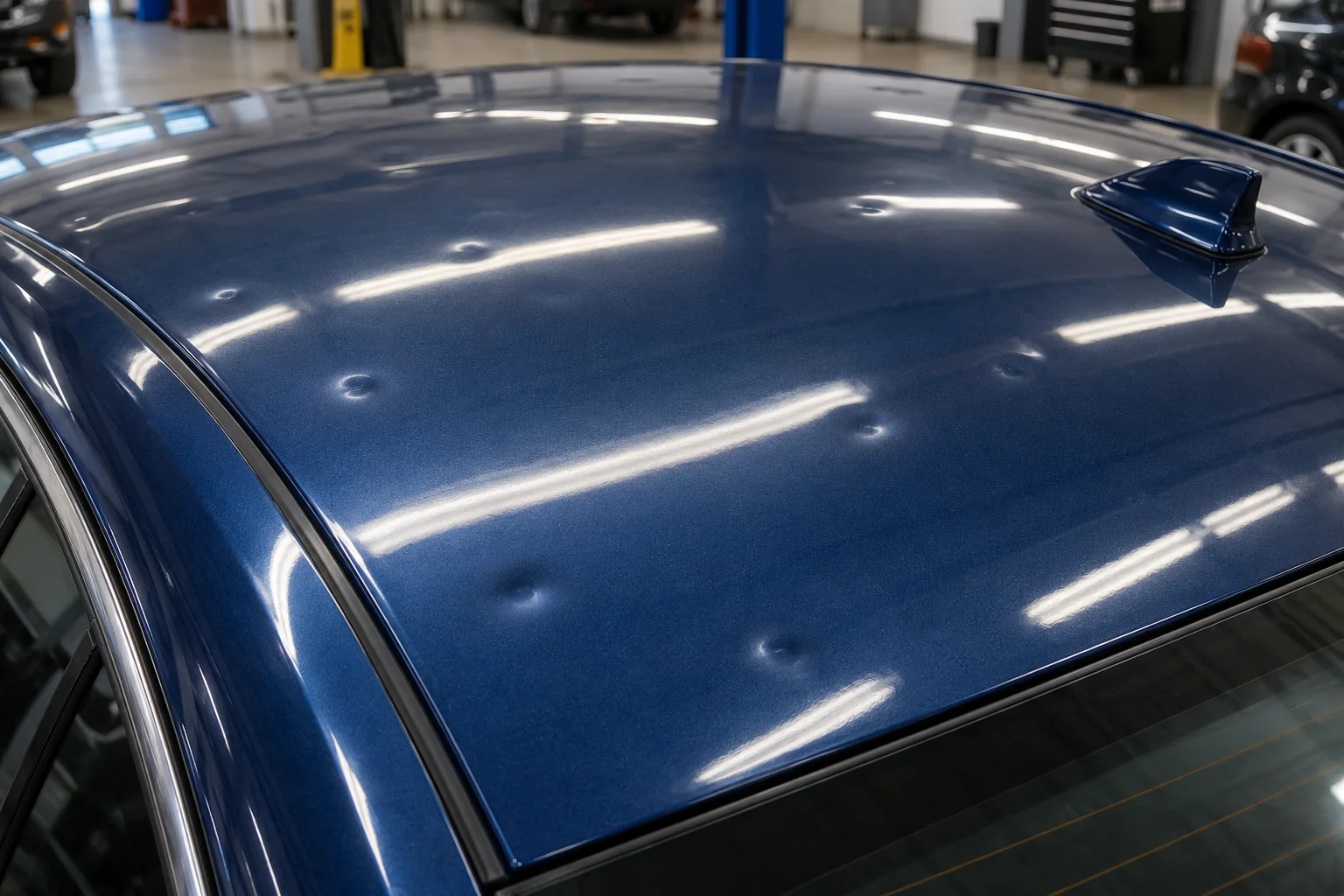
Small dents are often clearer when a straight reflection crosses them. Photograph the bonnet or roof from a low angle and move around the panel. Include a short video if still pictures do not show the contour. Avoid relying on one overhead picture taken in flat light.
You do not need to count every dent accurately at home. A clear panel overview is more useful than circling only the largest marks and missing the smaller ones. Do not climb on the car or press on the roof to inspect it. A workshop can examine difficult areas under controlled lighting.
How a workshop assesses each damaged panel
A useful assessment records which panels are affected, the concentration of dents and the condition of the paint. A bonnet with a few accessible depressions presents a different job from a roof with many marks beside reinforcement or a glass opening. Vehicle size alone cannot explain the repair.
The technician needs to consider dent depth and shape, panel material, access behind the metal and any previous repairs. Sound-looking paint is a useful starting point, but it does not prove that every dent can be corrected with PDR. Sharp impacts, stretched areas and poor paint adhesion can change the choice.
Roof work may involve removing and refitting interior trim to reach suitable areas. Headlining, roof reinforcement and nearby safety equipment need careful handling according to the vehicle’s repair instructions. Ask whether this access work is included, especially when comparing an estimate based on photographs with one made after inspection.
- Identify each panel that will be repaired and any panel that will remain untouched.
- Separate dents with intact paint from chipped or cracked areas.
- Disclose known resprays, filler, wraps or paint protection film.
- Ask which findings could change the method or estimate after trim removal.
That record becomes the basis for the quote and the final inspection. It also makes a mixed repair easier to understand. The workshop should explain why it recommends different work on the roof, bonnet or boot rather than treating the whole car as one category of damage.
Choose the repair method panel by panel
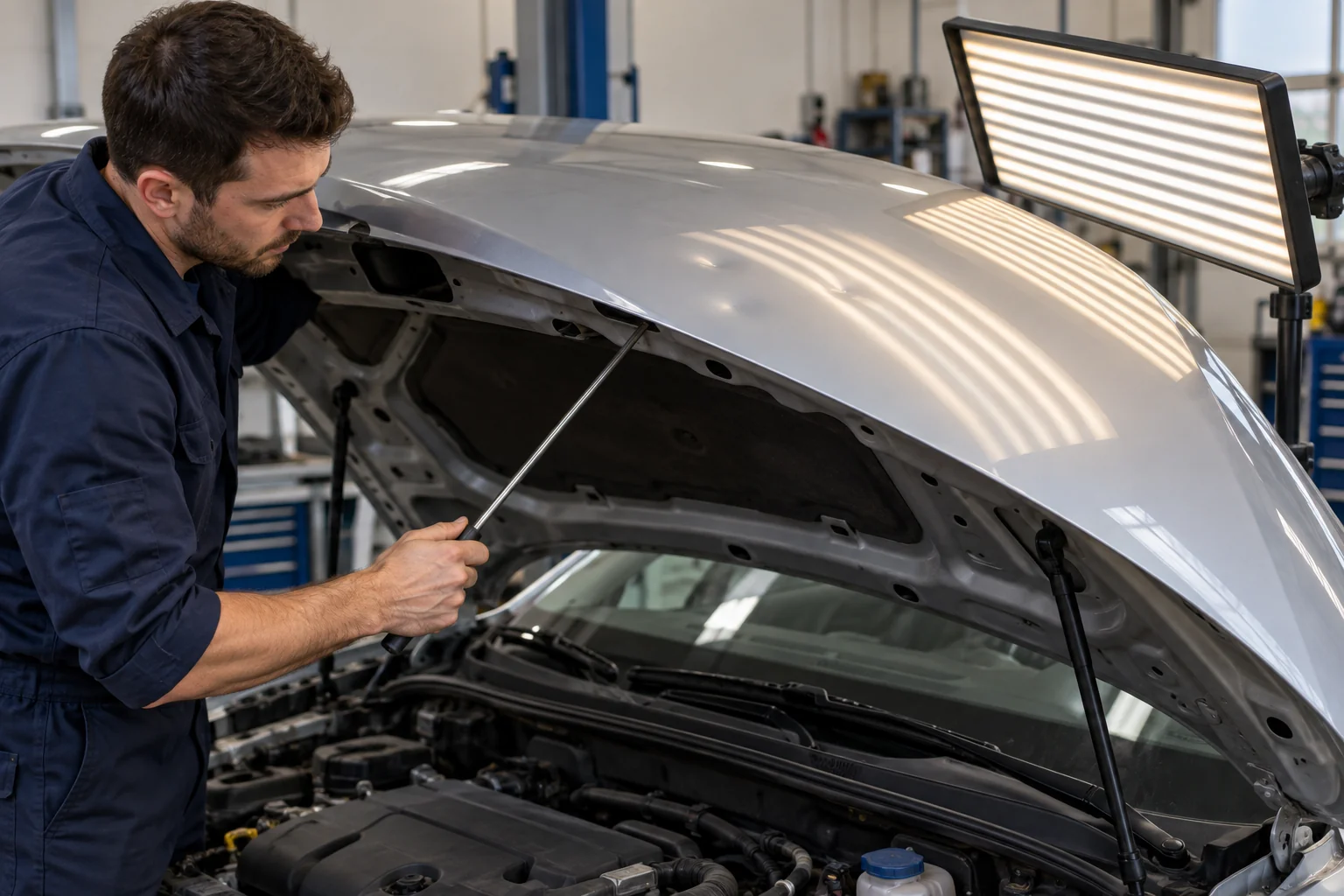
With sound paint and a suitable panel, paintless dent repair can reshape hail dents without repainting. The technician works with controlled pushes or an appropriate pulling method while checking the panel contour in reflected light. Suitability depends on more than the number of visible marks.
| Finding during assessment | Possible repair | What to clarify |
|---|---|---|
| Shallow dents with sound paint and suitable access | Paintless dent repair | Access, previous paintwork and achievable contour |
| Repairable metal with damaged paint | Panel correction and refinishing | Preparation, paint scope and any blending |
| Deformation that cannot be repaired acceptably | Replacement if required by the assessment | Vehicle instructions, parts and associated work |
| Chipped, cracked or broken glass | Separate glass assessment | Repairability, correct glass and equipment requirements |
Access and existing paint can limit PDR
A technician may be able to reach one part of the bonnet but have restricted access beside reinforcement. Glue pulling can be an option in suitable areas, but it also requires assessment of the paint. Tell the workshop if the panel has been repainted, because pulling can lift poorly bonded coatings.
Do not accept drilling as a routine shortcut to reach a hail dent. I-CAR’s guidance advises against drilling access holes for PDR and removing foam to make access. The method should avoid damaging other parts or altering the vehicle’s structure.
The protective finish behind the panel matters too. PDR tools can disturb coatings even when the visible paint stays intact. Restoring the appropriate corrosion protection behind the repaired area forms part of a durable repair.
Repainting and replacement need a clear reason
Where the paint is broken, correcting the dent alone cannot restore the coating. A conventional repair may involve shaping the metal, preparing the surface and refinishing it. Ask which panels will be painted and whether colour blending onto an adjacent panel is included.
Replacement may be necessary when the damage or vehicle-specific restrictions make repair unsuitable. It brings additional work that a PDR estimate does not include. Request the reason for replacement and the related fitting, paint and inspection items. Neither repainting every panel nor insisting on PDR everywhere is a sensible rule for all hail damage.
Repair glass separately from dents in metal
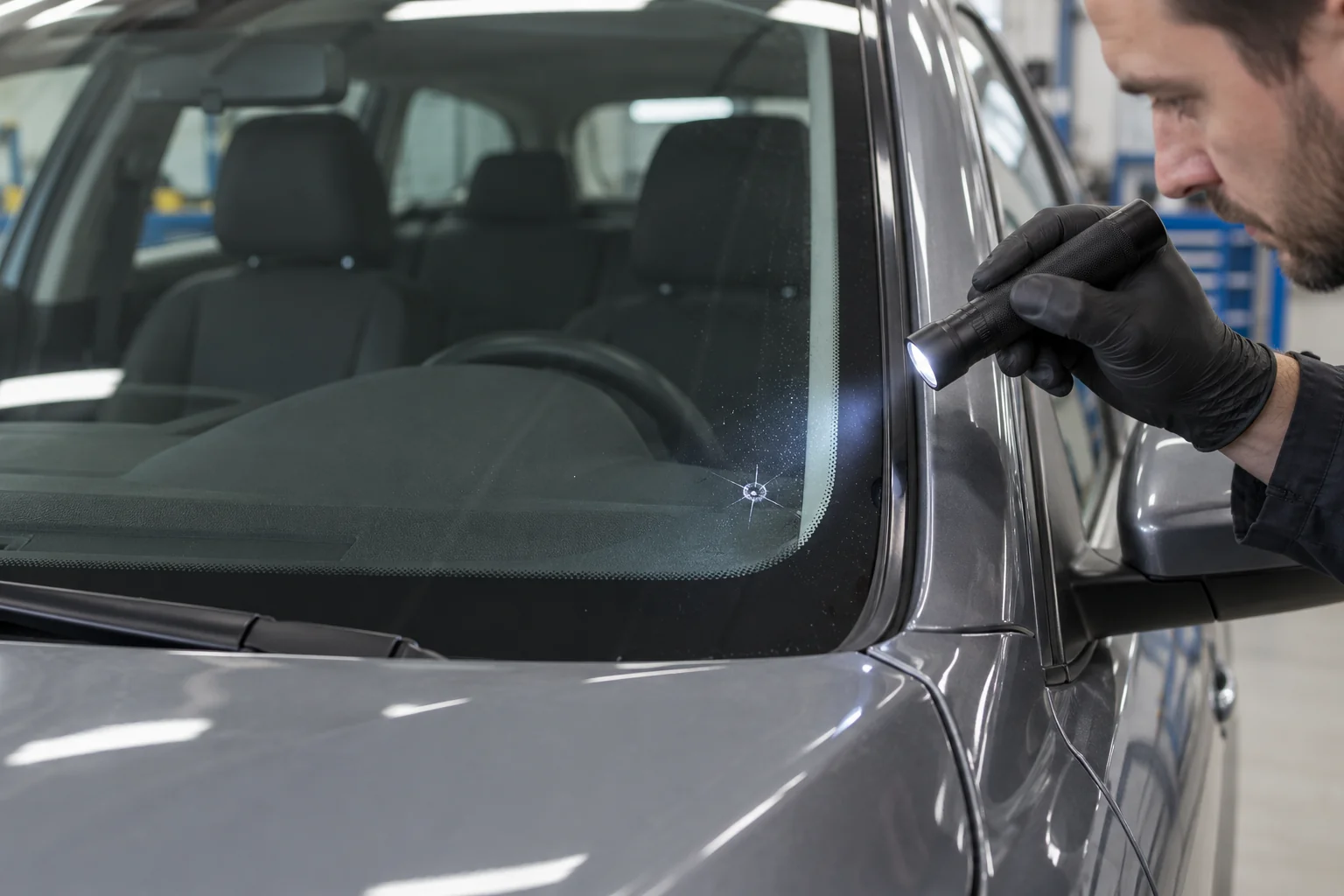
A car can have repairable metal dents and glass that needs replacement. The glass decision depends on its type and the location and extent of damage. A dent technician’s assessment of the roof does not establish whether a windscreen chip is repairable.
Tell the glass specialist about cameras, heating, rain sensors, an acoustic layer or a head-up display. The replacement must suit the vehicle’s equipment. Where the manufacturer requires camera calibration after windscreen replacement, that work should be included in the repair plan. Requirements vary by model.
Ask about the adhesive system’s safe drive-away time and any immediate aftercare when bonded glass is replaced. A fitting appointment and permission to drive away are different milestones. Check for water leaks and confirm that equipment disturbed during the work has been checked before collection.
Compare complete hail estimates before approving work
The cost of repairing a single dent can help you budget for isolated damage, but it does not price a hail-damaged roof. Multiple dents may share access work, while marks spread across several panels require separate preparation and assessment. Avoid multiplying a headline per-dent rate by a rough count.
A written hail estimate should identify the affected panels, method for each one, access work and the proposed finish. Paint, glass, replacement parts and required equipment checks should be clearly separated. Compare totals for the same scope and ask whether VAT is included.
- Check whether removing and refitting trim is included.
- Confirm which dents, paint defects and pre-existing marks the quote covers.
- Identify replacement parts, specialist finishes and any excluded work.
- Agree that additional repairs require your approval before they begin.
A low starting figure may describe only a small suitable area. A higher quote may include roof access, glass or repainting that the first estimate leaves out. Ask for an explanation of the difference rather than assuming that either price represents the whole job.
Check insurance cover before authorising the repair
Comprehensive insurance does not by itself establish that this hail event is covered. Check the policy schedule, natural-peril wording and endorsements, then ask the insurer to confirm how they apply. Third-party liability cover does not normally pay to repair your own car after hail damage.
Some policies provide natural-disaster cover through additional benefits. Sukoon’s published motor policy wording sets out its terms, but your own policy and schedule decide the applicable protection. Do not assume that another driver’s accepted claim guarantees the same outcome for you.
Notify your insurer promptly and ask which report, photographs and vehicle documents it requires for this incident. Confirm the inspection and authorisation process before repairs begin. Keep the claim reference and written instructions.
- Ask which excess and any other contribution apply.
- Confirm whether an approved workshop or agency repair condition applies.
- Ask how extra damage found during assessment should be submitted.
- Check any courtesy-car benefit and the effect on renewal terms directly.
Once cover is confirmed, compare your contribution with a complete repair quote. Do not make that decision from a starting price or an assumed excess. If you choose to pay yourself, retain the estimate, invoice and photographs as a record of the damage and work.
Understand the repair stages and likely delays
The repair plan begins with a panel assessment, followed by agreement on the method and scope. If you are claiming, insurer authorisation may be a separate stage. Keep that approval distinct from a workshop’s first available booking date.
During the work, suitable dents are corrected, painted areas are prepared and refinished, and replacement glass or parts are fitted as agreed. Trim removed for access then needs refitting. Any required equipment checks should be completed before the final handover.
Turnaround depends on dent concentration, access, paintwork, parts availability and approvals. Ask when the car needs to be left at the workshop and when an updated completion estimate will be available. A photo-based assessment cannot promise a fixed completion time for every hail-damaged vehicle.
Inspect the finish before collecting your car
Look over the agreed panels under more than one lighting angle. Stand back to see the overall contour, then inspect closer reflections for remaining marks. If a particular dent was excluded or a small imperfection was agreed beforehand, compare the result with that written scope.
- Check painted areas for colour match, texture and the finish along adjoining edges.
- Check that trim removed for access is securely refitted.
- Ask about any required glass, camera or other equipment checks.
- Confirm the invoice describes the work and obtain the applicable aftercare and warranty terms in writing.
Repair can improve the car’s appearance without guaranteeing a higher resale price or erasing its history. Keep an accurate repair record, especially if panels were replaced or painted. If you find a missed dent or a refitting concern, raise it with the workshop while the agreed work is easy to review.
Reduce exposure when another storm is forecast
Covered parking is the clearest way to reduce direct hail exposure when it can be arranged safely before a storm. Follow local weather warnings and plan parking in advance. Do not leave shelter during active hail just to move the car.
A standard car cover is not a guarantee against hail dents. If you consider a purpose-made protective cover, check its stated limitations, fit and securing instructions. Avoid relying on loose objects placed on the roof or bonnet.
Paint protection film and ceramic coatings should not be treated as hail-proofing. Protecting a paint surface from particular scratches or contaminants does not establish that the metal underneath will resist hail impacts. After another storm, inspect the car again rather than assuming that previous protection prevented damage.
Questions about repairing a car after hail
Can hail dents be repaired without painting?
Yes, suitable dents with sound paint can often be corrected using PDR. Depth, shape, access, panel material and previous repairs affect the decision. Different panels on the same car may need different methods.
Does a roof with many dents need replacement?
Not necessarily. Dent count alone does not decide repairability. The workshop needs to assess deformation, access and the vehicle’s repair instructions before recommending repair or replacement.
Can I use boiling water or a home puller?
Avoid experimenting before assessment, especially if you plan an insurance claim. Uncontrolled pulling or heat can damage the finish or change the panel. A home attempt can also make the original damage harder to document.
Will leaving the car in the sun remove dents?
Do not rely on sunlight to restore the panel contour. Have the damage assessed and choose a suitable repair method. The car may still need professional correction even when small dents are difficult to see in bright light.
Can an older or repainted car have PDR?
Age alone does not decide suitability. Paint adhesion, existing filler, the panel and the damage matter. Disclose any previous paintwork before the technician chooses a pulling or pushing method.
Will my insurance cover all the repair costs?
That depends on the applicable policy, accepted claim, excess and approved scope. Confirm these with the insurer before authorising repairs. Comprehensive cover alone is not confirmation of full payment.
Can photographs give me a final hail repair quote?
They can help establish the likely scope. Controlled lighting, access and paint inspection may reveal details that pictures miss. Ask what still needs inspection before the quote becomes final.
Discuss the damage before booking an assessment
Send our Al Quoz team the model, year and clear views of the affected panels. We can discuss an assessment for the dents, paint and glass. Let us know if you intend to make an insurance claim.