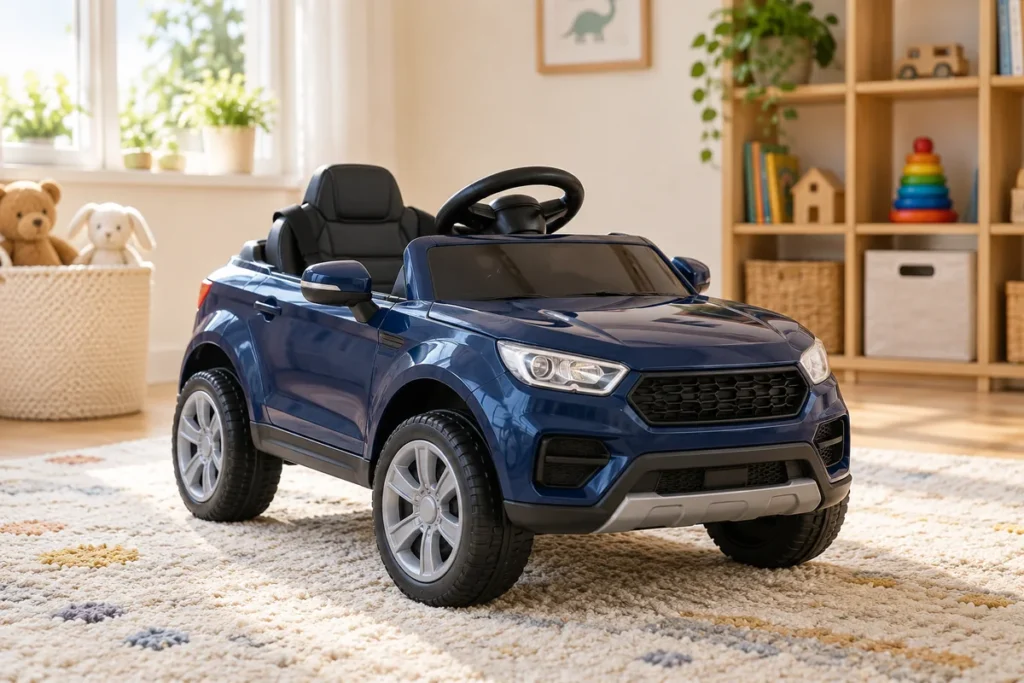
The best kids car is one your child can use comfortably, that meets the exact product’s age and safety guidance, and that fits the space available at home. Start by deciding whether you want a small toy to push by hand, a remote-control car or a ride-on. Then compare controls, construction, storage and support before choosing a color or a licensed car badge.
A large electric ride-on can be a poor purchase when there is nowhere suitable to use it. A simple toy car may be a better match for a child who enjoys building roads and telling stories. This guide helps you compare the different choices and ask the right questions before buying in Dubai.
Choose the car around your child’s play
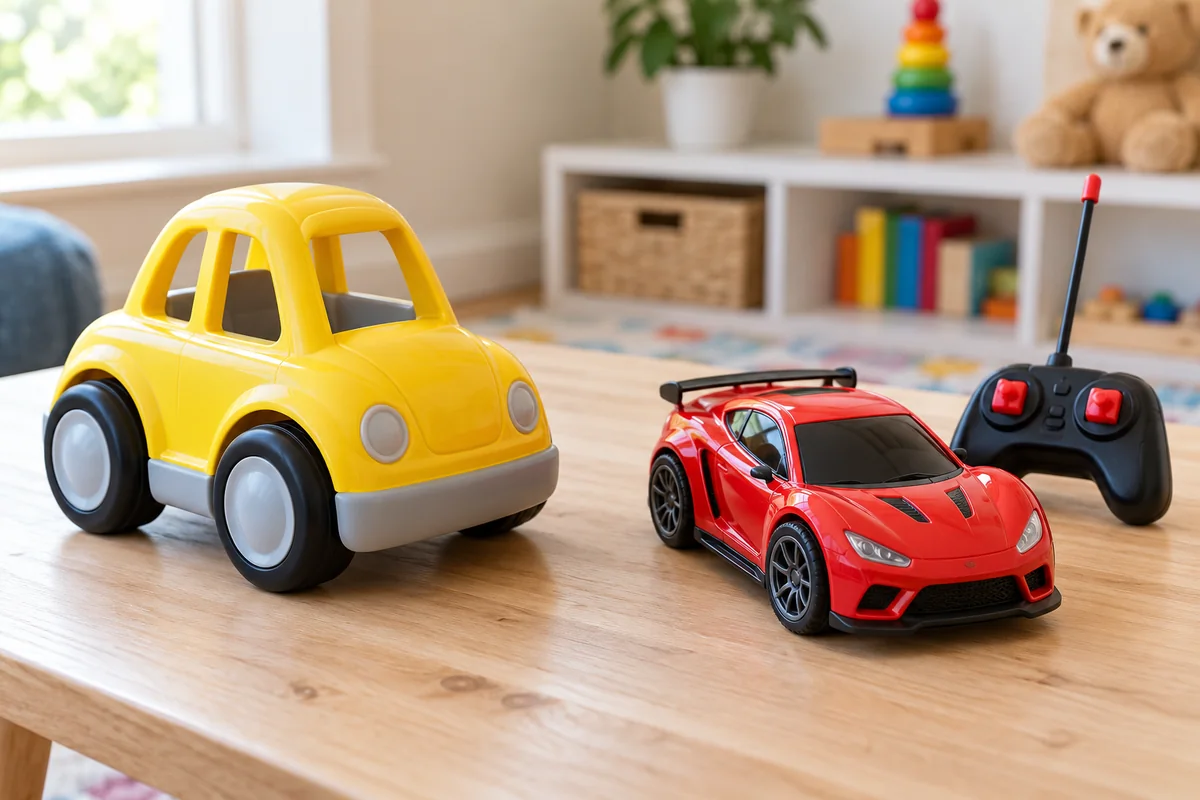
Think about what your child already enjoys. Do they push vehicles around a play mat, build tracks, steer with a controller or want to sit on something and move? These are different activities, even when the toys all look like cars. Choose the activity first and the appearance afterwards.
| Car type | What the child does | What to check before buying |
|---|---|---|
| Hand-pushed toy car | Moves a small vehicle by hand for pretend play. | Age label, secure wheels, small accessories and grip. |
| Track or construction set | Builds a route or assembles the vehicle. | Part sizes, age guidance, track compatibility and room for the set. |
| Remote-control car | Steers a small car using a handheld controller. | Control layout, speed options, battery access and permitted surfaces. |
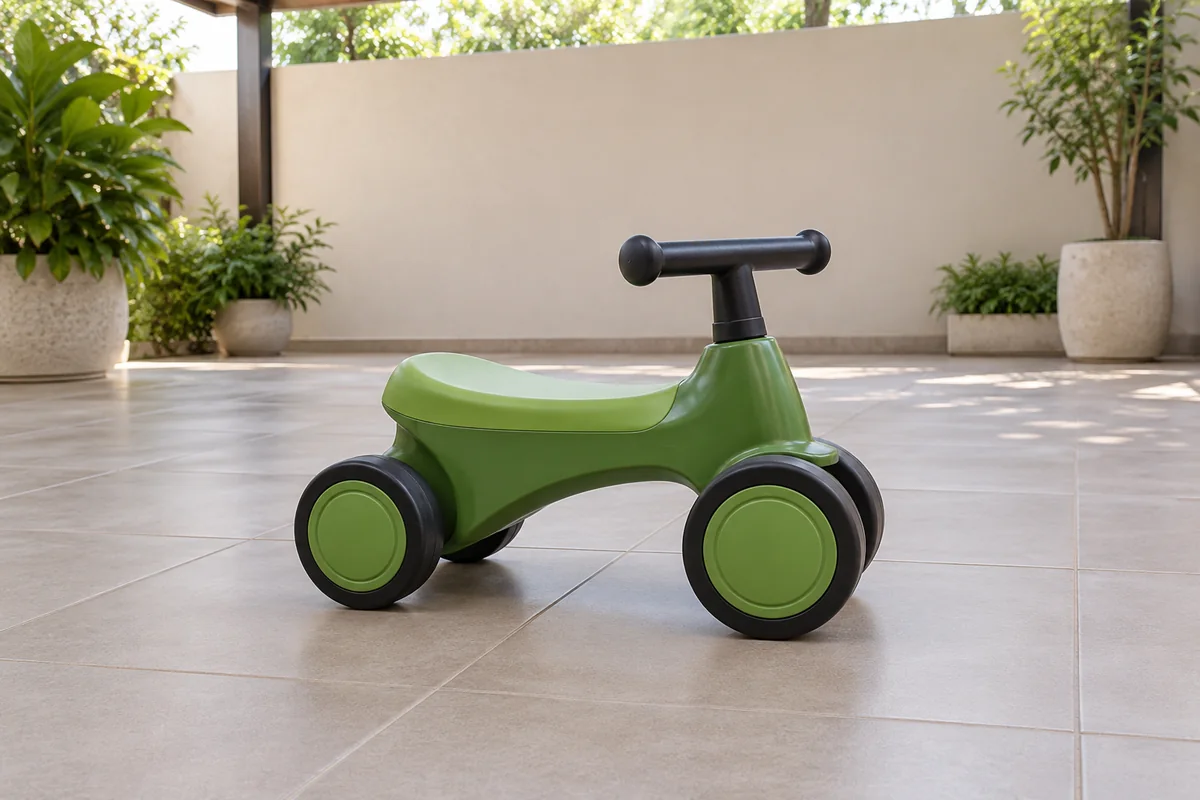
| Foot-to-floor ride-on | Sits on the toy and moves it with their feet. | Seat height, foot reach, stability and the manufacturer’s limits. |
| Pedal ride-on | Uses pedals and steering to move. | Pedal reach, effort, stopping method and usable space. |
| Electric ride-on | Rides in a powered toy with the specified controls. | Child fit, stopping controls, approved battery and charger, supervision and storage. |
For a child who likes construction vehicles, a sturdy digger or truck may be more appealing than a miniature sports car. A favorite character or color can help you choose between suitable toys. It should not override a missing age label, awkward controls or a toy that will not fit through your doorway.
Match the age label and actual ability
Use the age guidance on the exact toy and its packaging. A shop’s broad toddler or preschool category is not enough. Two similar-looking cars can have different moving parts, speeds, controls or small accessories. Being tall for their age does not make a younger child suitable for a toy intended for older children.
The CPSC’s toy safety guidance recommends following the packaging guidance and matching toys to a child’s interests and abilities. It also advises keeping toys with small parts away from children under three. Remember younger siblings who may reach an older child’s cars or track pieces.
- For a hand-pushed toy, check that your child can hold and move it without struggling.
- For a remote-control toy, ask to see how steering, forward movement and stopping work.
- For a ride-on, check whether the child can sit comfortably and use the specified controls.
- If the child cannot yet follow the toy’s basic instructions, choose a simpler suitable option or wait.
Watch how your child responds to the demonstration. A toy that needs repeated adult intervention may be frustrating even when the age label fits. More buttons, sounds and modes are not automatically more enjoyable. A few controls the child understands can be enough.
Check the ride-on seat and control reach
Measure your child and compare their size with the actual seating area, rather than judging from a product photograph. If a shop allows a fit check, keep the ride-on switched off and follow its instructions. Look for comfortable legroom and easy access to the steering and the controls the child is expected to use.
On a foot-to-floor toy, the child needs to reach the ground as intended. On a pedal toy, confirm that they can reach and operate the pedals. On a powered ride-on, ask about the seat, pedal position and stopping method. A car bought several sizes too large may be unusable now, even if you hope it will last longer.
Read both the permitted passenger count and the total load limit. A wide seat or two headrests do not prove that a toy is approved for two riders. Ask the seller to show the relevant manual entry, including whether the limit includes anything carried in a storage bed or trailer.
For example, the current Peg Perego John Deere Gator HPX specification separately lists an age recommendation, two passengers, dimensions, speed settings and a maximum load. This is an example of useful product documentation, not a recommendation for every child. Check the exact version being sold, because a familiar model name can cover different specifications.
Measure the play area and storage space
Before ordering a ride-on, measure the doorway, lift or passage it must pass through and the place where it will be stored. Check the assembled dimensions, not just the carton size. Consider who will move it when your child is finished, especially if it must be carried between floors.
Walk through the proposed play area. A space large enough to park the toy may still be too cramped for turning. Keep ride-on play away from traffic, vehicle access, stairs, pools and steep drops. Choose a clear area with the surface permitted by the manufacturer, and check the rules before using shared residential or public space.
Dubai outdoor use also needs a practical storage plan. Read the toy and battery instructions for heat, sunlight, moisture and charging conditions. A covered parking bay can still be an unsuitable storage or play area. Do not assume that a toy described as outdoor or off-road can be left exposed or driven through sand and water.
If your available space is a small room, a hand-pushed set may suit it better than a powered vehicle. A remote-control toy also needs room to stop and turn without repeatedly striking furniture. Mark out the footprint at home before buying something that will be difficult to return once assembled.
Compare powered models beyond the voltage label
Do not choose an electric kids car from a 6V, 12V or 24V label alone. Read the exact model’s age guidance, speed settings, load limit and controls together. Voltage is a battery specification, not a complete description of who the toy suits or how long a play session will last.
Ask about the battery and expected runtime
Ask which battery and charger come with the toy, whether the battery is replaceable and which approved replacement is available locally. Record the battery type, part number and charging instructions. Do not assume that another battery or charger is compatible just because it has the same voltage or its connector appears to fit.
For the current Gator HPX version linked above, the manufacturer specifies a 12V lithium battery. Check your own toy’s documentation rather than assuming that every 12V ride-on uses the same battery type. Avoid seller suggestions to increase voltage or improvise a charger to improve performance.
Treat advertised runtime as an estimate with conditions. Peg Perego’s battery play-time guidance explicitly describes its figures as approximate and dependent on use and terrain. Ask the seller what conditions support the quoted runtime for your model. Also ask about charging time and storage care, rather than relying on a universal overnight charging rule.
See the stopping and parent controls demonstrated
Ask the retailer to demonstrate the lowest speed setting, how the toy stops and whether the parent remote is included. If a remote is offered, check pairing, adult override, stop control and what happens if communication is lost. A small RC toy’s controller and a ride-on’s parent remote serve different purposes.
A parent remote does not make a child below the stated minimum age suitable for the toy. It also does not replace close supervision or a safe play area. Choose a model whose normal operation you understand, rather than relying on an emergency button you have not seen work.
Check the seller, labels and product identity
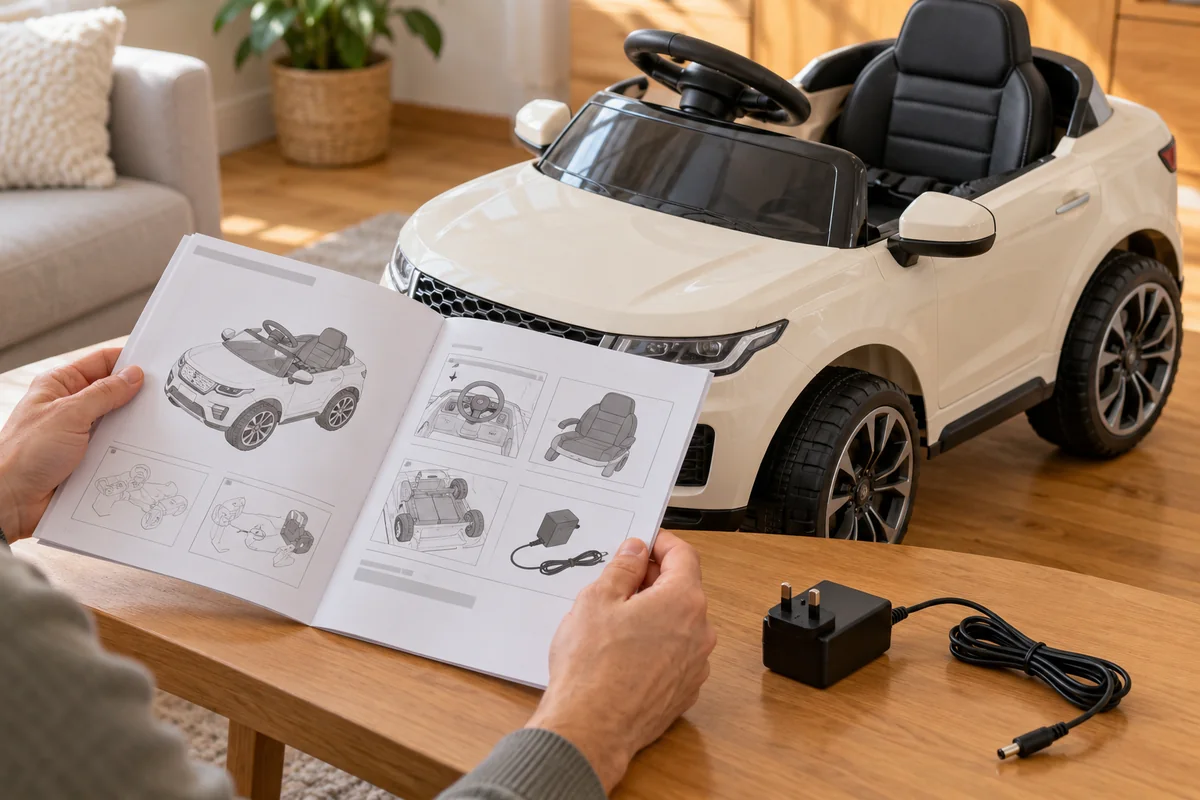
Buy from a seller who can identify the manufacturer and exact model, provide the manual and explain after-sales support. For an online listing, request any missing dimensions, warnings or photographs of the labels before paying. A detailed answer is more useful than a general promise that the toy is premium or safe.
For toys sold in the Gulf market, check the applicable conformity marking and traceable product information. The GSO explanation of the Gulf Conformity Mark describes it as a conformity marking rather than a quality award. A mark alone does not establish that a toy is the right size for your child or that a particular online listing is authentic.
- Match the model on the box, toy and manual.
- Ask who supplies support and approved replacement parts in the UAE.
- Keep the receipt, model details and supplier contact information.
- Check for manufacturer recall notices that apply to the exact model and version.
Reviews can help you spot practical complaints about assembly or missing parts. Look for details from owners of the same model, rather than treating a star rating as proof of safety. If the seller cannot provide basic product information, keep comparing other options.
Compare ownership costs and second-hand toy condition
Set a budget for the complete purchase. Ask whether delivery, assembly, the charger and controller batteries are included. For a powered model, check the price and availability of an approved replacement battery. A low purchase price is less useful if a missing controller or charger cannot be replaced.
Read the return and warranty terms before assembly. Confirm how faults are reported, who handles collection and what the policy says about battery problems. Save the written terms. Do not assume every seller offers the same coverage or that a used toy retains its original warranty.
A second-hand car deserves the same documentation checks as a new one. Look for missing pieces, cracked plastic, loose wheels and an incomplete battery cover. For powered toys, ask about modifications, water exposure and the supplied charger. An unexplained wiring change or unidentified battery is a reason to pause the purchase.
Compare the saving with the work needed to make the toy complete. If the correct manual or approved charger is missing, obtain confirmation from the manufacturer or authorised toy support before use. A toy that appears to run during a brief demonstration may still have unsuitable components or other faults.
Prepare for supervised play and routine checks
Before play, follow the assembly instructions, check the completed toy and remove packaging from the child’s reach. The Health Canada toy safety checklist highlights secure parts, clear labels and child-resistant battery compartments. It is general safety advice, not a statement of UAE product approval.
For riding toys, use appropriate protective equipment, including a correctly fitting helmet, and follow the manufacturer’s instructions about shoes and restraints. Stay close enough to supervise. A belt fitted to a toy does not give it the protection of a road vehicle, and extra riders should never exceed its approved seating or load.
Have an adult manage charging and battery handling according to the exact manual. For example, the Gator HPX instructions specify adult-only charging, approved battery and charger components, and suitable charging conditions. Do not turn model-specific charging times into instructions for another toy.
- Before use, look for loose parts, cracked wheels, exposed wires or a damaged charging lead.
- Stop using a toy or charger that is broken, overheating or otherwise damaged, and contact its supplier.
- Clean and store it as the manual directs. Keep water away from components that are not designed for it.
- Use only maintenance products and replacement parts approved for that toy.
For quieter pretend play, use a suitable play mat or draw roads on a sheet of paper. Let your child invent a delivery route or take turns parking the cars. Keep small craft pieces away from younger children, and do not modify a ride-on’s wiring, wheels or speed settings beyond the manufacturer’s instructions.
Common questions before buying a kids car
Which toy car is best for a toddler?
Choose a toy labelled for the child’s age, with suitable size and securely attached parts. A simple hand-pushed car may suit their preferred play. Do not assume a powered ride-on is suitable because it has a parent remote.
Is a 24V kids car better than a 12V model?
Neither voltage is automatically better. Compare the exact model’s recommended age, fit, speed controls, load limit, intended surfaces and charging requirements. Voltage alone does not settle the purchase.
Can two children share an electric ride-on?
Only if the manufacturer approves the model for two passengers and their combined load remains within its stated limit. Check the manual rather than judging by seat width or product photographs.
How long should a ride-on battery last?
There is no reliable single figure for every toy. Ask for the model’s stated runtime and test conditions, plus its charging and storage instructions. Usage and terrain can change the length of a play session.
Can a kids car be used on sand?
Check the exact model’s permitted surfaces. Off-road styling or large wheels do not establish sand or water suitability. Some manufacturers warn that sand and mud can damage motors, controls and gears.
What should I check before buying a used ride-on?
Confirm the model, manual, age and load limits, condition, approved battery and matching charger. Ask about modifications and support. Do not use it with unidentified electrical components or unresolved damage.
Need help looking after your family car?
If your family car is due for maintenance, explore our car servicing options in Dubai. Share its make, model and the work you need so the team can discuss the next step.