Rent-to-own can be a useful way to get a car in Dubai if the complete cost fits your budget, you expect to stay through the agreed term and the contract clearly explains how the car becomes yours. It is not automatically cheaper than buying, easier to exit than a loan or available without checks. Compare the upfront payment, every instalment, the final buyout and the ownership conditions before deciding.
A good offer answers two separate questions. Can you afford to use the car during the agreement, and can you afford to complete the purchase? A manageable monthly amount does not settle the second question when a substantial payment remains at the end. This guide helps you compare the written offer, the vehicle and the responsibilities you would take on.
Check what the agreement promises about ownership
Ask for the complete agreement before paying a reservation fee. Rent-to-own, lease-to-own and lease-purchase are labels used in vehicle offers. The label alone does not tell you whether buying is optional, whether you must buy at the end or what happens if you stop paying.
Look for the clause that identifies the vehicle, the registered owner during the term, the purchase price or its calculation and the conditions for transfer. If the offer refers to a separate purchase agreement, request that document too. A normal monthly rental or subscription should not be assumed to give you ownership rights.
- Is purchase an option or an obligation?
- How much of each payment, if any, is credited toward the purchase?
- Is there a final payment, and is the amount fixed in writing?
- Who arranges transfer, and who pays the associated charges?
A refundable security deposit and an upfront purchase contribution serve different purposes. The first may be held against specified liabilities. The second may form part of the agreed purchase price. Ask the provider to identify each amount separately, explain its refund conditions and confirm whether it changes the remaining balance.
Keep the signed documents, payment schedule and written clarifications together. If a salesperson promises something important, such as no final buyout or included servicing, have it incorporated into the agreement. A message about an advertised offer should not leave you with different terms in the document you sign.
Calculate the complete cost before comparing monthly payments
Add the non-refundable upfront contribution, all scheduled payments, the final purchase amount and mandatory charges needed to complete the agreement. Include separately charged insurance, maintenance and registration costs over the same period. Ask for a written total that states VAT treatment and shows which costs are already included.
For example, the two invented plans below both run for 24 months and reach the same total, despite different monthly amounts. All figures are assumed final payable amounts, including any applicable VAT. They are calculation examples rather than quotations for available cars.
| Cost item | Example A | Example B |
|---|---|---|
| Upfront purchase contribution | AED 12,000 | AED 6,000 |
| Monthly payment | AED 1,800 | AED 2,200 |
| Total of 24 monthly payments | AED 43,200 | AED 52,800 |
| Final buyout | AED 8,000 | AED 4,000 |
| Mandatory additional charges | AED 800 | AED 1,200 |
| Total committed cost | AED 64,000 | AED 64,000 |
Example A needs more money at the start and a larger buyout at the end. Example B needs more each month. Neither has a lower total in this example. Compare insurance, maintenance and vehicle condition as well, since equal totals do not make two real offers equivalent.
Track a refundable deposit separately. It increases the cash you need initially, but it is not an additional purchase cost if it is fully returned. Record the amount, the release date, permitted deductions and the return method. Do not count the same deposit twice as both a fee and part of the purchase price.

Compare rent-to-own with buying and ordinary rental
Compare alternatives using the same vehicle standard and intended period. A newer car with included servicing is not directly comparable with an older cash purchase that needs work. Ask for the bank’s complete repayment quotation where finance is an option, and a rental quotation for the period you actually need.
| Option | Ownership position | Main comparison |
|---|---|---|
| Rent-to-own | Purchase and transfer follow the written agreement. | Complete cost, buyout, restrictions and exit terms. |
| Ordinary rental or subscription | Vehicle use for the agreed period. Do not assume a purchase right. | Rental cost, mileage, included services and return conditions. |
| Bank-financed purchase | Vehicle purchased with lender finance and security arrangements. | Upfront contribution, total repayments, fees and settlement conditions. |
| Cash purchase | Purchase completed through the required ownership process. | Purchase price, condition, running costs and money tied up upfront. |
For the bank-loan comparison, CBUAE’s car loan rules cap financing at 80% of the vehicle value and repayment at 60 months. These are car-loan limits, not a universal deposit or duration rule for every arrangement advertised as rent-to-own. Approval and the offered terms still need confirmation.
Compare what you would retain at the end. A rental total pays for use, while a completed purchase leaves you with a car of a particular age, mileage and condition. Avoid assuming a future resale value will cover a buyout. Check whether the agreement works using money you can reasonably plan to have available.
Choose a commitment that fits your expected stay
Consider how long you expect to live in the UAE, your usual travel and whether your income can support the complete payment schedule. A longer agreement may reduce a headline monthly figure while increasing the time you remain committed. A short intended stay makes the early-return terms especially important.
Work out your monthly vehicle budget beyond the instalment. Include fuel or charging, parking, tolls and any insurance or maintenance outside the package. Leave room for costs you may have to pay at short notice, such as the applicable insurance excess after damage.
- Check the cash needed before delivery and the dates of later payments.
- Plan how you will fund a final buyout rather than postponing the question.
- Ask what happens if your employment or residency circumstances change.
- Compare an ordinary rental if you mainly need temporary transport.
Being unable to obtain a bank loan does not by itself make a rent-to-own offer suitable. Examine the total commitment and the consequences of ending it. If the purchase or exit clauses remain unclear after the provider explains them, have them reviewed before signing.
Confirm the documents and approval requirements for your offer
Request a checklist for the specific plan and applicant. Providers may ask for identification, residency information, driving licence details and evidence of income. A salaried employee and a self-employed applicant may be assessed differently. Do not rely on another customer’s approval as proof that the same terms apply to you.
Confirm the required licence type and history, driver age, permitted additional drivers and any insurance conditions. Being legally able to drive does not establish that a particular provider or insurer will accept you under its agreement. Check the conditions before paying a fee that may not be refundable.
If an advertisement says no credit check or no salary certificate, ask which checks still apply, who provides the finance or vehicle and what approval remains outstanding. Get the refund terms for a rejected application in writing. A preliminary quote should identify whether it is conditional on approval or vehicle availability.
Send personal documents only through the provider’s verified application channel. Confirm the company and its official contact details first. Avoid sending identity or financial information to an unidentified account merely because it promises rapid approval.
Check the provider and the exact vehicle
Verify the contracting company, its business details, the named vehicle supplier and the entity receiving payment. Ask for an invoice and a copy of the terms you are accepting. Reviews can identify recurring complaints about refunds or support, but a high rating does not replace a clear agreement.
Compare the exact model year, trim, specification, mileage and condition. A Corolla, Tucson or C-Class name can cover different engines, equipment and values. If you are considering an electric car, check the battery condition, remaining applicable warranty and your charging arrangements. Do not accept a generic brochure figure as evidence about a particular used vehicle.
- Match the chassis number and vehicle details across the offer and handover documents.
- Ask about service records, repair history and any declared accident damage.
- Check how remaining manufacturer warranty or a separate warranty is documented.
- Arrange permission for an independent condition inspection where appropriate.
Read the inspection findings before committing. Clarify which faults will be repaired, by whom and before what date. A registration test and a detailed purchase inspection have different purposes. Do not treat either as a promise that a car will remain fault-free throughout a multi-year agreement.

Separate included services from costs you still carry
Have the provider list insurance, registration, servicing and roadside assistance separately. Included maintenance may mean scheduled servicing only, rather than every repair or replacement. A warranty, a service package and insurance cover different situations, so ask for the relevant terms for each.
Read the insurance cover and excess conditions
Ask who holds the policy, who is authorised to drive and what excess applies to a claim. Clarify the process for an accident, theft or a total loss. Do not assume an insurance settlement automatically clears every amount remaining under the vehicle agreement.
Request an explanation of exclusions, any additional driver conditions and the documents required for a claim. Keep the emergency and reporting contacts with the vehicle paperwork. If you do not understand an excess or damage waiver, ask what you would actually pay in a defined example.
Confirm where maintenance and repairs are permitted
Check the approved workshop arrangements before booking work. Some agreements require the provider to arrange servicing and repairs, or require written approval before another workshop is used. An included service package does not give you permission to modify the car or replace components independently.
Ask about tyres, brakes, batteries, accidental damage and faults that appear after delivery. Record who authorises the work, who pays and whether a replacement vehicle is available during downtime. Keep service invoices and approvals, and report warning lights or faults through the agreed process.
Match the usage limits to your daily driving
Estimate your commuting distance and regular weekend travel before choosing a plan. Compare that estimate with the written mileage allowance and the charge for exceeding it. Check whether the allowance applies monthly, annually or across the whole term, and how an early return changes the calculation.
Ask about additional drivers, travel outside the UAE, commercial use and modifications if any of these matter to you. A plan marketed as flexible can still have restrictions. Obtain written approval for permitted exceptions rather than assuming that eventual ownership removes the conditions during the agreement.
Clarify toll and fine administration charges as well as the underlying tolls and fines. Ask how invoices are sent and how you can question a charge. Keep your contact details current so a notice or payment request does not go to an old phone number or email address.
Understand early exit, missed payments and loss
Ask the provider to explain three different situations before signing. What would you pay to return the car early, what would you pay to buy it early, and what happens after a missed payment? These are different outcomes and should not be covered by a vague promise that the plan is flexible.
| Situation | Written explanation to request |
|---|---|
| Early return | Notice period, termination charges, damage or mileage charges and treatment of previous payments. |
| Early purchase | Dated settlement amount, purchase credits, fees and ownership-transfer conditions. |
| Missed payment | Late charges, notices, available remedies and consequences for vehicle use or purchase rights. |
| Leaving the UAE | Permitted return, settlement or reassignment arrangements and who must approve them. |
| Theft or total loss | Insurance claim process, excess, settlement allocation and responsibility for any remaining balance. |
Returning the keys does not establish that the agreement has ended or the balance is cleared. Obtain a written closing statement. Likewise, do not assume that selling the car or letting a friend take over payments is allowed while another entity owns it.
If you expect difficulty making a payment, contact the contracting company promptly and ask for the options in writing. A suggested extension can change the total cost or ownership date. Check the revised schedule before accepting it, and keep the original and amended documents.
Document handover and confirm the final ownership change
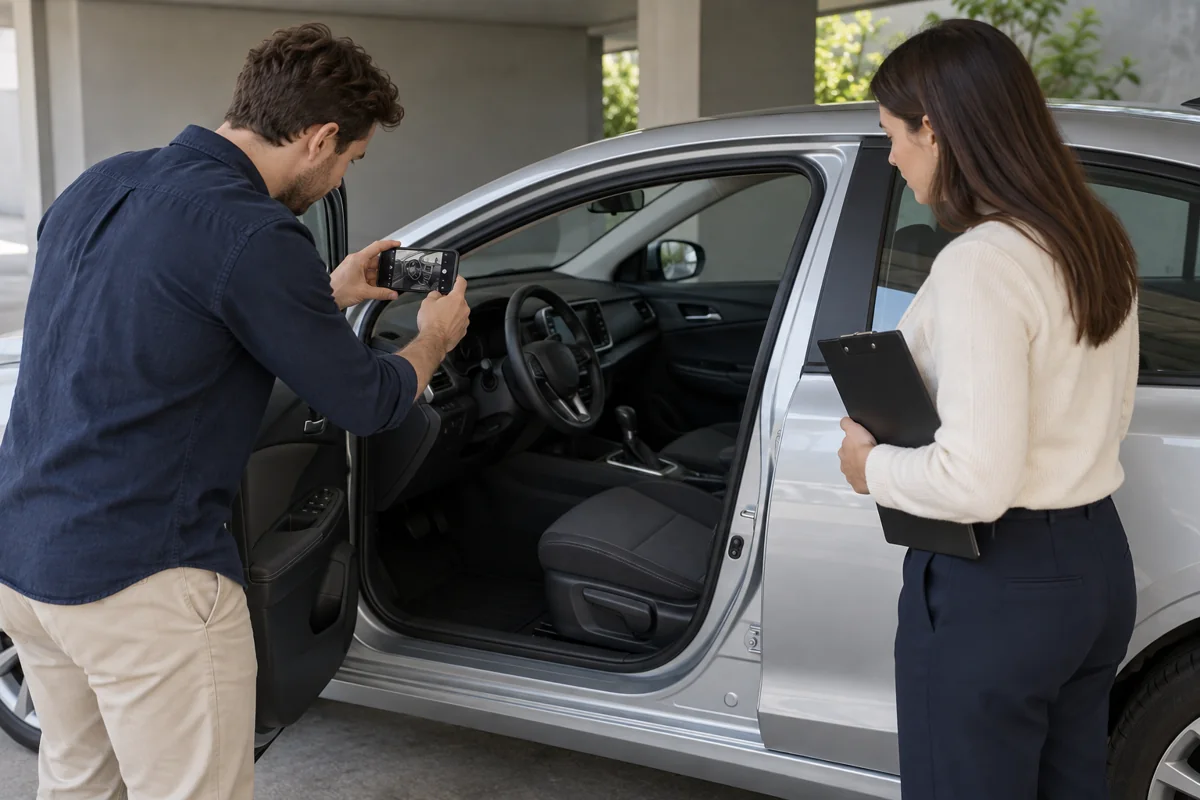
At delivery, compare the car with the agreement and record existing marks, the odometer, tyres, interior and supplied equipment. Photograph the condition and have discrepancies added to the handover record. Check how to report an issue discovered soon afterwards.
Near the end, request the final statement showing payments received, any remaining purchase amount and the steps required for transfer. Confirm who will deal with any finance release, registration requirements and outstanding charges. Keep the provider’s administrative fee separate from government fees.
RTA’s vehicle ownership change service covers transfer from a company or governmental owner to the buyer. Confirm the current requirements for your vehicle and seller, including any required insurance or inspection. Do not rely on a single transfer-fee range as the entire cost of finishing a rent-to-own agreement.
After completion, check the new ownership record and retain the purchase and settlement documents. Arrange your ongoing insurance and maintenance according to the completed transaction. Receiving keys at the start of a rental-purchase term and becoming the registered owner at completion are separate events.
Keep a clear record if charges are disputed
Ask the company for an itemised explanation and the contract clause behind a charge. Provide the payment receipt, agreed schedule, handover record or relevant correspondence. Keep the complaint focused on the amount and the resolution you are requesting.
For a consumer dispute with a Dubai business, check the scope of the official Consumer Rights complaint service. A dispute involving a regulated bank or finance company may need a different channel. Identify the contracting entity before choosing where to escalate, and keep copies of the response.
Common questions before choosing a rent-to-own car
Is rent-to-own cheaper than a car loan?
There is no universal answer. Compare the complete costs for equivalent vehicles and periods, including upfront payments, instalments, fees, included services and the final buyout. Then check what you retain at the end.
Does every monthly payment buy part of the car?
Check the agreement for how payments are allocated. Ask which amounts are rental charges, purchase credits, service costs or fees, and whether credits are retained if the contract ends early.
Can I get a car without a deposit?
An offer advertised without a deposit may still require an upfront payment, card hold or other charges. Ask for the complete amount due before delivery and separate refundable security from non-refundable payments.
Are insurance and maintenance always included?
No universal package should be assumed. Request the insurance terms, servicing scope, repair responsibilities and any excess or exclusions for the specific offer.
Can I return the car if I leave Dubai?
Check the early-exit clause and request a written calculation. Returning the car may leave termination charges or other amounts due. Contract reassignment or early purchase requires confirmation from the relevant parties.
Can I use an independent workshop during the agreement?
Check the servicing and repair permissions first. Obtain written approval where required, even if you expect to own the car later. Agree who authorises and pays for the work before it starts.
Want to check the car before committing?
Once the provider permits an independent inspection, explore our car inspection and diagnostic service. Share the vehicle’s make, model and details so the workshop can discuss the checks you need.