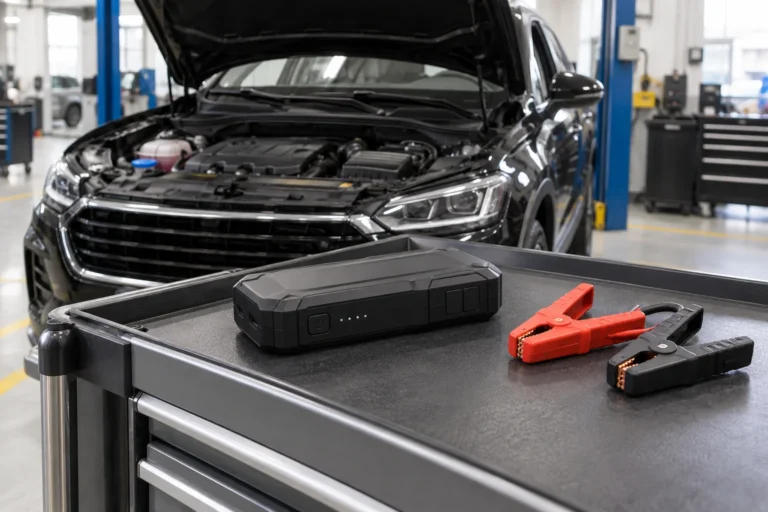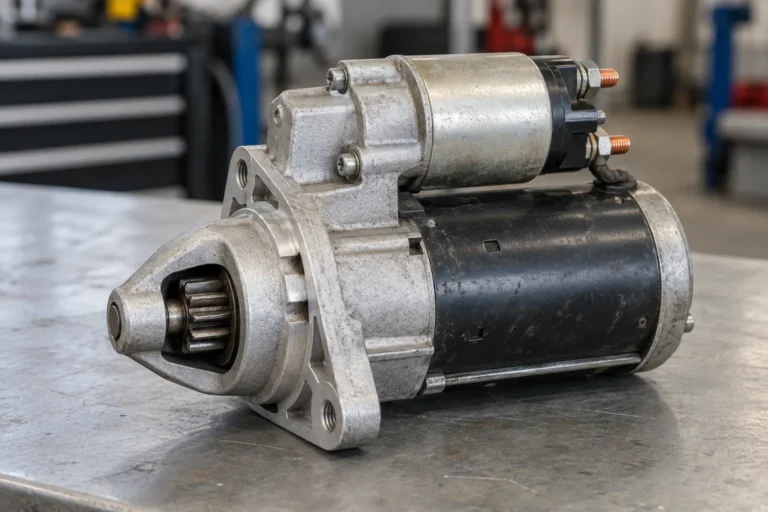
Car transmission issues can appear as delayed engagement, harsh shifts, rising revs without matching acceleration, difficult gear selection, unusual noise or a warning message. Start by identifying exactly what the car does and which transmission it has. Similar symptoms can come from the clutch, fluid level, controls, mounts or engine, so they do not automatically mean the gearbox needs replacing.
If the car loses drive, slips severely, leaks heavily or displays an overheating or stop warning, move to a safe place and arrange help. Do not force the selector or accelerate repeatedly to make a gear engage. For less severe changes, record the circumstances and arrange an assessment before choosing an oil change, reset or replacement part.
Decide whether the car should keep moving
A mild change in shift feel and a car that no longer transmits power present different problems. Safety depends on the warning, severity and whether the vehicle can move predictably. There is no universal distance you can safely drive with a transmission fault.
- Stop safely if the engine revs but the car barely moves, drive disappears or engagement becomes violent.
- Respond promptly to an overheating or stop message using the instructions for your vehicle.
- A major fluid leak, strong burning smell, smoke or grinding warrants stopping and assistance.
- If Park does not hold or the gear display disagrees with the selector, secure the vehicle using the manual’s instructions and seek help.
Cooling instructions are not identical across transmissions. Some dual-clutch warnings require remaining parked with the engine running, while other faults call for a different response. Follow the actual message and owner’s manual. Smoke, fire or a severe leak should not be treated as an ordinary cooling countdown.
For example, Hyundai’s dual-clutch warning instructions distinguish high temperature, clutch protection and permission to resume driving. They apply to the specified vehicle, rather than every automatic car. If drive remains unreliable or the warning returns, arrange assessment instead of repeating the journey.
Tell the recovery operator the model, drivetrain and whether the wheels or transmission are locked. Selecting Neutral does not make every car suitable for towing with its driven wheels on the road. The loading and transport method must follow the vehicle’s requirements.
Describe the symptom before naming a component
Two complaints often described as “it won’t go into gear” need different checks. A selector locked in Park concerns selection or its interlock. A selector that moves to Drive or Reverse while the car stays still concerns whether the commanded gear engages and power reaches the wheels.
| What you notice | Useful distinction for diagnosis |
|---|---|
| Selector will not leave Park | Record the gear message and whether the normal brake-and-start sequence works. Supply, interlock, selector or control faults can be involved. Do not force it. |
| Drive or Reverse takes longer to engage | Note whether it occurs cold, warm or after parking. Fluid level, hydraulic operation and controls may need assessment. |
| Revs rise without expected acceleration | Investigate possible slip alongside the transmission’s normal ratio behaviour and engine performance. Do not reproduce it with hard acceleration. |
| A shift produces a thump or jerk | Separate shift control from mounts, driveline movement and engine operation. |
| Vibration appears at a particular speed | Record speed and load. Tyres, shafts, engine operation and transmission components can produce similar sensations. |
| A manual gear grinds or resists selection | Clutch release, linkage and internal gear-selection components need distinguishing. |
| A warning accompanies restricted performance | Preserve the exact message and stored faults. A protection mode describes a response, not the failed part. |
Note whether only one gear, one direction or several shifts are affected. A new noise after work is useful information too. A brief description such as “Reverse hesitates after overnight parking but Drive is normal” gives the workshop more to investigate than “the gearbox is bad”.
Make recordings only while safely parked, or have a passenger record an observation where lawful and safe. Do not use a phone while driving or repeatedly provoke slipping to capture it.
Match the checks to your transmission type
The selector shape and the number of advertised speeds do not identify every internal gearbox variant. The VIN, engine and transmission code help establish the fitted unit, required fluid and relevant procedures.
| Transmission | How the investigation differs |
|---|---|
| Conventional automatic | The torque converter, internal clutches, valve body and pressure controls have different roles. A converter fault should not be inferred from every vibration. |
| Continuously variable transmission | Ratio operation differs from a stepped automatic. Identify the actual CVT design and use its tests and specified fluid. |
| Dual-clutch or DSG | Clutch engagement and mechatronic controls need separate consideration. Wet and dry clutch variants have different lubrication and service arrangements. |
| Manual gearbox | The clutch, release mechanism, selector linkage and gearbox internals can each affect the complaint. |
A CVT can hold engine revs while road speed increases, so the absence of a familiar stepped shift does not prove slipping. A marked change from the vehicle’s usual behaviour, poor acceleration or a warning still needs investigation.
Likewise, a hybrid’s eCVT label does not establish that it contains the same belt or chain mechanism as another car’s CVT. Electrified drivelines need identification before conventional transmission advice is applied. High-voltage work is separate from the parked observations described here.
Rule out faults outside the gearbox first
A misfiring or weak engine can make acceleration uneven. A worn mount can exaggerate a thump when drive is taken up. A shaft, joint or wheel problem can produce vibration that feels as though it comes from the transmission.
The timing helps separate these possibilities. Tell the workshop whether the vibration occurs while stationary, only during a shift, while accelerating or at steady road speed. Also mention any engine warning, rough idle or recent wheel, engine or battery work.
These observations do not replace testing, and more than one fault can exist. They prevent the investigation from starting with the assumption that everything felt through the cabin must be an internal gearbox problem.
Accessible faults can sometimes be repaired without a complete rebuild. A confirmed connection, mount, selector or external leak problem should lead to work on that cause, with checks afterward to establish whether the original complaint has cleared.
Check fluid specification before choosing a service
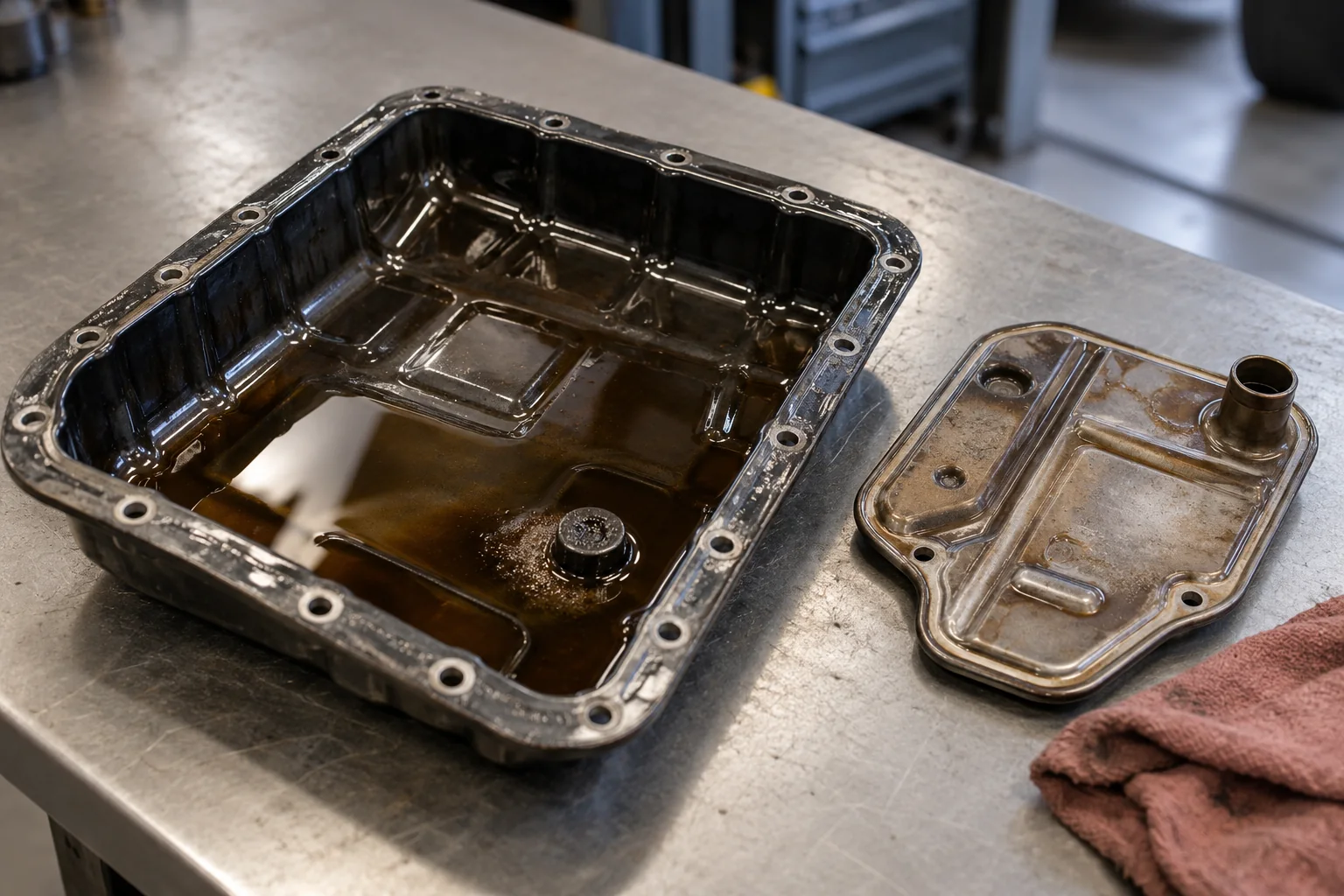
Transmission fluid can provide lubrication, cooling and, depending on the design, hydraulic control and friction behaviour. The exact approval matters. “Synthetic”, “universal” and the fluid’s colour do not establish compatibility with the fitted transmission.
Colour can change with the product and use. Smell, contamination and debris may support an investigation, but they do not identify a failed component by themselves. Ask what the sample showed and how that finding relates to the symptom.
Use the checking procedure for the fitted gearbox
Some vehicles provide an owner-accessible dipstick, while others require a workshop level check at a specified temperature with particular engine and gear-selection conditions. A sealed description does not mean a technician can ignore the level or simply add an estimated amount.
ZF’s transmission service instructions warn that incorrect filling and temperature can damage the unit. They also prohibit supplementary additives or cleaning agents for the covered procedure. Use the applicable instructions for your own gearbox.
Separate routine maintenance from investigating a fault
If operation is normal and scheduled fluid service is due, a gearbox oil change can be planned around the correct fluid and service parts. A leaking, slipping or overheating transmission needs assessment before a maintenance method is chosen.
- Confirm the specified fluid and whether a filter, integrated pan or seals are required.
- Ask whether a drain and refill or an appropriate exchange is proposed, and why it suits the unit.
- Have the leak source addressed rather than relying on repeated top-ups.
- Do not add a stop-slip treatment or cleaning chemical without the relevant manufacturer’s approval.
Fresh fluid cannot renew worn friction material or repair damaged mechanical parts. Equally, high mileage alone is not a complete diagnosis or a universal reason to refuse maintenance. The condition, history and approved procedure determine the next step.
Understand what a diagnostic scan can establish
A suitable scan should access the relevant transmission controls as well as connected systems. A basic code reader may not show every manufacturer-specific fault or live reading. Ask whether the equipment supports the fitted unit and the complaint being investigated.
Stored codes direct the next checks. A code naming a sensor or solenoid can concern its circuit or operation, rather than prove the component itself has failed. Electrical supply, connections and other recorded faults need consideration before buying parts.
Save the fault report and available information about the conditions when the fault occurred. Clearing codes, disconnecting the battery or resetting adaptations before recording them can remove useful clues without fixing the cause.
Compare operating data with the reported symptom
Depending on the gearbox, relevant information may include selected and actual gear, input and output speed, temperature or clutch operation. These readings need interpretation under the manufacturer’s conditions. Not every car provides the same measurements through a scanner.
If safe, a controlled road test may help reproduce a warm-only shift or load-related vibration. Pressure or internal mechanical tests are selected when the earlier findings justify them. Running-engine work, pressure connections and lifting belong in a properly equipped workshop.
Do not perform an improvised stall test by holding the brakes and accelerating hard. Nor should a reset be sold as proof that worn clutches or a hydraulic fault are repaired. A software update or relearn is appropriate only when it applies to the confirmed problem or completed work.

Separate manual clutch faults from gear selection
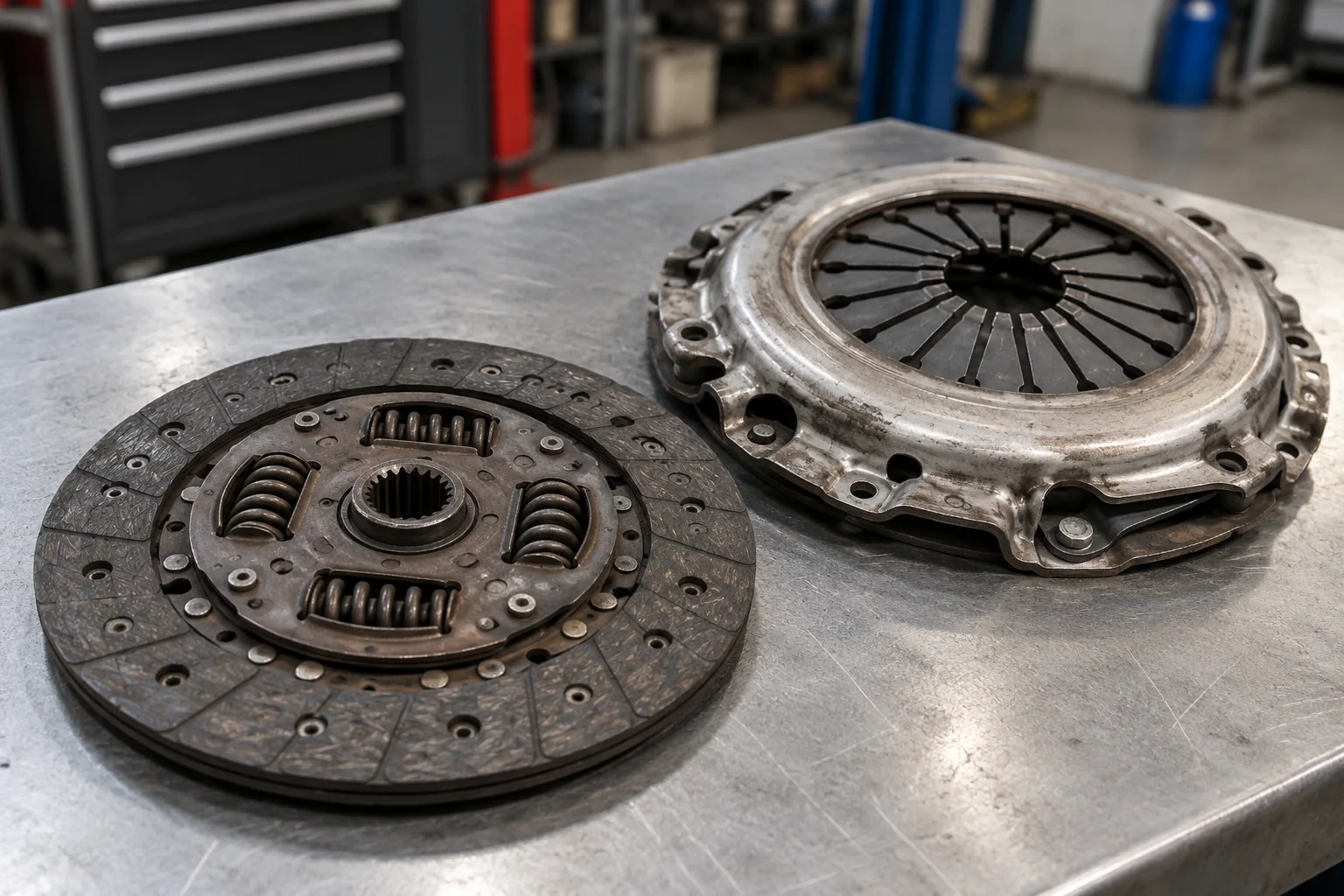
Clutch slip and incomplete clutch release are different. Slip can allow engine revs to rise without the expected transfer of power. Incomplete release, sometimes called clutch drag, can make selection difficult even when the pedal is pressed.
A changed pedal feel or fluid leak may point the investigation towards the release mechanism or hydraulic system. It does not, by itself, prove that the friction disc needs replacement. A cable-operated arrangement has different checks from hydraulic actuation.
Grinding can also involve selector linkage or internal components such as synchronizers. Tell the workshop whether one gear is affected or several, and whether the complaint began suddenly or after repair. Do not force the lever through resistance to establish which part is responsible.
Clutch repairs should address the actual cause, including relevant release parts, contamination or compatible component selection. Removing a gearbox to reach a clutch is not equivalent to diagnosing a failed gearbox. Ask which findings justify the proposed work.
Choose repair work that matches the findings
Transmission diagnosis should distinguish a confirmed fault from a possibility that needs another test. Ask for the reason behind the recommendation and whether a smaller repair is suitable before approving major work.
| Proposed work | What the explanation should establish |
|---|---|
| Targeted component repair | The confirmed fault and why the remaining transmission is considered serviceable. Possible work can concern a connection, leak, selector, control component or repairable assembly. |
| Removal and internal inspection | Why access is needed, the inspection charge and what happens if you decline further work after dismantling. |
| Rebuild or replacement | The internal condition, parts being renewed or replacement-unit specification, supporting work and verification needed. |
A used, remanufactured and new unit are different offers. Confirm the exact gearbox code, supplier, condition and control compatibility. A similar-looking housing or a matching number of speeds is not sufficient identification.
The written quotation should cover removal and refitting where needed, fluid, service parts, any converter or cooler work, coding or relearn, testing and the final total including VAT. Ask about parts availability, extra authorisation and whether the old unit must be returned.
Cost and completion time depend on the confirmed scope. An external fault, clutch job and complete rebuild should not share one generic price. Read the actual parts and workmanship warranty instead of assuming every option has identical coverage.
Confirm the repair solves the original complaint
The checks after work should address the condition that brought the car in. A problem after a long drive needs more than a brief cold start, while an overnight engagement delay may require a cold check arranged with the workshop.
- Confirm fluid level and leak checks using the applicable procedure.
- Ask whether relevant setup, coding or relearn was required and completed.
- Review gear engagement, shift behaviour and the original warning or vibration.
- Keep the diagnosis, parts details, fluid specification and warranty on the service record.
Return promptly if the symptom recurs and describe any change. Do not keep driving with severe slip, no drive or a stop warning to see whether the transmission “learns” its way out of the problem.
Reduce avoidable strain during your everyday driving
Follow the vehicle’s maintenance schedule and the instructions for the fitted transmission. Heat, towing and repeated heavy use may affect requirements, but Dubai weather alone does not establish a failed gearbox or justify the same shortened interval for every car.
- Bring the vehicle to a complete stop before changing between forward and reverse as instructed.
- Do not use the accelerator to hold a dual-clutch car on an incline.
- Avoid resting your foot on a manual clutch pedal while driving.
- Respect the vehicle’s towing and load limits.
- Act on a new warning, leak or change in engagement rather than adding an unspecified treatment.
These habits support appropriate care without guaranteeing that a transmission will never fail. Keep records of previous fluid services and repairs, especially when buying a used car or requesting a second opinion.
Answers to common car transmission troubleshooting questions
Can I drive with a transmission problem?
There is no universal safe distance. Stop safely for loss of drive, severe slipping, a major leak, smoke or a stop/overheating warning. Follow the vehicle’s cooling instructions and arrange suitable help if operation remains unreliable.
Why won’t the selector move out of Park?
An interlock, electrical supply, selector or control problem may be involved. Use the normal brake-and-start sequence in the manual and note the message. Do not force the selector or improvise a release procedure.
Why does Drive or Reverse engage slowly?
Fluid level, hydraulic operation, internal wear or controls may need investigation. Record whether it happens cold, warm or after parking. Accelerating to force engagement can produce an abrupt movement.
Will changing transmission fluid cure slipping?
Not necessarily. Correct fluid service may address a maintenance need, but it cannot renew worn components. Slipping, contamination or warnings should be assessed before a service method is chosen.
Does a fault code prove a solenoid has failed?
No. A code may concern the component’s circuit or performance. Relevant wiring, supply and operating checks help establish whether the part, another fault or further testing explains the complaint.
Is brown transmission fluid always bad?
Colour alone is not a diagnosis or a compatibility check. Consider the specified product, history, smell, contamination, level and transmission behaviour using the appropriate procedure.
Does a difficult manual shift mean gearbox replacement?
No. Clutch release, its actuation system, linkage and internal gear-selection parts can affect selection. The workshop should separate these causes before recommending removal or replacement.
Should I reset the transmission before diagnosis?
Preserve codes and useful operating information first. A reset is not a repair for worn or damaged parts. Software updates and relearn procedures should follow applicable instructions and a supported reason.
Discuss your transmission symptoms with our Al Quoz team
Tell us your model, year, transmission type and what changes when the car is cold or warm. Our Al Quoz team can discuss suitable checks, the initial assessment charge and available appointments. Mention any warning, leak or loss of drive before travelling.