Smoke or steam coming from the engine bay needs a safe stop before diagnosis. Possible causes include oil reaching a hot surface, an external coolant leak, overheating or an electrical fault. Vapour from the tailpipe is a different observation. Its colour alone does not establish that the engine needs a head gasket or replacement.
If smoke is building, there is a burning smell, flames are visible or a temperature or oil-pressure warning appears, stop safely and switch off. Keep a suspected burning bonnet closed and move away. This guide separates the main observations and explains the checks that should come before a repair decision.
Stop safely before investigating engine-bay smoke
When driving, find a safe stopping place without trying to inspect the engine in a live traffic lane. Once stopped, turn off the engine. Move passengers to a safe location away from traffic and the vehicle if smoke is increasing or fire is suspected.
Do not open the bonnet if fire may be underneath it. Opening it can feed a fire and expose you to a flare-up. Do not return to a burning car to retrieve possessions or try to diagnose the cause. In the UAE, call Civil Defence on 997 for fire, 998 for an ambulance and 999 when police assistance is needed for immediate danger.
The US Fire Administration’s vehicle-fire guidance advises occupants to move at least 100 feet, approximately 30 metres, from a burning vehicle and stay clear of traffic. Follow emergency responders’ instructions if conditions require greater distance.
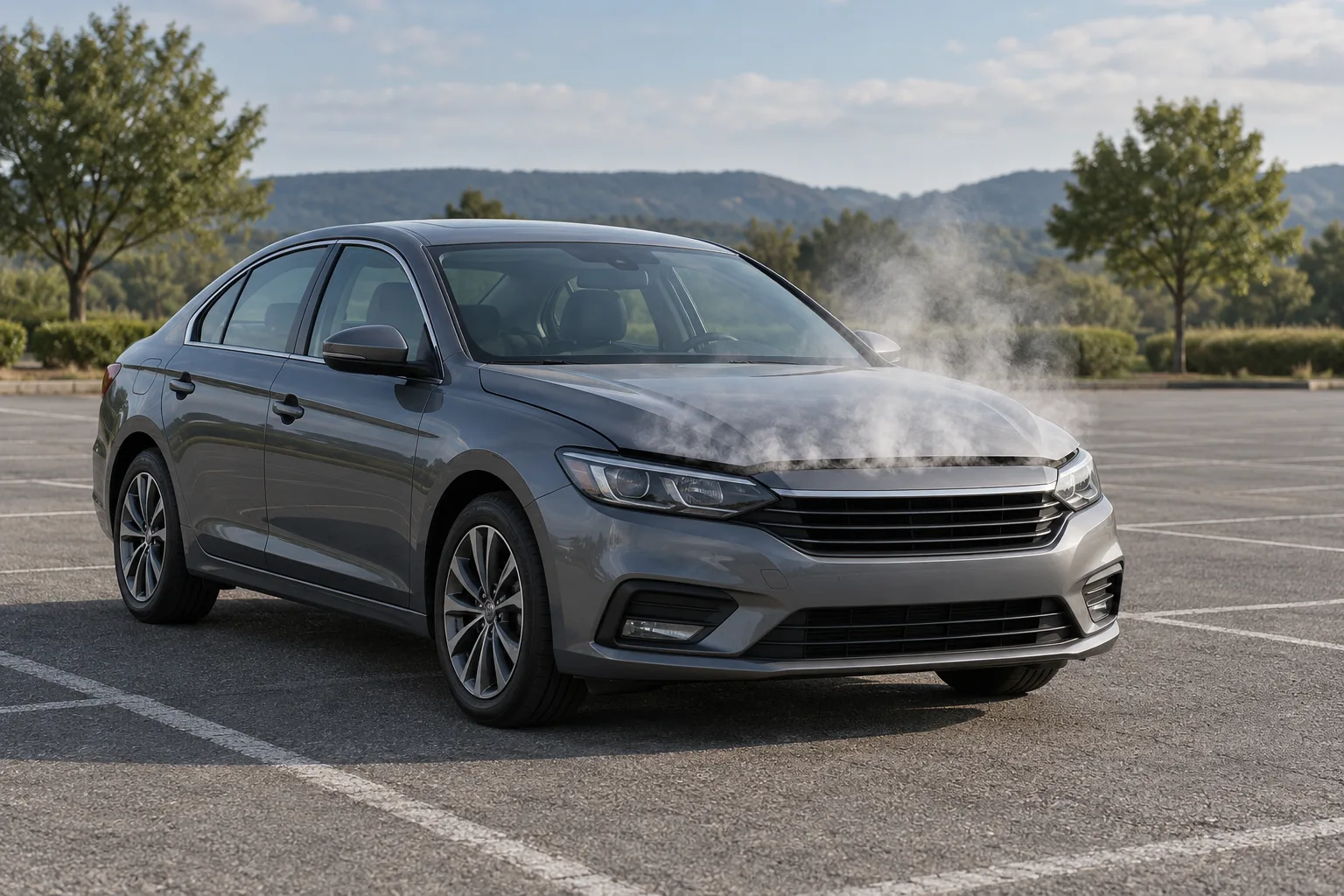
A plume that appears to be steam is not permission to approach. Hot coolant can escape under pressure. Do not remove a radiator or coolant-reservoir cap while the engine or cooling system is hot, and do not restart repeatedly to see whether the vapour has stopped.
First establish where the vapour is coming from
Describe the location before the colour. Smoke rising near the bonnet, vapour leaving the exhaust and smoke near a wheel involve different inspections. You do not need to approach the source to provide a useful description.
| Observed location | Possible direction for inspection | Important limit |
|---|---|---|
| Under the bonnet | External fluid leak, hot components, electrical or cooling concern | Do not open it if fire is suspected |
| Tailpipe | Exhaust vapour or a combustion-related concern | Colour alone does not identify a failed component |
| Under the middle of the car | Fluid or debris near exhaust parts | Do not crawl beneath a stopped roadside vehicle |
| Near a wheel | A brake, tyre or wheel-area concern | This should not be labelled engine smoke without inspection |
Note any warning that was already displayed and whether the plume appeared while driving, just after parking or after recent work. Those details help a workshop select the right checks. They do not establish that the car is safe to drive to the workshop.
Oil reaching a hot exhaust surface
An external oil leak can produce smoke when oil reaches a hot exhaust component. The source might be above the area where the smoke is visible because oil can travel down an engine. A technician should trace the leak rather than replacing a gasket at the lowest wet point.
Valve-cover sealing is one possible source, but a cracked cover, another seal or residue from recent work can require a different remedy. The amount of visible smoke is not a reliable measure of the total oil lost. A small plume can still need prompt investigation.
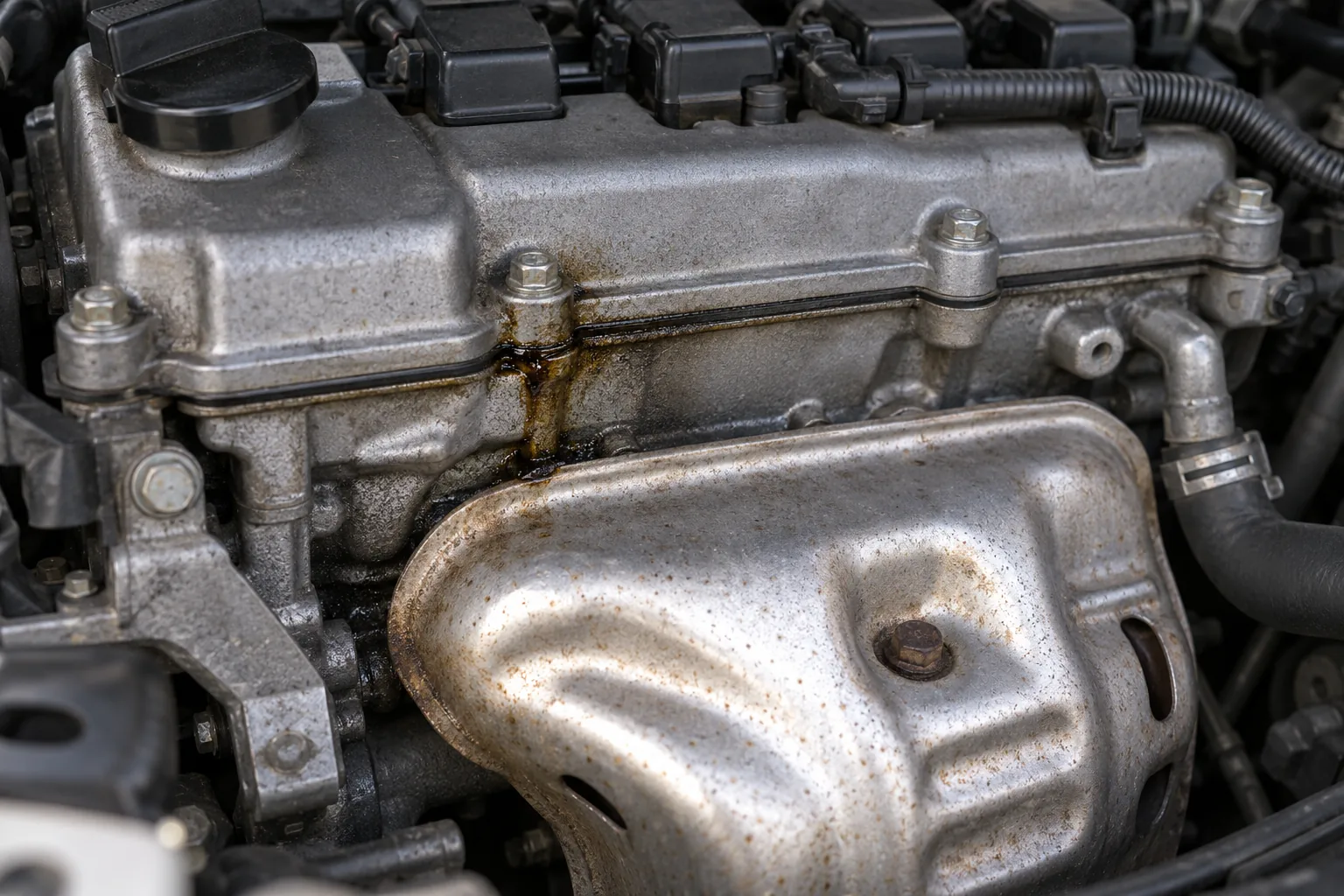
This is different from oil being burned inside the engine and leaving through the tailpipe. An external sealing repair and an internal oil-consumption investigation are different jobs. Ask the workshop to explain which condition its evidence supports.
Do not add oil merely to keep driving with an active leak onto hot components. An oil-pressure warning requires particular attention even if the oil level seems acceptable. The warning should be assessed according to the owner’s manual, not treated as an ordinary reminder to top up.
Coolant leakage, steam and overheating
Coolant escaping externally can create steam when it reaches a hot surface. Overheating can also be accompanied by vapour or a temperature warning. Possible inspection areas include hoses, radiator connections, the reservoir, pump and cooling operation, depending on the vehicle and the findings.
White vapour under the bonnet does not by itself prove that coolant is entering the cylinders. That is a different possibility to investigate when the evidence points there. Avoid jumping from a steam complaint directly to an internal-engine repair.
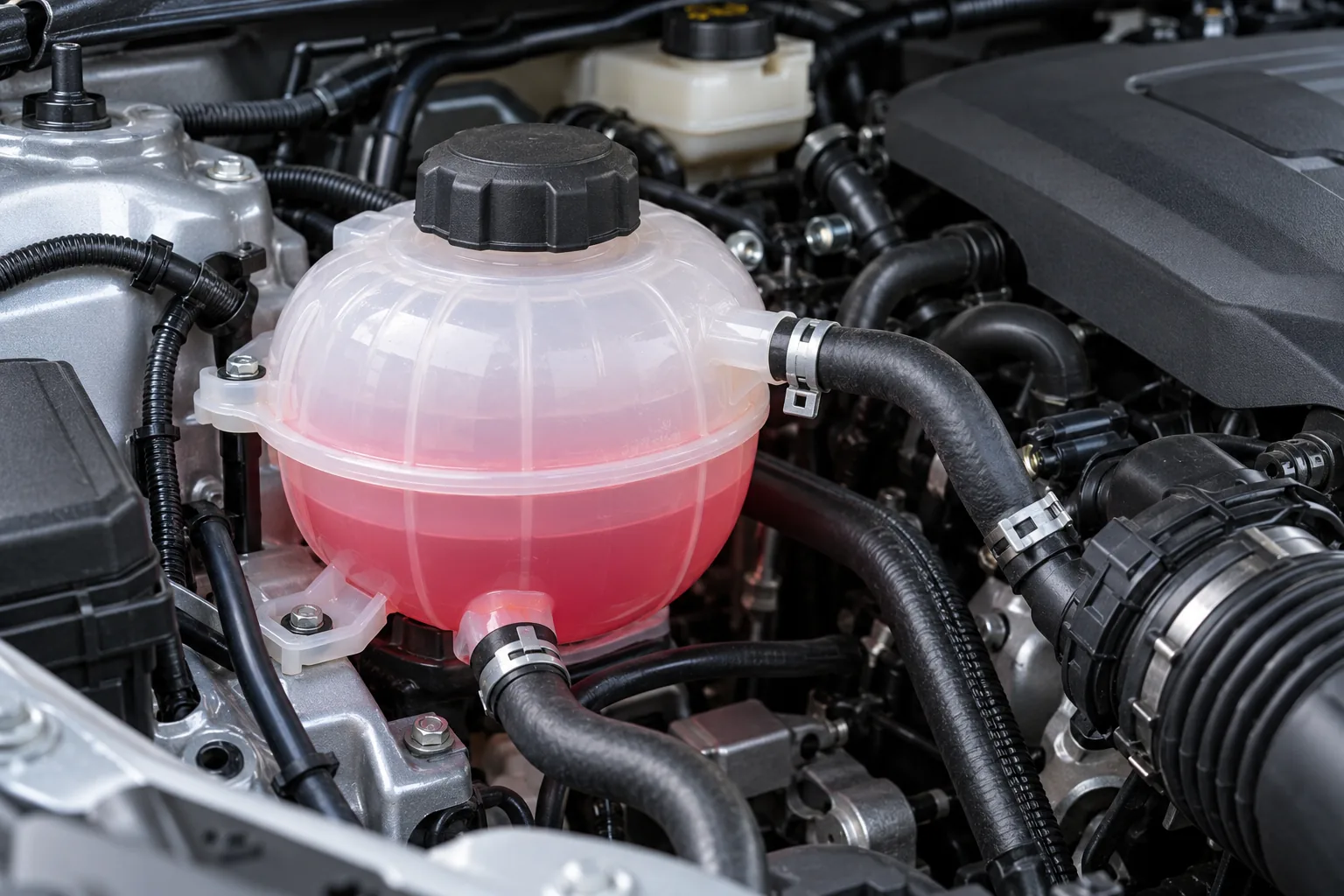
There is no universal number of minutes after which every overheated engine is safe to open. Follow the vehicle instructions and wait until the system is fully cool. A pressure cap can release hot liquid and steam even when loosened slightly.
Repeated coolant top-ups can hide a continuing fault. The technician needs to establish why the level is changing and whether circulation, airflow or another cooling function is affected. A flush does not repair a split hose, a failed fan or every overheating problem.
Electrical, belt and foreign-material concerns
A burning-plastic smell with smoke can prompt an electrical inspection. The location, wiring condition, relevant circuit and evidence of overheating matter. Do not disconnect parts, replace a fuse with a higher-rated one or repeatedly turn the ignition on to identify the circuit.
A rubber-like smell may involve a belt or another component near heat or friction, but the description is not a diagnosis. A workshop should inspect the actual source. Stopping the noise or smell temporarily does not prove that the affected component is safe.
Material trapped near a hot exhaust can also produce a smell or smoke. Do not reach beneath the car or touch a hot component to remove it. The vehicle should be assessed in a safe working area with suitable access.
If there is a petrol smell alongside the smoke, tell the recovery provider immediately. A suspected fuel leak changes how the car must be handled. Treat the combined complaint as a safety concern rather than trying to distinguish the fumes by getting closer.
How tailpipe smoke differs from engine-bay smoke
A short-lived light vapour at the tailpipe during a cold start can be condensation. It is not the same observation as smoke rising from under the bonnet. Persistent emissions after the engine is warm, new fluid loss, rough running or warnings need investigation.
Blue-looking tailpipe smoke can prompt an oil-consumption investigation. Persistent white-looking exhaust may lead to coolant or combustion checks. Dark exhaust can prompt checks of fuel delivery and airflow. Lighting, operating conditions and the engine type affect what you see, so none of these colours proves a specific failed part.
Tell the technician whether the vehicle is petrol, diesel or a hybrid and when the exhaust change appears. A photograph taken safely can help record the complaint, but a video alone is not enough to authorise an engine rebuild.
Keep this distinction clear when comparing quotations. A valve-cover leak, a cooling-system fault and internal oil consumption can all be described casually as “engine smoking”, while the required tests and repairs differ considerably.
Smoke that starts after a service or repair
Report the timing and the work performed. Oil or another fluid left on an external surface during maintenance is one possibility. A disturbed connection, an incorrect level or an active leak must also be considered. Do not accept “it will burn off” without an appropriate check.
Contact the workshop that performed the work and describe the location, smell, warnings and any visible fluid loss. Ask for transport advice before starting the car again if the situation remains unsafe. Keep the invoice so the affected area can be identified.
Cleaning residue may be part of completing a repair, but the workshop should first confirm that new fluid is not continuing to escape. Persistent or returning smoke needs another assessment, particularly if the original symptom has changed.
Useful observations without a roadside repair
Record the make, model, year and the warning message that was already visible. Explain whether the temperature reading rose, the engine lost power or the plume appeared after you stopped. Do not restart to gather additional dashboard information.
Once safely away, describe whether the smoke seemed to originate under the bonnet or at the rear. Take photographs only if doing so does not mean approaching heat, fumes or traffic. Never lean over a suspected source to identify its smell.
Our recovery team can discuss transport after you explain the vehicle’s condition and location. Mention smoke, suspected fuel leakage, locked wheels or restricted parking access. Emergency services should deal with an active fire before workshop transport is arranged.
Do not pour water over an engine, open a hot pressure cap or use an additive as a roadside repair. Hybrids can also contain high-voltage equipment. Keep away from exposed cables or damaged electrical components and leave their assessment to an appropriately equipped provider.
Tests that should come before replacing parts
A workshop should start with the recorded complaint and a physical inspection once the car can be handled safely. Relevant electronic information can then support the investigation. A fault code and the colour of smoke are clues, rather than a complete diagnosis.
For a cooling concern, the agreed work may include checking for external leaks, system pressure where appropriate, circulation and cooling airflow. For an oil concern, it may involve tracing the external source or investigating consumption. Electrical evidence requires a different testing plan.
If an internal-engine fault is suspected, ask what findings justify further tests or dismantling. A pressure test, a compression-related test and checking for combustion gases address different questions. The exact selection should follow the vehicle and the symptom.
Ask the workshop to record the limits of its assessment. An intermittent problem may not appear during a short visit, and inaccessible areas can require separate approval. A clear investigation plan gives you something useful to compare before approving major repairs.
Repair choices and what the quotation includes
The repair should address the confirmed cause. An accessible seal or hose may need a targeted replacement. Another fault may require more access or specialist work. Engine replacement is not an automatic consequence of seeing smoke.
A cooling-system flush should be recommended for a defined reason, rather than as a cure for every steam or overheating complaint. The quotation should explain any faulty component, the fluid specification, access work and how correct operation will be checked.
| Work | Current estimate including 5% VAT | Scope |
|---|---|---|
| Initial fault diagnosis | AED 150–350 | Relevant scan, agreed targeted checks and an explanation of findings |
| Straightforward local recovery in Dubai | AED 120–250 | Standard loading, transport and unloading, subject to location and access |
| Extended testing or repair | Quotation after assessment | Additional tests, dismantling, parts and repair labour agreed separately |
Our fault-diagnosis service explains the initial scope and separate approval for extended work. Recovery distance, special loading, difficult access, waiting and tolls can affect transport charges. Confirm the actual quote before dispatch or workshop work.
Do not compare an external oil leak with a head-gasket job using one generic standard-versus-luxury price table. The component, engine layout, access and extent of damage determine the work. Request the findings and an itemised quotation instead of approving a list of possible repairs.
Checks after repair and ongoing maintenance
Ask what was tested again after the work. Useful confirmation includes checking the repaired area for continuing leakage, the relevant fluid level and the operation associated with the original complaint. A cleared dashboard warning alone is not evidence that the cause has been corrected.
Follow the workshop’s advice about any further checks once the car is cool and keep the invoice and findings. If smoke, an odour or a warning returns, report it promptly. Do not assume that all remaining vapour is harmless residue.
Use the correct oil and coolant specifications and the maintenance schedule for the vehicle. Report changing fluid levels instead of relying on repeated top-ups. In Dubai, cooling performance and visible hose or seal condition deserve attention, but local heat does not justify a blanket flush or an invented replacement interval.
Frequently asked questions
Can I drive with smoke coming from under the bonnet?
Stop safely and switch off if smoke appears, especially with a burning smell or warnings. Do not continue to the workshop or restart to reproduce the symptom. Explain the condition when arranging assistance.
Should I open the bonnet to see what is burning?
Keep it closed if fire is suspected. Opening it can feed the fire and expose you to heat or a flare-up. Move away, keep clear of traffic and call Civil Defence on 997 in the UAE.
Does white smoke mean the head gasket has failed?
No. First distinguish engine-bay steam from tailpipe emissions. Colour alone does not identify the cause. Fluid changes, warnings, inspection and appropriate tests are needed before an internal-engine repair is recommended.
Can a coolant flush fix an overheating car?
Only where the findings justify that work. A flush does not repair every leak, fan fault or circulation problem. The cooling concern should be diagnosed before deciding what service or component replacement is needed.
Is smoke after an oil change always spilled oil?
No. Residue is one possibility, but an active leak or another service-related problem needs checking. Contact the workshop and do not continue driving with smoke or warnings while waiting for it to disappear.
Does smoke always mean the engine needs replacement?
No. An external leak or another local fault may have a targeted repair. Major engine work needs findings that justify it, rather than a decision based on the smoke colour or a video alone.
Discuss the engine-smoke assessment
Once you and the vehicle are safe, send the model, warning messages and where the smoke appeared. Our Al Quoz team can discuss transport and the appropriate inspection before repair work is agreed.