Professional window tinting is worth considering when you want a suitable film fitted cleanly, with the glass, visibility, installation scope and aftercare checked together. The benefit is more than a darker appearance. A good installation starts with the right product for your car and finishes with a clear record of what was fitted.
For Dubai driving, prioritise comfortable outward vision and documented solar performance. The darkest sample is not automatically the best choice. Existing factory glass, night driving, old film and the windows included in a package can all change the sensible decision.
What professional installation should add to the result
A professional appointment should connect product selection, preparation and finishing. Buying an expensive roll does not by itself prevent trapped dirt, lifting edges or an unsuitable shade. Equally, neat installation cannot give a basic film the thermal performance of a different product.
Ask the installer to explain the exact manufacturer, series and shade, then relate those choices to the glass already on your car. You should know which windows are included, whether removal is needed and what support applies if a genuine defect develops.
- Assessment of existing glass, film and visible damage before work.
- Product information that distinguishes visibility from heat and UV performance.
- Careful preparation around seals, trim and glass-mounted equipment.
- A written fitting scope, final price and product-specific care instructions.
Professional fitting is not an automatic guarantee of legal approval, zero dust or a particular cabin temperature. The useful difference is an accountable process with a suitable product and an agreed standard of finish. Keep satisfactory existing film if it already meets your needs.
Check existing glass before choosing the shade
Visible light transmission, usually shortened to VLT, describes how much visible light passes through the tested material. Higher VLT means more light passes through. A film labelled 20% VLT is darker than one labelled 50% VLT.
Shop descriptions such as “50% tint” may describe darkness rather than transmission. Ask what the number means and whether it refers to the film alone or to tested glass with film. It is not enough to choose from a number on a sample card.
Factory privacy glass also changes the finished appearance and transmission. Front and rear windows may start with different specifications. Adding the same film everywhere can therefore produce different results, and adding a second layer can make an already dark window unsuitable.
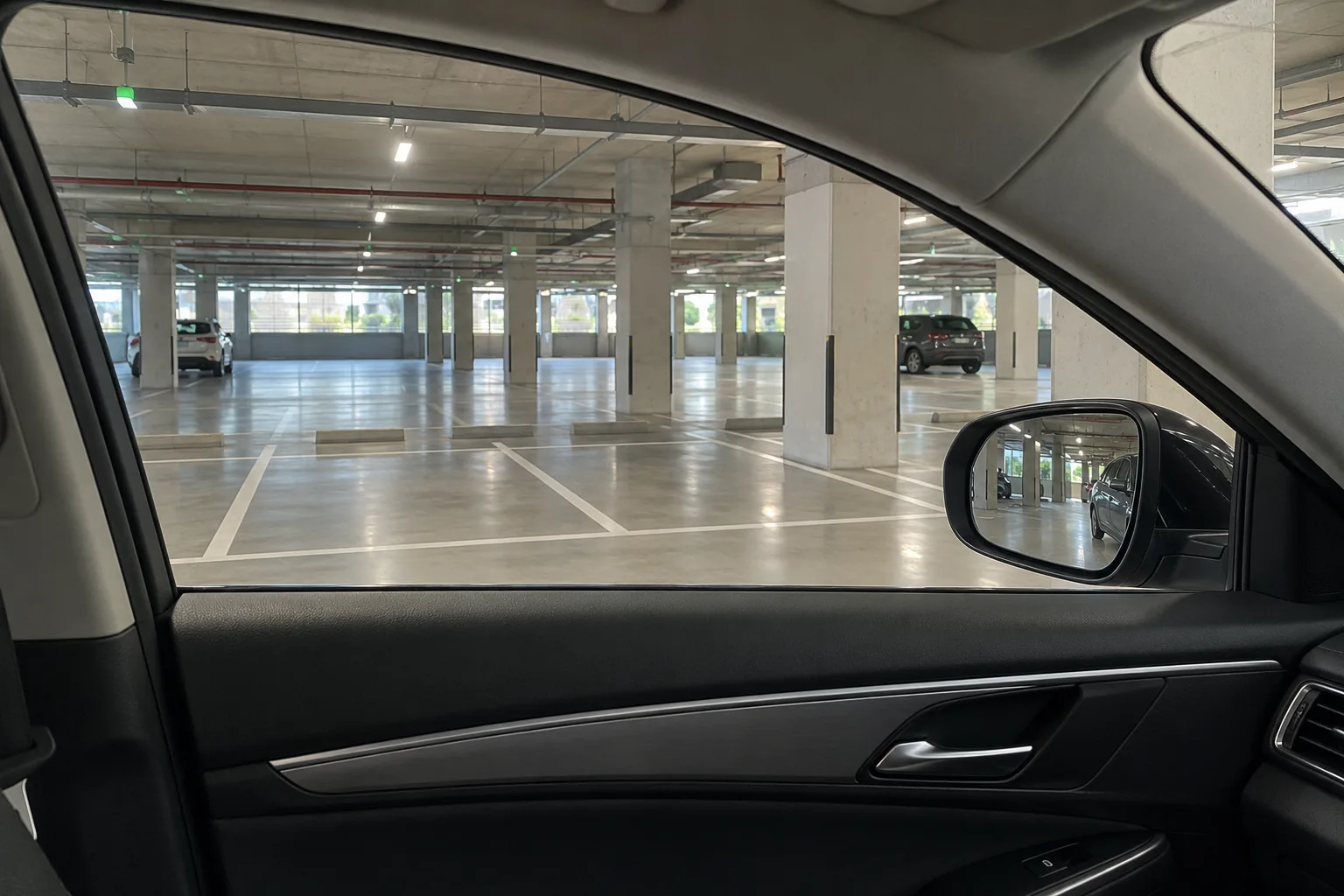
Ask for the existing and completed glass to be assessed with an appropriate light-transmission meter. Consider your view through the mirrors and rear glass, especially in dim parking areas. Photos and a display screen cannot reliably show the exact shade or approve an installation.
Explain when you usually drive and park. Someone who frequently reverses in poorly lit spaces may value clarity more than added privacy. A daytime commuter can still choose solar-control performance without simply choosing the darkest available film.
Choose film using the exact product information
Film categories help you start a comparison, but the named product and shade determine its tested properties. Ceramic is a construction description, not a universal performance level. Dyed, carbon, metal-containing and multilayer products also vary within their categories.
| Film option | Useful reason to compare it | What to verify |
|---|---|---|
| Dyed or colour-stable film | Appearance and glare control within a modest budget | Actual solar performance, colour stability and support terms |
| Metal-containing film | Solar control in a particular product range | Reflectivity and compatibility with antennas and electronic equipment |
| Ceramic or carbon-based film | A nonmetallic option with product-specific optical and thermal properties | The exact series, test figures and clarity at a suitable shade |
| Advanced multilayer solar-control film | Heat-control options that may retain a lighter appearance | Local product data, glass suitability, availability and fitted price |
For heat performance, compare total solar energy rejection, or TSER, on equivalent test glass. UV rejection concerns ultraviolet radiation. An infrared rejection claim concerns a defined infrared measurement and should not be read as rejection of the same percentage of all solar heat.
The manufacturer’s film terminology illustrates these distinctions. Request the current technical sheet for the actual series offered. A technical reference does not confirm that a workshop stocks the product or is an authorised installer.
A heat-lamp demonstration can illustrate a sample under its demonstration conditions. It does not predict the temperature of your particular car after hours outdoors. Avoid paying for a large marketing percentage without knowing what was measured.
Confirm the permitted windows before agreeing installation
Published Abu Dhabi Police guidance describes up to 50% black tint on side and rear glass, with the front windscreen excluded from that general allowance. It also excludes heavy vehicles and vehicles with taxi plates. Check the current requirements for your vehicle with Dubai Police or RTA before fitting.
That allowance is not automatic permission to fit a product labelled 50% VLT to any window. The terminology, original glass and finished result need checking together. Clear-looking windscreen film is not automatically permitted, and a claimed medical exemption needs authority approval.
Keep the proposed coverage in writing. Do not rely on another driver’s car, an earlier inspection pass or a seller’s “RTA compliant” sticker as approval for your own installation.
Dubai’s published vehicle impoundment decree includes exceeding the permitted tint level or tinting the windscreen without a permit among the relevant offences. The listed release amount for that category is AED 10,000. Compliance therefore needs checking before installation, alongside comfortable driving visibility.
Compare fitted costs with the same included work
The following planning estimates reflect the ranges published for our window tinting options. They cover ordinary film and installation on the agreed side and rear glass. Confirm the exact series, shade and covered windows before approving a quotation.
| Installation scope | Planning estimate including 5% VAT | What changes the quotation |
|---|---|---|
| Standard film on sedan side and rear glass | AED 315–735 | Chosen product and routine glass preparation |
| Ceramic film on sedan side and rear glass | AED 840–1,890 | Exact series, shade and stated product performance |
| Premium film or a larger SUV | AED 1,575–3,150 | Glass area, vehicle access and film range |
Old-film removal, extensive adhesive cleanup, damaged glass, panoramic roof treatment and any permitted windscreen work need separate agreement. These estimates are not a promise that every branded film is available at the lower figure. The service-page ranges were checked on 6 October 2026.
Compare complete quotations. A cheap installation on clean side glass and a removal-and-refitting job on a large SUV are different scopes. Ask whether the invoice includes VAT, preparation, fitting and the agreed product and workmanship support.
If one window needs replacement, confirm whether matching the remaining film is possible. A new roll from another series may look different even when its advertised percentage is similar. Agree the acceptable match before work starts.
Understand the preparation your car actually needs
Glass preparation affects the finish as much as the film. Existing adhesive, contamination, scratched glass and damaged seals can make a straightforward-looking job more involved. Discuss these findings before the old installation is disturbed.
Tell the installer about demister lines, antennas on the rear glass, electronic toll equipment and recent window repairs. Rear-film removal requires care around printed conductors. Ask for existing damage and the condition of these features to be recorded before removal.
If the window itself is cracked or damaged, arrange glass repair or replacement first. Tint is not a structural repair, and a neat new layer cannot correct a faulty window mechanism or damaged weather seal.
Automotive tint is normally fitted to the inside surface of the glass. Exterior windscreen-protection products are different materials with a different purpose. A package should identify the product rather than treating tint, paint protection film and wrapping as interchangeable work.
Installation may involve positioning or shaping film before it is fitted internally. Ask how adjacent trim and electrical components will be protected. Avoid attempting removal yourself with blades or strong solvents, particularly around rear demister lines.
Know what to expect from the fitting appointment
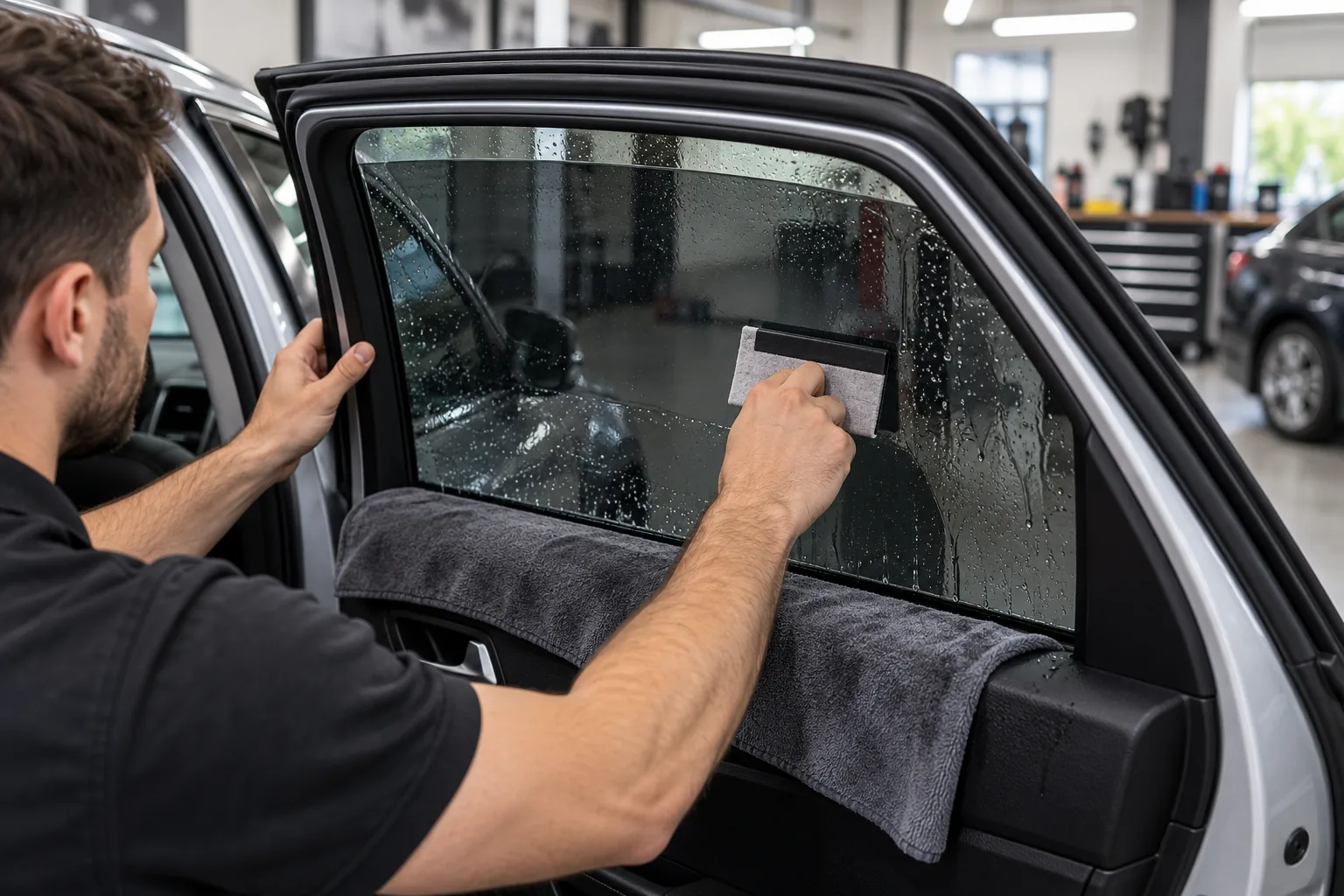
Collection time and curing time are separate. A car may be ready to leave before all installation moisture has dried. Old-film removal, large or curved glass and access to the rear screen affect the fitting schedule.
- Inspect the car and identify existing glass, film and damage.
- Agree the product, shade, windows, preparation and complete quotation.
- Prepare the glass and fit the selected film with the surrounding trim protected.
- Review visibility, finish, care instructions and the route for reporting a concern.
Confirm the appointment length when the workshop has your vehicle details. Do not treat a generic one-hour or same-day promise as a guarantee for every car. Keep access to the car available for the checks agreed at handover.
If product authenticity or manufacturer-backed support matters to you, ask how the supplied roll and invoice identify the exact film. A brand name in an advertisement or on a sample is not sufficient evidence of an authorised installer relationship.
Inspect the finished glass before you collect
Look through the windows from inside as well as outside, with the car safely parked. Reflections can hide imperfections from one angle. Check that the agreed glass has been covered and that the outward view is comfortable for your driving needs.
- Check for creases, obvious trapped debris, lifted edges and distorted vision.
- Ask which moisture effects may change during the stated curing period.
- Review the finished shade and any measured light-transmission result.
- Confirm that trim and relevant glass-mounted equipment were checked.
- Keep the invoice, film identity and written aftercare together.
A small border or the appearance around a dotted glass edge can depend on the vehicle and product. Discuss the expected finish rather than assuming every edge must look identical. Persistent lifting or a view-obstructing defect needs assessment.
Do not accept reduced driving visibility as the price of a premium appearance. If you cannot see clearly, have the installation assessed before routine driving. A brochure’s heat figure does not justify an unsuitable outward view.
Follow the aftercare for the film actually fitted
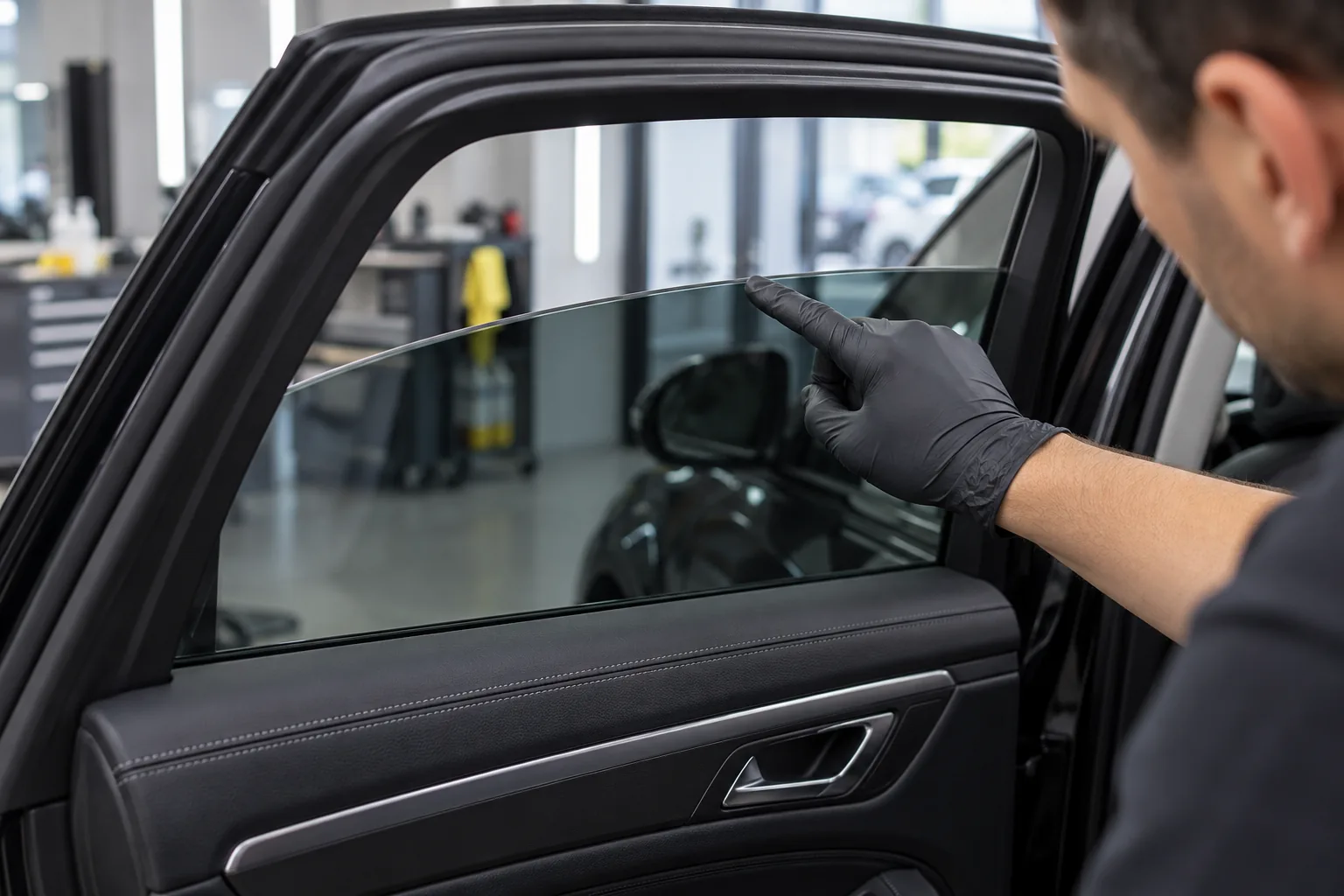
Ask when you can lower the windows, clean the inside glass and use any feature the installer has asked you to leave off temporarily. Follow the instructions for the fitted product and conditions rather than a fixed online waiting period.
Temporary moisture haze can remain while film dries. Ask what change to expect and when to return if it persists. Do not puncture a bubble, pick an edge or use a heat gun to hurry the process.
Once cleaning is permitted, use a clean soft cloth and a cleaner compatible with the film. Avoid abrasive pads, scraping and gritty cloths. Scratch resistance does not make the surface scratch-proof.
Keep dated photos of a concern and contact the installer before another workshop removes the film. Persistent bubbles, discolouration, peeling or distorted vision may need an inspection. Their appearance alone does not establish whether the cause is product, fitting, glass or later damage.
Ask separately about product warranty and workmanship support. Confirm the local provider, duration, exclusions, documents and whether a remedy includes removal and refitting. “Lifetime” should have written conditions, not be treated as unlimited cover for every mark or complaint.
Set a realistic goal for comfort and privacy
Suitable film can reduce some solar energy entering through treated glass and make glare more comfortable. It does not actively cool the car or stop all heat entering through the roof, body and untreated glass. A parked tinted car can still become dangerously hot.
Never leave a child or animal unattended in a parked car because it has tint. Combine suitable film with shaded parking and a compatible windscreen shade used only while parked. Clear the driver’s view before setting off.
Tint also cannot repair weak air conditioning. If vent air stays warm or cooling changes in traffic, have that problem assessed instead of replacing sound film simply because the cabin feels hot.
Privacy means the interior may be less visible from outside. It does not guarantee theft prevention or make valuables safe to leave on display. Nor should reduced AC demand be converted into a promised fuel saving for every journey.
The sensible purchase is a film and installation that improve the issue you actually notice while retaining useful visibility. Spend on a documented benefit, careful work and clear support rather than an unqualified promise of the darkest or coolest result.
Questions about choosing professional window tinting
Is professional tinting worth paying for?
It can be when it provides suitable product selection, careful preparation, clean fitting and accountable support. Confirm the actual work and film. Paying more alone does not establish a better installation.
Does ceramic film always perform better?
No category name guarantees a result. Compare the exact product’s solar performance, clarity and support at a suitable shade. A ceramic label or a large infrared number is not a complete specification.
Can I put new film over existing tint?
Do not assume that is suitable. The existing layer, glass condition and finished visibility need assessment. Removal and adhesive cleanup may be necessary and should have a separate scope.
Is clear windscreen film automatically legal?
No. The general side-and-rear allowance does not establish permission for windscreen treatment. Confirm current authority requirements for the proposed product, coverage and vehicle before fitting.
When can I roll the windows down?
Follow the waiting period given for your film and installation conditions. Being ready for collection does not mean the film has fully cured. Ask for the instructions in writing.
Are bubbles after fitting always permanent?
No. Some moisture effects may change during curing. Follow the installer’s guidance, document the concern and arrange assessment if it persists or affects visibility. Do not press, puncture or heat the film yourself.
Will the tint affect GPS or toll equipment?
Construction and equipment placement matter. Some metal-containing products can affect reception. Check the actual film’s compatibility and relevant vehicle equipment instead of relying on a blanket claim about all ceramic or carbon films.
What should I send before getting a quote?
Send the model and year, desired windows, existing film condition and your visibility or comfort priorities. Mention factory privacy glass, roof glass and any removal needed so the quotation describes the real job.
Discuss suitable window tint for your car
Send your car model, year, the windows to cover and whether old film needs removal. Our Al Quoz team can discuss suitable options and explain the complete fitting scope before you book.