Brake pads need replacement when an inspection finds the friction lining at the vehicle’s wear limit, damaged or wearing unevenly. A persistent squeal or a pad-wear message can prompt that inspection, but neither proves the pads are the only problem. A soft or sinking pedal, reduced braking or severe grinding needs urgent attention rather than a routine pad appointment.
The useful question is not simply how many kilometres the pads have covered. It is how much usable lining remains, whether the discs and calipers are sound, and which parts fit the car. This guide explains those checks, the fitted costs to expect in Dubai and what to ask before approving replacement.
Separate pad wear from urgent brake faults
In a disc brake, pads sit in a caliper and press their friction surfaces against the rotating disc to slow the wheel. The lining wears during use. A warning sound, dashboard message or changed braking behaviour gives a reason to investigate, but the response depends on the symptom.
| What you notice | What it may mean | Sensible next step |
|---|---|---|
| Persistent high-pitched squeal | A wear indicator on some pads, or a noise caused by another part of the brake assembly | Arrange an inspection promptly. Do not order pads from the sound alone. |
| Pad-wear message | A monitored pad or its sensor circuit needs attention | Follow the handbook and have the complete axle checked. |
| Severe grinding or reduced braking | Possible metal contact or a more serious brake fault | Stop safely and arrange assistance rather than continuing to the workshop. |
| Soft pedal or pedal that sinks | A possible hydraulic or other system fault | Stop safely and arrange assistance. New pads alone may not resolve it. |
| Brake warning light | Meaning depends on the vehicle and warning displayed | Check the handbook. Treat a warning with abnormal braking as urgent. |
Noise is a clue, not a diagnosis. Fitting hardware, caliper movement and the disc surface can contribute to squeal. Similarly, vibration under braking does not establish that the pads are worn or that a disc is simply “warped”. Tell the workshop whether the symptom happens during braking, at particular speeds or after recent work.
Ordinary pad wear should not be used to explain away a pedal that keeps sinking under steady pressure. Air, leaks or a master-cylinder fault are among the possibilities. Our explanation of why a brake pedal goes to the floor covers that separate problem. Avoid repeated road tests to reproduce an unsafe symptom.
Confirm pad condition with a proper inspection
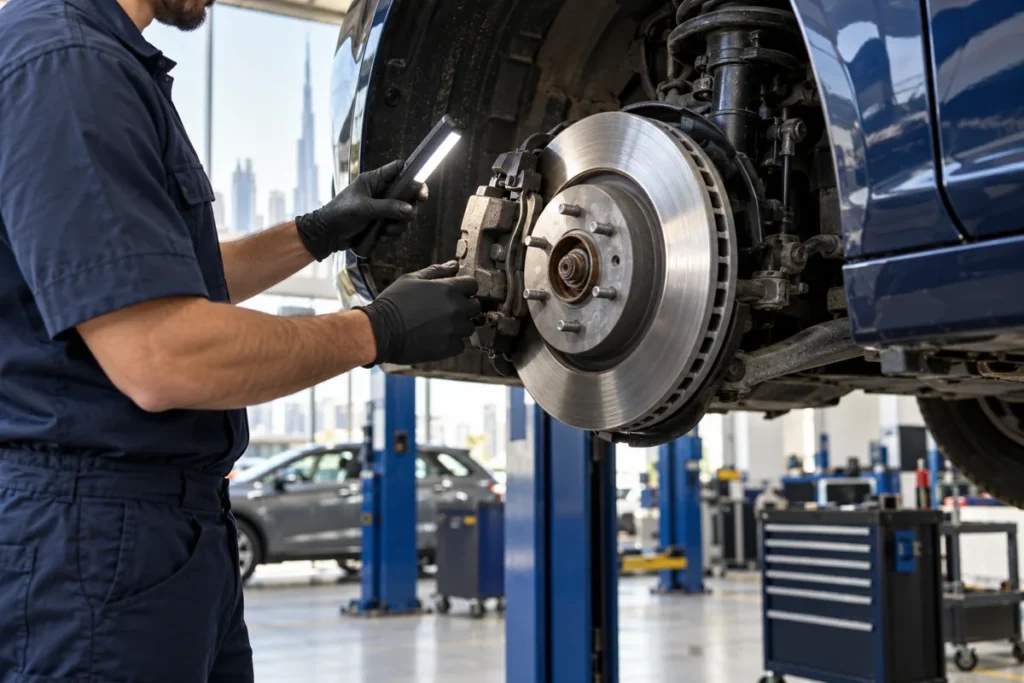
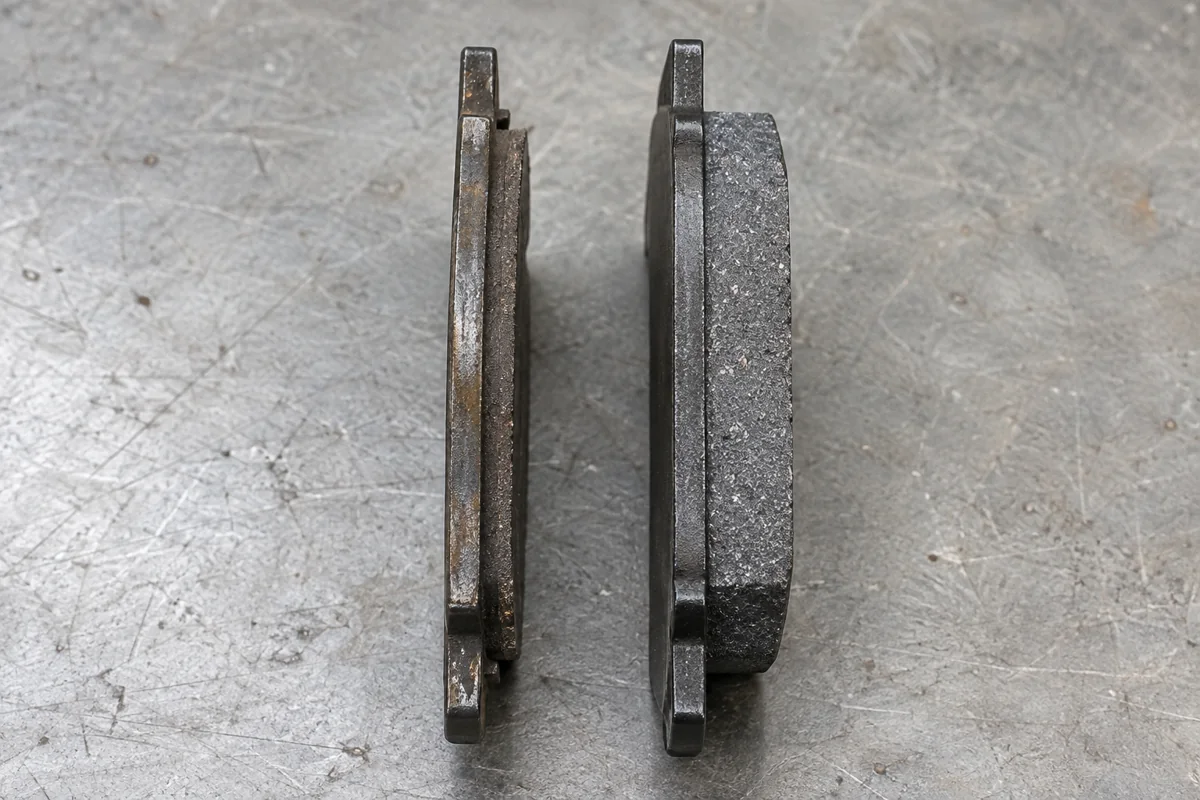
A glance through a wheel opening may show part of an outer pad, but it cannot confirm the condition of every pad. The inner pad can be less visible and more worn. Looking at one wheel also misses differences between the left and right brakes. Treat a visual glimpse as a reason for a check, not permission to keep driving indefinitely.
Ask for the remaining friction-lining measurements for the relevant axle, with the thinnest pad identified. The metal backing plate is not usable friction material and should not be included in that measurement. The report should describe uneven wear, contamination or damage as well as thickness.
Use measured thickness rather than a safe-looking gap
Brembo’s worn-pad guidance uses approximately 3 mm of remaining lining as a replacement reference. Use that as a reason to plan promptly, not a universal legal limit or a guarantee of safe remaining mileage. The correct vehicle-specific wear limit and the actual pad condition take priority.
If a report only says “pads at 30 per cent”, ask for the measured lining thickness and the basis for that estimate. A percentage without an original thickness, axle or inspection date is difficult to use when deciding whether replacement can wait. A measured record also makes the next inspection more useful.
Investigate uneven wear before fitting another set
A pronounced difference between pads needs an explanation. A sticking caliper or guide can keep a pad in contact or prevent the assembly from moving as intended. Changing the pads without addressing the cause can leave the new set wearing unevenly again. Ask which component needs attention and why it is included in the quote.
Check disc condition before approving new pads
New pads do not automatically require new discs, also called rotors. Equally, a pad-only quote is incomplete if the existing discs are unsuitable. Ask for their measurements and condition findings before choosing the repair scope.
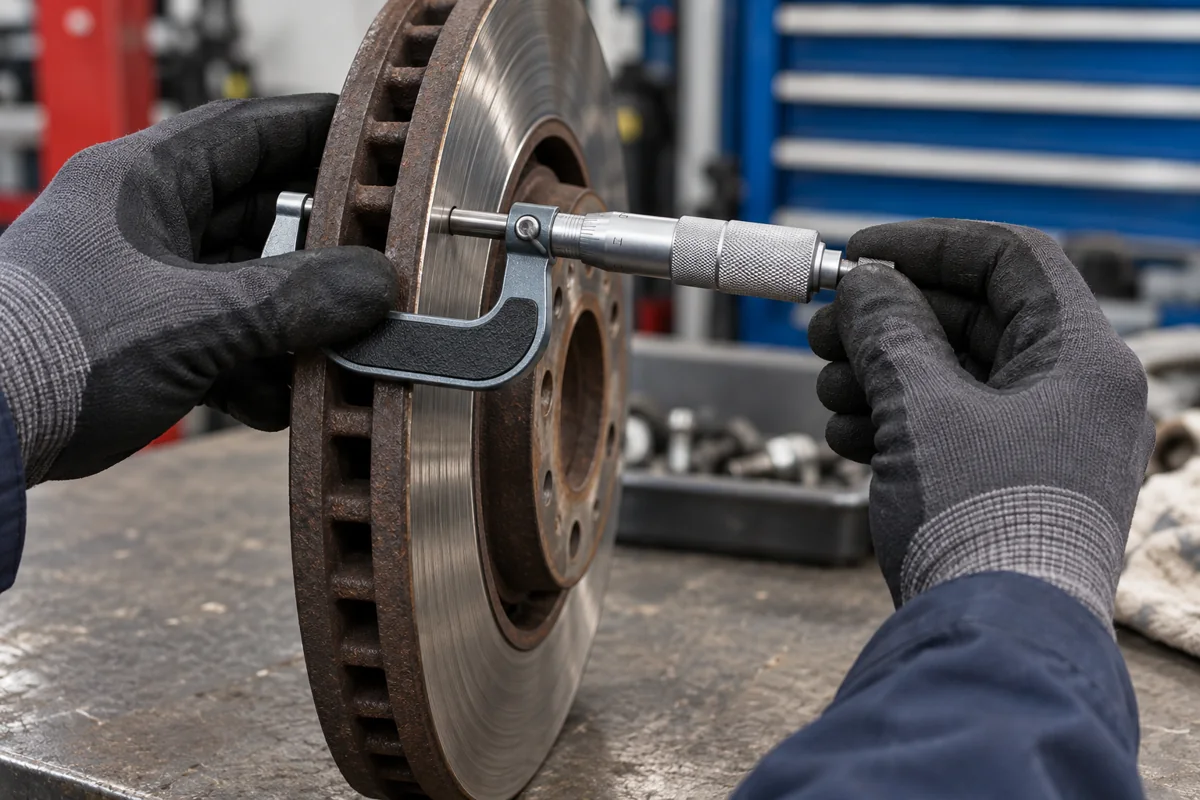
A disc’s minimum thickness is commonly marked “MIN TH”. A technician measures the working disc with an appropriate tool, checks more than one position and compares the lowest reading with the correct limit. The raised outer lip is not the measurement. Brembo’s minimum disc thickness explanation describes this comparison and replacing the pair on an axle when a disc is below its limit.
Thickness is only part of the decision. Cracks, deep scoring and evidence of heat damage may also make a disc unsuitable. If vibration is reported, the workshop needs to investigate the disc and mounting condition rather than diagnosing from the steering-wheel sensation alone.
Machining is a separate proposal, not an automatic cheaper alternative to replacement. Ask whether the vehicle and disc manufacturer allow it and whether the disc will remain within the applicable specification after material is removed. Special discs, including carbon-ceramic systems, need their own assessment. A generic steel-disc price or procedure should not be applied to them.
Choose the correct matched pads for each axle
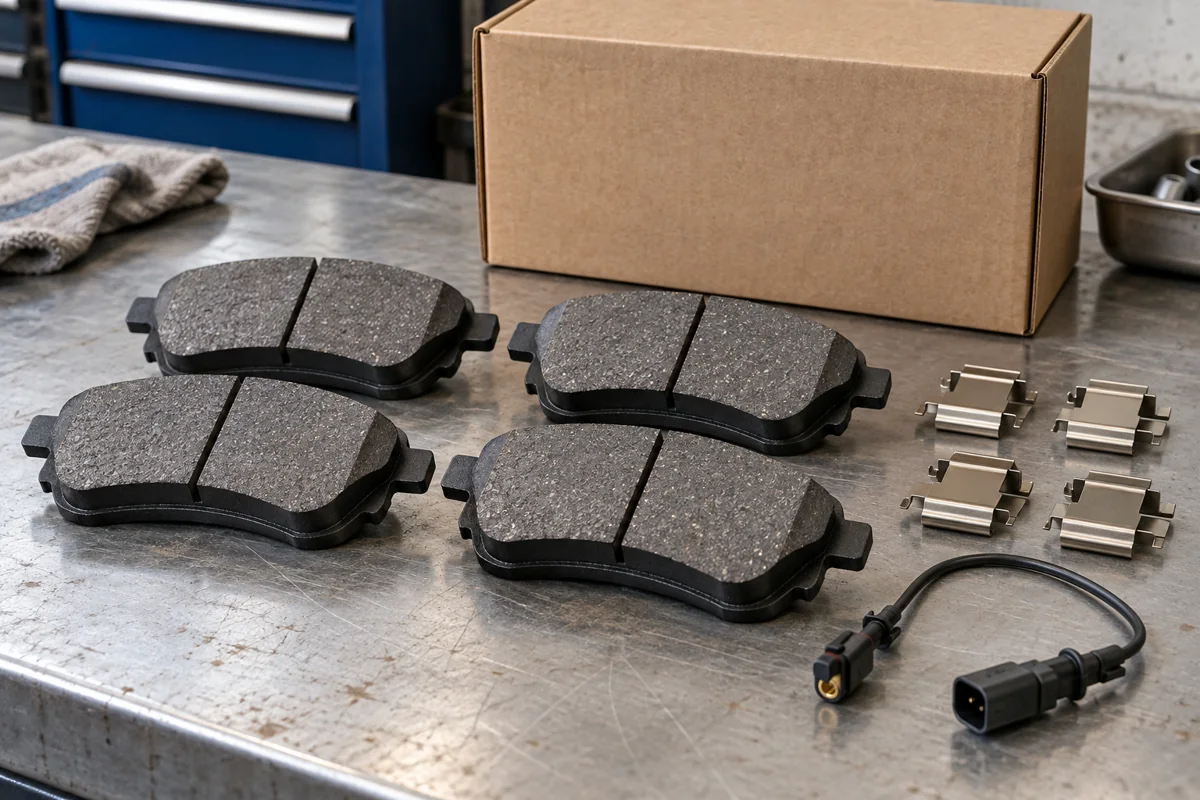
Replacement is normally a complete matched pad set for both wheels on the affected axle. It is not one loose pad or only the noisier wheel. Front and rear axles are assessed separately, so replacing the front pads does not automatically mean replacing the rear pads at the same visit.
Provide the vehicle’s VIN or chassis number, model year and any known brake-package details. The same model can have different calipers, disc sizes or performance options. A listing that says it fits the model name is not enough to establish that it fits your exact vehicle.
Ask the quote to identify the pad manufacturer and part number. “OEM quality” on its own does not identify a manufacturer, prove a particular approval or explain what is supplied. Genuine vehicle-branded parts and suitable aftermarket parts are different purchasing options, and each should be described accurately.
Compare suitability before choosing a friction material
Ceramic, semi-metallic and non-asbestos organic describe broad families of friction material. They do not create a universal ranking for every car. The vehicle’s approved application and the specific pad formulation matter more than a promise that one material always lasts longer, stops better or suits Dubai’s temperature.
When comparing options, ask what is specified for your brake system, whether the supplier documents the exact application, and what warranty terms apply to the supplied parts and fitting. Discuss noise or dust preferences after compatibility has been confirmed. Price alone does not establish quality, and a higher price does not prove that the car needs a different formulation.
Understand fitted brake pad replacement costs in Dubai
The following are My Car Repair Dubai’s current indicative fitted ranges, checked on 6 October 2026 against the workshop’s brake service page. They include parts, labour and 5 per cent VAT for the stated scope. They are not parts-only prices, and the exact vehicle and brake package determine the final quote.
| Replacement scope | Fitted range | What the range covers |
|---|---|---|
| Standard brake pads | AED 250–500 per axle | Quality aftermarket pad set and fitting. Sensors and additional hardware are itemised separately. |
| Premium brake pads | AED 300–1,500 per axle | Pad set and fitting for higher-cost systems. Larger performance applications can cost more. |
| Pads and discs together | AED 650–2,500 per axle | One pad set, two discs and fitting. Genuine, larger or performance systems can cost more. Carbon-ceramic work is quoted separately. |
Per axle means the left and right wheels at the front, or the left and right wheels at the rear. It does not mean all four wheels. Ask the quote to name the axle so a front pad-only price is not compared with a four-wheel pad-and-disc estimate.
Since these are fitted ranges, do not add a separate labour allowance to them when budgeting unless the written quote identifies additional work. Confirm the total, parts choice, sensor, hardware and any required parking-brake procedure before approving the job. A caliper fault, damaged disc or hydraulic repair changes the scope and needs its own explanation.
A brake-fluid service is also a separate maintenance or repair decision. It should not be silently added to every pad replacement, nor should low fluid simply be topped up without understanding its cause. Ask which findings or vehicle maintenance requirement support any extra line on the estimate.
Know what a proper replacement should include
Brake work is more than exchanging visible worn parts. The inspection should establish whether the proposed pad-only repair addresses the findings and whether further work is needed. The workshop can explain its vehicle-specific procedure without giving you a generic DIY sequence.
- Record the pad and disc findings for the axle being repaired.
- Confirm the replacement part numbers and any necessary sensor or fitting hardware.
- Check the caliper, moving guides and protective boots for faults affecting pad operation.
- Use the appropriate parking-brake procedure and vehicle-specified fastening requirements.
- Confirm pedal operation, warnings and brake function before handover.
Rear brakes with an electric parking brake may need a vehicle-specific service procedure. A reset button, a piston tool or a procedure shown for another model is not a universal substitute. Ask whether that work is included, particularly when comparing a rear-axle quote with a straightforward front-axle job.
Request an itemised invoice showing the axle, fitted parts and additional authorised work. Keep the inspection findings with your service record. If the original complaint remains after replacement, report it clearly and ask for further diagnosis rather than buying another set of pads on speculation.
Follow the correct instructions after pad replacement
New pads and discs need the bedding process specified for the fitted components and vehicle. The workshop should verify the brakes before handover and explain the instructions in plain language. A generic online distance or repeated hard-stop routine should not replace those instructions.
Ask whether your particular parts need any temporary driving adjustments and when normal use can resume. Keep a sensible following distance and follow traffic rules. If an emergency requires firm braking, respond to the emergency. Bedding advice is not a reason to delay necessary braking.
Do not dismiss severe grinding, pulling, reduced braking or a changed pedal as normal bedding. Stop safely if braking is compromised and contact the workshop for the appropriate next step. If only a noise remains, describe when it happens and whether it began immediately after the repair so the fitting and surrounding components can be checked.
Plan inspections around use rather than fixed mileage
There is no single pad-replacement distance that applies to every car in Dubai. Repeated braking in traffic, vehicle load, driving style, the brake system and part specification change wear. Two cars with the same odometer reading can therefore have different remaining lining.
Use the vehicle’s maintenance schedule for inspections, and ask the workshop whether the measured condition calls for an earlier check. A quiet brake is not proof of adequate lining, and a wear sensor does not monitor every pad on every vehicle. Keep previous measurements so changes can be compared.
A useful record names the inspection date, mileage, axle, remaining lining and relevant disc findings. Ask for a practical next inspection recommendation based on that record and your expected use. Treat it as a review plan rather than a guarantee of how far the pads will last.
If the vehicle is used differently after the inspection, mention that at the next visit. A change from occasional trips to daily heavy traffic or regularly carrying greater loads changes the context. The decision still rests on the condition found, not an automatic replacement because a round kilometre figure has been reached.
Prepare useful details before asking for a quote
Share the model, year, VIN or chassis number, current mileage and the wording of any warning message. Explain whether the concern is a sound, vibration, measured wear or a pedal change. If the car is unsafe to drive, discuss assistance rather than an arrival time at the workshop.
Bring the last inspection report or recent brake invoice if available. This helps distinguish overdue wear from a new symptom after previous work. Ask the workshop to explain which findings support replacement now, what can be reviewed later and how any extra work will be authorised.
Before approving, confirm the axle, parts brand, disc decision, inclusions, VAT and final total. The most useful quote answers those questions clearly. A low headline amount without them is difficult to compare with a complete fitted estimate.
Common questions about replacing worn brake pads
Does every brake squeal mean the pads are worn?
No. A wear indicator is one possibility, but noise can also involve fitting hardware, disc condition or caliper movement. Persistent noise needs an inspection rather than a parts order based only on the sound.
How far can I drive with 3 mm remaining?
A thickness reading does not predict a safe distance. The vehicle limit, the thinnest pad and the inspection findings matter. Discuss replacement promptly and do not wait for a target mileage, especially if warning symptoms are present.
Do front and rear pads need replacing together?
Not automatically. Each axle is assessed on its own condition. When replacement is needed on an axle, use a complete matched set for both wheels. Ask for the findings that support work on the other axle.
Do I need new discs every time?
No. Suitable discs may remain in service when their measured thickness and condition meet the applicable requirements. Discs below the limit or otherwise unsuitable need attention, and replacement is normally a pair on the affected axle.
Does the quoted fitted price include a sensor?
Check the itemised quote. The standard fitted range above includes the pad set and fitting, while a wear sensor and additional hardware are itemised separately. The exact vehicle determines what is required.
Are rear brake shoes the same as pads?
No. Pads work against discs, while shoes work inside drums. Some vehicles use different rear or parking-brake arrangements. Confirm the brake type before comparing parts or applying a pad-replacement price.
Need help checking wear before choosing parts?
If you need an inspection before deciding on replacement, explore our brake inspection and repair service. Share the vehicle details and symptoms so the team can discuss the checks, parts options and fitted quote.