A brake pedal that goes unusually close to the floor, feels very soft or keeps sinking can mean the braking system cannot build or hold the pressure it needs. Possible causes include a fluid leak, trapped air, a worn master cylinder or another hydraulic fault. Do not drive the car to find out whether the brakes will work on the next stop. Arrange inspection and recovery if the pedal has excessive travel or braking has changed.
The way the pedal behaves helps a technician choose the next test. It does not identify a failed part on its own. A slight movement when assistance switches on, a hard pedal and a pedal that reaches the floor are different observations. This guide explains those differences, what to record safely and how to assess the proposed repair.
Put safety before testing a sinking pedal
If the car is already parked, leave it parked. A pedal that firms up temporarily, a full reservoir or the absence of a warning light does not establish that the car is safe to drive. Tell the recovery operator that there is a brake fault so they can plan safe loading.
If braking changes while you are moving, release the accelerator, keep control of the steering and look for a clear place to stop. Warn other road users with the hazard lights when you can do so safely. Keep your attention on controlling the vehicle rather than trying to diagnose it in traffic.
Do not switch off the ignition to slow the car. Doing so can reduce steering and braking assistance. Do not select Park or Reverse while moving. Emergency use of a parking brake and the available engine-braking controls depend on the vehicle. A lever-operated handbrake and an electronic parking brake do not have interchangeable operating instructions.
Follow the emergency guidance in your vehicle’s handbook. Once stopped, do not continue the journey because the pedal appears to have recovered. Arrange assistance from a safe location and avoid standing in traffic or carrying out roadside repairs beside moving vehicles.
Describe the pedal movement rather than guessing
“Soft”, “low” and “sinking” are often used as if they mean the same thing. Tell the workshop what actually happened, including whether the pedal changed suddenly or gradually. These observations can overlap, so the table is a way to describe the complaint rather than a home diagnosis.
| What you noticed | What needs checking | What it does not prove |
|---|---|---|
| The pedal feels springy or spongy | Air, fluid condition and hydraulic components | That a routine bleed alone will solve the cause |
| The pedal continues moving under steady pressure | Leaks and the system’s ability to hold pressure | That the master cylinder is definitely the failed part |
| The first press travels farther after brake work | Assembly, clearances and the required completion procedure | That the car only needs to be driven to settle the brakes |
| The pedal is unusually hard to press | Brake assistance and other mechanical or hydraulic restrictions | That this is the same fault as a pedal reaching the floor |
Report pulling, unusual noises, a burning smell, warning messages and any fluid you noticed as well. A description such as “it sank while I was stopped at a junction” is more useful than deciding beforehand that it needs new pads.
Understand how braking pressure reaches the wheels
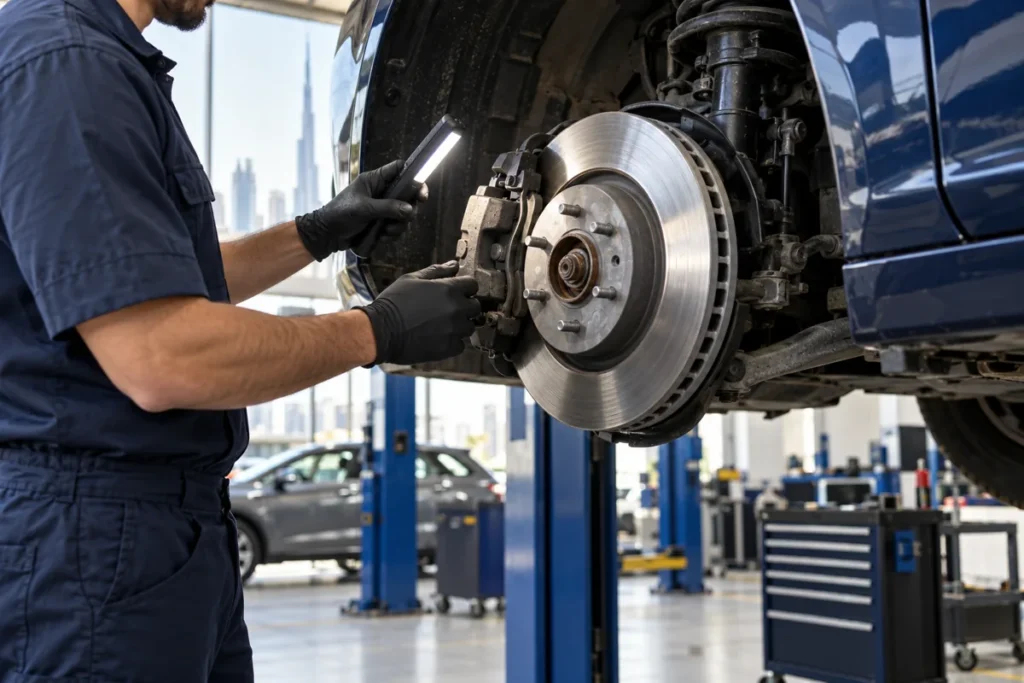
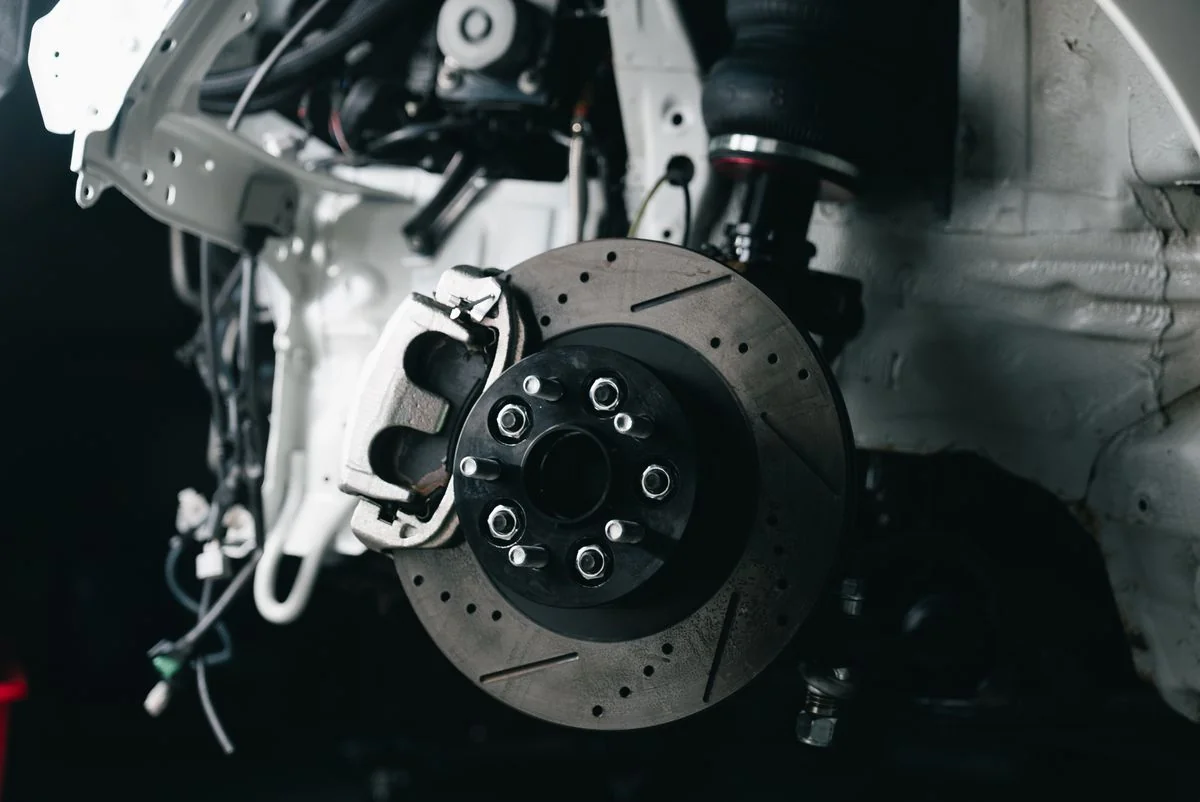
In a conventional hydraulic system, pressing the pedal operates the master cylinder. Brake fluid carries pressure through pipes and flexible hoses to the wheel brakes. Disc-brake calipers press pads against discs. Vehicles with hydraulic drum brakes use wheel cylinders to move the shoes against the drums.
The circuit must contain the correct fluid, remain sealed and operate with the required component clearances. A leak can release fluid and pressure. Air or vapour can compress within the circuit. A worn seal can allow pressure to escape internally even when no puddle appears underneath.
Brake assistance reduces the effort needed from the driver. Conventional vacuum assistance, electric assistance and integrated electronic brake systems differ. This is why an engine-off pedal comparison is not a universal test for every petrol, diesel, hybrid or electric vehicle.
Check the causes of excessive pedal travel
Fluid escaping from the hydraulic circuit
A leaking pipe, flexible hose, caliper or wheel cylinder can reduce braking pressure. Damage may be visible around a connection or hidden behind a wheel or inside a drum. A technician needs to inspect the circuit rather than look only beneath the reservoir.
Low fluid is an important finding, but it is not a diagnosis by itself. The level can also change as friction components wear. A sudden drop, visible wetness or a changed pedal requires investigation. Topping up the reservoir does not repair a leak or make the car safe to drive.
Air trapped after a leak or repair
Air can enter when the hydraulic circuit is opened or the reservoir runs too low. Because air compresses, the pedal may feel springy and travel farther before useful pressure develops. The reason air entered matters as much as removing it.
Bleeding must follow the procedure for the fitted system. Some work involving an ABS hydraulic unit requires diagnostic equipment as part of the process. Repeated bleeding without finding a leak or correcting an assembly issue can leave the original problem unresolved.
Pressure bypassing worn master cylinder seals
A master cylinder can lose pressure through worn internal seals without an obvious external leak. Continued pedal movement under pressure can make this a possibility. It should be assessed alongside the rest of the hydraulic circuit before replacement is approved.
The guide to bad brake master cylinder symptoms explains that component in more detail. Here, the starting point remains the floor-reaching pedal and the checks needed to distinguish its possible causes.
Clearance, assembly and wheel brake problems
Excessive movement within a wheel brake can use more pedal travel before braking force builds. Drum-brake adjustment, incorrectly assembled components or a problem after recent work may need attention. The technician should check the actual brake design and what was disturbed.
Ordinary disc-pad wear should not be assumed to explain a pedal suddenly reaching the floor. Pads, discs and hydraulics need different assessments. Ask for measurements and a stated fault rather than replacing every wear item in the hope that the pedal improves.
Overheating and vapour in brake fluid
Under demanding braking, fluid that reaches its boiling point can form vapour bubbles. Moisture lowers the boiling point of conventional hygroscopic brake fluid. The result can include a softer pedal, longer travel and reduced braking force.
Tell the workshop whether the change followed repeated braking, a long descent or a burning smell. Recovery after cooling does not explain the condition of the fluid or the cause of overheating. Follow the manufacturer’s fluid specification and replacement requirements rather than a universal interval copied from another car.
ABS hydraulics and integrated braking systems
The ABS hydraulic unit and electronically controlled braking components can also require investigation. However, an ABS warning or a wheel-speed sensor code does not establish that the hydraulic unit is causing pressure loss. Stored information must be connected with inspection and appropriate tests.
Normal ABS operation can cause pedal feedback during hard braking. That should not be confused with a persistent floor-reaching pedal during ordinary use. Describe the conditions and follow the handbook’s braking instructions for the car.
Separate normal assistance movement from a fault
A small pedal movement when the engine or power system starts can be normal on some vehicles as brake assistance becomes available. Honda, for example, describes a slight movement when the electric brake system activates on the 2026 Prelude. This does not mean that unrestricted travel to the floor is normal on every car.
If the pedal drops much farther than usual, braking feels weaker or the pedal continues sinking, have it assessed. The relevant comparison is the manufacturer’s information and the car’s normal operation, not a video showing another model.
Loss of conventional brake assistance more often increases the effort needed to press the pedal. That is a different complaint from a soft hydraulic pedal. A technician may still need to examine both systems, but a booster should not be sold as the automatic answer to every low-pedal report.
Record useful details without opening the system
Once the car is safely parked, you can gather information for the workshop without dismantling anything. Do not crawl beneath a vehicle supported only by a jack, loosen hydraulic fittings or conduct a road test to reproduce the fault.
- Record the exact warning text and which lights stayed on.
- Note whether the change happened before or after the engine started.
- Explain whether the pedal suddenly dropped or slowly moved farther.
- Mention brake work, fluid replacement or an ABS repair performed recently.
- Photograph visible wet areas from a safe position without touching unidentified fluid.
- Use the handbook to locate the reservoir and, where visible through its side, note the level with the cap closed.
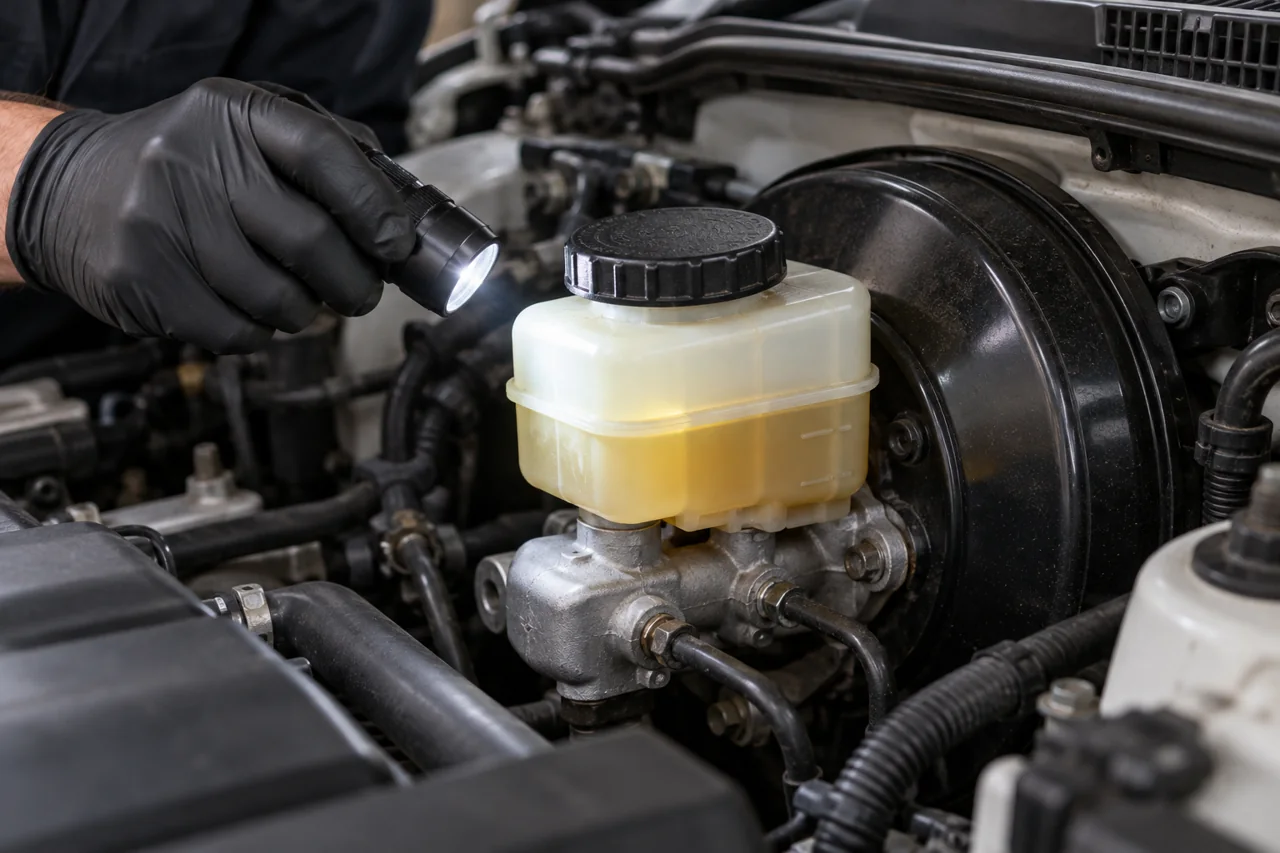
A full reservoir does not exclude an internal pressure fault. Equally, fluid colour alone cannot identify the failed component or establish the correct repair. Share what you have observed and let the inspection determine its significance.
Ask how the workshop will confirm the cause
A useful inspection begins with your complaint, the vehicle details and the recent work history. The technician can then check the fluid, external leaks, pipes, hoses and wheel brakes, and compare pedal operation with the manufacturer’s specifications.
If a master cylinder or hydraulic unit is proposed, ask what test supports that conclusion. A scan can provide ABS and braking-system information when the equipment supports the vehicle. It cannot replace checking a physical leak, component clearance or fluid contamination.
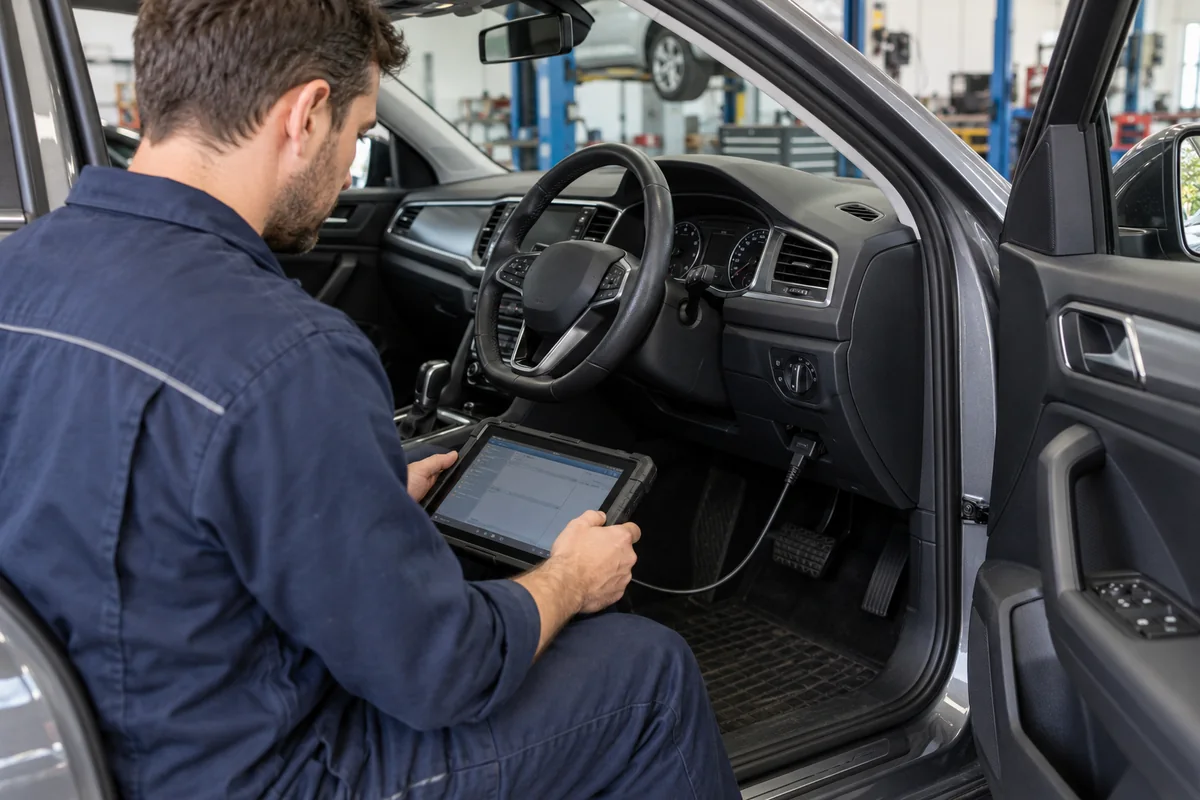
For a complaint that started after repair, provide the invoice and the work description. The completion checks may include correct assembly, the specified bleeding procedure and system functions. Do not accept “new brakes always feel like that” as an explanation for unsafe pedal travel.
Compare repair scope and the complete quotation
The cost depends on what failed, the vehicle’s brake design and the work needed to complete the repair correctly. An inspection, a hose replacement, a master cylinder replacement and an ABS hydraulic repair have different scopes. Ask for the finding first and the parts estimate second.
- Diagnosis. Confirm the initial inspection charge and when further testing needs your approval.
- Parts. Identify the component, brand, part number and any related seals, sensors or fittings.
- Fluid and completion. Include the required fluid, bleeding and any applicable diagnostic procedure.
- Additional damage. Separate confirmed contamination or wear from optional replacements.
- Total. Request the full payable amount including labour and VAT.
- Recovery and warranty. Clarify transport charges and the written cover for parts and workmanship.
The brake repair service is the relevant booking destination once inspection and transport have been discussed. Do not drive there with an unsafe pedal. A cheap fluid change or pad package is not an equivalent quote for repairing a confirmed hydraulic fault.
Know what should be checked before collection
Ask which defect was found, what was repaired and how the result was checked. The invoice should identify the completed work and anything still requiring attention. A firmer pedal at handover is useful, but the workshop should also explain the checks relevant to the original complaint.
Where new friction components were fitted, follow the supplied bedding instructions. Bedding is separate from correcting a hydraulic fault. If the pedal is still unusually low, spongy or sinking, raise that concern before accepting the car for normal driving.
For future maintenance, use the schedule and fluid requirements for your model. Report changes promptly rather than waiting for the next service interval. Regular inspection can identify wear and leaks, but it cannot guarantee that a fault will never occur.
Questions about a brake pedal reaching the floor
Can I drive if the car still stops?
No. If the pedal reaches the floor or braking has changed, the fact that the car stopped once does not establish reliable stopping performance. Leave it parked and arrange inspection and suitable recovery.
Does a full reservoir rule out a brake fault?
No. Internal pressure loss, trapped air, assembly issues and other problems can exist without an obviously low reservoir. The level is one observation within a full assessment.
Does pumping the pedal prove there is air?
No. A temporary change is a clue, not confirmation of a particular cause or a repair. Do not use it as permission to drive. The hydraulic system and relevant component clearances need checking.
Is a slight drop when starting always dangerous?
A small change can be normal as assistance activates on some models. Excessive travel, continued sinking or weaker braking needs assessment. Check the handbook for the fitted system rather than assuming all pedal movement is the same.
Will replacing brake pads fix a sinking pedal?
Only if the inspection establishes a relevant wheel-brake problem. Ordinary pad wear should not be used as the automatic explanation for a pedal reaching the floor. Leaks, pressure retention and other causes need investigation.
Can I bleed the brakes myself to test the cause?
Brake repairs are safety-critical and procedures vary, particularly where ABS or integrated braking is involved. Arrange a qualified inspection and the correct completion procedure. Bleeding without finding why the fault occurred can leave it unresolved.
Manufacturer information for understanding pedal changes
Brembo’s explanation of brake heat and vapour lock describes why overheating can change braking performance. Honda’s 2026 Prelude guidance provides a model-specific example of normal slight pedal movement. Use your own vehicle’s handbook for operating instructions.
Discuss inspection before moving the car
Tell My Car Repair your model, the pedal symptoms and any recent brake work. The team can discuss inspection and the appropriate transport arrangements. Keep the car parked if braking is unsafe.