An electric car that will not start may have a weak low-voltage supply, an unrecognised key, a connected charging cable, too little charge in its main battery or a fault that prevents drive readiness. Begin with what the car actually does. A dark, unresponsive vehicle needs a different check from one with working screens that will not enter READY mode or select Drive.
This guide covers battery-electric cars. A hybrid or plug-in hybrid also has a combustion engine, so its starting faults need the instructions for that particular powertrain. For any EV, use the handbook for your model, build version and market before attempting a reset, a battery boost or recovery.
Identify what happens when you try starting
Electric motors do not make the cranking sound of a petrol engine. Silence can be normal. Look for the drive-ready indication described in your handbook, while keeping the vehicle stationary with your foot on the brake. A lit entertainment screen alone does not establish that the car is ready to move.
| What you notice | What to investigate | Sensible next step |
|---|---|---|
| No screen, lights or normal unlocking | Low-voltage power, access or supply faults | Check the approved access instructions and arrange model-compatible assistance. |
| Screens work but no drive-ready indication | Start sequence, key recognition, charge connection or a control-system fault | Read the exact message and check the normal starting conditions. |
| Key not detected or authentication required | Key, phone or backup authentication | Try the registered spare key or the handbook’s backup method. |
| Charging did not add the expected energy | Session completion, schedule, charger or vehicle charging fault | Compare the vehicle’s current charge with the session record. |
| Stop, electrical-system or temperature warning | A condition that may restrict or prevent operation | Follow the warning and obtain assistance if it persists. |
These are routes for investigation, not confirmed diagnoses. For example, failure to unlock with one remote can involve that key. Failure of the locks, cabin lights and screens together raises a different question about the vehicle’s electrical supply.
Stop checking if the car shows danger
If there is smoke, unusual heat, sparks, a strong burning smell or popping or hissing, move away and contact emergency responders. Do not approach the car to connect a charger or booster. If you are stranded beside traffic, prioritise getting people to safety and arranging assistance.
- Do not open the traction battery, disconnect orange high-voltage cables or probe their connectors.
- Do not attempt to restart or charge a vehicle that has been submerged until it has been inspected under the manufacturer’s guidance.
- Tell the recovery operator about any collision, underbody impact, water exposure or visible damage.
- Do not bypass a safety interlock or repeatedly retry a start after a stop warning.
Ordinary parking checks are appropriate only when the vehicle is safely accessible and there are no signs of damage or an electrical hazard. An EV refusing to drive can be protecting itself from a condition that needs investigation.
Understand the two different sources of power
The traction battery stores energy for driving. The auxiliary low-voltage system supplies vehicle controls and equipment such as lights, locks and displays. On many EVs, a small 12-volt battery supports that system. Other designs use a different voltage or battery chemistry, so compatibility must be checked rather than assumed.
A car can therefore show substantial driving charge before parking and later fail to wake up. That does not by itself establish that the main battery needs replacing. Equally, a working screen does not prove that every condition required to drive has been satisfied.
Why another low-voltage battery may fail again
A DC-DC converter supplies low-voltage power from the high-voltage system. When discharge returns after a battery replacement or boost, diagnosis may need to examine that supply, connections and electrical demand, as well as the auxiliary battery itself. The appropriate tests depend on the vehicle.
Ask which battery a warning or quotation concerns. “EV battery replacement” is too vague to approve. A low-voltage battery, a traction-battery component and a complete traction pack are very different jobs, with different compatibility requirements and costs.
What a permitted battery boost actually restores
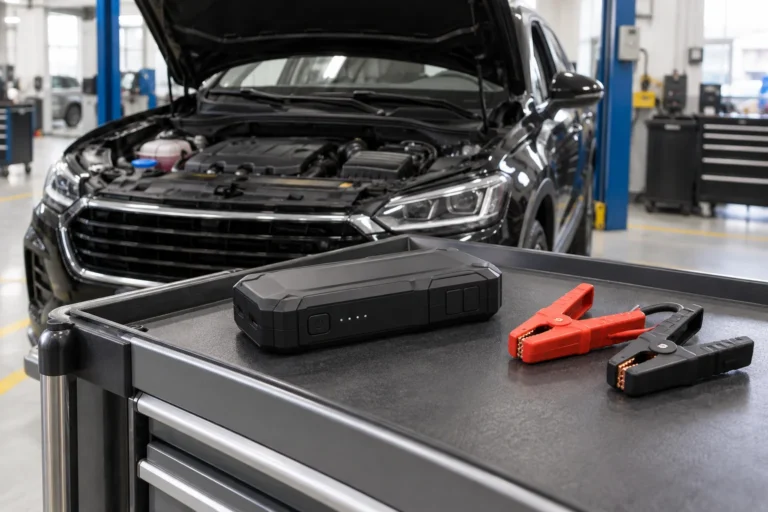
Some manufacturers permit external support for the low-voltage system. It does not charge the traction battery. Equipment, connection points and access procedures must match the car. A bonnet-release power connection may have a separate purpose and must not be treated as a charging terminal.
Tesla’s Model 3 jump-start instructions give separate procedures for lead-acid and lithium-ion auxiliary batteries. That distinction is a reason to check the actual car before connecting equipment. Do not use an EV as a donor vehicle unless its manufacturer explicitly permits it.
Our guide to jump-start precautions explains equipment and connection risks, including the need for vehicle-specific EV instructions. If you cannot establish the correct supply and approved points, leave the connection to suitable assistance.
Check key recognition and normal starting conditions
With the vehicle safely parked, read its starting instructions and the message on the display. Start-button cars commonly require the recognised key inside, Park selected and the brake pressed. Cars without a conventional start button use their own authentication and drive-selection sequence.
- Confirm the correct key is with you. Use a registered spare if available.
- If using a phone key, check the phone’s power and the required connection or app settings.
- Use the manufacturer’s backup key-reading position if normal recognition fails.
- Check that a floor mat or another object is not obstructing the brake pedal.
- Confirm the car reports Park before repeating its normal start sequence.
A key fob has its own battery. Replacing it does not recharge either battery in the vehicle. Likewise, successfully unlocking the doors with a remote does not establish that driving authentication has succeeded.
Hyundai’s 2025 IONIQ 5 starting instructions describe applying the parking brake, selecting Park, pressing the brake and using the Start/Stop button. They also describe pressing that button with the smart key when its battery is weak. Use that backup only where your own handbook specifies it.
Keep your seat belt fastened and doors properly closed before driving. A seat-belt reminder or applied parking brake is not a universal diagnosis for an EV that will not power on. Observe the particular warning and start requirements rather than releasing safety controls experimentally.

Check the charging session and cable connection
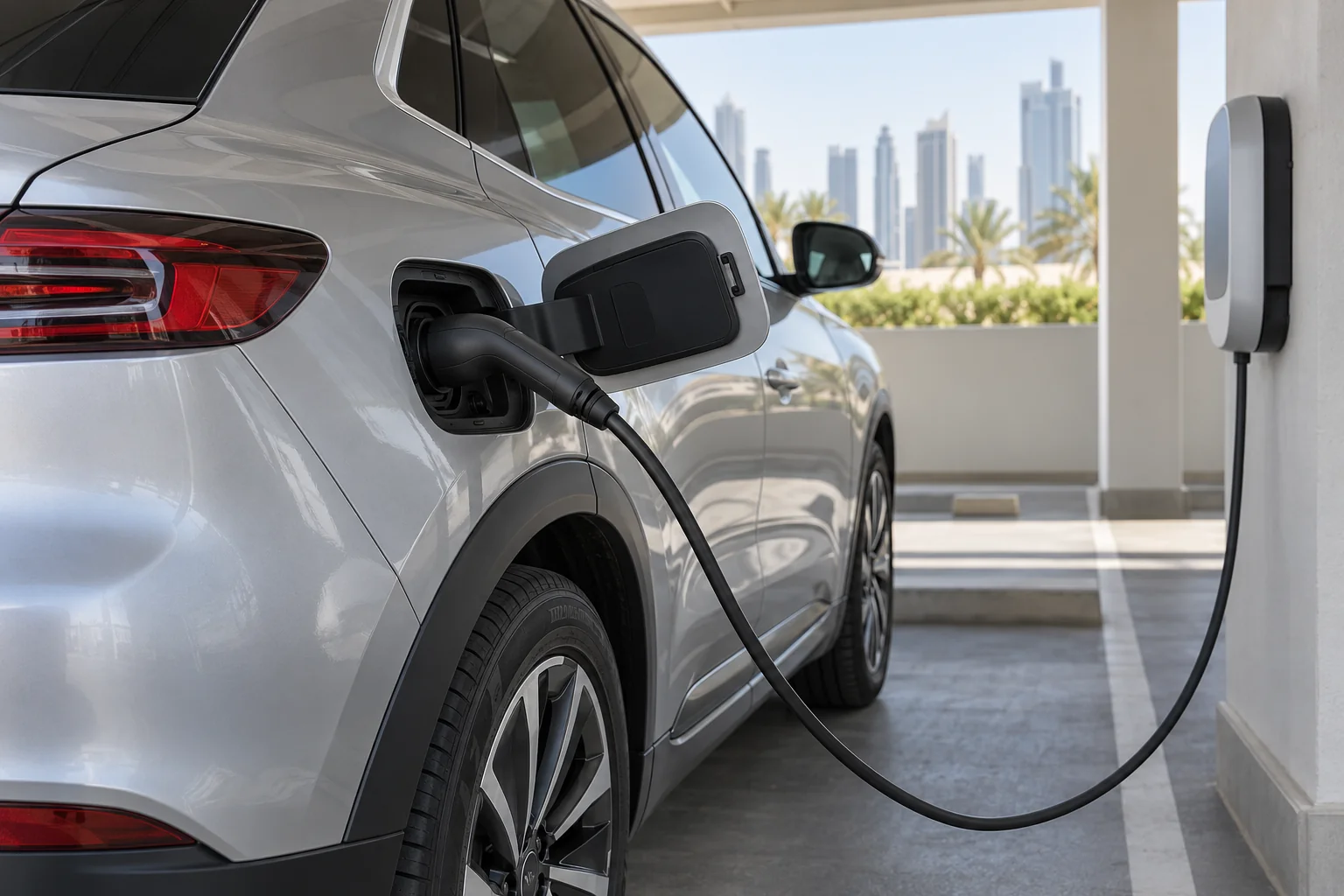
If the car was left charging, confirm the session actually delivered energy. Being plugged in overnight does not establish that charging started or completed. Check the vehicle’s current charge, any scheduled charging time and the charger or app’s session status.
End the session and disconnect the cable using the approved procedure before requesting drive readiness. A connected plug can prevent driving even when charging has stopped. If the connector is locked, follow the vehicle and charger instructions. Do not pull it out by force.
DEWA cautions that forcing a cable out can damage the vehicle and charging station. At a public charger, note the unit number and session error so the operator can identify the equipment. A station-side problem needs the operator’s help, while a recurring vehicle warning needs vehicle diagnosis.
- Inspect the cable and port from outside for obvious damage. Do not touch exposed contacts or dismantle the connector.
- Only try another compatible charger when the car and equipment are undamaged and the manufacturer’s instructions permit it.
- Record whether AC, DC or both types of charging fail. The systems involved differ.
- If the main battery is depleted and the car will not accept charge, arrange assistance instead of repeatedly attempting to drive.
Charging failure and failure to enter READY are related complaints, but they are not interchangeable. A car that retains usable driving charge may have a charging fault without an immediate no-start condition. Tell the technician which symptom occurred first.
Read temperature warnings before trying a reset
Dubai heat is relevant to cooling and battery operating conditions, but a hot day alone does not diagnose a failed battery. Follow the temperature or power-limitation message for your vehicle. Hyundai’s EV warning guidance, for example, identifies low battery charge, unsuitable battery temperature and high motor temperature among conditions that can limit power.
If a warning requires you to stop, do not drive to test whether it disappears. Do not add coolant, remove a hot cap or reach into high-voltage equipment as a parking-lot remedy. A continuing temperature warning needs a check of the relevant system.
A screen restart is a separate operation
A frozen touchscreen may have a manufacturer-approved restart procedure. Tesla states that its Model 3 scroll-button operation restarts the touchscreen and does not power the whole vehicle off and on. It also specifies that the vehicle must be stopped and in Park because status information and safety displays disappear during the restart.
Do not assume a dark display is a software problem when other electrical functions have also stopped. Avoid generic internet reset sequences, battery disconnection and repeated reboots. Save the exact alert before a permitted reset, and seek help if the warning returns or drive readiness remains unavailable.
Explain the symptom before approving repair work
Useful diagnosis begins with your description of the failure. Share the make, model, year and vehicle identification details with the workshop, along with the last successful drive and anything that changed before the problem. A photograph of the exact message is more useful than calling every alert a battery warning.
- Does the car unlock and do its lights and screens work?
- Does it show drive readiness, remain in accessory mode or refuse gear selection?
- What was the last known traction-battery charge and did the latest session complete?
- Has the auxiliary battery recently been replaced or supported externally?
- Did the fault follow storage, accessory installation, an update, water exposure or an impact?
Ask whether the workshop has the diagnostic access and procedures for your exact model. Reading a fault code is a starting point for investigation. A useful explanation connects the code, the observed symptom and the checks that support the proposed repair.
For a low-voltage complaint, ask how battery condition and the supporting power supply were assessed. For an authentication complaint, ask what the car reports about the key and start request. High-voltage isolation, battery-management and drive-system concerns require appropriately trained personnel and model-specific procedures.

Compare the scope of the proposed quotation
Request an estimate that separates diagnosis from the proposed parts and labour. It should identify the actual battery or component, any setup or software work, VAT treatment and the conditions of any parts or repair warranty. Ask whether diagnosis remains payable if you decline the repair.
A no-start symptom alone cannot establish a traction-pack replacement price. Once the fault is identified, the work and cost information for electric car repairs can help you compare the proposed scope. Confirm the estimate for your vehicle before approving work.
Arrange recovery that suits your particular EV
If safe checks do not restore normal operation, tell the recovery operator the exact model, location and displayed warnings. Explain whether the car has low-voltage power, whether it can unlock and whether the charging cable is still connected. In an underground car park, also provide the entry height limit and access details.
Do not push-start an EV or assume it can be towed with driven wheels on the road. The manufacturer’s transport procedure controls the method. Tesla’s Model 3 guidance requires an approved arrangement that keeps all four wheels off the ground during transport. Its tow mode is for limited loading or repositioning, not ordinary road towing.
A dead screen or missing key recognition may also prevent a transport mode from being enabled. A recovery team needs to plan the approved loading equipment around that condition. Leave parking-brake overrides and loading procedures to the operator using the correct instructions.
Confirm normal operation after the car wakes
A successful wake-up or boost does not explain why the fault occurred. Before returning to routine use, establish whether the vehicle now enters drive readiness without external support, whether charging works as expected and whether any warnings remain.
If the same fault returns after parking, report that pattern rather than arranging another battery replacement immediately. Keep the first diagnosis and invoice so the next check can account for work already done. Do not set off with a continuing stop warning simply because the screen has come back on.
Reduce repeat problems during parking and storage
- Follow your model’s storage and charging guidance. Avoid leaving a depleted traction battery unattended.
- Respond to auxiliary-battery warnings and recurring charging errors before the next long trip.
- Keep an approved backup key available and check the key fob’s battery when recognition becomes unreliable.
- Have added accessories fitted with suitable power management for the vehicle.
- Use the manufacturer’s maintenance schedule and software-update instructions, including their required parking and power conditions.
There is no single storage charge percentage, battery replacement interval or reset procedure that suits every electric car. Keeping the right handbook accessible on your phone helps when the car’s own display is unavailable.
Questions about an electric car that will not start
Why will my EV not start with charge left?
The displayed driving charge concerns the traction battery. A weak low-voltage supply, failed key authentication, a connected cable or a system fault can still prevent the vehicle from becoming ready to drive. The exact symptom determines the next check.
Can an electric car be jump-started?
Some models permit support for their low-voltage system using specified equipment and connection points. It does not charge the main driving battery. Check the exact vehicle instructions or arrange compatible assistance.
Does a working screen mean the EV is ready?
No. A screen can operate while the vehicle is in accessory mode or driving is disabled. Check the drive-ready indication and any warning described in your handbook while keeping the vehicle stationary.
Should I replace the battery after one failure?
First establish which battery or supply is involved and why it failed. A discharge, a defective auxiliary battery and a fault in its supporting supply need different responses. One no-start event does not establish that the traction pack is defective.
Can I drive after restarting the touchscreen?
A screen restart alone does not confirm that a vehicle fault has cleared. Check normal drive readiness and follow any continuing warning. Obtain assistance when the car still refuses to drive or displays a stop message.
What should I do if the plug will not release?
End the session and follow the release procedure for the car and charger. Do not force the connector. Contact the charging operator or vehicle assistance if the approved procedure does not work.
Discuss an EV that will not start
Tell our Al Quoz team your EV model, what happens when you try to start and the exact warning. We can discuss suitable diagnosis or the next step for your vehicle.