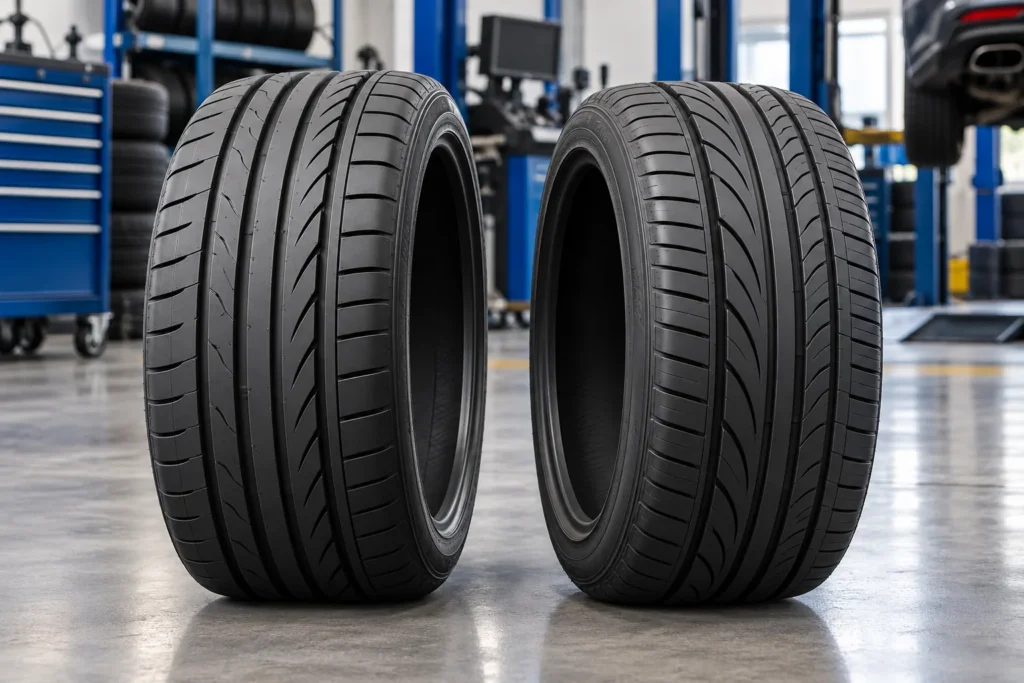
Neither Bridgestone nor Michelin is better for every car. Compare the exact tyre model, size and approved specification first. For everyday road use, start with equivalent touring options such as Bridgestone Turanza 6 and Michelin Primacy 5. For a performance car, compare an appropriate Potenza with a suitable Pilot Sport. A cheaper tyre in the wrong category is not a useful alternative.
Your best choice depends on the compromise you prefer between braking, steering response, ride comfort, road noise and the complete fitted price. Dubai driving also makes correct cold pressure, vehicle load and tyre condition important. A premium brand cannot compensate for an unsuitable fitment or a tyre driven underinflated.
Compare equivalent models before choosing a brand
The family name tells you where to start, but the full product name determines what you are buying. Turanza T005, T005A, Turanza 6 and Turanza 6A are not interchangeable descriptions. Likewise, Primacy 4, Primacy 4+, Primacy 5 and Primacy 5 energy should not be treated as the same tyre. Ask for the exact version on your quotation and on the delivered sidewall.
| Driving need | Bridgestone starting point | Michelin starting point | Check before comparing |
|---|---|---|---|
| Everyday touring | Turanza 6 or suitable Turanza variant | Primacy 5 or suitable Primacy variant | Same category, generation, size and required ratings |
| Performance road driving | Appropriate Potenza model | Appropriate Pilot Sport model | Road-use specification, vehicle approval and exact model |
| Road-focused SUV | Alenza 001 or suitable road SUV option | Suitable Primacy SUV or Pilot Sport SUV option | Load capacity and intended road use |
| Mixed terrain | A suitable all-terrain Dueler variant | A suitable terrain-specific option | Actual terrain category, size and manufacturer suitability |
These are comparison starting points, not a stock list or a fitment approval. The regional catalogues include touring, performance and SUV products, but availability changes with size and version. An SUV badge does not mean the tyre is intended for sand or rocky tracks. Dueler also contains different applications, so the family name alone cannot settle an off-road choice.
For a road-driven family SUV, compare suitable road tyres before choosing a more aggressive tread. For regular off-road use, explain the terrain and loaded vehicle requirements to the supplier. Do not buy an off-road-looking tyre merely because it appears tougher, or assume every Latitude or Alenza product serves that purpose.
Use model tests to understand the trade-offs
One useful example is the original 2026 Tyre Reviews summer test in 225/45 R17 on a Volkswagen Golf GTI. It compared Turanza 6 and Primacy 5 alongside other tyres. Results below belong to that test and its conditions, not every tyre sold under either brand.
| Measured discipline | Turanza 6 | Primacy 5 | Preferred direction |
|---|---|---|---|
| Dry braking | 37.45 m | 38.39 m | Lower |
| Wet braking | 29.47 m | 29.73 m | Lower |
| Wet handling lap | 72.65 s | 71.35 s | Lower |
| Subjective comfort | 6.6 points | 6.9 points | Higher within this test |
| Measured noise | 72.8 dB | 70.9 dB | Lower |
| Rolling resistance | 6.46 kg/t | 7.12 kg/t | Lower |
Turanza 6 had shorter braking and lower rolling resistance here, while Primacy 5 had quicker wet handling and better comfort and noise results. That split defeats a simple whole-brand winner. Different sizes, generations, test surfaces and scoring priorities can change the conclusion. These figures are not stopping-distance promises for your UAE journey.
The original comparison test explains its results and conditions. Use that evidence to shortlist models, then verify your actual specification. A result for a conventional tyre does not automatically describe a run-flat or a manufacturer-specific version bearing a similar name.
Choose the compromise that suits your driving
Comfort and a quieter daily commute
Start with the touring category when comfortable commuting is the main goal. Read both ride-comfort observations and noise measurements for the model you are considering. A tyre that works well on one test car may feel different with your wheel size, suspension and cabin insulation.
The external rolling-noise figure on a European tyre label describes noise outside the vehicle. It is not a direct measurement of the sound reaching your passengers. Ask whether a test measured cabin noise, pass-by noise or subjective impressions before assuming two decibel figures are comparable.
Steering response and road performance
If your car requires a performance tyre, compare equivalent road-performance products from both brands. Pilot Sport 5, Pilot Sport 4 S and Pilot Sport SUV products serve different fitments and should not be merged into one rating. The same caution applies to different Potenza products and their original-equipment variants.
Pay attention to wet and dry braking as well as steering feel. A sharper response alone does not prove shorter stopping distances. Track-oriented requirements are another decision and should not be inferred from this road-tyre comparison. Keep normal road driving within posted limits regardless of a tyre’s speed symbol.
Energy use and tyre wear
Compare rolling resistance for the exact model or size where reliable data are available. A lower value can support efficiency, but it does not establish a fixed fuel saving or extra EV range for your car. Pressure, speed, route and vehicle condition also affect consumption.
Similarly, a predicted wear result is not a guaranteed kilometre life in Dubai. Your loading, alignment, driving and replacement condition matter. Avoid paying a premium solely because someone says one entire brand lasts longer.
Confirm the specification your vehicle actually needs
Use the vehicle handbook, approved fitment information and tyre placard rather than copying a tyre size from an unrelated trim. Check both axles because some cars use different front and rear sizes. Aftermarket wheels need a separate compatibility assessment.
- Match the required size and approved wheel fitment.
- Confirm the load index and speed rating meet the vehicle requirements.
- Retain required XL or HL construction rather than assuming a standard-load tyre is equivalent.
- Check required run-flat construction and relevant original-equipment markings.
- Confirm front and rear specifications for staggered fitments.
For example, 225/45 R17 describes nominal width, aspect ratio, radial construction and wheel diameter. It is not the complete specification. The following load and speed codes still matter, as do extra construction or vehicle-approval markings. Two tyres of that size may therefore be unsuitable substitutes.
Michelin’s explanation of tyre markings covers load, speed and original-equipment codes. Some original-equipment versions are tuned for a particular vehicle. If your existing tyres carry a relevant approval marking, confirm the correct replacement version. A brand name or an apparently identical tread photo does not establish that match.
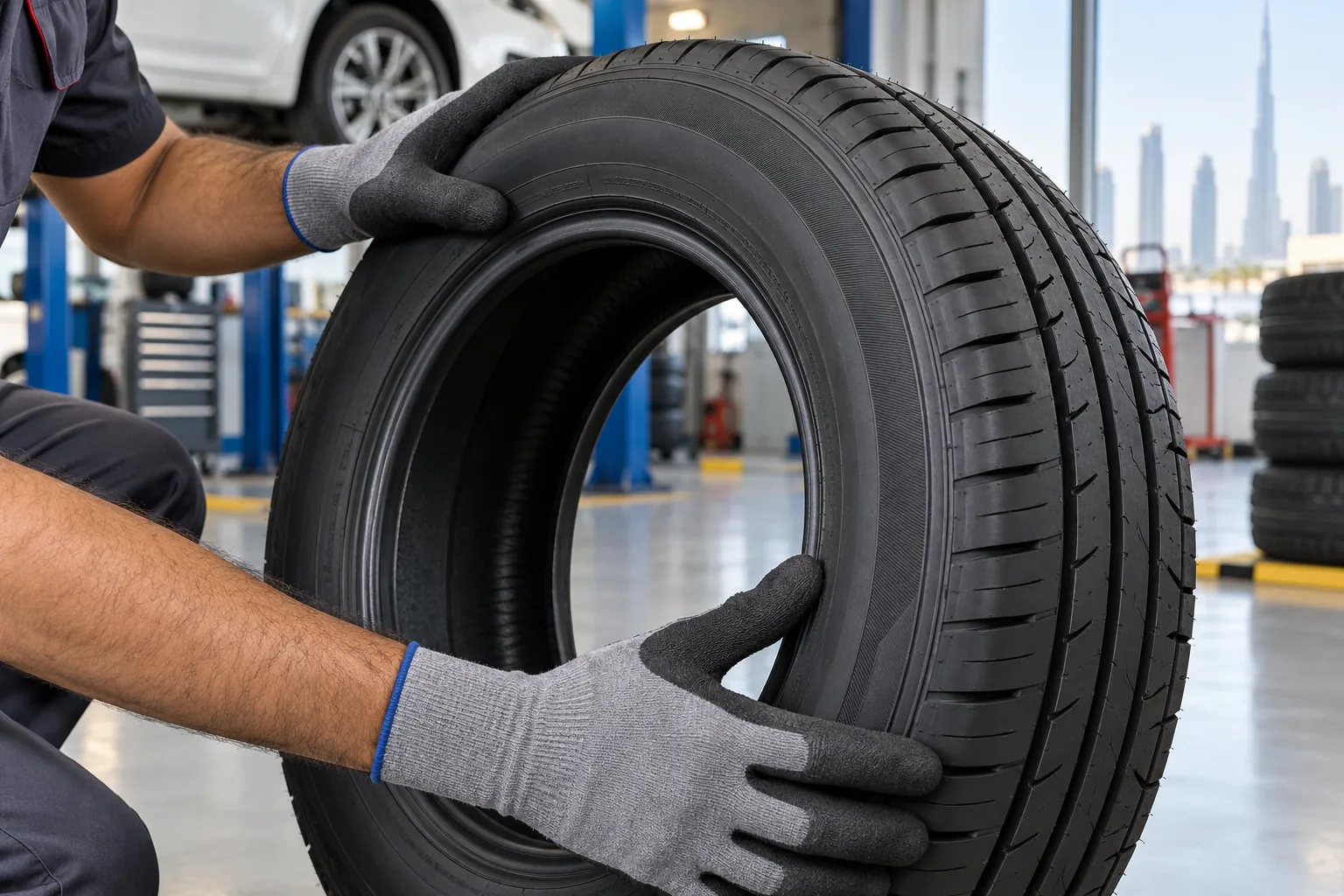
Check run-flat and EV requirements before ordering
Run-flat construction changes the buying decision
Both brands have run-flat products, but not every model or size uses that construction. A reinforced sidewall or an XL marking does not by itself mean run-flat. Identify the exact product designation and follow the vehicle requirements.
Run-flat capability allows only limited continued operation after pressure loss under specified conditions. It is not permission to drive any damaged tyre for a fixed distance. Follow the particular tyre and vehicle limits, including speed, load and warning instructions. A severe impact, visible damage or unstable handling may require stopping and suitable assistance.
Do not mix conventional and run-flat tyres as a normal replacement strategy. A proposed conversion needs confirmation of vehicle suitability, pressure monitoring and an appropriate puncture contingency. A punctured tyre also needs professional assessment before reuse, especially if it was driven with very low pressure.
EV suitability goes beyond the badge
Bridgestone presents Turanza 6 as EV-ready, and Michelin offers Primacy 5 for electric as well as other suitable vehicles. That positioning does not approve every available size for every EV. The vehicle’s load, construction and approved tyre specification still come first.
If your current tyre includes an acoustic insert or a particular original-equipment specification, discuss whether the quoted replacement matches it. Those features are version-dependent. A suitable replacement can be chosen from either brand without promising a universal percentage range gain or longer traction-battery life.
Compare the complete fitted price and scope
Bridgestone is not always cheaper, and Michelin is not automatically better value at a higher price. Model, size, production batch, approval markings, run-flat construction and available stock can outweigh the brand difference. Compare written quotations for the same requirements and the same number of tyres.
For context, our published tyre fitting options include the estimates below. These are general size-based workshop estimates checked on 6 October 2026, not confirmed Bridgestone or Michelin model prices. A specific premium or special fitment needs its own quotation.
| Example passenger-car size | One fitted tyre including 5% VAT | Four fitted tyres including 5% VAT |
|---|---|---|
| 195/65 R15 | AED 200–400 | AED 800–1,600 |
| 205/55 R16 | AED 210–520 | AED 840–2,080 |
| 215/60 R17 | AED 300–720 | AED 1,200–2,880 |
The scope includes a new tyre, fitting, balancing, a standard rubber valve and old-tyre disposal. Alignment, replacement TPMS sensors and special metal valves are separate. Avoid adding balancing again when it is already included in the fitted price.
Check the final invoice total rather than a supply-only headline. A promotion may apply to one production year, quantity or version. An advertised price for an older Turanza generation cannot settle the value of a newer Primacy, and a cheaper conventional tyre is not an equivalent run-flat quotation.
- Get the exact model, size, ratings and construction in writing.
- Confirm the number of tyres and front/rear allocation.
- Ask what fitting, valve and disposal work is included.
- Confirm any alignment or TPMS work separately.
- Check VAT, total payable and actual availability before booking.
Check the delivered stock and local warranty
Read the production date on each tyre rather than relying only on a listing marked with a year. In a four-digit manufacturing date code, the first two digits indicate the week and the last two indicate the year. The invoice and delivered tyres should match the agreed model and specification.
Manufacturing age is one factor, not a complete condition assessment. Storage, damage and the tyre’s history matter as well. Ask about older stock before accepting it, and check the vehicle and applicable inspection requirements. An overseas manufacturer’s maximum-age recommendation is not a target service life for Dubai.
There is no useful universal five-year-versus-six-year warranty comparison without the actual local terms. Ask who provides the warranty, when cover starts and how a claim is assessed. Manufacturer defects, treadwear guarantees and optional road-hazard cover are different forms of protection.
Keep the invoice and any registration or inspection evidence required by the policy. Confirm exclusions for impact damage, misuse, uneven wear and running underinflated. Do not assume a puncture is covered, that a replacement will be free, or that a foreign mileage warranty applies to a UAE purchase.
Protect either brand through correct tyre care
Check pressure when the tyres are cold using the vehicle’s specified values for the relevant load. Do not use the maximum pressure moulded on the sidewall as your everyday target. Normal pressure rise after driving is not a reason to bleed a warm tyre down to the cold setting.
A monthly pressure check is a useful routine, with additional checks before a long journey or when a warning appears. Include the spare if fitted. Repeated pressure loss needs inspection rather than endless top-ups or a switch to another brand.
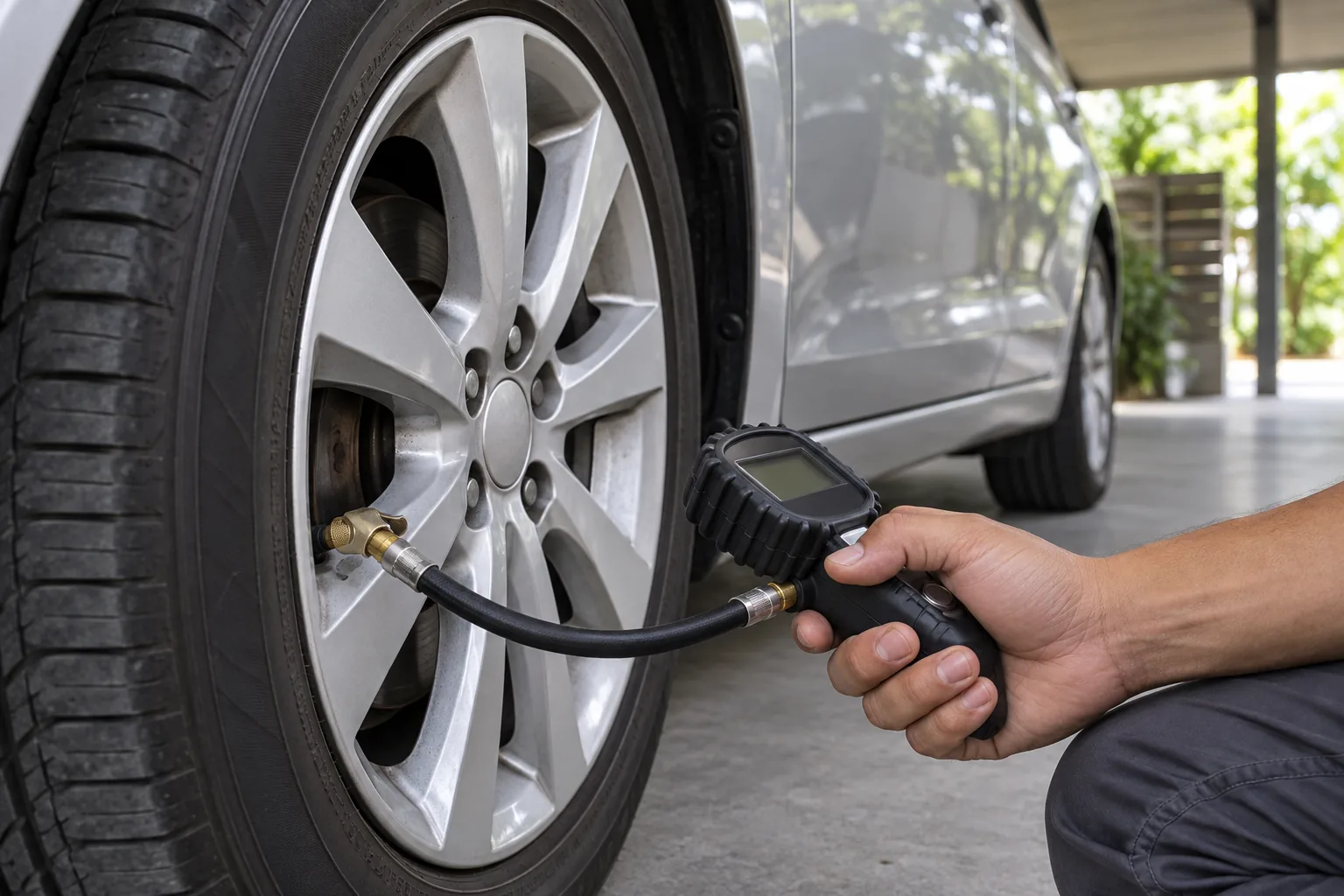
Heavy loads and underinflation can increase tyre stress and heat. Follow the vehicle’s loading instructions, and do not assume summer driving requires an arbitrary extra pressure amount. The correct cold settings may change with passengers and luggage according to the placard or handbook.
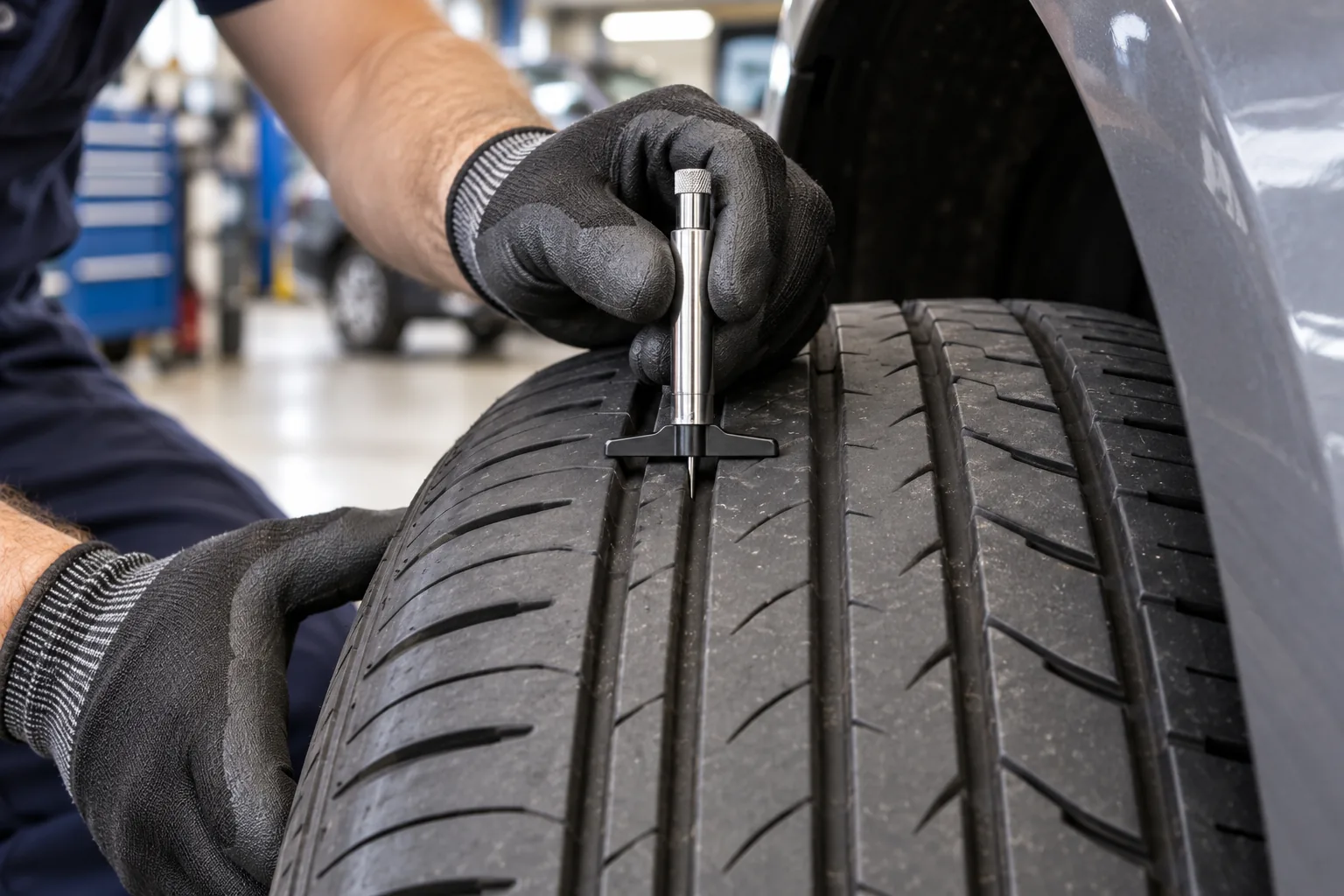
Observe tread across the width rather than only the most visible outer edge. Unusual wear, a bulge, cuts, exposed cords or new vibration warrant assessment. Our guide to tyre blowout warning signs covers the safety response in more detail.
Balancing and alignment are different jobs. Balancing addresses uneven rotating weight, while alignment concerns wheel angles. Neither restores worn tread or repairs a damaged tyre. Investigate pulling or uneven wear before expecting a new premium set to solve the underlying problem.
Plan a suitable set or axle replacement
For predictable comparison, a matching set avoids combining different performance characteristics. If only two tyres need replacement, follow the vehicle and tyre-maker guidance on matching and axle placement. Do not choose a mixed arrangement solely to use the cheapest remaining stock.
All-wheel-drive vehicles may have restrictions on rolling circumference and differences in wear. A new tyre and a substantially worn tyre can matter even when their nominal sizes match. Ask for the vehicle-specific limits rather than assuming a universal permitted tread difference.
Staggered sizes and directional or asymmetric tread designs also affect fitting and rotation. Some arrangements cannot be rotated in the same way as a square setup. Confirm the permitted pattern instead of applying one interval or rotation method to every car.
After fitting, check that the delivered specification matches your order, the cold pressures are appropriate and any required TPMS procedure is completed. Report a new vibration, pulling or warning promptly. A brand comparison ends with a correctly fitted, suitable tyre, not just a familiar logo on the sidewall.
Make your final choice from two suitable quotes
- Confirm fitment first. Supply your car’s model, year, tyre size, axle details and any required approval or run-flat specification.
- Choose the relevant category. Explain whether comfort, road performance, SUV touring or genuine mixed-terrain use is the priority.
- Compare exact models. Use relevant test evidence without turning one test result into a promise for every size.
- Check delivered stock and cover. Agree production information, actual availability and the written local warranty.
- Approve the complete fitted total. Confirm inclusions, separate work and VAT before booking.
Choose Bridgestone when the suitable model and complete offer better match your priorities. Choose Michelin when its equivalent option does so. If both meet the requirements, the decision can reasonably come down to the ride characteristics you prefer, the quotation and the support available for that actual purchase.
Questions about choosing Bridgestone or Michelin tyres
Which brand is better for everyday Dubai driving?
Neither wins for every vehicle. Start with equivalent touring models in the approved specification, then compare braking, comfort, noise and the fitted quote. Pressure, load and tyre condition remain important whichever brand you buy.
Are Michelin tyres always quieter than Bridgestone?
No. Primacy 5 had better noise and comfort results than Turanza 6 in the particular 2026 test discussed here, but that does not rank all products. External label noise also differs from cabin comfort.
Is Bridgestone always the cheaper option?
No. Compare the same size, required ratings, construction, generation and complete fitting scope. A stock promotion or an older model can change the price relationship. Neither brand has one universal price.
Which brand lasts longer in UAE heat?
There is no reliable whole-brand kilometre promise. Exact product, loading, driving, pressure, alignment, condition and age affect replacement timing. Do not treat a foreign test prediction or a warranty period as an expected Dubai service life.
Are Turanza and Primacy automatically all-season tyres?
No. Those family names contain different products across markets. Turanza 6 and the Primacy 5 comparison here concern summer touring tyres. Confirm the exact model rather than inferring its category from the brand.
Can I switch from run-flats to ordinary tyres?
Only after confirming suitability for the vehicle and planning for pressure loss or a puncture. Do not mix ordinary and run-flat tyres as a routine setup. Use the vehicle and tyre-maker guidance for the exact replacement.
Does an EV need one particular tyre brand?
No. It needs a suitable approved specification. Load capacity, construction, tyre characteristics and any relevant approval or acoustic feature matter more than buying by the logo alone. Verify the exact version offered.
What should I send to get comparable quotations?
Send your make, model and year, clear sidewall photos, front and rear sizes, and any run-flat or approval markings. State how many tyres you need and your priorities. Ask for the model, fitted scope, VAT total, stock details and written cover.
Discuss suitable tyres for your car
Send your car details and clear photos of the tyre sidewalls. Our Al Quoz team can discuss suitable models, confirm availability and explain the complete fitted quotation before you book.