A bent rim needs inspection before anyone decides whether it can be repaired. Wheel and vehicle manufacturers may prohibit straightening or welding structural damage, so replacement can be necessary even when the bend looks small. A surface scuff on an otherwise sound wheel is a different problem.
If you have hit a pothole or kerb, first check whether the car is safe to move. Pressure loss, a tyre bulge, a crack, strong vibration or changed steering are reasons to stop safely and arrange assistance. This guide explains what the damage can mean, what a workshop should check and how to assess a repair or replacement recommendation.
Know when to stop driving after impact
Do not continue driving on a flat tyre, a visible sidewall bulge or a visibly cracked wheel. If the car vibrates strongly or becomes difficult to steer, slow down smoothly and stop somewhere safe. Avoid testing it at a higher speed.
A pressure warning after an impact needs attention even if the tyre does not look flat. The display may not reveal how quickly air is escaping. Adding air and watching the warning disappear does not establish that the tyre or wheel is undamaged.
A suitable spare may provide a temporary route forward if the owner’s manual permits it and you can fit it in a safe place. Follow its pressure, speed and distance restrictions. Do not change a wheel beside moving traffic or rely on a jack while reaching underneath the vehicle. Arrange recovery when a safe wheel change is not possible.
Run-flat tyres have vehicle-specific restrictions too. Their presence does not make a cracked or distorted wheel safe. Where there is obvious wheel damage, uncertainty about tyre condition or a handling change, seek assistance rather than assuming the car can reach a workshop.
Separate surface scuffs from actual wheel distortion
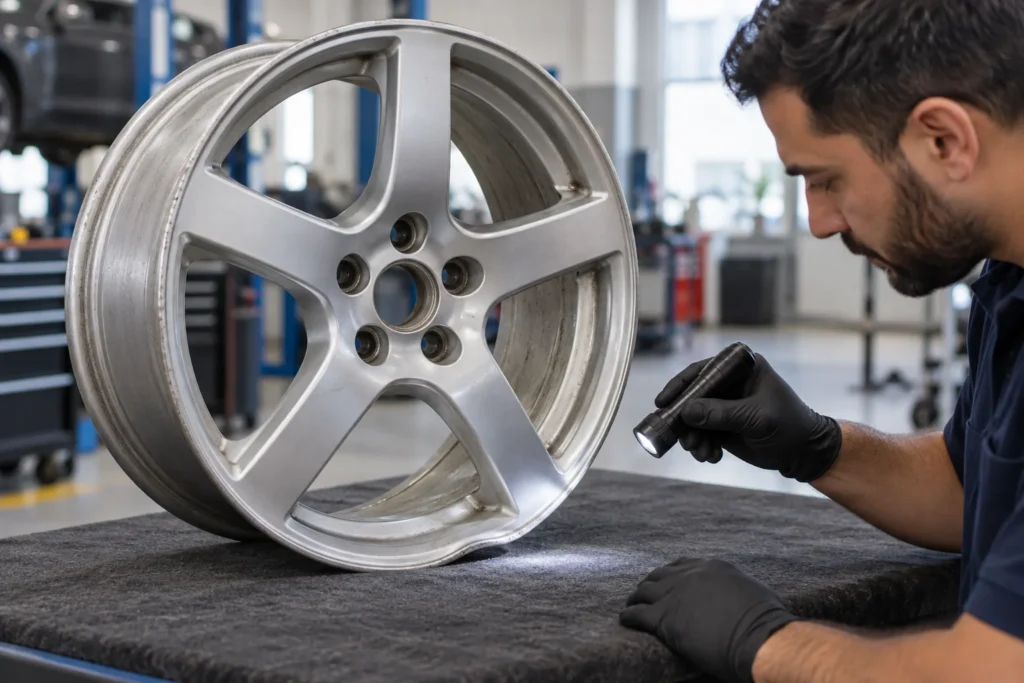
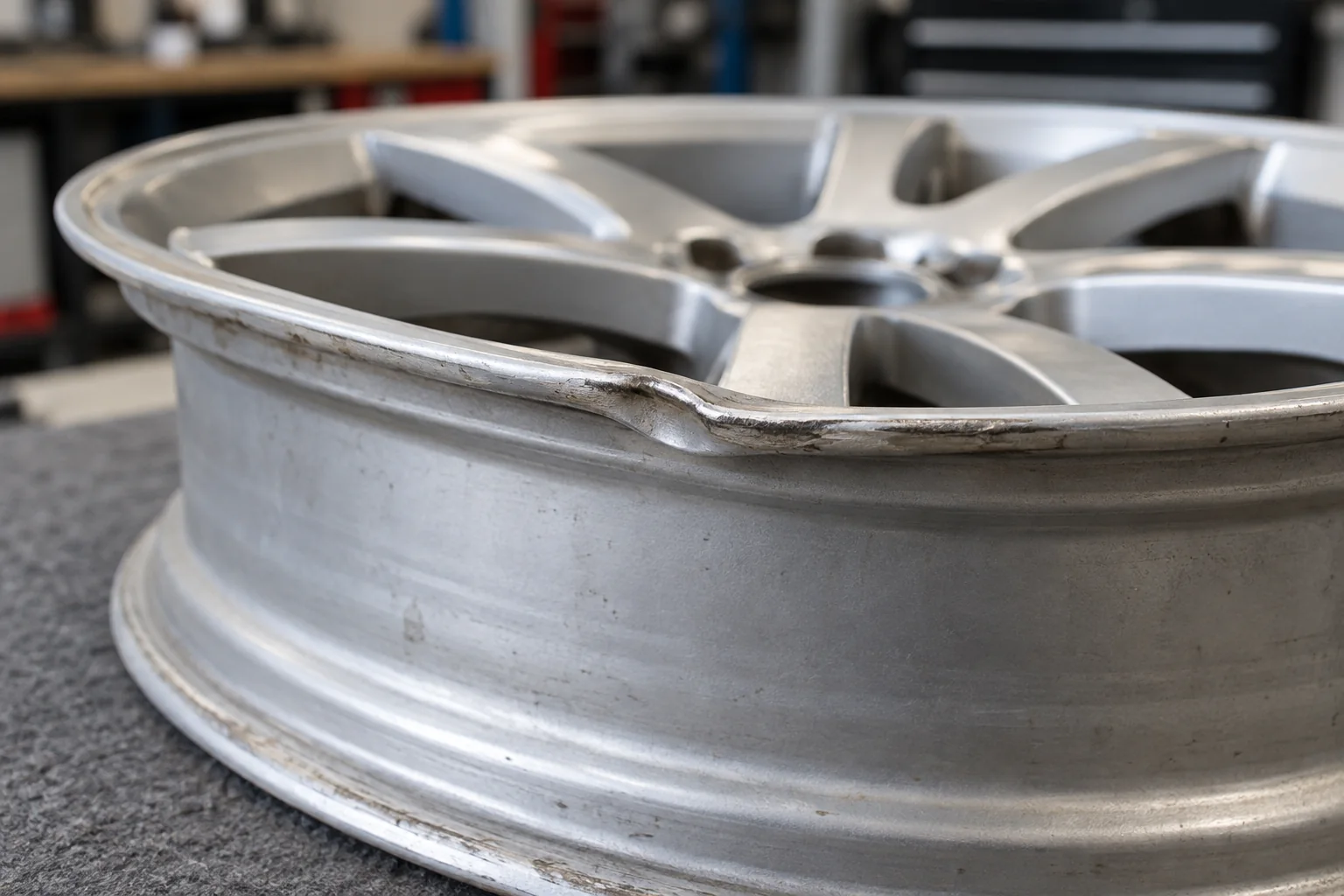
Drivers often use “rim” to mean the whole wheel. More precisely, the rim is the outer part that supports the tyre. A kerb can mark the finish without changing the wheel’s shape, but a harder impact can deform a flange, damage the barrel or affect another structural area.
| Visible finding | What it means for the decision |
|---|---|
| Light scratches in the coating with no visible distortion | Cosmetic refurbishment may be possible after the wheel is confirmed structurally sound. |
| A flattened, folded or displaced rim edge | This is deformation. Establish the maker’s restrictions before considering any work. |
| A crack in the flange, barrel, spoke or mounting area | Stop using the wheel and obtain a replacement recommendation. Do not treat welding as an automatic safe solution. |
| A deep gouge, damaged bolt seat or distorted mounting face | Appearance alone cannot establish serviceability. A technician must assess the affected area. |
| No obvious damage on the outer face | The inner edge and tyre can still be damaged. A clean-looking face does not rule out an impact problem. |
On a safely parked car, photographs of the visible damage can help explain what happened. Include a wider view showing which wheel is affected. Do not remove the wheel, crawl underneath or scrape away material just to obtain a better photograph.
Understand why vibration alone cannot identify damage
Steering-wheel shake or vibration through the seat can follow an impact, but neither proves that the rim is bent. An imbalance, an out-of-round tyre, incorrect mounting or another suspension or steering fault can produce similar symptoms. The pattern helps a technician choose checks, rather than giving a diagnosis by itself.
Note when the vibration started, whether you struck a kerb or pothole, and whether the car also pulls to one side. Report any new noise or pressure warning. You do not need to reproduce the symptom on a motorway to provide useful information.
Air loss also has several possible causes. Damage where the tyre seals against the wheel is one possibility, alongside a puncture, valve fault or corrosion around the sealing surface. A leak test should locate the escape path before anyone sells a wheel repair.
Do not assume that a rear-wheel problem is harmless because the steering wheel feels normal. Equally, do not replace a wheel solely because a vibration appears at a particular speed. Inspection should establish which component is responsible and whether more than one fault is present.
Ask what the wheel inspection actually measured
A useful inspection goes beyond looking at the outer face. The technician should examine the inner and outer edges, barrel, spokes, mounting face and fastener seats. The tyre, valve and sealing areas need attention as well. The wheel’s identity and the relevant manufacturer guidance matter to the final recommendation.
How runout readings help explain wheel condition
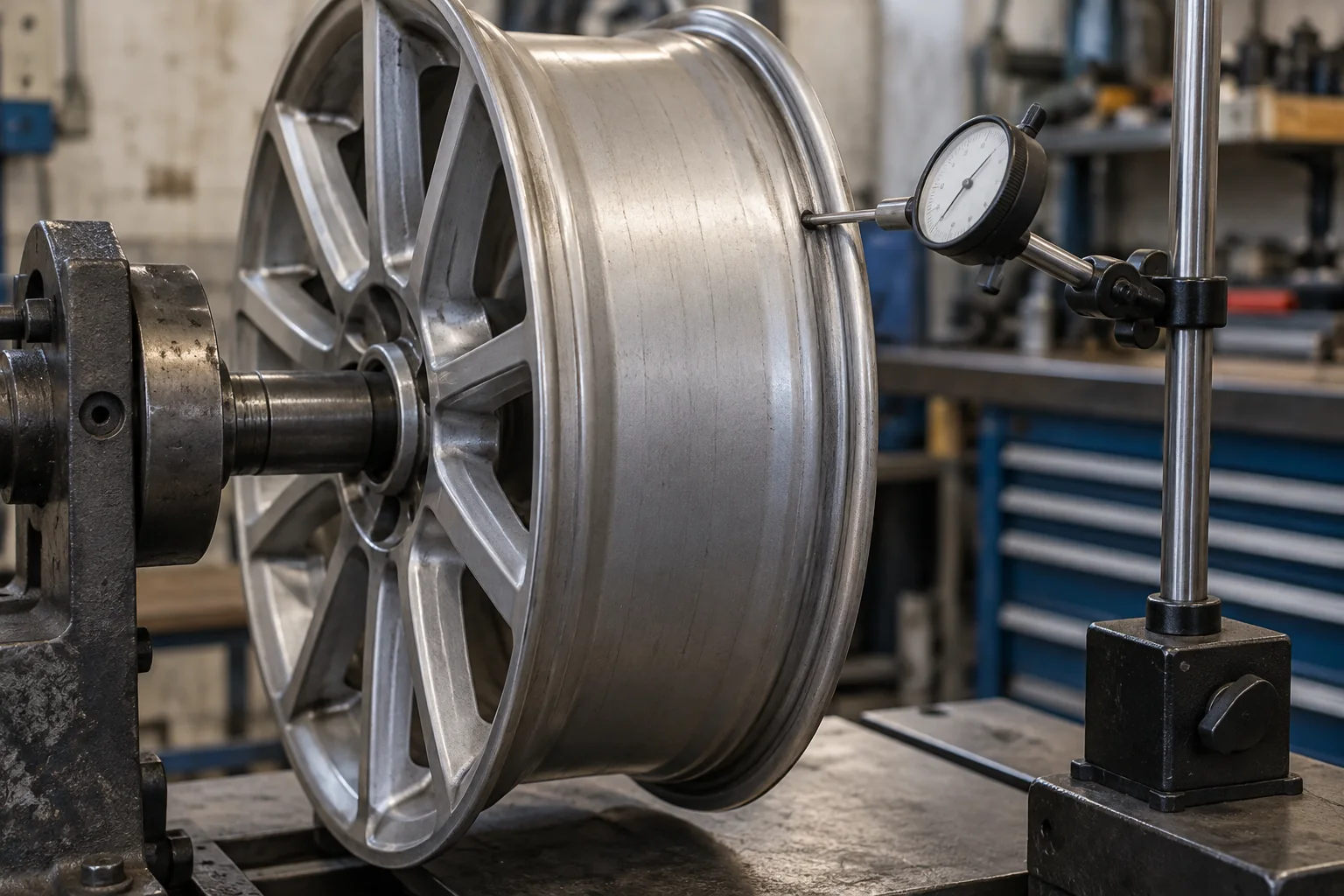
Runout describes how much a rotating part departs from its intended path. Radial runout concerns variation towards and away from the centre. Lateral runout concerns side-to-side variation. These measurements are different from a balancing machine’s assessment of weight distribution.
The wheel must be correctly centred and mounted for a meaningful check. Dirt on mating surfaces or an unsuitable mounting arrangement can affect the result. Where needed, inspecting the bare wheel separately helps distinguish wheel distortion from tyre shape or seating problems.
Ask which area was measured and which limit applies to your wheel. A single internet figure in millimetres is not a universal pass or fail limit. Nor does a low reading over one part of the wheel exclude a crack somewhere else.
A wheel assessment should explain whether the finding is cosmetic, structural or tyre-related before you agree to refurbishment or replacement. After a significant impact, the technician may also need to check the hub, bearing, suspension or steering components. That decision should follow the impact history and findings, rather than an assumption that every bent edge means widespread damage.
Check manufacturer restrictions before agreeing to straightening
The availability of a hydraulic straightening machine does not establish that a particular wheel may safely be straightened. Heating, bending, welding and removing material can fall outside the wheel maker’s permitted procedures. A workshop’s description of its equipment cannot replace that approval.
EUWA’s passenger-car wheel safety guidance prohibits structural repair methods such as welding and plastic deformation for the wheels it covers. It also identifies deformation and fractures as reasons to reject a wheel. This is technical industry guidance, not a statement about UAE law.
Manufacturer policies can be specific to construction and product. OZ Racing, for example, does not approve repairs to its monobloc wheels, while directing questions about modular wheels to its retailer. That distinction is a reason to identify the exact wheel, rather than assuming that every alloy or multi-piece design has the same repair options.
A cast, forged or flow-formed label alone does not grant permission to repair a bend. Neither does the fact that a wheel is steel. Ask for the current instructions applicable to that vehicle or wheel. If they prohibit straightening, a small bend remains a replacement issue.
Why cosmetic refurbishment requires a sound wheel
Cosmetic work has a separate purpose. Refinishing may improve an eligible wheel’s appearance, but a fresh coating cannot restore a cracked spoke or prove that a deformed barrel is sound. Inspect first, then consider finish options only if the wheel remains serviceable.
Inspect the tyre as carefully as the wheel
A wheel and tyre take the impact together. A tyre can have internal damage even when its tread looks normal and it still holds air. Conversely, the tyre may need replacement while the wheel proves serviceable. The two decisions should be recorded separately.
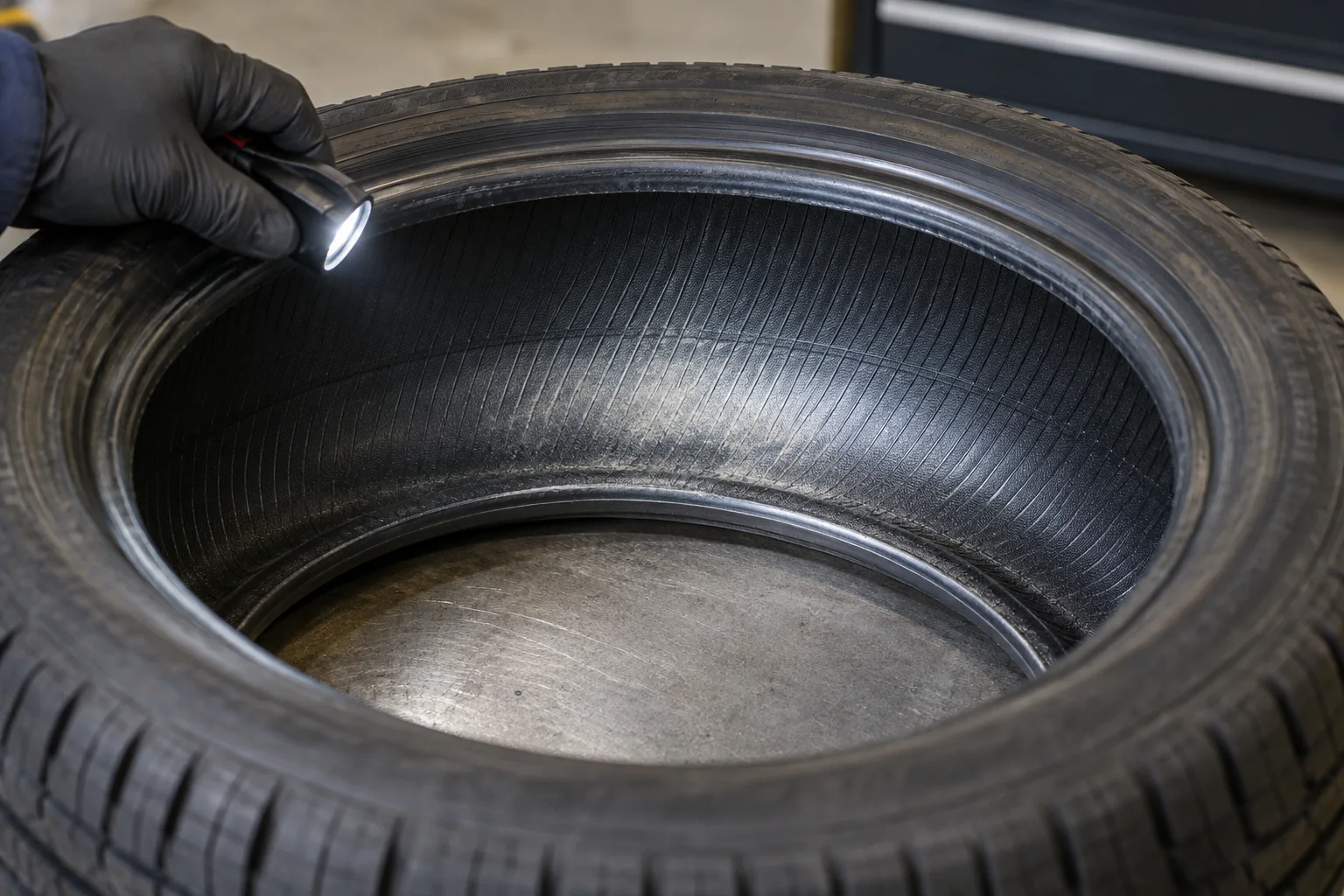
Michelin’s tyre-damage advice explains that an impact can damage internal cords or other structural parts without an obvious external mark. A professional inspection may require removing the tyre from the wheel. A sidewall bulge is a replacement warning, not something to patch or monitor while driving.
The technician should assess the sidewalls, bead and inner liner where appropriate, along with signs that the tyre has been driven underinflated. A bead damaged during the impact may affect sealing or safe reuse. Repeatedly inflating the tyre cannot repair these defects.
Before approving a new wheel with the old tyre fitted, ask whether the tyre was inspected for reuse. Before approving a new tyre on the old wheel, ask whether the wheel passed its assessment. Changing only the component that looks worse can leave the original problem unresolved.
Distinguish wheel balancing from alignment and runout
These terms often appear together on a quotation, but they describe different checks. Knowing the difference helps you understand what a proposed job can resolve.
- Runout measurement assesses how truly the wheel or tyre rotates. It can help identify distortion or a mounting problem.
- Wheel balancing corrects an uneven distribution of mass in the wheel and tyre assembly. Adding weights does not straighten a bent flange.
- Wheel alignment checks and adjusts suspension-related wheel angles against vehicle specifications. It does not reshape a damaged wheel.
Once the wheel and tyre are serviceable, balancing and alignment checks can address the separate issues that an impact may leave behind. Alignment should follow an assessment of damaged parts when the car pulls, the steering has changed or the impact warrants it.
If a workshop reports that the assembly “balances fine”, ask whether wheel shape and tyre condition were also assessed. A balancing result answers a mass-distribution question. It does not certify freedom from cracks or authorise a structural repair.
Replacing a wheel may still leave a vibration caused by a damaged tyre or another component. The sensible response is to revisit the findings, not to keep adding weights or repeatedly adjusting alignment without identifying the cause.
Choose a replacement that matches the vehicle
A matching spoke pattern is not enough. The replacement must suit the vehicle’s approved fitment and loading requirements. An original part number can help identify it, but the workshop should confirm compatibility with the actual vehicle specification.
- Dimensions and position include diameter, width and offset. Cars with different front and rear wheel sizes need the correct wheel for the affected axle.
- Mounting and clearance include bolt pattern, centre bore, compatible fasteners and space around the brakes. A wheel that bolts on is not automatically a suitable fit.
- Capacity and equipment include the required load rating, tyre compatibility and pressure-monitoring equipment where fitted.
A used replacement needs its own inspection. Photographs, a clean finish and the seller’s statement that it held air do not establish its impact history or structural condition. Ask about repairs and verify the identifying markings before purchase.
Replacing one damaged wheel may be appropriate when a correctly specified matching part is available. Replacing all four is not automatically necessary. If tyre replacement is also required, axle matching, tread differences and any all-wheel-drive restrictions must be checked against the vehicle maker’s requirements.
Read the quotation before approving wheel work
There is no useful universal price for fixing a bent rim when some wheels must be replaced. The vehicle, exact wheel, tyre condition and permitted work determine the scope. A low straightening price is not good value if the procedure conflicts with the maker’s instructions.
Cosmetic refurbishment prices apply to structurally sound wheels. They should not be used as a price promise for deformation or cracking. A replacement quotation should identify the proposed wheel and explain whether it is new, used or another compatible option.
What the written total should actually include
Ask what the written total includes. Relevant items may include inspection, the replacement wheel, tyre removal and refitting, balancing, valve or pressure-sensor work, and any separately justified alignment or suspension work. Confirm VAT and any additional charges before approving the job.
Keep the structural decision separate from optional finish work. You should be able to see why a wheel was rejected, whether the tyre can be reused and which checks are planned after fitting. Photographs or measurement notes can make that explanation easier to follow.
Availability affects timing, especially where a particular original wheel is required. Ask for an estimate based on the selected part and assessment, rather than relying on a same-day promise made before the damage is examined.
Confirm the checks after fitting a replacement
Before the car is returned, the fitted wheel and tyre should be compatible, correctly seated and balanced as required. Fasteners need the specified tightening procedure and torque for the vehicle and wheel. An air wrench setting is not a substitute for the correct final torque.
Tyre pressures should follow the vehicle’s cold-pressure recommendation and loading conditions. Where pressure monitoring is fitted, the technician should confirm its operation and carry out any required reset or sensor procedure. The correct procedure depends on the system.
Ask whether a leak check and any necessary alignment or handling checks were completed. The workshop should explain any outstanding findings. A road test, when appropriate and safe, follows inspection and fitting checks rather than serving as a way to prove that visible structural damage can be ignored.
If vibration, air loss or pulling returns, stop using the car when the symptoms affect safe control or tyre inflation. Contact the workshop with the conditions in which the symptom appeared. Do not increase speed to see whether it clears.
Reduce wheel damage without guessing tyre pressures
Use the vehicle’s recommended cold tyre pressures and check them regularly. Do not inflate to the maximum pressure printed on the tyre simply because the roads are rough. Equally, releasing air from a hot tyre to match a cold-pressure figure can leave it underinflated once it cools.
Keep loads within the vehicle’s limits. Approach rough surfaces more slowly when traffic conditions allow, and avoid striking kerbs when parking. Do not make a sudden swerve into another lane to miss a pothole.
After a significant impact, pay attention to new pressure warnings, vibration, noise or steering changes. Arrange an inspection even if the outer wheel face looks undamaged. Dubai’s heat makes correct tyre care important, but hot weather alone is not evidence that a wheel has bent.
Answer common questions about bent wheel damage
Can I drive with a slightly bent rim?
Appearance cannot establish a safe driving distance. Stop safely if there is pressure loss, a tyre bulge, a crack, strong vibration or changed steering. Obtain an assessment before further use when you know the wheel is distorted.
Does a wheel that holds air need replacement?
It may. Holding air does not prove that the wheel is structurally sound or meets its runout limits. The inspection and applicable manufacturer restrictions determine whether it remains serviceable.
Can a cracked alloy wheel be welded safely?
Do not assume welding restores the wheel’s original safety. Manufacturer guidance may prohibit it, and EUWA’s passenger-wheel guidance rejects this structural repair method for the wheels it covers. Ask for a replacement assessment rather than a cosmetic repair quotation.
Will balancing fix a bent wheel?
No. Balancing adjusts mass distribution with weights. It cannot restore the wheel’s shape. Runout and structural inspection answer different questions from a balancing result.
Does every pothole impact need wheel alignment?
Not automatically. The impact, symptoms and inspection findings determine the checks. Pulling, a changed steering position or relevant suspension damage may justify an alignment assessment after damaged parts are addressed.
Can the old tyre go on a replacement wheel?
Only if the tyre remains serviceable and is compatible with the replacement. Impact damage may be hidden inside. Ask whether the tyre, bead and inner liner were inspected before agreeing to reuse it.
Do I need to replace all four wheels?
Not solely because one wheel is damaged. A correctly specified matching replacement may be suitable. Different front and rear fitments and any tyre-matching requirements still need to be checked.
What information helps a workshop assess the damage?
Provide the model and year, the affected wheel, how the impact happened, photographs taken safely, and any pressure warning, vibration or steering change. The exact wheel identification helps establish the applicable restrictions and replacement options.
Discuss your damaged wheel with our team
Share your model, year, affected wheel and any pressure loss or vibration with our Al Quoz team. Ask about an inspection, the applicable wheel restrictions and suitable replacement options before approving work.