To check a car’s accident history in the UAE, match its chassis number or VIN to the vehicle, search the relevant official accident records, and compare the result with the seller’s documents and an independent inspection. A search showing no recorded accidents does not prove the car has never been damaged.
For a car with Dubai history, investigate the Dubai records separately. The RTA Technical Vehicle Status Report is an additional history check, but RTA explicitly says it does not include vehicle accident data. Imported cars also need checks in their previous country.
Match the VIN before checking any records
Ask the seller for the full vehicle identification number before arranging a viewing. UAE portals commonly call it the chassis number. Use the same identifier throughout your checks so that an online result, an invoice and the car in front of you can be compared.
Compare the number on the registration card, often called the mulkiya, with the number displayed on the vehicle. Depending on the model, identifiers may be visible through the windscreen, on a door label or at a stamped location specified by the manufacturer. The owner’s manual can help you find the correct position.
- Copy the full number carefully rather than relying on a cropped screenshot.
- Check it again when you view the car. A report supplied by the seller may belong to a different vehicle.
- Record the current registration emirate and ask where the car was previously registered.
- Ask whether it was originally supplied in the UAE or imported later, and from which country.
- Keep the seller’s permission for checks that require access to ownership, insurance or service information.
If a label looks altered or the numbers disagree, pause the purchase and ask the relevant authority or an independent inspector to clarify the identity. Do not choose whichever number produces the most reassuring search result. A registration plate alone is not a substitute for the chassis-number search required by an accident inquiry.
Choose the official check for the vehicle
Start with the records relevant to the car’s history. Emirates Vehicle Gate, the Ministry of Interior and Abu Dhabi Police are commonly used routes for available UAE accident information. Their results should be read within the coverage of the service used. Running several searches does not automatically produce a complete national history.
| Check | How to approach it | What to keep in mind |
|---|---|---|
| Emirates Vehicle Gate | Open EVG and look for Traffic Accidents Management. Use the chassis number requested by the inquiry. | Read the available incident records. Do not assume a clear result covers every emirate or overseas event. |
| Ministry of Interior | Use the official MOI traffic services and follow the accident-inquiry options available. | An accident inquiry and a request for a copy of an existing accident report are different tasks. |
| Abu Dhabi Police | The public Accidents’ Inquiry form asks for the chassis number and the text shown in its security image. | Check the incidents returned by that service. It does not certify the condition of repairs. |
| Dubai Police and seller documents | Ask for existing Dubai accident reports and confirm the appropriate record request with Dubai Police. | Obtaining a copy of a known report does not establish a complete history. |
| RTA technical history | Request the Technical Vehicle Status Report with the owner’s consent if you need this additional check. | It provides available historical information and excludes accident data. |
Use the chassis-number inquiry without guessing inputs
The Abu Dhabi Police accident inquiry searches by chassis number. Enter that number, complete the security-image field yourself and submit the form. Review any matching records and check that the vehicle details agree. An accident reference is not required to begin this chassis-number search.
Emirates Vehicle Gate and the Ministry of Interior are other routes to available UAE accident information. Look for the relevant traffic-accident service and follow its current prompts. Login requirements, fees and menus can differ between services.
If a portal is unavailable, mark that check as unfinished. A blank page, a failed security-image entry or an error message is not a clear accident record. Keep the source and search date with any result you save, and avoid entering identity documents or payment details on a lookalike website.
Check Dubai records separately from technical history
For a Dubai-registered car, ask the owner for any Dubai Police accident reports and the related repair paperwork. If the car moved between emirates, ask about its earlier registrations too. Do not treat a clear federal portal result as confirmation that every Dubai incident has been checked.
If a copy of a known accident report is missing, the owner can ask Dubai Police about reissuing it. This retrieves an existing report. It does not establish the vehicle’s complete accident history, so confirm which records the request covers.
Available ownership and insurance information can provide useful background, but the RTA’s Technical Vehicle Status Report excludes accident data. It requires the owner’s consent and costs AED 120 in total, comprising AED 100 for the report and AED 20 in Knowledge and Innovation fees. Accident records need to be investigated separately.
For that additional report, follow the current vehicle-licensing steps on the RTA website, RTA Dubai app or Dubai Now. Check the displayed scope before paying. RTA also lists additional imported-vehicle information for an extra fee. Confirm what is available for the particular car rather than expecting every repair or mileage entry.
Read the result before judging the vehicle
An accident record establishes that an incident was recorded in the database you searched. The available fields may help you locate the original report, but they do not automatically explain the repair quality or the car’s condition today.
- Match the VIN and vehicle details before reading the incident entries.
- Look for the dates, locations and reference numbers actually shown.
- Ask the seller to explain each entry and supply the corresponding report or repair invoice.
- Compare the affected area with the car and any available photographs.
- Separate information the report supplies from assumptions you are making about severity.
A count of accidents is a reason to investigate, not a measure of damage on its own. A cosmetic bumper repair and a collision involving structural areas or restraints raise different questions. Even if a record describes an incident as minor, ask which parts were affected and what was repaired.
A clear result still leaves important questions
“No records found” means the search did not return a matching record. It does not establish that all previous damage would have appeared. Unreported work, overseas incidents and information outside that system’s coverage can leave gaps. Flood damage and mechanical neglect also need separate attention.
If one source shows an accident and another does not, keep both results. Recheck the VIN, dates and scope, then ask the relevant authority about the recorded incident. Do not discard a matching accident entry simply because a second search is clear.
Investigate overseas history for an imported car
Ask where the car was registered before arriving in the UAE. A local accident search should not be expected to reconstruct its overseas life. Export papers, previous registration documents and a history report relevant to the source country can help you build a more useful timeline.
For a US import, NMVTIS vehicle-history information covers title records, title brands, odometer entries, total-loss history and salvage history. Obtain the relevant data through an approved provider. The US Department of Justice explains the limits of these records, which do not document every repair.
A title brand is a label applied by a US state authority, such as salvage, junk or flood. Read the actual entry and date. Do not equate a later registration document with proof that earlier damage never happened.
Participating US insurers also supply records to NICB VINCheck, a free search that can return unrecovered theft and salvage or flood information. Enter the correct 17-character VIN. As checked on 6 October 2026, NICB allows up to five searches per IP address within 24 hours. Its coverage is limited to the records supplied. A clear result cannot replace a fuller history check and an inspection.
- Match overseas reports and export documents to the same VIN.
- Look for unexplained gaps between the last overseas record and UAE registration.
- Compare dated mileage entries, allowing for miles versus kilometres.
- Request original auction or damage photographs if the seller has them, and verify the VIN and dates.
- For cars from Japan, Europe or another market, choose records relevant to that country and vehicle.
GCC specification describes a vehicle’s market specification. It does not certify an accident-free past. Likewise, American specification does not prove a car was damaged. Assess the individual vehicle and its records.
Compare documents with the car’s actual condition
Ask for repair invoices, photographs taken before repairs, relevant insurer correspondence and service records. Each document answers a different question. A police report can identify an incident, while an invoice may describe the work billed. Neither alone confirms that every necessary repair was completed correctly.
Where access is needed, ask the owner to request or authorise the information. Do not assume an insurer or dealer will release a complete history to any prospective buyer. Keep service history separate from accident history. A well-documented body repair does not answer whether the engine and gearbox have been maintained.
Ask the inspector to examine the affected areas
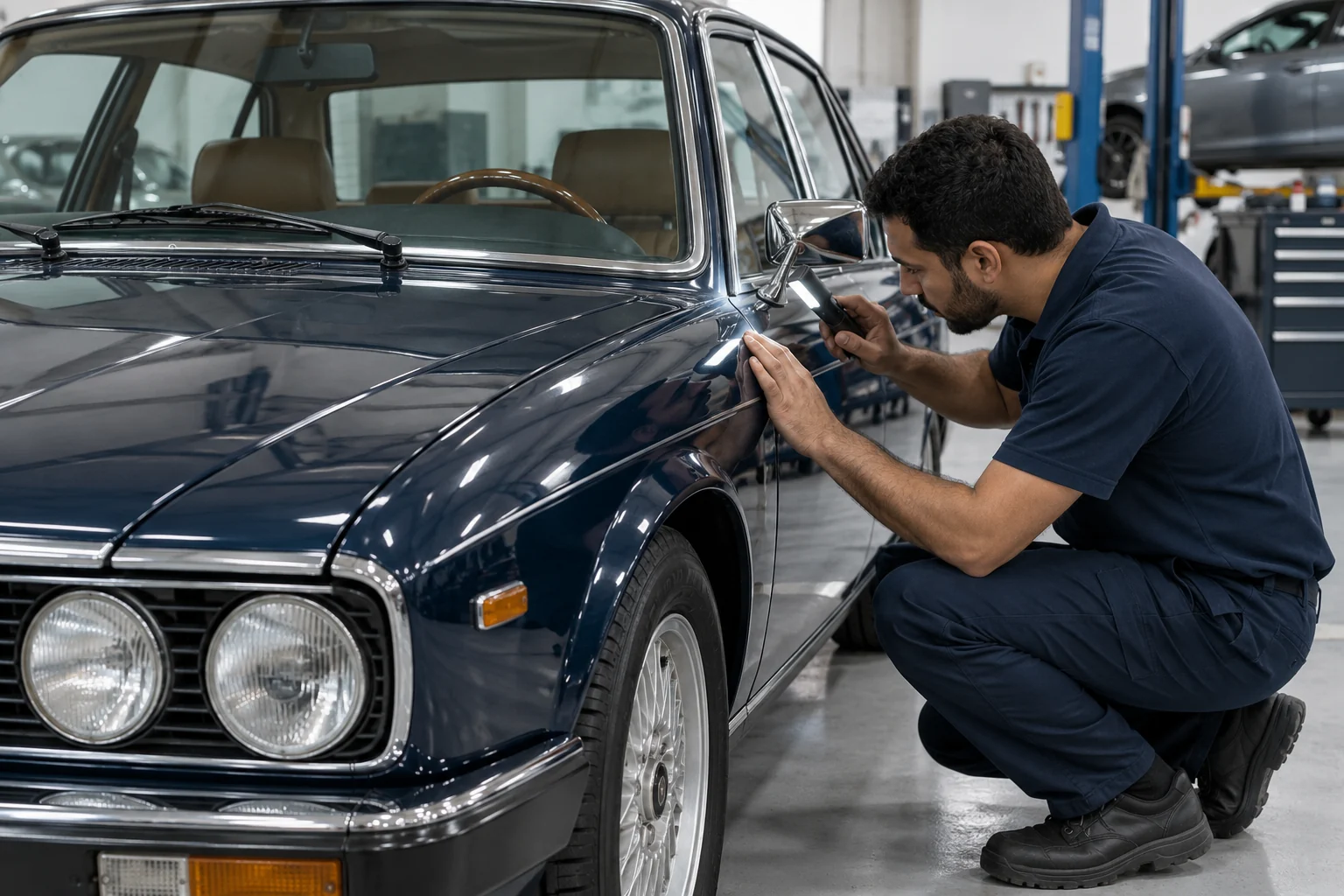
Share the accident records before the pre-purchase inspection so the inspector can compare the affected areas with the seller’s explanation. Agree which areas will be checked and ask what is inaccessible. A structural concern may need more detailed measurement or a specialist review.
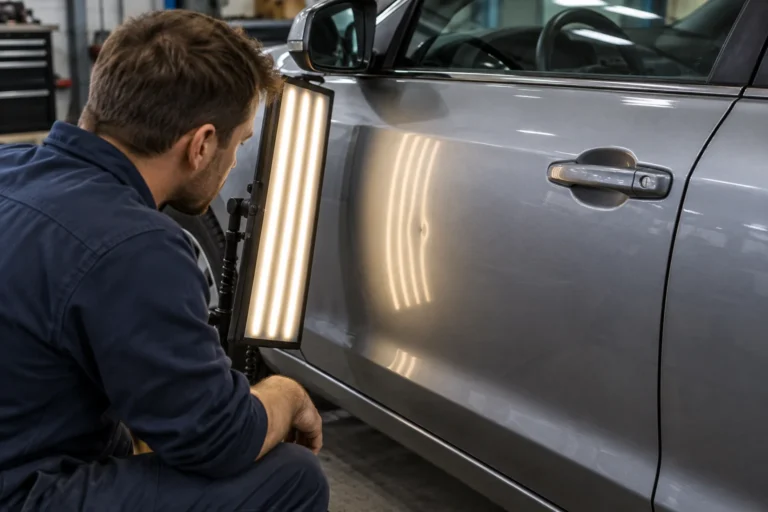
- Paint and panels can be examined for differences in finish, overspray, panel fit and signs of previous work. Paint readings need interpretation for the material and vehicle.
- Structure and underbody need attention where reports or visible clues suggest damage to rails, pillars, floors or suspension mounting areas.
- Restraint systems need model-specific checks if airbags or seat belt pretensioners were involved. An extinguished warning light alone does not establish correct repair.
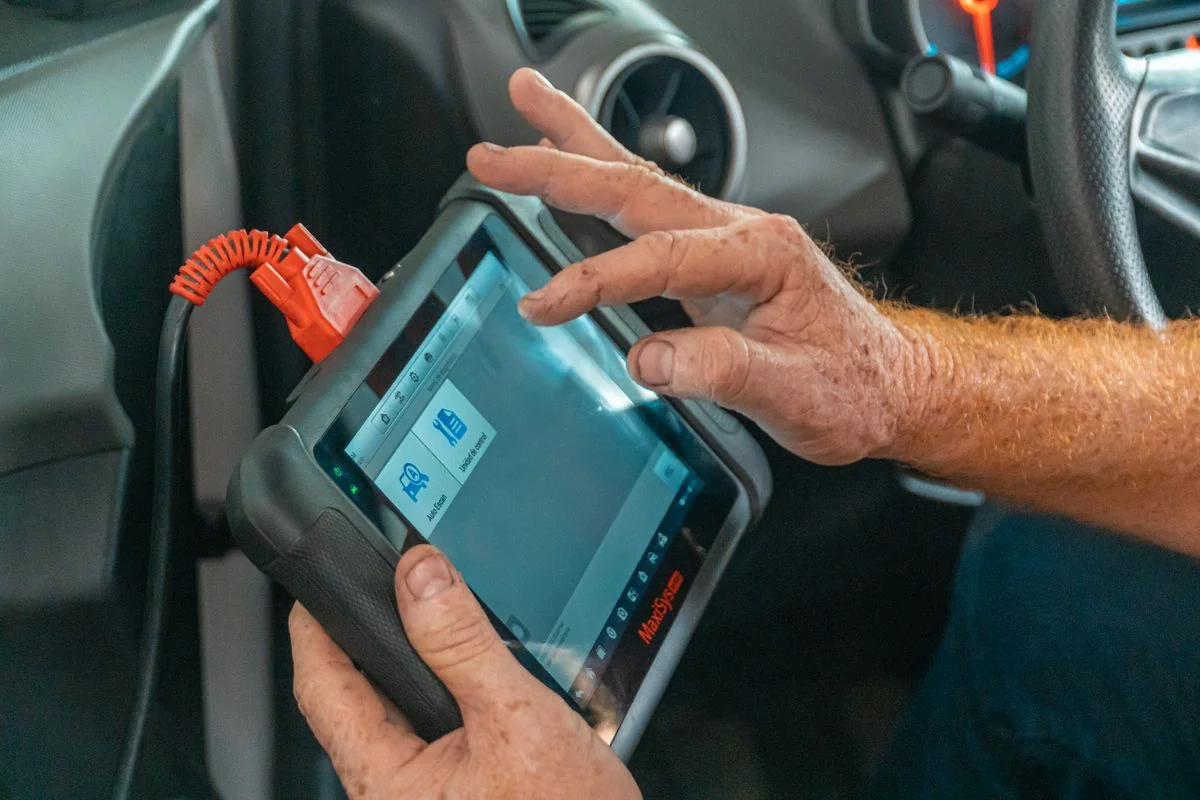
- Electronic systems may need a diagnostic scan and practical checks. Fault codes can guide investigation but do not reconstruct every previous collision.
- Mechanical condition remains relevant even when accident searches are clear. Ask about the engine, transmission, brakes and suspension within the agreed inspection scope.
If damage is suspected in a hybrid or electric vehicle, confirm that the inspector can assess the relevant model safely and identify when specialist high-voltage assessment is needed.
Check water damage separately from collision records
A traffic-accident search does not establish that a car has never flooded. Ask directly about water entry and request inspection of accessible areas beneath carpets, around seat mountings, in the luggage compartment and at electrical connections where appropriate.
Moisture, sediment, unusual corrosion or persistent odours deserve investigation, but one clue alone does not prove a flood. Cleaning or replacing trim can also make visible evidence harder to assess. If the findings or history suggest substantial water exposure, pause and obtain a specialist assessment before committing.
Use the findings to decide whether to proceed
Previous damage needs to be judged by the affected areas, repair evidence and present condition. A discount does not resolve an unanswered safety question. Ask the inspector to distinguish cosmetic work, outstanding repairs and concerns needing further investigation.
| Finding | Useful next step |
|---|---|
| Matching records and documented cosmetic repairs | Assess the current condition and asking price alongside the inspection findings. |
| Unexplained accident entry or conflicting account | Request the original report and supporting documents before paying. |
| Possible structural, restraint or substantial water damage | Pause for specialist assessment. Do not rely on appearance or a discount. |
| Seller refuses VIN verification or an independent inspection | Leave the transaction until those checks can be completed, or choose another vehicle. |
When comparing prices, use similar vehicles with the same model, specification, age and condition. There is no universal percentage reduction for an accident history. The extent of work, remaining faults, documentation and future buyer concerns all influence the decision.
Confirm the insurance you need for the specific car before buying, particularly where there is imported or substantial damage history. Ask for the actual terms and premium. A clear accident inquiry does not guarantee cover, a lower premium or future resale value.
Complete these checks before paying a deposit
Make a short record of what you have checked and what remains unresolved. Keep the listing, the seller’s written statements, dated search results and the inspection report together. Where a deposit is proposed, understand its conditions before paying.
- The VIN matches the car, registration and reports.
- The relevant UAE checks are completed, including the car’s Dubai history where applicable.
- Overseas records have been investigated for an import.
- The seller has explained any matching accident entries or signs of repair.
- An independent inspection has assessed the agreed areas and identified its limitations.
- Any further assessment, repair costs and insurance questions have been resolved.
If a concern remains, resolve it before proceeding. A polished exterior, a valid registration or a confident seller cannot fill a missing part of the history.
Questions about checking UAE car accident history
Can I check accident history using a number plate?
Use the chassis number for the public accident inquiry that requests it. Plate details may be relevant to other official services, but they do not replace the VIN for matching the vehicle across records.
Does a clear EVG result mean the car is accident-free?
No. It means that search did not return a matching accident record. Check the car’s relevant emirate history, overseas records where applicable and its present condition.
Does the RTA report include accident history?
No. RTA states that its Technical Vehicle Status Report excludes vehicle accident data. Treat it as an additional historical check and investigate accident records separately.
Should I reject a car with one recorded accident?
Investigate the damage and repair evidence first. The incident count alone cannot distinguish a cosmetic repair from a structural or restraint-system concern.
Can UAE checks show damage before a car was imported?
Do not expect a local inquiry to reconstruct the overseas history. Obtain records relevant to the previous country and compare them with the VIN, import documents and inspection findings.
Does repainting prove the car had a serious crash?
No. Paintwork can have several explanations. Ask what was repaired and have the finish, panels and any related structural concerns assessed together.
Can an inspection guarantee that every past accident is found?
No. An inspection assesses the vehicle within its agreed scope and access limits. Use it alongside history records and repair documents, and request further assessment where the findings justify it.
Discuss an inspection before buying the car
Tell our team the make, model, year and any accident-history concern. We can discuss the inspection scope, appointment options and charge before you book.