The best car body kit for Dubai is one that fits your exact vehicle, gives you the look you want and remains practical on your usual roads. For a restrained change, start with a matching lip and side skirts. A bumper conversion or widebody kit needs a larger budget and more planning around equipment, permanent alterations and approval. Choose the parts and installer together before buying.
A dramatic photograph can help you choose a style, but it cannot confirm fitment, road acceptance or the complete cost. Compare the actual part number, material, included hardware and finished installation. A well-chosen single component can make more sense than a full kit that compromises parking clearance or requires changes you did not expect.
Choose the change that suits your car
A body kit may include bumper covers, lower lips, side skirts, a rear valance, a spoiler or wider arches. The word “complete” does not define a standard package. Ask for an itemised contents list, including grilles, brackets and any pieces shown in the photographs but sold separately.
| Option | What it changes | Check before choosing |
|---|---|---|
| Lip and skirt additions | The lower outline of the existing bumpers and sides | Exact bumper version, mounting instructions and ramp clearance |
| Replacement bumper kit | Front or rear styling, often with different grilles or trim | Brackets, lighting, parking equipment and retained safety components |
| Facelift-style conversion | Selected exterior parts resemble a later design | Compatible lamps and wiring, panel changes and the full parts list |
| Widebody or arch kit | Wider bodywork around the wheels | Approval, permanent arch work and a suitable wheel-and-tyre plan |
| Boot lip or larger wing | The rear profile and attachment to the boot or body | Mounting support, boot operation and evidence for any aero claim |
A diffuser-shaped insert can be a styling part. A splitter or wing is not automatically a handling upgrade. If performance matters, ask for evidence for that particular design and installation rather than treating a sporty appearance as proof of more downforce, less drag or better fuel economy.
A facelift changes the appearance of selected panels. It does not change the vehicle’s production year, identity or underlying safety equipment. Off-road protection is also a separate decision. A decorative bumper cover is not a substitute for a properly specified protection system.
Match the kit to the exact vehicle
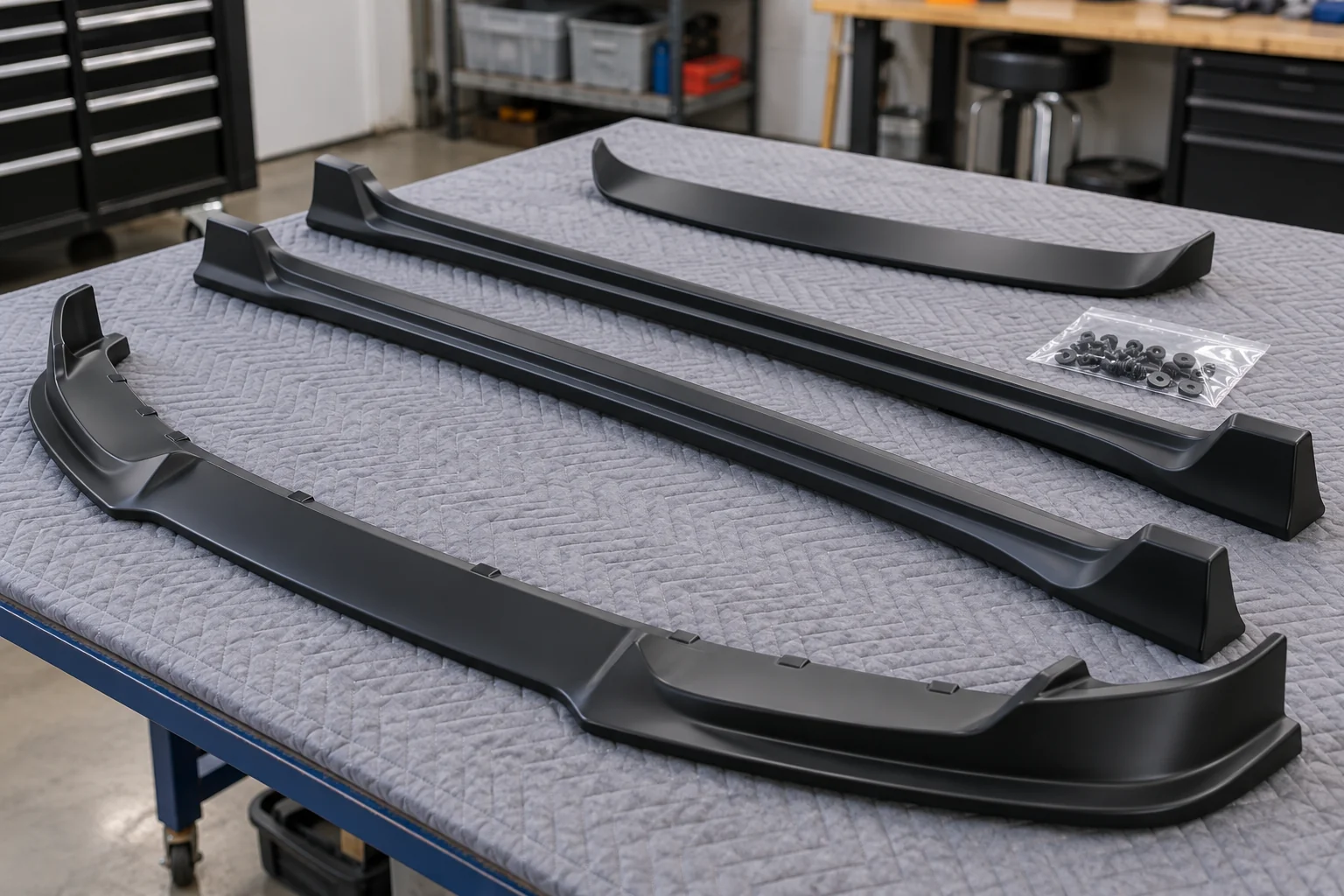
Give the seller your make, model, production year, body style and trim, together with clear front and rear photographs. Two cars with the same model badge can have different bumpers, grilles, lights and mounting points. A sport-package part may not fit a standard bumper, and a pre-facelift kit may not suit the later vehicle.
For example, Maxton Design identifies its Model 3 splitter set for the Mk1 generation from 2017 to 2023 and describes ABS construction. That is a specific application, not a reason to assume it fits every newer Model 3. Match the product code and the supplier’s current fitment information to the car in front of you.
- Confirm whether the part replaces the original panel or attaches to it.
- Check included clips, brackets, fasteners and any retained original hardware.
- Identify parking sensors, cameras, radar and lamps fitted to your vehicle.
- Allow access to towing points, number plates, doors and service locations.
- Check exhaust clearance where applicable and avoid obstructing cooling openings.
- Discuss wheel coverage and tyre clearance before choosing wider arches.
Sensor holes alone do not establish compatibility. The mounting position, bracket, surrounding material and finish can matter. Ask the installer which vehicle-specific checks are needed and whether the planned work calls for calibration. Calibration should follow the applicable procedure, rather than being promised as a cure for an unsuitable bumper.
Tesla’s bumper repair guidance distinguishes vehicles with and without radar and sets restrictions for the radar area where fitted. It illustrates why the actual equipment must be identified. Do not assume every Tesla has a front radar, or apply one vehicle’s refinishing requirements to another model.
Compare the material and the finished surface
Ask what the component is made from, how it is supplied and what finishing it needs. ABS, polyurethane, fibre-reinforced plastic and carbon-fibre composite are different constructions. The material name alone does not establish the quality of a particular moulding, laminate or attachment.
Look beyond a glossy catalogue photograph
For moulded plastic parts, check the declared material, edges, mounting areas and fitment instructions. A ready-finished black surface may suit your design without body-colour painting. A bare or primed component needs an agreed preparation and paint process, and primer should not be mistaken for the final finish.
Fibreglass or FRP parts should be checked for their construction and the adjustment work anticipated before painting. With exposed carbon, establish whether the part is carbon composite, a carbon-skinned component or a printed carbon-look finish. A visible pattern is not enough to identify its construction.
Ask what protection and repair are practical
For a car parked outdoors, discuss the finish supplier’s sunlight and aftercare requirements. Dubai heat does not make every carbon or plastic kit suitable, and a premium material does not prevent damage from kerbs or ground contact. Ask how a chipped, cracked or scratched part would be assessed and whether replacement parts can be purchased individually.
Choose the finish as part of the whole design. Exposed weave, satin black and body-colour paint create different effects. Compare a sample where possible, and ask how future repairs would be handled before committing to a finish that is difficult to reproduce.
Use brand examples to narrow your shortlist
Manufacturer catalogues are useful starting points because they identify an actual product instead of a generic style name. These examples represent different approaches. They are not a ranking of Dubai shops, confirmation of local stock or a promise that the manufacturer approves your planned road use.
- Maxton Design offers model-specific additions such as the ABS Model 3 set described above. This approach can suit owners exploring smaller changes around existing bodywork.
- Liberty Walk lists an LB-WORKS Mustang package for its stated 2015-onward application, with FRP components and wide fenders. Discuss the exact car and the full conversion requirements, rather than treating the catalogue year range as universal fitment.
- NOVITEC describes both a widebody programme and separate exposed-carbon elements for the Urus. Choosing individual styling pieces and undertaking a wider conversion are different projects.
- Manufacturer accessory routes can be worth checking with the vehicle dealer. Ask whether a suitable accessory exists for your vehicle identification number and what its installation and warranty terms require.
A “Brabus-style” or “AMG-style” listing describes an appearance unless the seller establishes the actual product identity. Ask whether you are buying a genuine branded item, a clearly described aftermarket alternative or a custom-made part. Compare equivalent products and keep the manufacturer, part number and invoice together.
Find a supplier and installer in Dubai
You can approach a specialist installer for a supplied-and-fitted package, buy through a parts supplier, ask a dealer about accessories or order directly from an overseas manufacturer. The useful difference is who checks compatibility, receives the parts, handles defects and takes responsibility for the completed installation.
A local viewing gives you a chance to inspect the component and discuss the finish. An online listing can offer more choice, but photographs may show optional wheels, suspension changes or extra components. Ask which pictured items the quoted package actually contains and whether a stock item or a made-to-order product is being offered.
- Request fitment examples for a matching generation and bumper specification.
- Confirm who supplies the parts and who performs any preparation or painting.
- Agree how damage, missing hardware or unsuitable fit will be handled.
- Ask for separate written terms for the product, paint and workmanship.
- Check cancellation and return conditions before cutting, drilling or painting.
Customer-supplied parts can be a sensible route when the application is established. Show the installer the listing and fitting instructions before purchase. If the installer and seller disagree about compatibility, resolve it before work makes the kit harder to return.
When comparing body kit fitting options, look at the complete scope alongside the component price. A low labour figure is difficult to compare if brackets, paint or equipment checks are left outside it.
Check approval before making permanent changes
Under Article 26 of Federal Decree-Law No. 14 of 2024, substantial changes to a vehicle’s shape, chassis, body, engine power or colour require licensing-authority approval. The law also requires inspection and approval of the relevant modifications before the altered vehicle is used.
Before ordering, describe the actual planned changes to RTA and establish what applies to your vehicle. Wider arches, panel cutting, altered body dimensions and a colour change deserve particular attention. Do not assume a small-looking component is exempt solely because a seller calls it bolt-on.
An overseas certificate or a product advertised as road legal does not by itself establish acceptance in Dubai. Ask what documents, inspection and registration changes are required for the proposed build. Professional fitting and authority approval are separate matters.
Also tell your insurer about the proposed modification and ask how it affects coverage and the declared value of the parts. Keep its response with the quotation and approval documents. Avoid relying on a verbal promise that every modification will be covered.
Compare the complete delivered and fitted cost
There is no single meaningful price for a “full body kit” without a vehicle, product and contents list. A small ready-finished addition and a painted conversion with multiple panels are different purchases. Request a written AED quotation for the complete project, including VAT, before comparing offers.
| Cost item | What the quote should identify |
|---|---|
| Parts | Manufacturer or supplier, product codes, material and included components |
| Delivery | Shipping, handling and any import charges that apply |
| Trial fitting | Inspection, adjustment and the treatment of an unsuitable part |
| Finishing | Surface preparation, paint, colour matching and any agreed blending |
| Installation | Labour, brackets, hardware and approved attachment products |
| Associated work | Agreed lamp, sensor, clearance or wheel-related work where required |
| Approval and tax | Responsibility for applicable approval costs and the final VAT-inclusive total |
A manufacturer’s overseas catalogue price is not a Dubai fitted price. Check the selected currency, tax treatment and delivery destination rather than converting a headline amount and assuming it covers the job. Ask which extras require your approval and whether the quote depends on successful trial fitting.
Paint also needs its own scope. A replacement cover may require preparation and colour matching, while a ready-finished lip may need no painting. Discuss colour matching and painting for the actual material and existing finish. A price for repainting an original bumper does not automatically cover preparing a new aftermarket kit.
Review trial fitting before the final finish
The parts should be inspected and trial fitted before final preparation makes defects expensive to correct. Ask to see the alignment at the bonnet, lamps, fenders and adjacent trim. A kit that needs force to hold it in position deserves assessment before it is painted.
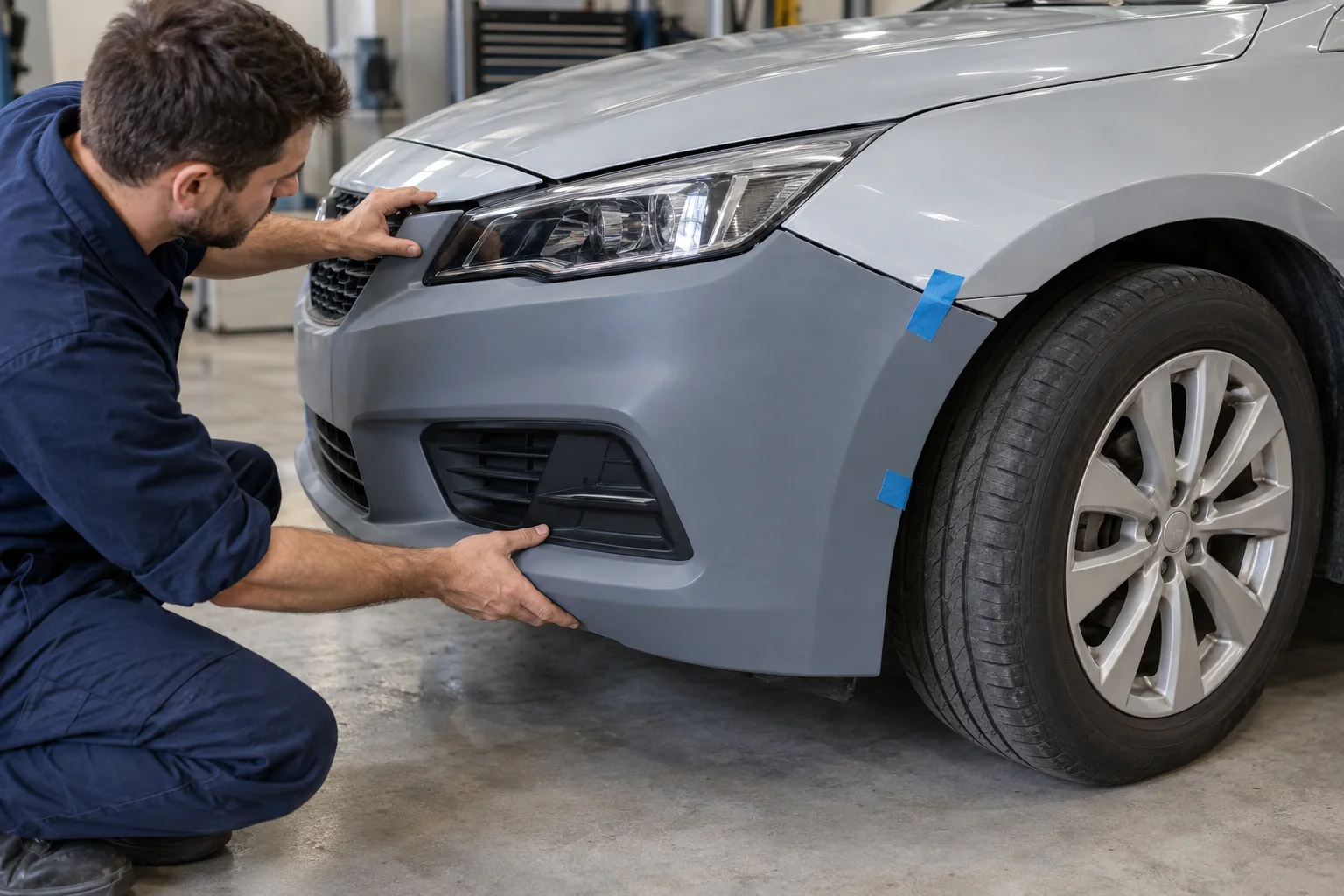
Agree any drilling, trimming or permanent panel work in advance. “Bolt-on” does not necessarily mean the car will return to its original condition without mounting holes or marks. A widebody conversion involving cut arches can require substantial restoration after removal.
Attachment must follow the part and product instructions. Tape, adhesive and mechanical fasteners are not interchangeable, and an automotive trim tape is not a universal fixing for every splitter or wing. Ask which supplied hardware and mounting support will be used. Dent-removal tools do not serve this purpose.
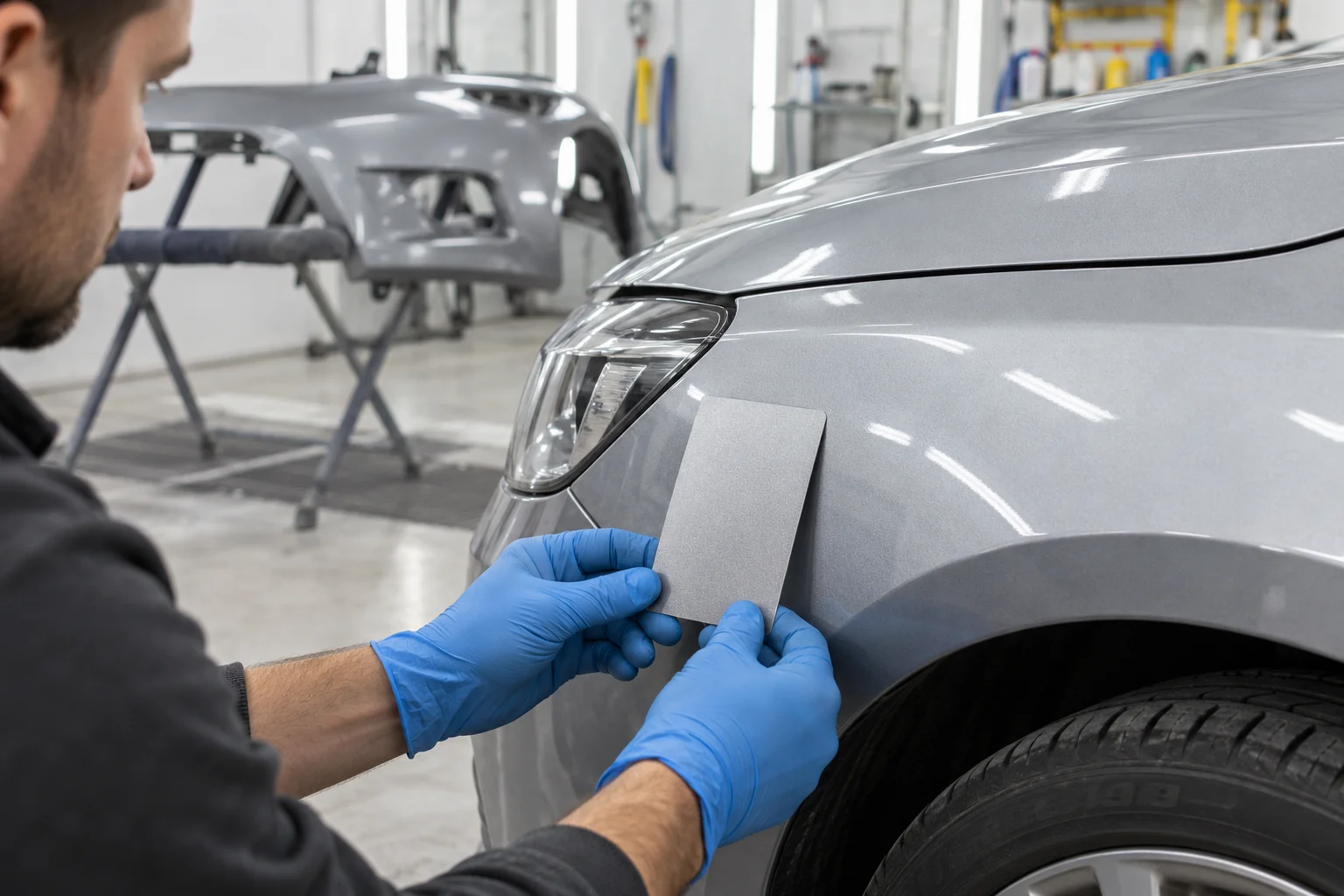
Before painting, compare the proposed colour against the existing car. The paint code is a starting point, but the finished match should be checked on the actual vehicle. Ask whether blending into an adjacent panel is proposed and agree that additional scope before it begins.
- Inspect panel gaps, fasteners and the condition of nearby paint.
- Confirm doors, boot, lamps and retained equipment operate correctly.
- Check useful clearance for your ordinary parking and driving.
- Obtain the instructions for driving, washing and any mounting follow-up.
- Keep removed original components if you have agreed to retain them.
Let parts availability, fitment corrections, finishing and required checks determine the schedule. A promised collection date should account for those stages. If you need the car for a particular occasion, agree the deadline before ordering rather than assuming every kit can be fitted immediately.
Keep the finished kit practical to maintain
A deeper front lip can change how comfortably you use ramps and kerbs even when the suspension stays standard. Consider your usual car park before choosing the design. Follow the installer’s curing and care instructions, and keep strong cleaning jets away from vulnerable edges and mountings.
After ground contact, check the affected component and its fixings. A loose part, rubbing tyre or newly obstructed light needs assessment before continued use. Repairability depends on the particular construction and damage, so do not assume every crack can be filled or every carbon part must be replaced.
Keep invoices, product details and photographs with the vehicle records. They can help identify a replacement piece later and explain the work to a future buyer. Choose the kit for your own use rather than assuming it will increase resale value.
Questions about choosing a car body kit
Which body kit is best for daily driving?
A compatible, securely mounted design with practical clearance is a useful starting point. A restrained lip or skirt package may give you the appearance you want without a larger conversion. Judge the exact parts and your normal roads rather than the brand name alone.
Can a body kit improve fuel economy?
A styling kit does not establish a fuel-economy benefit. Ask for relevant testing of the actual design if the seller makes that claim. The shape, installation and complete vehicle matter, and a sporty-looking component is not proof.
Can I buy a kit online and have it fitted?
Yes, but have the installer review the product code, vehicle application, condition and hardware first. Confirm the seller’s return terms before painting or altering it. An incompatible part may need returning rather than extensive adjustment.
Are carbon-look parts genuine carbon fibre?
Not necessarily. They may be printed, wrapped, carbon-skinned or carbon composite. Ask for the declared construction and finish, and compare that specification with the price and intended use.
Does a facelift kit make my car newer?
It changes selected exterior styling, not the vehicle’s production year or identity. New-looking lamps and panels do not automatically add the later model’s safety features. Confirm equipment compatibility and describe the vehicle accurately.
Is professional fitting enough for road approval?
No. Establish the approval requirements for the proposed modification with RTA. Substantial changes covered by Article 26 require licensing-authority approval and inspection. An installer’s workmanship or an overseas certificate does not replace that process.
Discuss the kit before you buy
Send your make, model, year and a link or photo of the kit to our Al Quoz team. We can discuss the application, finish and fitting assessment before you commit.