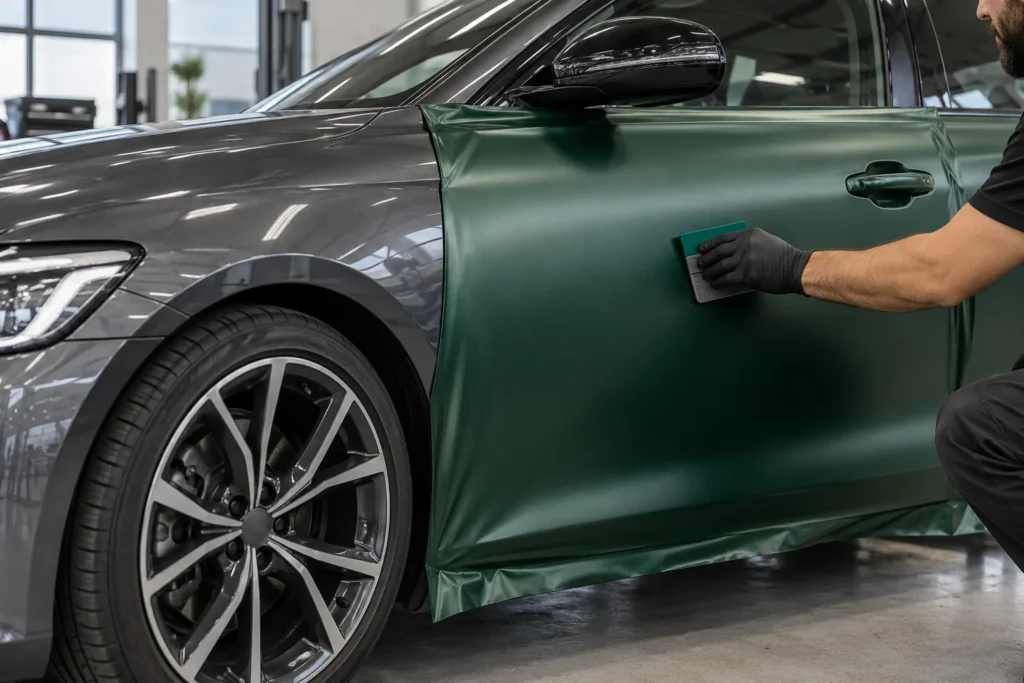
A good car wrapping service in Dubai should inspect your paint, identify the exact film, explain the coverage and give you a written quotation before work starts. A striking finished-car photo is useful, but it cannot show the preparation underneath or tell you what happens if an edge lifts later.
Start with the result you want and compare installers against the same brief. For a standard exterior sedan wrap, My Car Repair Dubai’s published planning range works out to AED 3,675–8,400 including VAT. The film, panel list and condition of the existing paint still need confirmation. This guide explains how to compare that scope, assess workmanship and choose a finish you can maintain.
Compare wrap quotes with matching coverage first
A roof accent and a complete exterior colour change are different jobs. Even two quotations described as a full wrap can cover different surfaces. One may include the mirrors and bumpers but leave the door jambs in their original colour. Another may allow extra time for removing old film or working around complex trim.
The figures below use the indicative ranges on our published wrapping service page, with 5% VAT included. They are planning estimates for the stated work, rather than fixed offers for every vehicle.
| Coverage and included work | Estimate including VAT |
|---|---|
| Selected panel or accent in a standard finish, such as an agreed roof or hood treatment. Confirm the panel size first. | AED 840–2,625 Per agreed treatment |
| Full exterior sedan wrap in standard colour vinyl, with routine preparation and installation on agreed outer panels. | AED 3,675–8,400 Per vehicle |
| Full exterior SUV wrap, allowing for the larger panel area and more complex shaping. | AED 6,300–12,600 Per vehicle |
Old film removal, paint repair, door jambs, complex trim removal, artwork and official fees are additional unless the quotation expressly includes them. Specialty effects and printed branding need a design-specific quotation. A cheaper figure may simply cover less work, so compare the final total alongside the panel list.
If you are deciding between a small accent and a complete colour change, our full and partial wrapping options explain the available coverage. Take the same chosen scope to each installer so you can compare like for like.
Ask for the film brand, product series, colour code, preparation, included parts and VAT-inclusive total in writing. Also agree how the workshop will seek permission for extra work discovered during preparation. This avoids approving one price and finding that removal or paint repairs were assumed to be separate.
Choose film for the result you want
Colour-change vinyl is primarily an appearance choice. It lets you change the visible colour or finish without applying a new paint system. Purpose-made paint protection film, usually called PPF, has a different emphasis and is designed to help protect paint from everyday surface damage. Some protective films also offer a colour change, so ask exactly which type is being quoted.
Do not treat ordinary colour vinyl as equivalent to a protective PPF package. If stone-chip protection is your main reason for spending, compare the proposed product’s specifications rather than assuming that any film delivers the same result. Neither option repairs damaged paint underneath or prevents every possible impact.
Repainting is another option when the paint itself needs restoration or you want a permanent colour change. Compare preparation, covered surfaces and the expected result before deciding. There is no useful rule that wrapping is always cheaper than painting, especially when the car first needs repairs or old film removal.
Compare physical samples before choosing a finish
Gloss has a more reflective appearance, satin gives a softer sheen and matte has a flatter look. Inspect a real sample in daylight and workshop lighting. A phone photo can change the apparent shade, hide texture or make a satin finish look glossier than it is.
Hold the sample against the car and consider how it works with the wheels, trim and any original paint that will remain visible. A full exterior wrap does not automatically change the colour inside an open door. If that contrast matters to you, resolve it before ordering film.
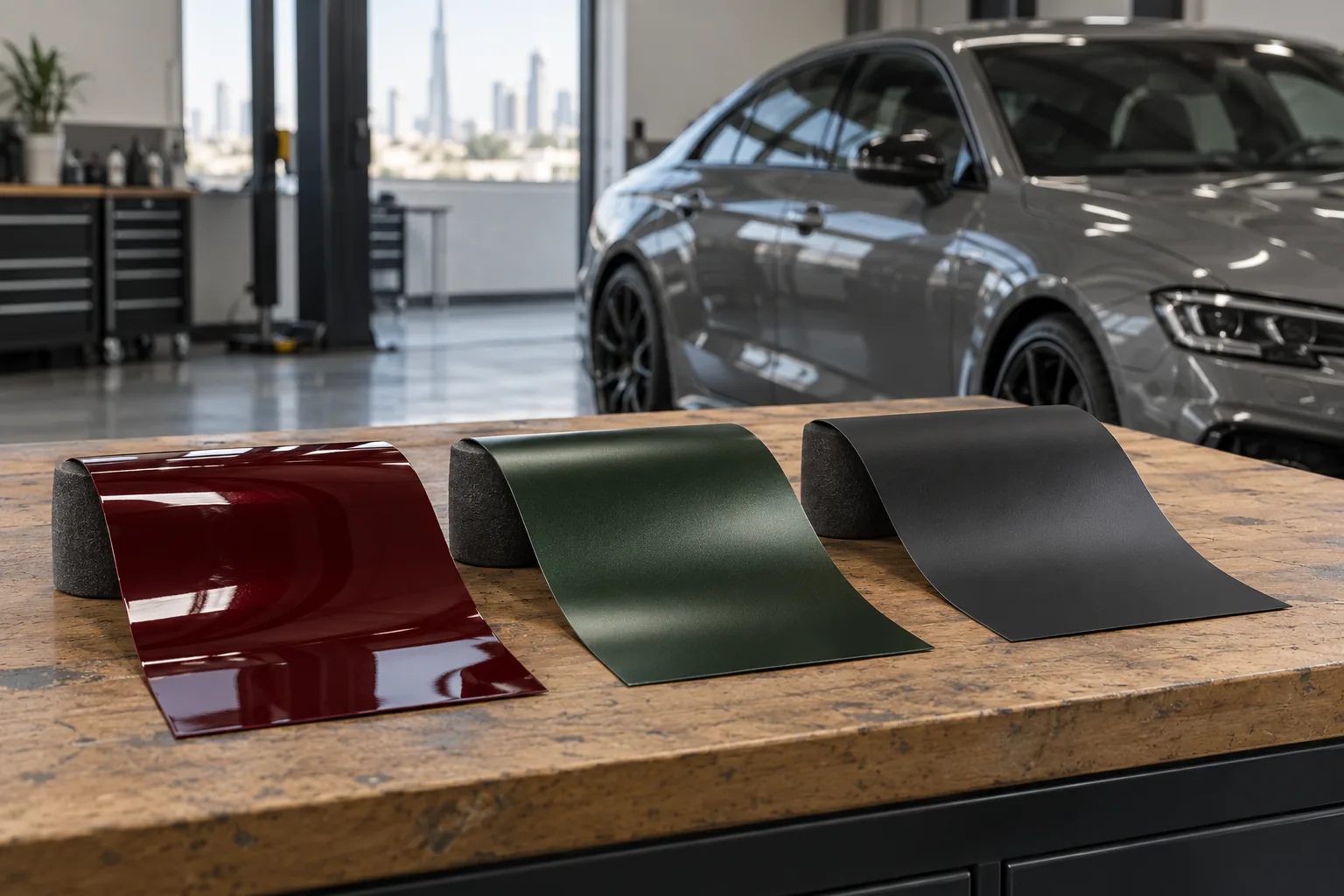
Established colour-film families include 3M Wrap Film Series 2080 and Avery Dennison Supreme Wrapping Film. These are examples to help you ask a precise question, rather than a statement that every workshop stocks them. Confirm the actual product, colour code and availability on your quotation. A description such as premium vinyl is not enough.
Ask to see the proposed film’s product information and regional warranty. A familiar brand name alone does not establish the series, intended use or coverage. Film thickness also does not tell you everything about its finish, suitability or removal terms.
Check the paint before approving the installation
The existing surface is part of the job. Tell the installer about accident repairs, repainting, peeling clear coat, corrosion, stone chips, ceramic coatings and any previous wrap. An attractive vinyl colour cannot make a weak paint layer sound.
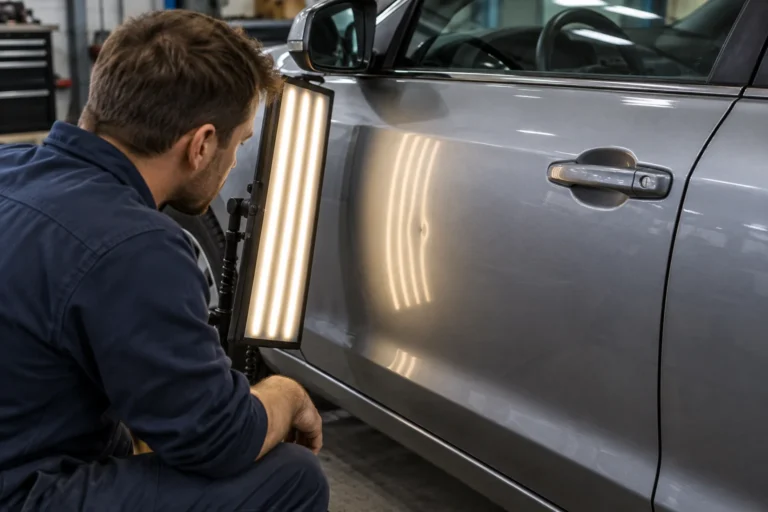
Ask the workshop to inspect and photograph the paint before preparation. Discuss which marks may remain visible through the film and which areas need repair first. A wrap follows the surface beneath it, so a dent or damaged coating can still affect the finished appearance.
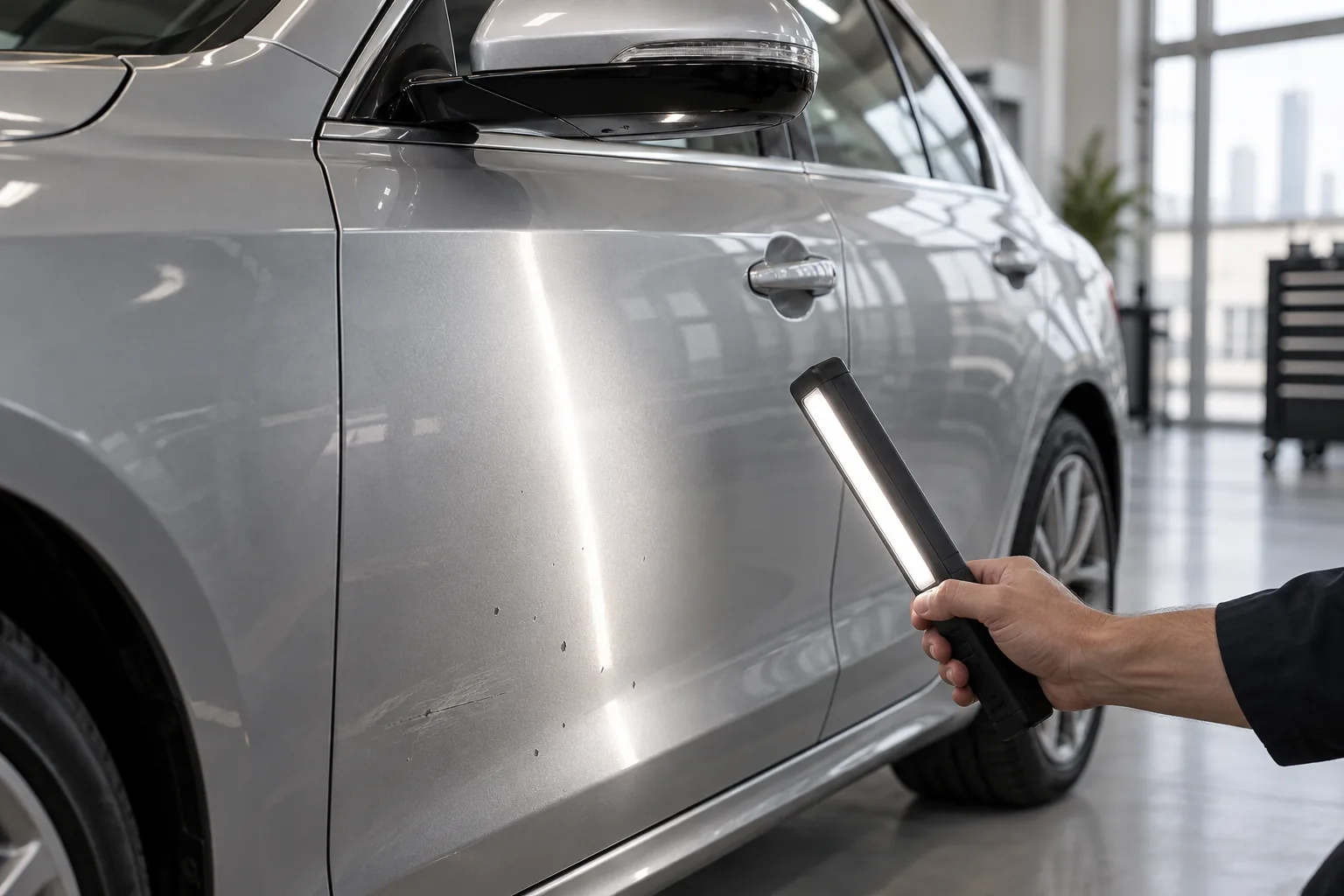
Recently repainted panels need particular care. The painter and film supplier should advise when that specific paint system is suitable for wrapping. Do not assume that a fixed waiting period applies to every repair. If the paint history is uncertain, ask what the installer can establish and which risks remain.
Removal is another reason to assess the surface. Sound original paint and a poorly bonded respray can behave differently when film is taken off. 3M’s wrap-film guidance discusses repaint-related risks and explains that its published North American warranty excludes paint pull during removal. Those terms are not a UAE warranty, but they show why a universal damage-free promise needs questioning.
Have any pre-existing damage and agreed preparation recorded. If the workshop recommends repairs before installation, ask for a separate explanation and price. You should understand whether it is addressing the condition of the paint or simply preparing a suitable surface for film.
Inspect workmanship beyond the finished car photos
Use recent examples of comparable work to assess an installer. A car with similar bumpers, mirrors and recesses gives you more useful information than a distant photograph of an entirely different shape. Ask to see close views of edges and difficult areas as well as the overall finish.
Look for explanations as well as images. A competent installer should be able to tell you where a join or separate piece is planned, why it is needed and how it will look. A claim of no seams anywhere should not replace a discussion of your car’s actual shape.
- Ask how the existing paint will be assessed and recorded.
- Confirm who carries out the work and who handles a later concern.
- Discuss planned joins, edge coverage and trim removal.
- Request the preparation, installation and collection schedule.
- Ask what workmanship cover is offered separately from film cover.
The work environment should support careful preparation and installation. Ask how the workshop keeps the surface clean, manages the vehicle while work is in progress and checks the completed panels. A polished reception area or a premium film name cannot answer those questions on its own.
Reviews can help you identify patterns in communication and aftercare, but read beyond the star score. Look for detailed accounts of the agreed scope and how the business responded to a concern. Do not treat an unsupported best-in-Dubai label as evidence of installation quality.
Agree which panels and edges are included
Write down the outer panels to be wrapped, including the roof, bumpers, mirrors, handles and any accessories you want covered. Clarify exclusions such as textured plastic or specialist surfaces rather than leaving them inside a vague full-car description.
Door jambs and other inner painted surfaces need their own discussion. Open a door or the boot and point out the original colour that would remain visible. Ask what additional coverage is feasible, how it changes the work and whether it is included in the price.
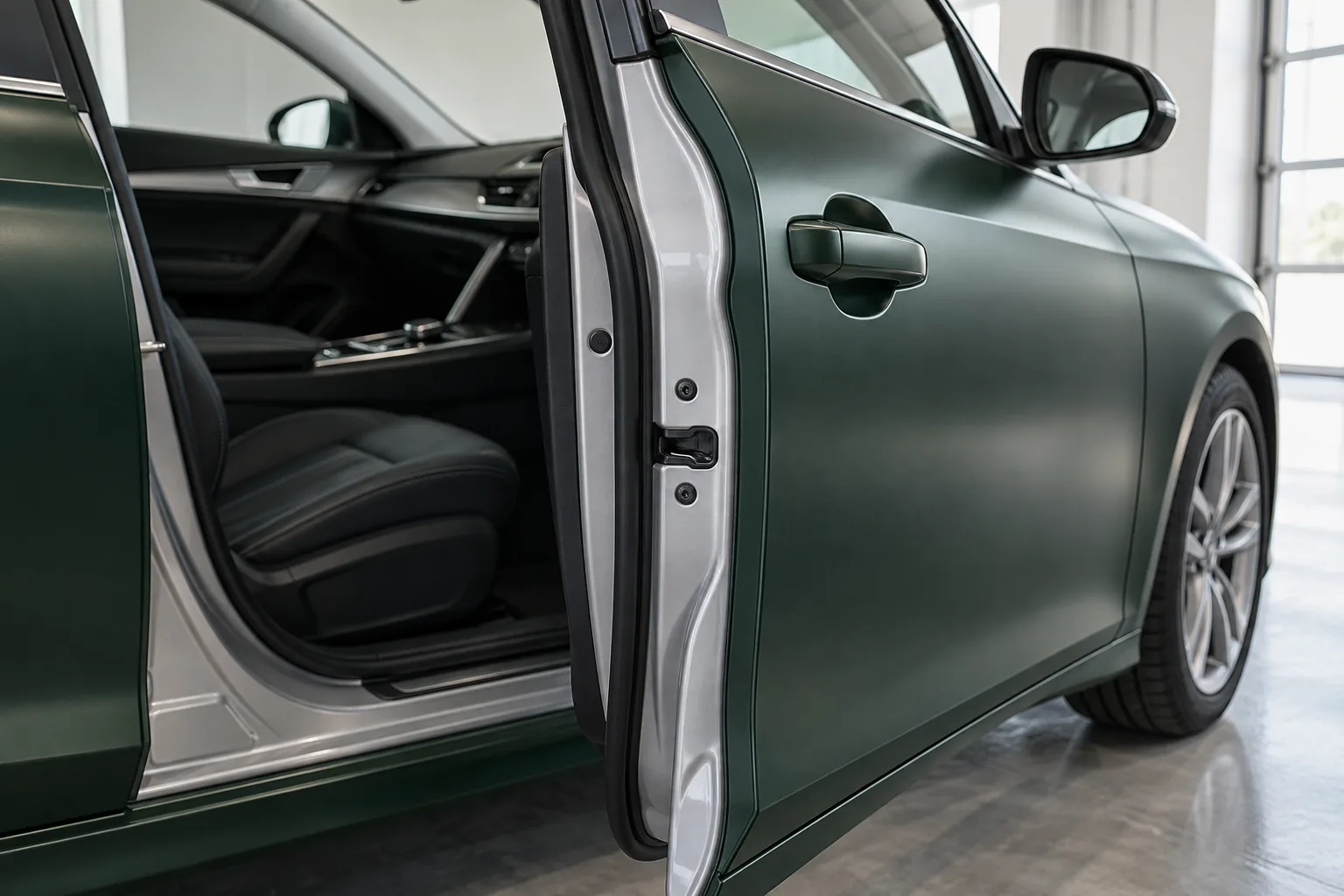
If parts will be removed, agree which ones and ask how they will be refitted. Discuss any vehicle-specific restrictions around cameras, sensors, lights and trim. Film placement should not compromise the normal use of equipment or obscure identification and registration markings.
Agree visible joins and finish boundaries before installation. Also consider what happens after a later panel repair. Replacement film may look different from an aged surface, so a perfect future match should not be assumed. Keep the product and colour details for that discussion.
Confirm colour-change requirements before work begins
If wrapping changes the vehicle’s registered colour, confirm the applicable approval process before installation and the steps needed to update the vehicle record. A removable finish is still a change in appearance and should not be assumed to be exempt from the relevant requirements.
The current RTA ownership-amendment service for individuals says a vehicle must be inspected before applying for a colour amendment. Requirements can also depend on how the vehicle is registered, so confirm the route for your own vehicle rather than relying on a checklist for a company car.
Our guide to Dubai’s colour-change requirements explains the approval and registration sequence in more detail. Settle who will arrange each step, whether fees are included and when you can collect and use the car. Keep the wrapping quotation separate from the official paperwork costs.
Read the warranty for your exact film
A useful warranty identifies the product, vehicle, installation date, covered defects and process for making a claim. Ask for the terms that apply in the UAE. A headline taken from another region does not establish what your own installation will receive.
Separate film-manufacturing cover from the installer’s workmanship promise. If a surface changes or an edge lifts, you need to know who will inspect it and what remedy is available. Ask whether the cover includes replacement material, removal and labour, and which conditions or exclusions apply.
The expected service life and the warranty period are different ideas. Exposure, parking, maintenance, film choice and the covered surfaces all matter. Ask specifically about the roof and bonnet as well as the sides, rather than assuming one headline period applies equally to every panel.
Do not accept a universal five- or seven-year lifespan as a substitute for product-specific advice. Explain whether your car is usually parked outdoors and how it is washed. Then ask the installer to relate the proposed film and care requirements to that use.
Keep the invoice and any required warranty registration. If an installer describes itself as manufacturer-approved, ask how that status can be verified with the manufacturer. A logo in a social post is not the same as confirmed authorisation.
Care for the wrap after taking delivery
Get written washing and maintenance instructions for the installed film. The first-wash waiting period, permitted cleaners and suitable cleaning methods can differ by product. Give those instructions to anyone who regularly cleans the car.
For Series 2080 specifically, 3M’s maintenance instructions say to wait at least 72 hours before washing, favour hand washing and warn that brushes can scratch film or lift edges. They also recommend shade or covered parking where possible. Apply those details to that product rather than presenting them as a rule for every vinyl.
Ask before adding a ceramic coating or other aftermarket treatment. The 2080 document states that 3M does not warrant that film with coatings or similar additions. Check the terms for your chosen film and any proposed coating together before purchasing the extra treatment.
Follow the film maker’s directions for cleaning dust, spills and marks. Avoid experimenting with abrasives, polish or chemicals intended for a different finish. If you notice lifting, cracking or a sudden change in appearance, photograph it and ask the installer to inspect it rather than attempting a repair yourself.
Regular checks also help you plan removal at a suitable time. Ask what signs indicate that your particular film needs attention or replacement, especially on exposed upper panels. Removal should be discussed with a professional who can assess both the film and the paint underneath.
Check the finished work and keep records
At collection, inspect the car in useful light and compare it with the agreed panel list. Look at the overall shade, the finish and the edges that were included. Open the doors and boot to review the coverage boundaries rather than checking only the closed-car appearance.
Check that removed trim has been refitted and that the doors, handles and relevant equipment operate normally. Ask the installer to explain any visible join or difference you were expecting from the agreed plan. Photograph a concern while it is easy to identify and discuss it before leaving.
Keep the final invoice, product and colour code, condition photographs, aftercare instructions and warranty paperwork together. Record any planned follow-up inspection. These details give both you and the installer a clear reference if a question arises later.
If you eventually want to return to the original colour, request a removal assessment rather than assuming that peeling the film off is a simple home job. Paint condition, film age and removal method matter. Also check any registration update needed after the appearance changes again.
Common questions about choosing a wrapping installer
Should I choose the cheapest wrapping quote?
Compare the film, preparation, panel coverage, exclusions and final total first. A lower figure can be reasonable for a smaller scope, but it is not a fair comparison if another quote includes removal or extra surfaces.
Can I wrap only the roof or mirrors?
Partial coverage can be assessed separately. Identify the exact panels and finish, then confirm surface suitability, the quotation and whether the appearance change affects any approval requirement.
Will wrapping hide dents and peeling paint?
Do not rely on it to restore a damaged surface. Have the paint and body assessed first and ask which marks would remain visible. Necessary repairs should be agreed separately before film installation.
Does a full wrap include the door jambs?
Only when the agreed scope includes them. Ask to see where the exterior film ends and which inner surfaces will retain their original colour.
Is vinyl wrapping the same as paint protection film?
No. Colour vinyl is chiefly selected for appearance, while PPF products are designed around paint protection. Some protective films also change colour. Compare the exact product and purpose instead of treating every film as equivalent.
Can the workshop promise a same-day full wrap?
Ask for a schedule based on the car, preparation and coverage. Film removal, paint issues and complex areas can affect timing. Confirm when the vehicle is ready for collection and when washing is permitted.
Will removal always leave the paint unchanged?
No universal guarantee is appropriate. The original paint, any resprays, the film’s condition and the removal process all matter. Ask for a paint assessment and written risk explanation before installation.
What should I send when asking for a quote?
Share the model and year, clear paint photographs, your chosen finish and the panels you want covered. Mention previous repainting, coatings or existing film. The workshop can then explain what still requires an in-person assessment.
Discuss the wrap you have in mind
Share your model, year, desired finish and the panels you want covered. Mention repainting, coatings or existing film so our Al Quoz team can discuss the assessment and quotation.