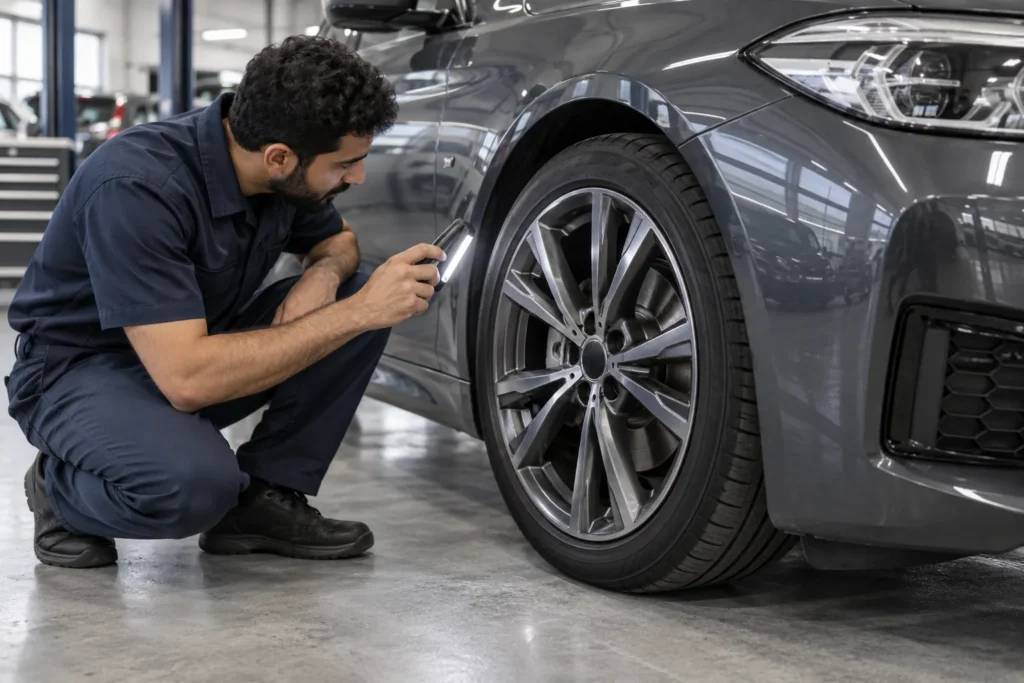
Choose wheel repair in Dubai by the condition of the wheel, the finish you want and the complete fitted price. A surface scuff may suit cosmetic refurbishment. A crack, distorted edge or damaged mounting area needs a separate replacement assessment before anyone offers paint or polishing.
For a structurally suitable wheel, My Car Repair Dubai currently lists light kerb-scuff work at an estimated AED 300–450 per rim including VAT. Comparing that figure with a full repaint or a four-wheel colour change only makes sense when the quantity and included work match. This guide explains the choices and the questions to ask before approving them.
Identify the damage before choosing a service
Drivers often call the complete metal wheel a rim. The rim is the outer part that supports the tyre, while the wheel also includes the spokes and centre. That distinction matters when a workshop describes a cosmetic edge repair or damage elsewhere in the assembly.
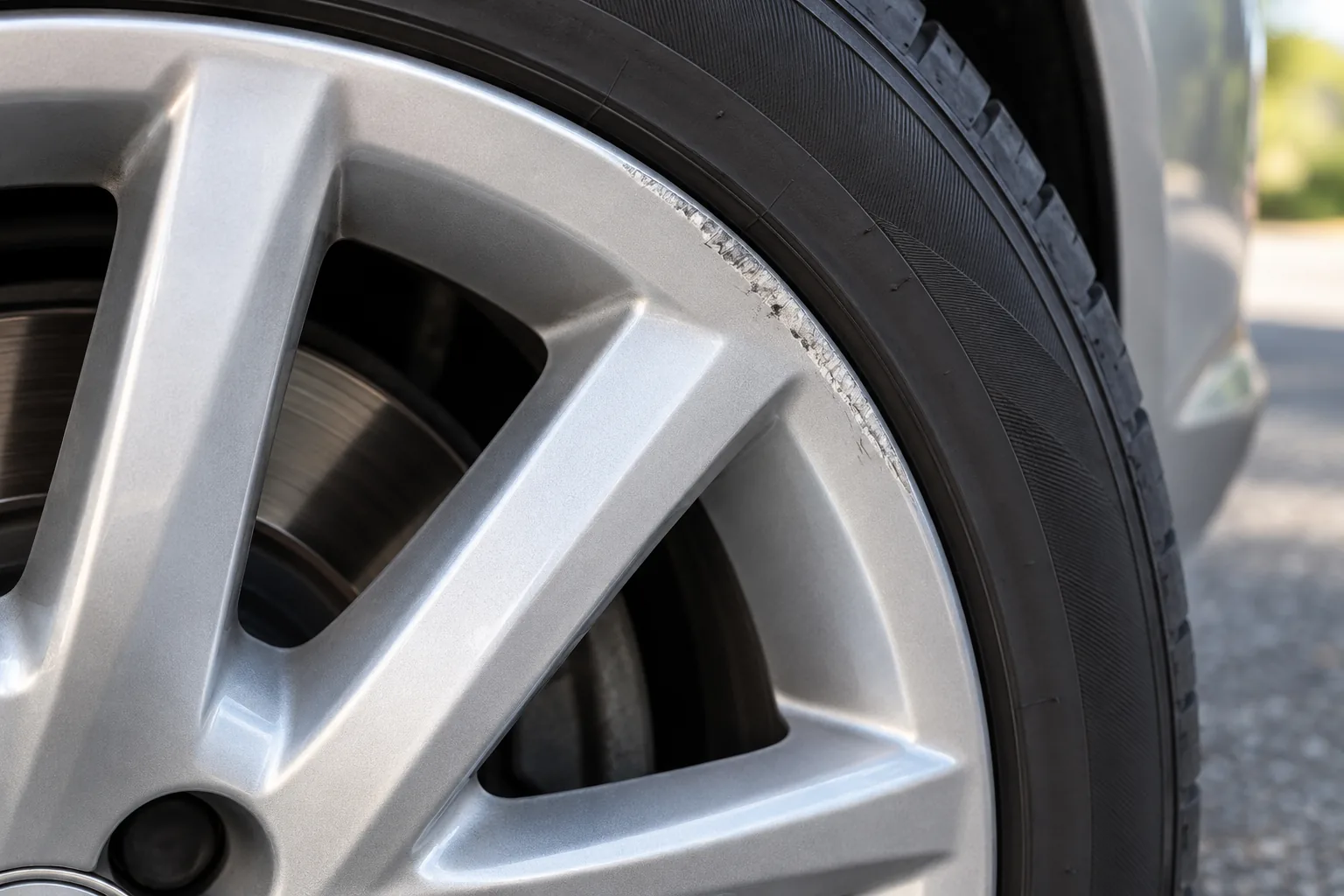
A scratch in the coating is different from a change in the metal’s shape. Paint, lacquer and surface marks affect appearance, but a new finish does not answer whether an impacted wheel remains suitable for use. Tell the workshop about pressure loss, vibration or steering changes even if the main reason for your visit is a visible scuff.
| What you notice | What to ask for first |
|---|---|
| A shallow scrape in the finish | A condition check and a cosmetic quotation specifying the affected area. |
| Peeling lacquer or a patchy colour | Identification of the existing coating and an explanation of the proposed preparation. |
| A visibly bent edge or metal crack | A structural and replacement assessment rather than an appearance-only price. |
| Repeated pressure loss | A wheel, tyre and valve assessment. Do not assume the coating is the cause. |
| New vibration without obvious surface damage | Diagnosis of the wheel and tyre assembly and any relevant mounting or suspension issue. |
If the edge has changed shape after a pothole or kerb impact, understanding whether a bent rim can be repaired safely helps you assess the recommendation before discussing its appearance.
Stop safely if there is a visible wheel crack, a flat tyre, strong vibration or uncertain steering after an impact. Do not test the car at a higher speed. Follow the vehicle’s instructions for a suitable spare where it can be fitted safely, or arrange assistance.
Compare finishes and their practical repair limits
Start with the appearance already on the car. A plain silver-painted wheel, a bright machined face and a polished or plated finish may look similar in a photograph but need different treatment. Ask the workshop to identify the finish before recommending a process.
Keep the condition decision separate from the colour decision. The EUWA wheel safety guidance applies to wheels produced or commercialised by its members. It requires replacement of fractured or deformed wheels and prohibits structural repair by welding, heating or deformation. Its cosmetic restrictions also cover machining and heat processes. This is manufacturer-association guidance, not a statement of UAE law. Confirm the exact wheel maker’s requirements.
Painted finishes and local cosmetic touch-ups
A painted wheel can have a silver, black or coloured coating with an agreed sheen. A local touch-up addresses a limited area, while a full repaint treats a wider surface. Ask which is being quoted and whether preparation includes the whole face, the outer edge or other areas.
Matching one wheel to an older set deserves a realistic discussion. Compare a sample or the proposed colour in daylight, including its gloss or satin appearance. An exact-looking colour code does not guarantee that a freshly coated wheel will look identical to three weathered ones.
Powder coating and a complete colour change
A full colour change may be useful when you want the set to look consistent. Powder coating is one finishing option, but the name alone does not establish suitability. Ask what stripping and curing process is proposed and whether it is permitted for your wheel. Agree the colour and sheen before work begins.
A four-wheel colour change should be compared with another four-wheel quotation. A cheap single-wheel figure is not a complete-set price. Check whether centre caps or other visible accessories are included and whether they will match, since these details can affect the result you expect.
Diamond-cut appearance and other specialist finishes
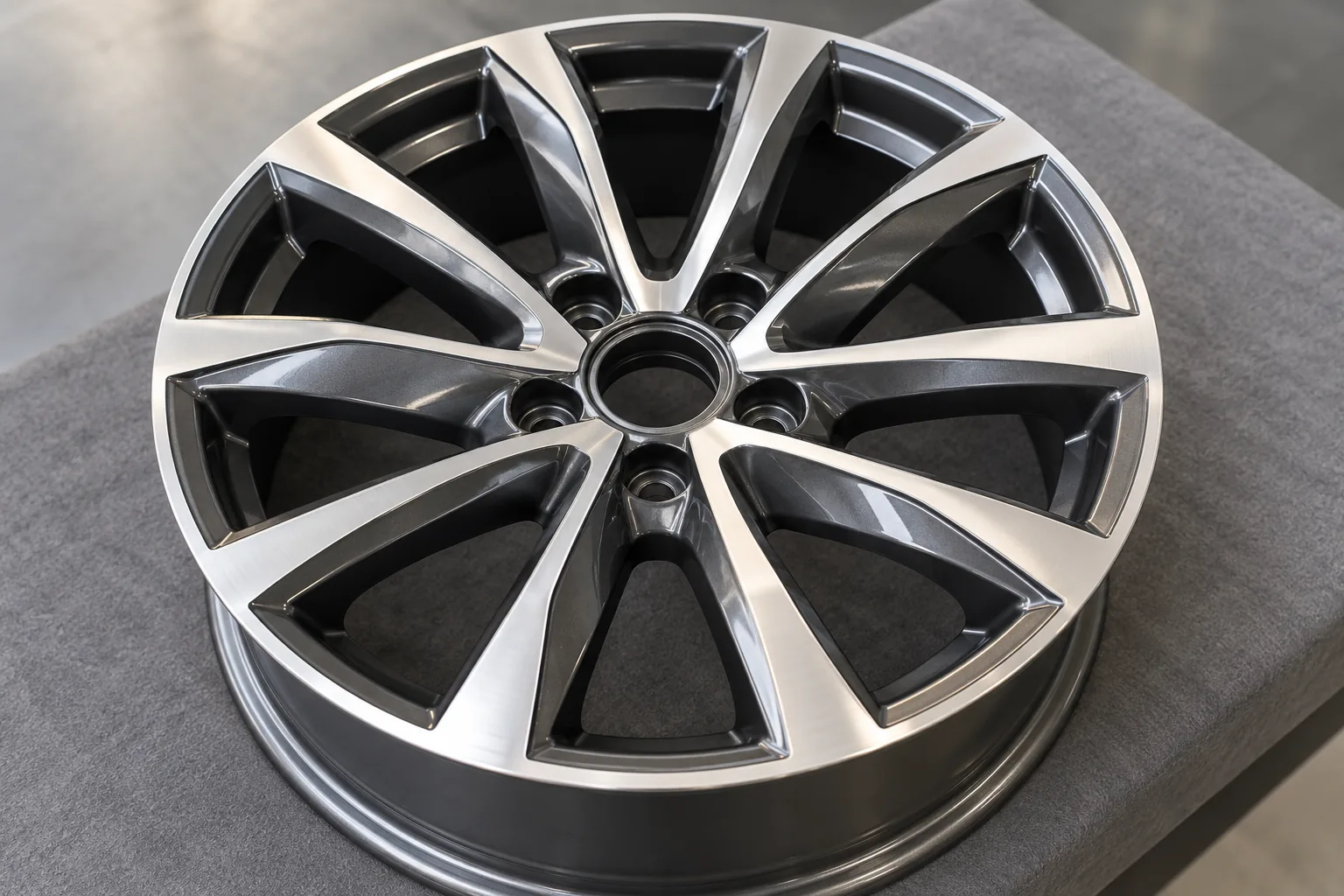
A diamond-cut-style wheel has bright metal faces alongside painted recesses. It is different from painting the entire wheel silver. Do not assume another machining pass is allowed because the original wheel has a machined face or because another workshop advertises that process.
Tell the assessor about any previous refurbishment. Ask whether the original appearance can be retained using a permitted method, whether a painted alternative would change the look, and whether replacement is the appropriate choice. Polished and chrome-plated wheels also need a finish-specific assessment.
Compare the complete wheel refurbishment cost
These are the workshop’s currently published cosmetic estimates. Prices include 5% VAT and are per rim unless the row states a set of four. Inspection determines the suitable work and final total.
| Cosmetic work | Estimated price | Quantity and scope |
|---|---|---|
| Light kerb scuffs | AED 300–450 | One structurally suitable rim. |
| Repair and repaint | AED 400–650 | One rim with preparation, colour match and clear coat. |
| Full colour change or permitted powder coating | AED 500–900 | One rim with preparation and the agreed finish. |
| Standard single-colour repaint | AED 1,400–2,200 | A set of four suitable wheels. |
These estimates include labour, coating materials, standard tyre removal and refitting, and balancing when needed. New tyres, valves, tyre-pressure sensor parts and replacement wheels cost extra. Specialist finishing needs a separate assessment and quotation.
If cosmetic work is suitable, compare the current rim refinishing options and prices with the finish you want and the number of wheels involved.
Before comparing two totals, check whether both cover the same wheel size, existing finish and extent of preparation. Removing a tyre, dealing with an old coating, matching a special colour and including refitting are different scopes from touching up one visible scuff. A useful quote explains these differences rather than hiding them in a broad repair label.
Replacement is a separate purchase. Ask for the wheel identity, whether the part is new, its intended position on the car and the fitted total. A cosmetic estimate cannot price an unspecified replacement wheel, and a low refinishing price should not influence the structural decision.
Choose a workshop by its written scope
Finding an affordable workshop means finding a clear proposal for the work your wheel actually needs. Ask for an assessment that records the condition and separates optional appearance work from necessary replacement or tyre work. You should be able to explain what you are buying after reading the quotation.
- Ask which wheel or wheels are included and how the existing finish was identified.
- Confirm the proposed preparation, finishing method and appearance you are approving.
- Request the total with fitting, balancing where needed, VAT and any extra parts shown.
- Agree how the workshop will contact you if inspection changes the recommendation.
- Ask who carries out specialist work, where it is done and who handles any warranty claim.
- Confirm the expected collection time and what happens if parts or processing take longer.
Photos of completed finish work can help you judge colour and presentation, but they cannot establish that the same process is suitable for your wheel. Likewise, a warranty on the coating does not automatically cover the wheel’s structure, tyres or future kerb damage. Ask for the written terms and keep the quotation and invoice.
A quotation can include an initial assessment fee even if cosmetic work is declined. Ask about that fee, any removal charge and the return condition of the wheel before leaving it. This makes a replacement recommendation easier to consider without a surprise bill.
Separate finish work from vibration and fitting
Vibration is a reason to investigate, not a reason to choose a repaint. The workshop may need to examine the tyre, wheel condition and mounting before deciding what else to check. Explain when you feel the vibration and whether it started immediately after an impact or a wheel change.
Balancing corrects an uneven distribution of mass in the rotating wheel and tyre assembly. Alignment concerns how the wheels are positioned relative to the vehicle and road. Continental’s explanation of tyre balancing distinguishes the two and recommends rebalancing when a tyre is refitted.
Neither a balancing result nor a fresh finish should be treated as approval of structural damage. Ask the workshop to explain what its checks establish and what remains uncertain. If another fault is found, approve that work separately so the final bill and the expected improvement are clear.
Tyre handling also matters. Confirm whether the existing tyre is suitable to refit and whether a valve or pressure-sensor component needs attention. A coating quotation should explain how these items are handled instead of leaving you to assume every part will be reused.
Check wheel identity before changing the specification
Changing the colour of an existing suitable wheel and changing the wheel specification are separate decisions. If you want a different wheel, do not order it solely because its advertised diameter matches the old one. Give the supplier the exact vehicle and wheel details and ask for confirmed compatibility.
Wheel width, offset, centre bore, bolt pattern and fastener type are fitment details, not cosmetic preferences. The tyre combination, load suitability and clearance also need confirmation for the vehicle. Front and rear wheels may have different specifications even when they look alike.
Provide the make, model, year and any existing wheel information. A technician can identify markings on the reverse during a suitable inspection. Do not crawl under the car or remove a wheel simply to obtain a code for an enquiry. Safe photographs and the vehicle details are enough to start the conversation.
Discuss the final installation as well as the part. Ask which bolts or nuts are required, how pressure-sensor compatibility is handled and which vehicle-specific tightening instructions apply. If the proposed fitment differs from the original, ask the supplier to explain its approval basis before ordering.
Plan collection and inspect the finished work
Ask for a completion estimate after the scope is agreed. A local cosmetic job, full-set colour change and replacement order involve different schedules. Preparation, coating, processing and refitting all need to be allowed for, so a same-day promise is only useful when it applies to your actual job.
Confirm whether you are leaving the car or supplying loose wheels. If the car is staying, ask what arrangements are available during the work. If you are bringing loose wheels, agree whether tyres, valves and centre caps should be supplied and how transport will protect the finish.
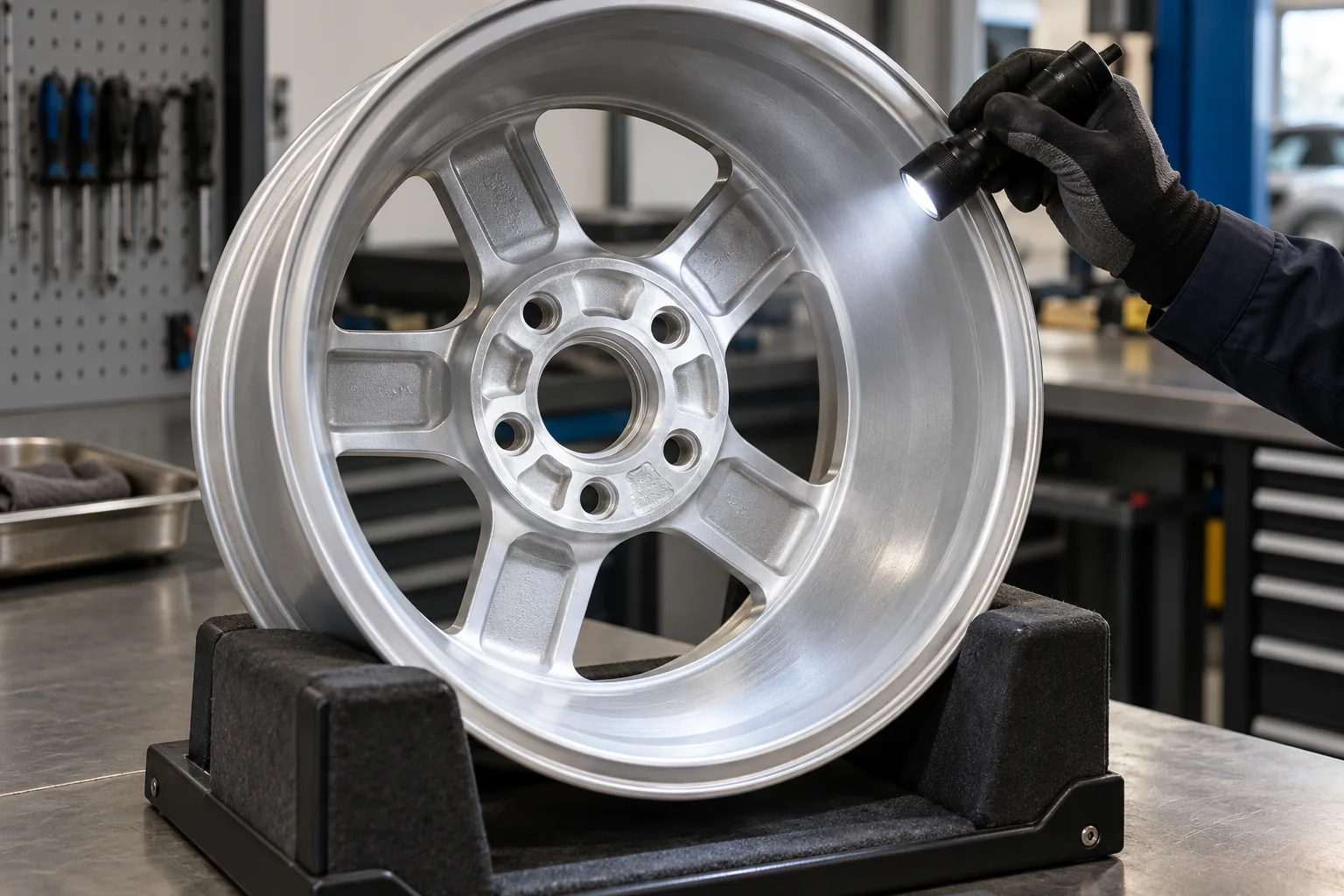
At collection, compare the finished appearance with the agreed scope before leaving. Check the colour and sheen in useful light, look at the edges and recesses that were included, and ask about any visible differences from the original finish. Keep the work record so a later concern can be discussed against what was approved.
- Confirm what tyre handling and balancing were completed.
- Ask about the final fitting checks and any vehicle-specific follow-up instructions.
- Read the invoice for additional parts and agreed changes.
- Obtain aftercare instructions and the written coating warranty, if offered.
If a pressure warning, vibration or steering problem remains after collection, contact the workshop and explain the symptom. Do not assume that a visually improved wheel has resolved a separate driving concern. Strong vibration or loss of control still calls for a safe stop.
Care for the finish after refurbishment
Follow the finishing provider’s instructions for the newly applied coating, including any waiting period before washing. Once normal cleaning is permitted, choose products compatible with the wheel finish and use a gentle method rather than trying to remove marks with abrasive tools.
For its own wheels, OZ recommends cleaning cold wheels with water, neutral detergents and soft sponges, avoiding solvents and metal brushes. Check your wheel maker’s guidance as well as the refinisher’s instructions, especially for a specialist coating.
In Dubai, allow wheels to cool after driving before cleaning them. Regular gentle cleaning makes fresh marks easier to notice. If coating starts to lift or the finish changes unexpectedly, take clear photographs while parked and contact the provider instead of sanding or repainting the area yourself.
Common questions about wheel repair and customisation
Can just one scuffed wheel be refinished?
Yes, a suitable single wheel can be assessed for cosmetic work. Ask how closely the colour and sheen will match the remaining wheels. Repainting a full set is an appearance choice rather than an automatic requirement after one scuff.
Can paint hide damage that needs replacement?
A coating changes appearance and does not resolve structural suitability. Tell the assessor about cracks, impacts, previous work and driving symptoms before approving finishing.
Is every diamond-cut wheel suitable for another cut?
No. Ask for the exact wheel requirements and an explanation of the permitted options. The original appearance does not establish permission for further machining.
Does a colour change include the centre caps?
Only if the quotation says so. Agree which accessories are included and how they will match the chosen finish before work begins.
Should I choose mobile or workshop refurbishment?
Ask what assessment and finish work can be completed at the proposed location, whether tyres need removal and where any specialist process takes place. Choose the setting that supports the agreed scope, rather than assuming either location makes every method suitable.
What should I send before requesting a quote?
Send the model and year, the number of affected wheels, a whole-wheel photograph and a close-up of the visible damage taken safely. Mention the desired finish, earlier refurbishment and any pressure loss or vibration. Photos help plan the assessment and cannot certify driving safety.
Can I drive while waiting for a cosmetic appointment?
A confirmed surface-only scuff is different from an unassessed impact. Seek advice if the condition is uncertain. A flat tyre, visible wheel crack, strong vibration or changed control requires a safe stop and suitable assistance.
Discuss the right work for your wheels
Send our Al Quoz team your model, year, wheel photos and preferred finish. Mention any impact, pressure loss or vibration so we can discuss the assessment first and confirm the suitable work, charges and timing.