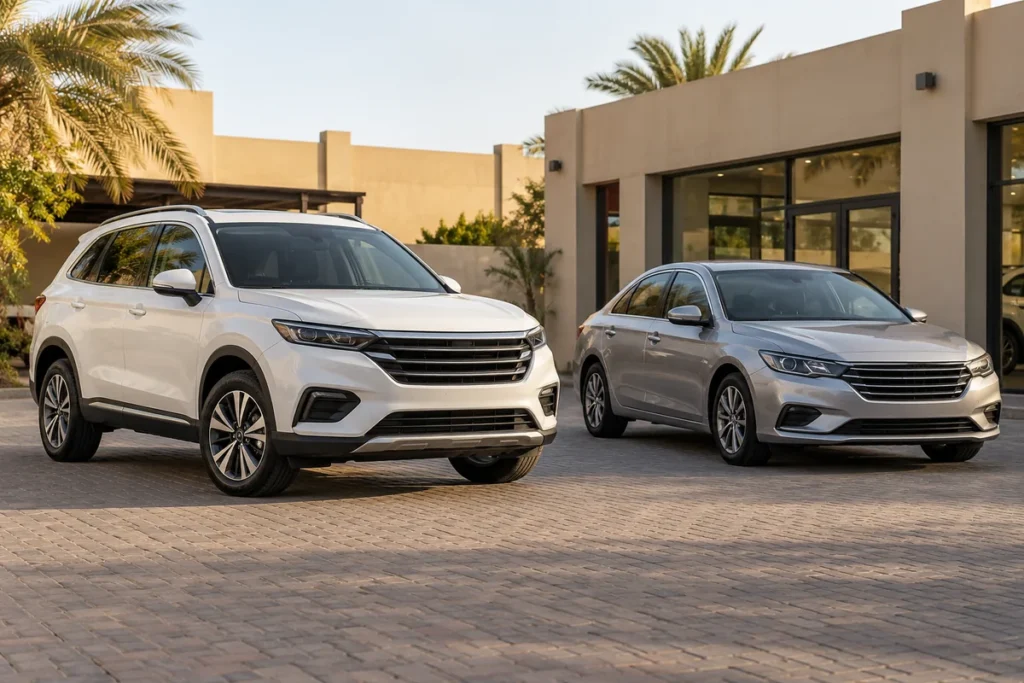
Toyota Land Cruiser, Nissan Patrol, Toyota Prado, Camry and Corolla are sensible starting points when resale value matters in Dubai. Honda Accord, Toyota RAV4 and Lexus LX are also worth comparing for different budgets and uses. There is no defensible single winner across every model year, trim and condition, and an attractive badge cannot compensate for paying too much for the wrong car.
The shortlist below brings together historical residual-value research and UAE used-market interest. It is not a numbered ranking or a promise of what your car will fetch. Compare the exact vehicle, calculate the likely cash loss and investigate its history before treating resale as a reason to buy.
Compare eight resale-focused candidates
Start with the type of car you need. Large SUVs, compact sedans and luxury vehicles have different purchase budgets and running costs. The table explains why each candidate belongs in the conversation and which differences could make a comparison misleading.
| Candidate | Evidence behind the shortlist | Important comparison checks |
|---|---|---|
| Toyota Land Cruiser | Historical regional trim-level residual analysis | Series, engine, grade, original price and off-road history |
| Nissan Patrol | Historical regional generation and trim analysis | Generation, engine, modifications and maintenance |
| Toyota Prado | UAE used-market interest, not a verified retention rank | Generation, powertrain, specification and actual use |
| Toyota Camry | Historical UAE midsize-sedan residual comparison | Petrol or hybrid version, previous use and service records |
| Toyota Corolla | Historical UAE compact-sedan residual comparison | Body, powertrain, specification, mileage and condition |
| Honda Accord | Historical UAE midsize-sedan residual comparison | Generation, engine, grade and documented servicing |
| Toyota RAV4 | UAE used-market interest, not a verified retention rank | Petrol or hybrid version, drivetrain and market specification |
| Lexus LX | Historical regional grade-level residual analysis | LX generation, grade, equipment condition and repair budget |
Land Cruiser and Patrol need generation-specific comparisons
A Land Cruiser listing needs more detail than its name. Establish the series, model year, engine and trim before comparing its price with another car. Keep Prado separate where a report or seller uses Land Cruiser as a broader label. A newer generation may have different equipment and ownership requirements, so an older vehicle’s price pattern cannot simply be transferred to it.
Apply the same discipline to Patrol. Different generations and engines can sit beside each other in search results at very different prices. Ask about suspension changes, wheels, engine tuning and previous off-road use. Those are inspection questions rather than automatic reasons to reject a vehicle. Price the actual condition and specification, including the cost of resolving any findings.
Prado and RAV4 serve different ownership needs
Prado and RAV4 deserve consideration when comparing used SUVs, but used-market attention does not establish which will lose less money. Check whether you need the offered car’s size, drivetrain and seating arrangement. Paying for capability you rarely use can leave you with a larger ownership bill even when another buyer later values that capability.
For each, compare the same generation and powertrain. A petrol vehicle and a hybrid should not share an assumed maintenance budget or resale forecast. Ask what support and service evidence accompany the individual car. Then use closely matched listings and actual offers to assess today’s market rather than relying on a generic Toyota percentage.
Camry, Corolla and Accord are useful sedan comparisons
These three sedans provide a more focused comparison for buyers who do not need a large SUV. Camry and Accord belong in a midsize discussion, while Corolla serves a compact-car shortlist. Test passenger room, luggage access and parking first. A car’s place in historical resale research is useful only after it meets your ordinary driving needs.
Establish previous use without assuming that a commercial car is poor or a privately owned car is sound. Compare mileage with dated invoices and wear. Check the particular engine, transmission and servicing requirements. A cheaper example with missing records may need a different repair allowance from a documented car, and neither should inherit a universal retained-value figure from its model name.
Lexus LX requires a complete luxury-car budget
LX is relevant to a luxury-SUV comparison, with historical research separating grades rather than assigning one result to the badge. Confirm the generation and equipment fitted to the offered vehicle. Check that cabin, suspension, cooling and electrical functions work as expected, and obtain vehicle-specific estimates for any faults before agreeing to a price.
A higher future selling price does not necessarily mean a lower ownership cost. Include the original purchase amount, insurance, maintenance and likely repairs in your decision. Buyers considering a BMW 3 Series or Mercedes-Benz C-Class should follow the same method. Interest in a luxury model does not prove that every version retains more value than a mainstream sedan.
What UAE resale evidence can tell you
AutoData’s Q1 2024 UAE used-car report identifies Corolla among compact-sedan residual performers and Camry and Accord in its midsize comparison. These are historical findings for the report’s comparisons, not current quotes for every vehicle carrying those names.
Its H1 2025 UAE and Saudi Arabia report examines Patrol generations and trims, Land Cruiser grades and Lexus LX grades. The useful lesson is that specification changes the comparison. Its regional analysis should not be presented as a Dubai-only completed-sale result.
UAE 2025 marketplace reporting also places Prado and RAV4 among frequently viewed used SUVs. That supports including them in a shortlist, but page views and advertised prices measure different things from a sale. An advert can remain online because the price is ambitious, the condition is unclear or the seller has not updated it.
Research checked in October 2026 includes newer brand-level reporting. A brand average combines models and specifications, so it cannot establish your particular Camry’s or Patrol’s value. When reading a resale statistic, look for the country, vehicle age, price baseline and method. If those are missing, avoid using it to forecast a deposit, finance balance or future sale.
Calculate depreciation in dirhams as well as percentages
Retained value expresses the selling amount as a share of the price used as the baseline. For your own purchase decision, use the amount you actually pay for the vehicle. A percentage calculated from an old brochure price can give a different result from one calculated after a dealer discount or from a used-car purchase.
Divide expected net selling proceeds by the vehicle purchase price, then multiply by 100 to estimate retained value. Subtract those proceeds from the purchase price to estimate cash depreciation. Net proceeds mean the sale amount after any selling charges included in your calculation. Keep the baseline and deductions consistent for every candidate.
| Measure | Car A | Car B |
|---|---|---|
| Vehicle purchase price | AED 60,000 | AED 120,000 |
| Assumed net selling proceeds | AED 36,000 | AED 84,000 |
| Retained value | 60% | 70% |
| Cash depreciation | AED 24,000 | AED 36,000 |
| Average annual depreciation | AED 8,000 | AED 12,000 |
These figures are hypothetical and are not prices or forecasts for the shortlisted models. Car B retains a larger percentage but loses AED 12,000 more over the same three years. This is why choosing solely by a retention percentage can mislead a buyer whose priority is keeping cash costs down.
The example excludes fuel, insurance, servicing, repairs, registration and finance costs. Add your own estimates separately. If you bought used, calculate depreciation from that used purchase price and your intended ownership period. Do not compare your two-year used-car plan with a report measuring three years from new.
Prepare a cautious sale scenario as well as your preferred one. If a lower sale amount would make the purchase unaffordable, revisit the budget. For financed vehicles, obtain the lender’s actual settlement figure and confirm relevant charges. The money left after settling a loan is different from the car’s retained value.
Estimate what an individual car could sell for
Begin with a small set of closely matched current listings. Record the model year, generation, engine, trim, market specification, mileage and seller type. Treat accident history, service evidence and warranty claims as fields needing verification. A screenshot of a high-priced advert provides little context if those details are missing.
- Separate GCC-specification cars from imports until you have checked comparable history and support.
- Compare similar mileage and distinguish documented entries from a seller’s description.
- Remove adverts for materially different generations, engines or grades.
- Note whether a dealer price includes a stated warranty or services absent from a private listing.
- Record the date and avoid treating duplicate adverts as separate vehicles.
- Ask about the full payable amount and any conditions attached to the advertised figure.
Look at the range rather than picking the highest number. Investigate why an unusually cheap or expensive example differs. A damaged import, a promotional finance condition or a different grade may explain the gap. Do not apply a fixed negotiation discount to every advert or assume that the lowest listing establishes fair value.

Use written offers to compare selling channels
If you already own the car, obtain vehicle-specific offers after providing accurate details and allowing an assessment. Ask whether the amount is firm or subject to another inspection. Confirm which charges are deducted and when payment would be made. An online estimate before anyone has seen the vehicle is a starting point.
Compare private sale, direct dealer purchase and trade-in on net proceeds and the work involved. A private sale can require advertising, viewings and negotiation. A dealer offer reflects that dealer’s assessment and business requirements. Neither channel guarantees the best result for every car, so compare actual terms rather than a promised universal percentage advantage.
For a trade-in, request the replacement car’s cash price and the trade-in allowance separately. A generous allowance can accompany a less attractive replacement-car deal. Keep finance, optional accessories and service packages visible as separate commitments. Judge the complete transaction against an equivalent cash purchase and separate sale.
Keep a simple valuation worksheet with one row for each comparable vehicle and a separate row for each genuine offer. Write down the advertised amount, the available history, the inspection status and any deductions. Keep your own car’s findings beside that sheet. This prevents a fully assessed offer from being compared casually with an unverified asking price.
Decide how much time you can spend selling. If an offer is lower than your preferred private asking price, compare the difference with the time, viewings and continuing ownership costs you would accept while waiting. Do not assume an advert will sell within a fixed number of days. Review the response to your listing and adjust using new evidence.
If you are buying now but expect to sell after a short stay in Dubai, record the intended ownership period before choosing. Include the cost of buying and selling again, not just the difference between two headline vehicle prices. If your departure date changes, update the budget rather than treating the original sale estimate as a fixed entitlement.
Condition and history can change the result
Resale research cannot tell you whether a specific car has overdue maintenance, collision repairs or water damage. Ask for the VIN, service invoices, previous repair documents and an explanation of ownership and use. Match records to the car and compare dates and mileage instead of treating a stamped book or an attractive interior as conclusive evidence.
Use our guide to checking accident history in the UAE to understand the available records and their limitations. A search with no returned incidents does not prove that the vehicle has never been damaged. Imports also need investigation of their previous-country history.
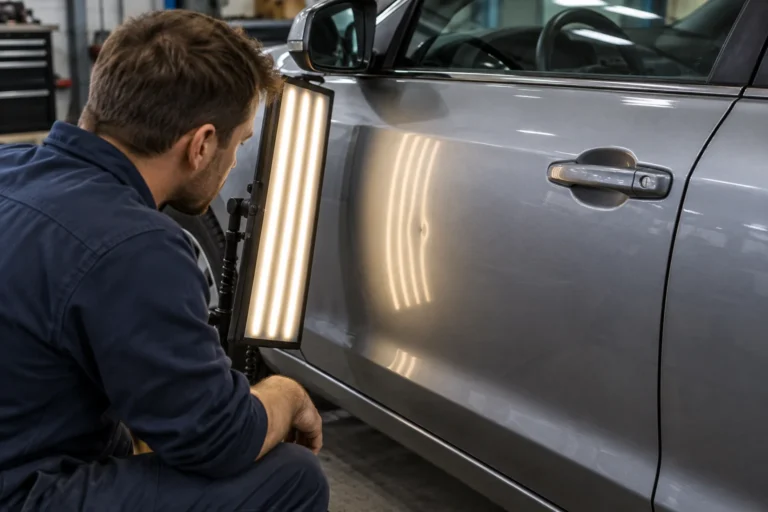
Previous paintwork deserves an explanation, but repainting alone does not establish a serious collision. Ask which areas were repaired and why. Structural damage, restraint-system work and substantial water exposure require more detailed assessment than cosmetic wear. There is no universal price deduction that makes an unanswered safety concern acceptable.
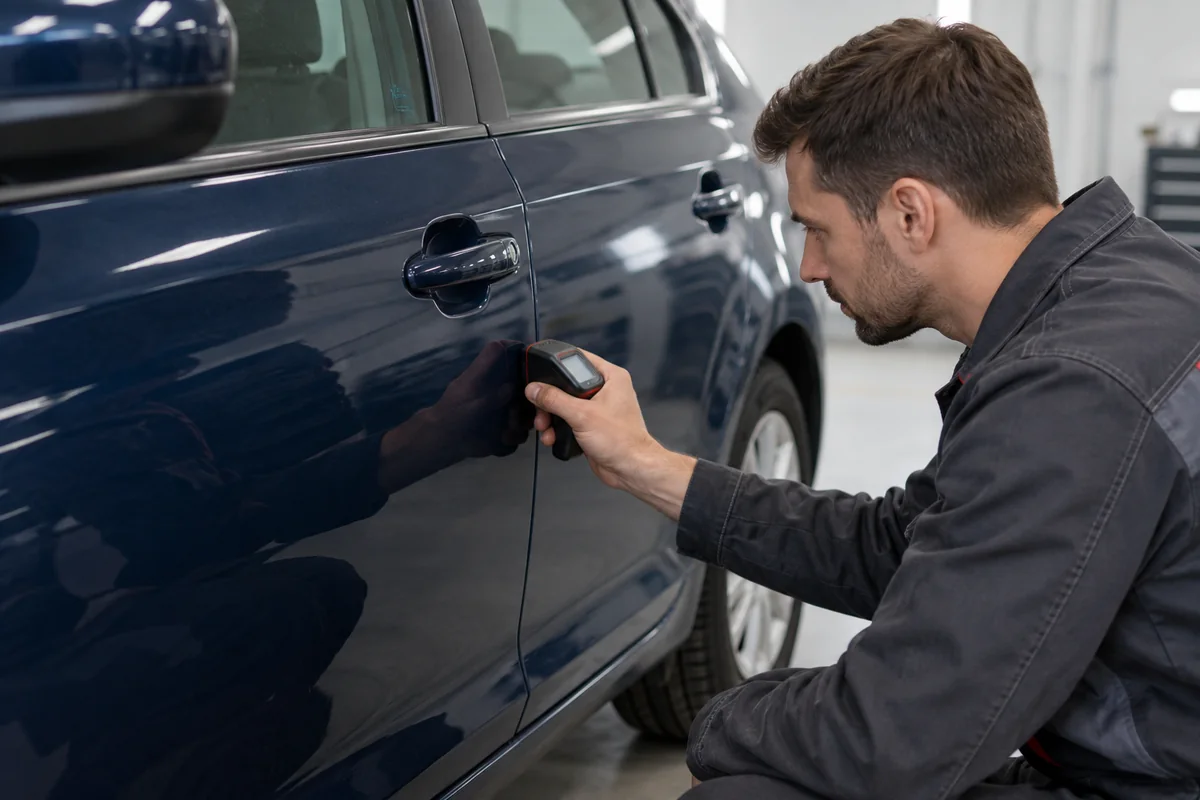
Arrange a pre-purchase inspection suited to the exact car. Agree the scope and ask about access limits before booking. A diagnostic scan can support physical checks and a test drive, but it cannot reconstruct every past repair or predict every future fault. Share any history concerns so the affected areas receive attention.
Read mileage together with maintenance and wear
Low mileage is useful context, not proof of better condition. Check its progression through dated invoices and available records. Consider storage, short-trip use and gaps in servicing as well as the total distance. A higher-mileage car with coherent records deserves a different assessment from a low-mileage advert with unexplained inconsistencies.
Ask for findings that distinguish immediate concerns, scheduled work and optional cosmetic improvements. Price unresolved faults using the actual vehicle details. Brake, tyre, cooling or transmission findings can affect your purchase budget regardless of the model’s reputation. Set aside money for identified work rather than relying on a future resale estimate to absorb it.
Consider powertrain, specification and future buyers
GCC specification is a comparison field, not a certificate of a clean history. An imported car is not automatically damaged either. Establish the source market, previous records, fitted equipment and local service support. Confirm applicable warranty and insurance terms for that VIN before assuming that another visually similar car offers the same ownership proposition.
Choose a trim around useful equipment and its purchase premium. Check how closely matched used examples are priced today, then consider whether you would still want the equipment if little of its extra cost came back at resale. Wheels, accessories or a higher grade do not automatically return what the original buyer paid for them.
Hybrid and electric cars need their own assessment
Do not assign a guaranteed resale advantage to every hybrid or electric vehicle. Compare the specific generation, battery arrangement, service history and market specification. For a plug-in car, consider the charging access you will actually use. A vehicle that fits another owner’s home-charging routine may not fit your building or weekly travel.
On a used electrified vehicle, confirm the applicable battery warranty and transfer conditions in writing. Ask an appropriately qualified assessor about battery condition and any model-specific checks. The displayed charge level indicates how full the battery is at that moment, not how much usable capacity remains compared with new.
Check charging operation where relevant, investigate warnings and ask about previous battery or high-voltage repairs. A range display is affected by usage and cannot replace a suitable condition assessment. Avoid projecting an older report’s electric-vehicle trend onto every current model, especially when the purchase price, version or warranty differs.
For any powertrain, think about the buyer you might eventually reach. A standard, documented vehicle is easier to explain than one whose specification or modifications are unclear. That does not guarantee a faster sale. Keep service information and any approved modification paperwork available, and compare the market again when you are actually ready to sell.
Protect resale without overspending on repairs
Keep maintenance aligned with the manufacturer’s schedule and retain itemised invoices. Record the date, mileage and work completed. Investigate new warning lights, abnormal noises or fluid loss when they arise. Timely assessment supports your use of the car and gives the next buyer clearer information about how issues were handled.
Before spending specifically for resale, separate necessary safety or functional repairs from presentation work. Resolve identified concerns properly and disclose the relevant history. Then compare the cost of optional detailing, paint correction or accessory replacement with realistic offers. There is no promise that spending AED 1 on preparation adds AED 1 to the sale proceeds.
A clean interior and clear photographs help a buyer understand what is being offered. Photograph the outside, cabin, wheels, luggage area and visible wear in ordinary light. State the correct model year, specification, mileage and known concerns. Avoid describing a repaired car as accident-free or hiding faults by clearing warnings for a viewing.
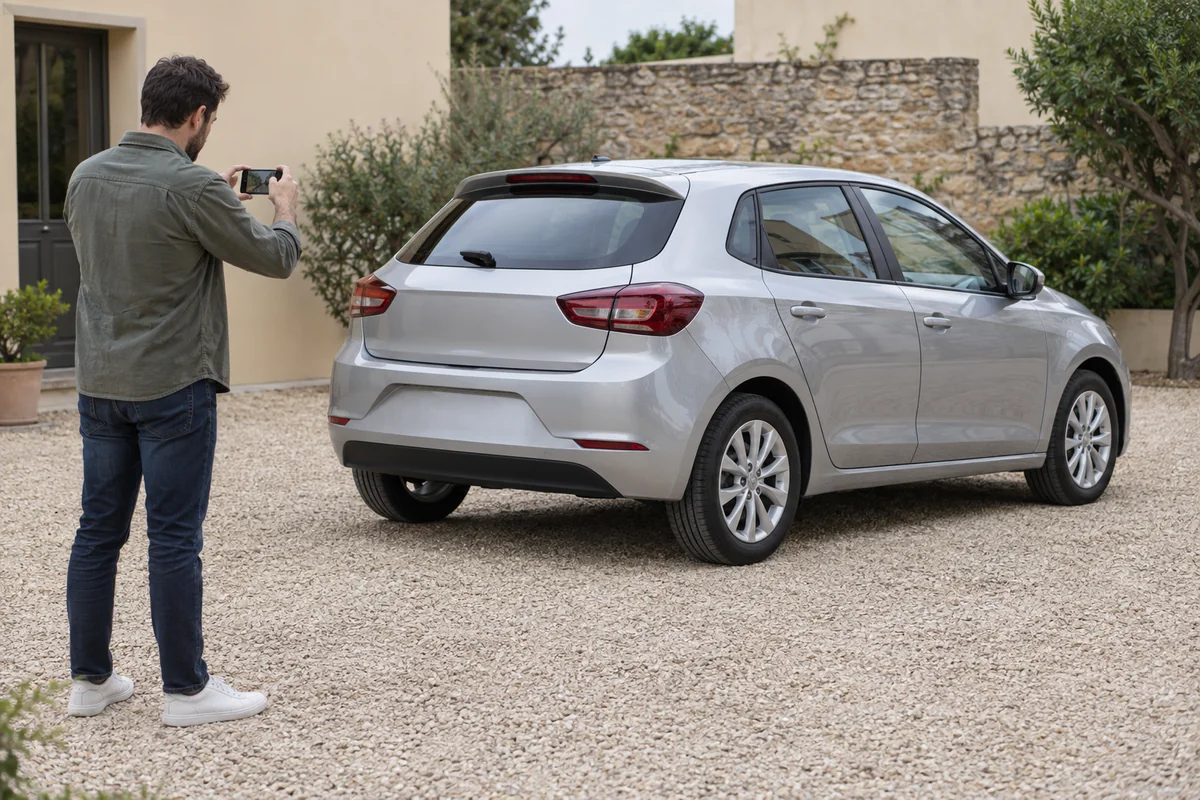
Keep private information out of public photographs and share documents appropriately with a serious buyer. Prepare the keys, manuals and service information you actually have. Missing items should be stated clearly. Transparency lets a buyer assess the car on its real merits and reduces the chance of a viewing being wasted on a misunderstood specification.
When choosing your next car, combine three things you can investigate now. Check whether it meets your needs, whether its condition justifies the price and whether the ownership budget remains manageable under a cautious resale scenario. Historical retained value can inform that decision, but the amount you pay today remains within your control.
Questions about car resale in Dubai
Which car has the best resale value in Dubai?
There is no single verified winner across all ages and specifications. Land Cruiser, Patrol, Prado, Camry and Corolla are useful starting points, with Accord, RAV4 and LX relevant to different needs. Compare the actual version, paid price, history and current offers before choosing.
Can I apply a Toyota brand percentage to my car?
No. A brand average combines different vehicles and comparison groups. Your model year, grade, specification, condition and sale date may differ. Use closely matched evidence and a vehicle-specific assessment rather than multiplying your invoice by a headline percentage.
Is the advertised price the resale value?
An advertised price is an asking amount. A buyer’s offer and the completed transaction can differ. For an ownership calculation, use plausible net proceeds, including any selling deductions you have allowed for, and label an estimate as an estimate.
Does higher retained value mean lower ownership cost?
No. A more expensive car can retain a higher percentage and still lose more dirhams. Add fuel, insurance, maintenance, repairs and finance costs to cash depreciation before comparing the overall budget.
Does an accident always reduce value by a fixed percentage?
No universal deduction applies. The affected areas, repair quality, documentation, unresolved faults and buyer concerns differ. Investigate safety and condition first, then compare suitable vehicles rather than accepting a fixed discount formula.
Will a hybrid or electric car always resell better?
No. Assess the exact model, purchase price, battery condition, support and applicable warranty. Charging practicality also matters for plug-in vehicles. Historical segment trends cannot guarantee a future sale amount for your car.
Should I repair everything before selling?
Address safety and functional concerns appropriately and disclose known issues. Obtain estimates for optional work and compare realistic sale offers before spending. Cosmetic preparation does not guarantee that every dirham will be recovered.
Discuss the condition of a shortlisted car
Share the model, year, mileage and any history concerns with My Car Repair Dubai. Our Al Quoz team can discuss the inspection scope, appointment options and charge before you book.