Common car AC problems include warm air, weak airflow, cooling that fades in traffic, unpleasant smells, unusual noises and water inside the cabin. The solution depends on which symptom you have. A blocked cabin filter needs a different repair from a refrigerant leak, and neither should be diagnosed from the temperature setting alone.
In the UAE, a hot parked cabin can take time to cool, but persistent warm air or a noticeable change from the car’s usual performance deserves a check. Start with the controls and airflow. Leave refrigerant handling, electrical testing and work near moving engine components to a qualified technician.
Recognise warning signs that need immediate attention
If the engine temperature warning appears, steam rises, or you smell burning or fuel, stop safely and switch the vehicle off. Do not continue driving to see whether the AC improves. Keep clear of smoke and arrange assistance. Never open a hot radiator or coolant reservoir cap.
Loss of cabin cooling without other warnings is usually a different situation from engine overheating. Still, stop somewhere safe if heat, discomfort or poor visibility prevents you from driving safely. Do not leave people or pets in a parked car while investigating the fault.
A loud grinding noise, a smoking belt area or water reaching electrical equipment also warrants prompt attention. Switching off the AC may reduce a load, but it does not establish that the vehicle is safe to continue using. Follow the owner’s manual and any dashboard instructions.
Match the symptom before choosing a repair
Notice whether air is moving strongly, whether it is cold, and when the problem happens. These observations narrow the investigation without pretending to identify a failed part.
| What you notice | Possible area to investigate | Useful next step |
|---|---|---|
| Strong airflow that stays warm | Refrigerant circuit, compressor operation or air mixing | Check settings, then request cooling and refrigerant-system tests. |
| Little air even at higher fan speeds | Cabin filter, blower or air distribution | Compare fan speeds and inspect the filter using the manual. |
| Colder while moving than in traffic | Condenser airflow, fans or system control | Record the pattern and request testing at idle. |
| One side warmer than the other | Zone settings, temperature doors or system performance | Match both zone settings and compare the vents. |
| Cooling fades during a longer drive | Evaporator icing, sensors, compressor control or another intermittent fault | Note whether airflow also falls and when it recovers. |
| Wet carpet beneath the dashboard | Condensate drainage or another water or coolant leak | Arrange inspection rather than assuming the fluid is harmless. |
More than one fault can exist. For example, replacing a restricted filter may improve airflow while a separate refrigerant problem still leaves the air warm. Recheck the original complaint after any repair.
Check the controls before booking a repair
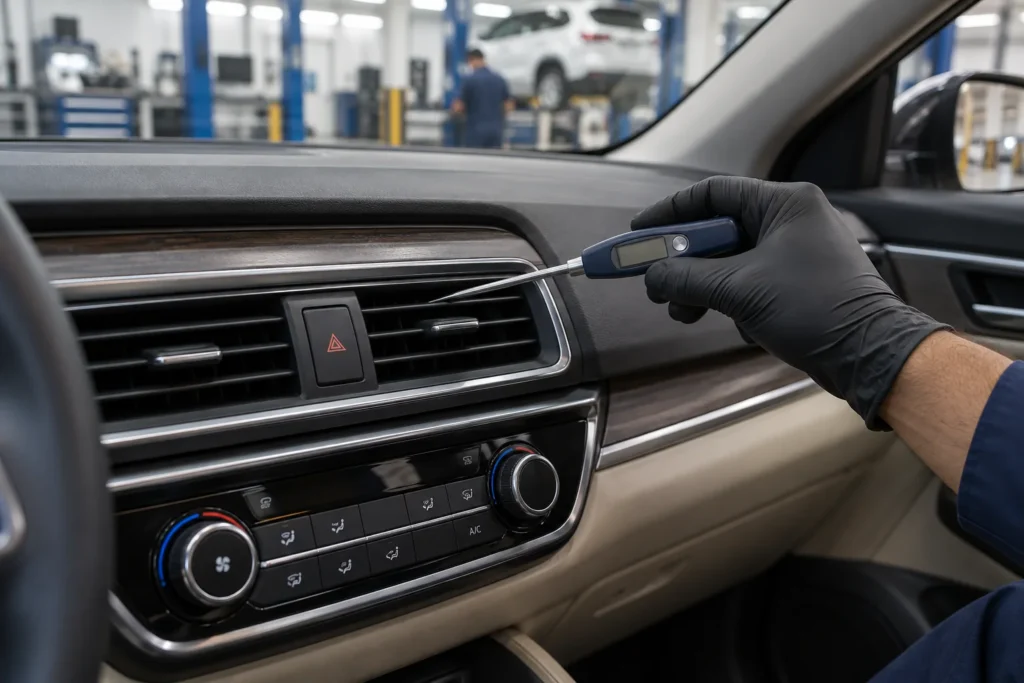
Park safely before comparing settings. Select a low temperature, enable AC cooling rather than an economy mode that disables it, open the dashboard vents and direct air towards them. Compare several blower speeds. On a dual-zone system, set both sides to the same temperature or use the SYNC function if fitted.
Briefly let trapped hot air escape when practical, then close the windows and use recirculation for cabin cooling. Follow the vehicle’s guidance for demisting and fresh air. Recirculation is a setting, not a remedy for a mechanical fault, and persistent fogging needs attention.
- Check that luggage, covers or accessories are not obstructing cabin vents.
- Note whether front and rear controls are set differently.
- Check when the cabin filter was last inspected or replaced.
- Record whether the fault starts immediately, only in traffic or after a longer drive.
- Keep any warning messages and recent AC repair details for the technician.
Do not run the engine in an enclosed garage while testing. Keep hands and tools away from belts and electric fans, which can start unexpectedly. A dashboard AC light only shows a selected function. It does not prove that the compressor is operating or that the system contains the correct refrigerant charge.
Why strong airflow can still feel warm
If plenty of air comes through the vents but it remains warm, the blower is doing at least part of its job. The cooling circuit may be undercharged, the compressor may not be producing the required pressure difference, or the controls may be mixing in too much warm air. Poor heat rejection at the condenser can also reduce cooling.
The evaporator absorbs heat from cabin air. Refrigerant carries that heat through the system, and the condenser releases it outside. Engine coolant serves a separate circuit. A coolant flush is not an AC refrigerant recharge, although an engine cooling fault can affect AC operation.
Ask for the cause to be established before approving a refill or compressor replacement. Proper car AC diagnosis and repair should distinguish an incorrect charge, a leak, an airflow problem and a control fault. The symptom alone does not establish which job the car needs.
Some compressors use a clutch, while others regulate their output without the familiar engagement click. Electric compressors operate differently again. Listening for a click is therefore not a universal compressor test. A technician should identify the fitted system and compare its command, response, pressures and temperatures.
Why the vents deliver very little air
Weak airflow is often associated with a restricted cabin filter, but a blower problem, blocked intake or air distribution fault can produce a similar complaint. The cabin filter belongs to the heating and ventilation system. It is different from the engine’s intake air filter.
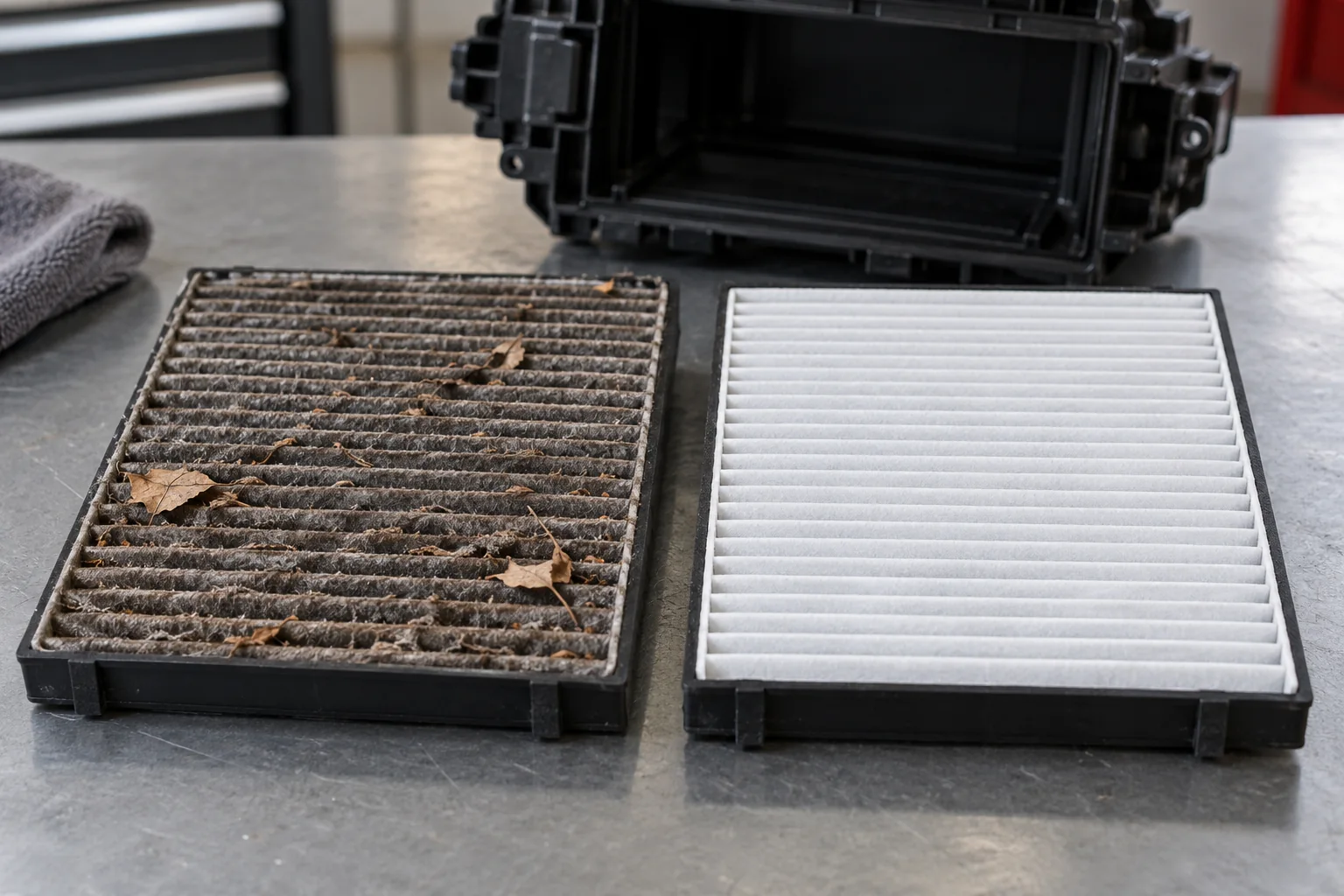
If the manual provides a straightforward filter access procedure, check its condition and fitting direction. Replace a damaged or heavily loaded disposable filter with the specified type. Do not wash a paper filter unless its manufacturer specifically permits cleaning. Avoid forcing glovebox clips or dismantling unfamiliar trim.
If the blower is silent, works only at certain speeds or runs without delivering air to the selected vents, replacing the filter may not solve it. The motor, speed controller, wiring and temperature or distribution doors may need testing.
Airflow that starts normally and gradually fades can also point towards evaporator icing. Mention whether air returns after the cooling is switched off. That pattern is useful evidence, but it does not confirm the cause or justify a particular replacement part.
Explain cooling changes in traffic and across vents
Cooling improves while moving but fades in traffic
The condenser needs airflow to release heat. Road movement provides some of that airflow, while fans are important when the car is stationary. Cooling that improves while driving can therefore make condenser airflow and fan operation useful checks.
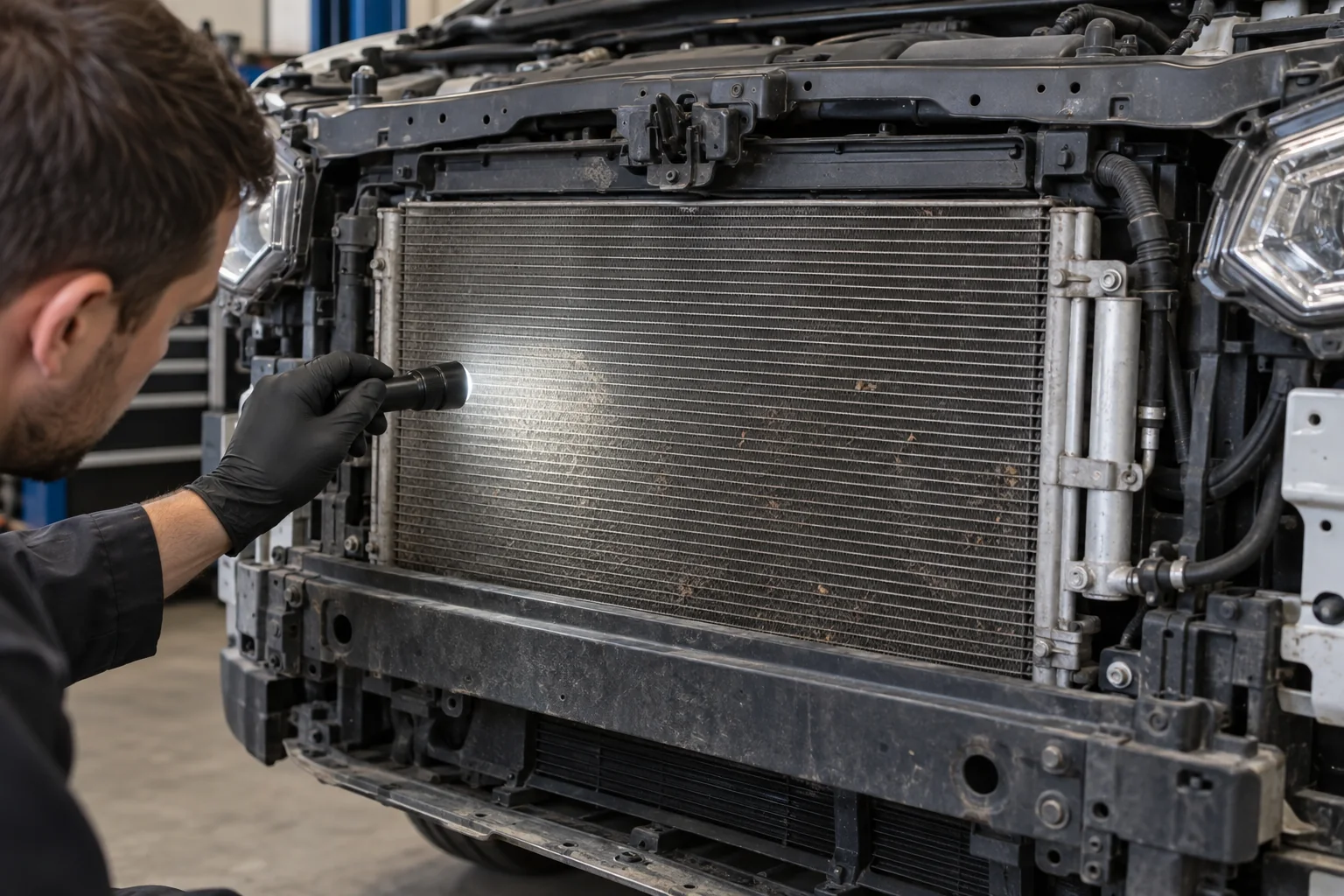
This pattern does not prove that a fan has failed. Refrigerant charge, compressor performance, control commands and engine temperature can also matter. Ask for the complaint to be reproduced at idle, rather than checked only after a road drive.
Do not test fans with your hands, bridge electrical terminals or spray a strong water jet into delicate fins. A fan that happens to be stationary at one moment is not automatically faulty. Its command and operating conditions need to be checked.
One side stays warmer despite matching temperature settings
First rule out different zone temperatures, a closed vent or separate rear controls. If the difference persists, a temperature blending door or its actuator may be involved. A refrigerant-system problem can also cause uneven cooling on some vehicles.
Tell the technician exactly which vents differ and whether the difference changes with the temperature setting. Comparing vent temperatures and checking door movement is more useful than replacing an actuator solely because one side feels warm.
Cooling comes and goes during the same journey
AC output normally changes as a climate-control system approaches its target temperature. Repeated uncomfortable changes from cold to warm, particularly with declining airflow or warnings, deserve investigation. Possible causes include icing, sensor readings, compressor control and pressure-related protection.
Record how long the car has been running and whether the fan still sounds normal when cooling drops. Intermittent faults may need live readings while the symptom is present. Calling every such problem a faulty thermostat can confuse engine cooling controls with HVAC temperature sensors.
Understand unusual smells, noises and cabin water
A musty smell can involve moisture and contamination around the evaporator, a dirty filter or drainage trouble. Check where the smell comes from and when it appears. Appropriate cleaning should address the source rather than simply cover it with perfume.
A new filter may improve airflow and filtration, but it does not guarantee that every smell will disappear. DENSO’s explanation of cabin air filters describes their role in airflow and cabin air quality. Filter choice and maintenance still need to suit the vehicle.
A rattle that changes with blower speed can come from debris or the blower assembly. Clicking as the temperature changes may involve a door actuator. Grinding or belt squeal from the engine bay needs a different investigation. A brief hiss during normal operation is not, by itself, proof of a leak.
Clear water dripping beneath a car after AC use can be normal condensation. Water inside the cabin is different. An obstructed evaporator drain is one possible cause, but rainwater entry, body drainage, a spill or a heater-system leak can also wet the carpet.
Do not taste fluid or assume colour alone identifies it. A sweet smell, coolant loss, persistent greasy windscreen film or an engine-temperature warning changes the urgency. Arrange inspection, especially if the wet area is near wiring. Avoid pushing wire into a drain or forcing compressed air through it, which can damage components or dislodge connections.
Leave refrigerant and electrical repairs to technicians
Refrigerant is not fuel that the AC burns during normal use. Some gradual loss can occur over time, but rapid or repeated loss needs investigation. A recharge may restore cooling temporarily while leaving the reason for the loss unresolved.
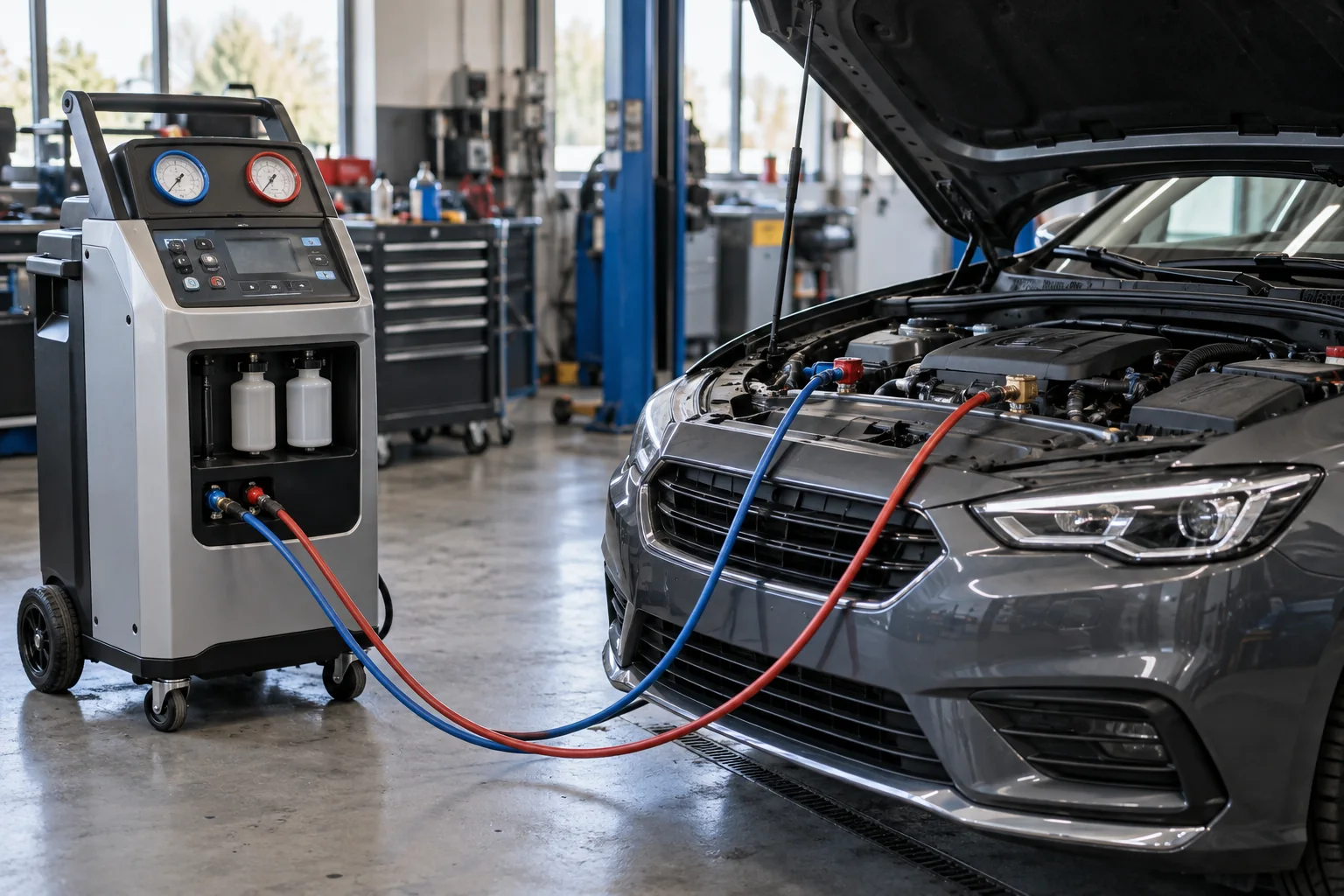
The workshop should identify the specified refrigerant, such as R134a or R1234yf, from the vehicle information rather than assume every car uses the same product. Correct compressor oil, charging equipment and filling quantity also matter. Do not mix refrigerants or loosen AC pipes to release pressure.
A small can’s pressure gauge is not a substitute for system diagnosis or a manufacturer-specified charge by mass. Avoid unapproved sealants and additives. Ask how any loss was investigated and what evidence supports the proposed repair. HELLA’s AC leak detection guidance explains why the components and connections need checking.
Electrical faults may affect the blower, compressor controls, sensors or climate-control panel. If the owner’s manual permits a fuse check, use its identification and specified rating. Never fit a higher-rated fuse or keep replacing one that blows again. Do not bypass a relay or pressure protection to force cooling.
Where a blower loses speeds or the controls stop responding, a car electrician can investigate the affected circuit and its controls. A fault code helps direct testing, but it does not always mean the component named in the code needs replacing.
Hybrids and EVs may use a high-voltage electric compressor, with specific oil and service requirements. AC faults can also interact with battery thermal management on some models. Keep away from orange high-voltage cables and use technicians equipped for the exact vehicle. Ordinary belt-driven compressor assumptions do not apply to every EV.
Know what to request before approving repairs
Give the workshop your model, year, symptoms, recent repairs and the conditions that trigger the problem. Ask whether the initial charge covers diagnosis only or includes refrigerant service. An estimate should explain the identified fault, proposed work, parts, refrigerant, labour and any applicable VAT.
- Ask what tests distinguish a leak from a control or airflow fault.
- Request the refrigerant type and specified charge when refrigerant work is proposed.
- Ask why a compressor, condenser or evaporator needs replacement and what supporting evidence was found.
- Clarify access work, especially if an evaporator repair involves dashboard removal.
- Confirm how cooling, drainage or the original intermittent complaint will be checked afterwards.
A filter replacement, wiring repair and evaporator replacement have very different scopes. Vehicle design, refrigerant type, access, contamination and additional damaged components all affect cost. A single price for every car AC problem would hide those differences.
After repair, cooling should be assessed against the manufacturer’s test conditions. Vent temperature depends on ambient conditions, humidity, settings and system design. There is no single outlet temperature that proves every vehicle is healthy. An idle-only complaint should be checked at idle, and a repaired leak needs appropriate follow-up checks.
Maintain airflow and notice changes before summer
Follow the vehicle’s maintenance schedule for cabin filter inspection and AC checks. Dusty use may justify earlier inspection, but the same replacement interval does not suit every car and route. Keep the filter access area and accessible intake openings free of loose leaves without reaching into machinery.
Shade and a suitable windscreen sunshade reduce the initial heat load when parked. Ventilating a hot cabin before closing the windows can also help. These habits support cooling comfort, but they cannot correct a refrigerant leak or a failed fan.
Arrange a check when performance changes rather than treating an annual refill as the answer to every fault. Keep records of refrigerant work and replaced parts. If cooling fades again soon after service, return with those details and ask for the cause to be investigated.
Common questions about car AC faults and repairs
Why is my car AC blowing warm air?
Possible causes include an incorrect refrigerant charge, compressor or control trouble, poor condenser airflow and unwanted warm-air mixing. First check the controls. Strong airflow and warm air require a different investigation from a weak blower.
Does my car AC need gas every year?
A fixed yearly refill is not a diagnosis. Follow the vehicle’s maintenance guidance and have reduced cooling assessed. Rapid loss or repeated refills call for leak investigation rather than another unexplained top-up.
Can a dirty cabin filter stop the AC cooling?
A restricted filter can reduce the amount of cooled air reaching the cabin. It does not explain every refrigerant or compressor fault. If airflow improves after replacement but the air stays warm, the cooling system still needs checking.
Why does the AC cool better while driving?
Condenser airflow and fan operation are useful checks when cooling worsens at idle. Refrigerant charge, compressor control and engine temperature can also contribute. The pattern alone does not confirm a failed fan.
Is water under the car normal after AC use?
Clear condensation draining outside the vehicle can be normal. Wet carpet, coolant loss, an unusual smell or a temperature warning needs investigation. Do not identify an unfamiliar fluid by tasting it.
Can I drive with the AC switched off?
If the only problem is lost cooling and there are no other warnings, consider heat, visibility and comfort before driving. Overheating, smoke, burning smells, severe noises or electrical trouble require a safe stop and assistance. Turning off the AC does not make every fault safe.
How do I know an AC repair worked?
The original symptom should be resolved under the conditions that caused it. Ask for appropriate temperature, airflow, leak or control checks. A brief cold blast in the workshop does not confirm that an intermittent or idle-only problem has gone.
Discuss your AC symptoms with our Al Quoz team
Tell us your model, year and whether the problem is warm air, weak airflow or cooling that changes in traffic. Ask about a suitable inspection, what it includes and the initial charge.