A brake pedal that keeps sinking while you hold it down can indicate a failing brake master cylinder. Fluid leaking from the cylinder is another warning sign. A soft pedal, low brake fluid or a dashboard warning also needs attention, but none of these symptoms identifies the faulty part on its own. A workshop must check the hydraulic system before recommending a replacement.
What the brake master cylinder does
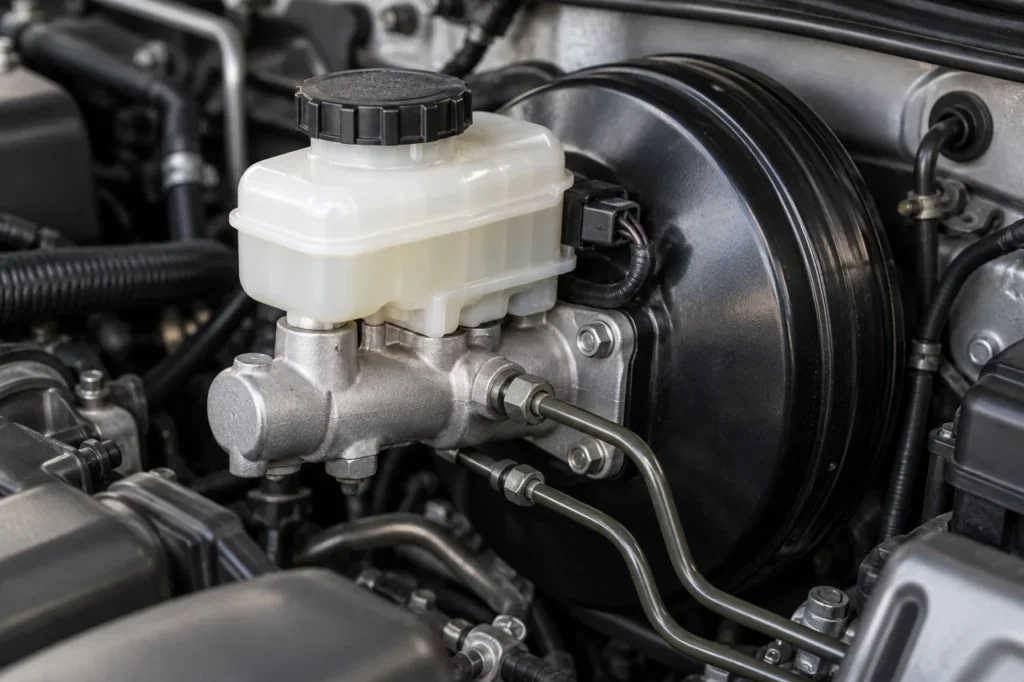
In a conventional hydraulic braking system, the master cylinder turns force from the brake pedal into hydraulic pressure. Its pistons and seals pressurise brake fluid, which carries that pressure through the system to the wheel brakes. The reservoir supplies fluid to the cylinder. A brake booster helps reduce the effort needed at the pedal.
The master cylinder, booster and reservoir have different jobs. A fault in any of them can affect braking, but replacing one does not automatically repair the others. At the wheels, calipers press pads against discs, while drum brakes use wheel cylinders to move brake shoes. The ABS hydraulic unit also forms part of the pressure circuit on equipped vehicles.
Knowing these distinctions helps when discussing an inspection. Ask whether the fault involves generating pressure, losing fluid, trapped air or brake assistance. That explanation is more useful than being told only that the brakes feel bad.
Symptoms that need a master cylinder check
The most useful clue is a change in pedal behaviour, especially progressive sinking during an application. Describe what you have already noticed rather than driving the car again to reproduce the problem. Symptoms can overlap, so the following signs guide an inspection rather than confirm a diagnosis.
| What you notice | Why it matters | What else needs checking |
|---|---|---|
| Pedal continues sinking | The system may not be holding hydraulic pressure. Internal cylinder seal failure is a possibility. | External leaks, the ABS hydraulic unit and the vehicle’s specified pedal-test conditions. |
| Fluid around the master cylinder | The cylinder or its reservoir connections may be leaking. | The exact leak source, pipe fittings and the area where the cylinder meets the booster. |
| Soft or spongy pedal | Air in the hydraulic system can create this feeling. | Recent brake work, bleeding, fluid level and other hydraulic faults. |
| Low fluid or repeated fluid loss | The level needs investigating, particularly if it falls quickly. | Leaks throughout the system and brake-pad wear. |
| Brake or ABS warning | The warning needs interpreting alongside the pedal change. | The exact handbook instructions, fluid level and relevant fault codes. |
| Unusually hard pedal | Loss of brake assistance is a different possibility from hydraulic pressure loss. | The booster and its vacuum or electrical assistance system. |
A pedal that keeps sinking during braking
A sinking pedal deserves particular attention because the cylinder must maintain pressure during braking. Worn or damaged piston seals can allow fluid to pass internally instead of holding pressure. This is often called internal bypass. It can happen without leaving a puddle beneath the car.
ADVICS distinguishes progressive pedal sinking from a soft pedal caused by air in its brake hydraulics troubleshooting guidance. That distinction helps explain why a soft pedal should not automatically lead to a master-cylinder replacement.
Tell the technician whether the pedal initially resists and then moves further, or feels soft from the start. Also mention whether the change appeared before or after brake work. Pedal-test conditions vary by vehicle. A home observation cannot certify that the braking system is safe.
Fluid leaking around the cylinder or reservoir
Wetness around the reservoir, cylinder body, hydraulic connections or rear of the cylinder needs a proper inspection. The location matters. A reservoir seal or pipe connection is a different repair from an internal cylinder fault, even if both leave fluid in the same general area.
A leak at the back of the cylinder also calls for a check of the booster pushrod and its alignment. Incorrect alignment can place sideways load on the cylinder and contribute to rear-seal leakage. If the leak appeared after brake work, tell the workshop what was replaced so it can check the installation as well as the seals.
On some designs, fluid leaking from the rear of the cylinder can enter the brake booster and remain hidden. The booster then needs inspecting alongside the leak source. A dry driveway therefore does not rule out a leak. Ask the workshop to identify the source before cleaning the area or replacing parts. A photograph of an accessible wet area can help explain what you noticed, but cannot establish which seal failed.
Warning lights appearing alongside a braking change
A brake warning is a reason to follow the handbook’s instructions, not a part number to order. An ABS warning alone does not prove the master cylinder has failed. Read the exact message and record which lights appeared together. A red brake-system warning combined with altered pedal feel needs urgent attention.
Do not wait for every symptom in the table to appear. A serious change in braking is enough to keep the vehicle off the road until it has been assessed.
Internal bypass and low fluid are different problems
Internal bypass means loss of pressure inside the cylinder. External leakage means fluid is leaving the hydraulic system. Those faults can occur separately. A normal-looking reservoir level cannot prove that the cylinder holds pressure, and a falling level cannot prove that its internal piston seals are the cause.
A gradual reduction in reservoir level can accompany brake-pad wear. For example, Ford’s Five Hundred owner handbook describes the level falling as the brakes wear. That does not make a rapid fall or an abnormal pedal safe to ignore. Use your own vehicle’s handbook for its permitted level, fluid specification and warning response.
A rapid fall, repeated need to add fluid or a level below the permitted mark requires investigation. Leaks can occur at pipes, hoses, calipers, wheel cylinders and reservoir connections, as well as at the master cylinder. Some are hidden from an ordinary look under the bonnet.
Adding fluid does not repair a leak or restore a worn seal. Do not use a top-up as permission to continue driving with an abnormal pedal. Leave the reservoir closed during a simple visual observation, and ask for help if the level cannot be seen clearly.
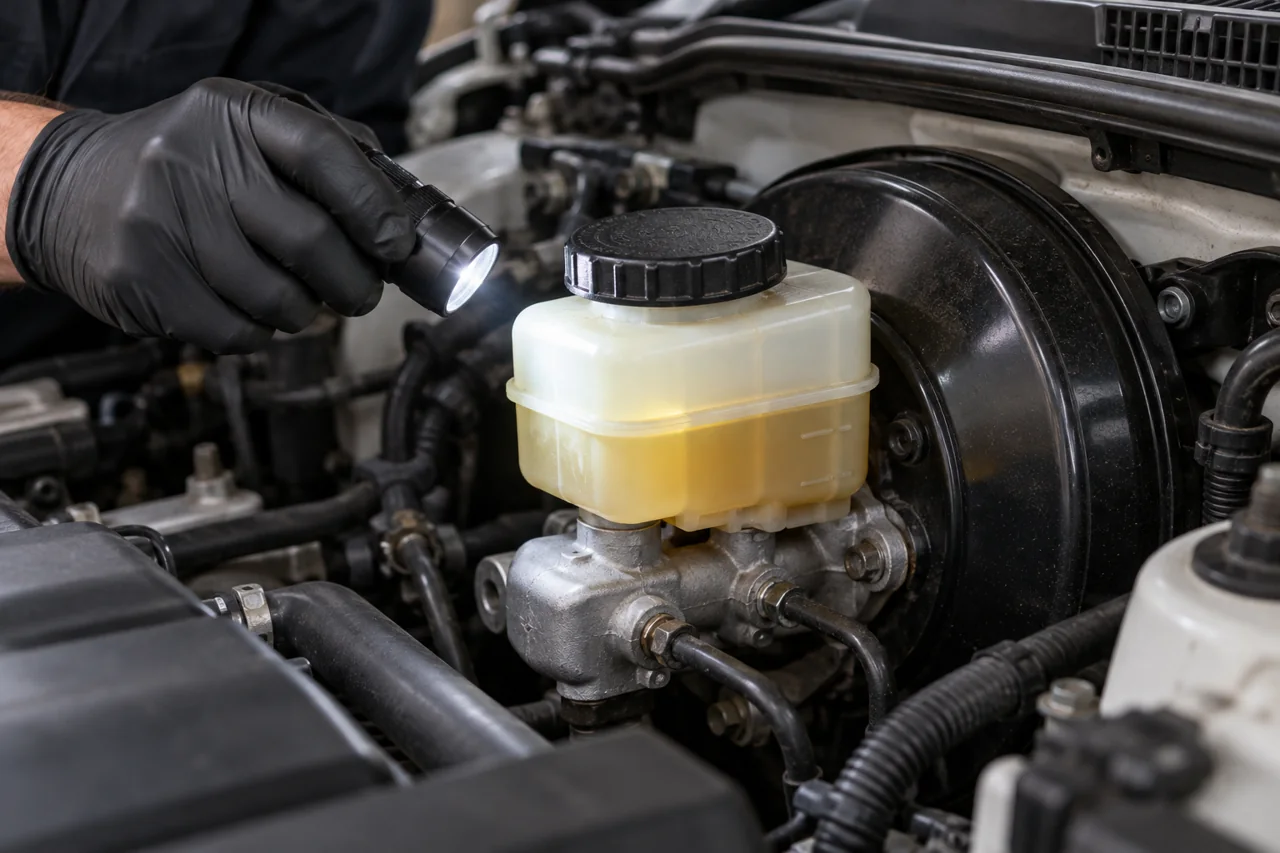
Why seals and fluid condition need checking
The cylinder relies on its piston seals and internal surfaces to maintain pressure. Damage to either can affect that function. An external leak and internal bypass need different checks, and symptoms alone cannot show the condition of the parts inside.
Cleanliness also matters. Dirt or debris entering an opened cylinder or reservoir can cause internal damage. Using the wrong fluid or introducing other substances can damage the braking system. Tell the workshop if someone recently topped up the reservoir with an uncertain product. Bring the container or a photograph of its label if available.
Do not judge contamination or seal condition from fluid colour alone. A technician needs to review what was added, inspect the system and decide which components require attention. Follow the specified fluid-service schedule, and keep additives, cleaners and other automotive fluids out of the reservoir.
Other faults that can look similar
Several brake faults share symptoms. The purpose of diagnosis is to separate them before fitting parts. When your brake pedal goes to the floor, the cause may be elsewhere in the hydraulic system. The master cylinder should be investigated alongside other potential sources of pressure loss.
Air in the hydraulic system
Air can produce a soft or spongy pedal. If the problem began after a caliper, hose or cylinder was changed, the workshop should review the work and the bleeding procedure. Replacing the master cylinder without resolving trapped air can leave the original complaint unchanged.
A hard pedal needs an assistance check
A pedal that is unusually hard to press raises a different question from one that keeps sinking. The booster and its assistance supply need checking. On a vacuum-assisted system, that includes the relevant vacuum components. Describe the difference between greater effort and greater pedal travel rather than calling both a soft pedal.
Leaks and faults at the wheel brakes
Calipers, wheel cylinders, hoses and pipes belong in the inspection. Pulling to one side, vibration or noise should also be reported, but these do not isolate a master-cylinder fault. A component decision needs evidence from the system, not a match to one item in a symptom list.
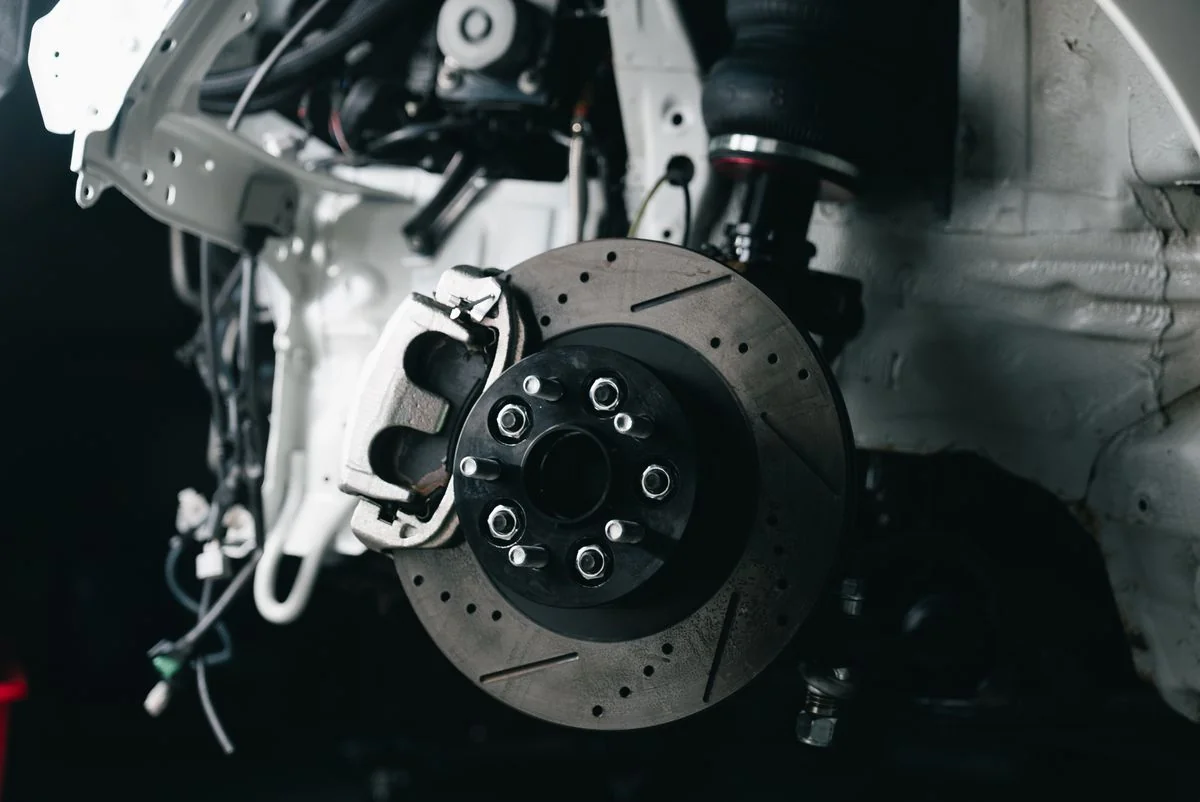
Brakes that fail to release fully
Brakes that remain applied after you lift your foot need investigation too. The workshop should check pedal return, the booster, hydraulic pressure release and the wheel brakes. This symptom does not identify the master cylinder on its own. Report a burning smell or signs of excessive heat without touching a wheel or brake disc, and keep the car parked for assessment.
ABS and electronic systems need specific procedures
Some vehicles need a model-specific scan-tool procedure to remove air from parts of the ABS hydraulic unit. Hybrid and electric vehicles can also have different brake-control arrangements. The workshop should identify the system before applying a conventional test or bleeding sequence. An ABS code is a starting point for checks, not proof that a new cylinder or ABS module is required.
What you can safely record before the inspection
You can help the diagnosis without opening the brake system. Once the car is safely parked, gather information from what you have already observed. Do not make a test journey, crawl underneath an unsupported car, disconnect brake pipes, clamp hoses or attempt a cylinder isolation test.
- Describe the pedal. Record whether it feels soft, needs unusual effort, travels further than usual or continues sinking.
- Record the warning. Note the exact dashboard wording and whether the parking brake was released when the warning appeared.
- Mention recent work. Include brake-fluid service, pad changes, hydraulic repairs or an earlier attempt to fix the symptom.
- Check only accessible observations. If the handbook shows an accessible translucent reservoir, view its level without opening it. Report a level you cannot read rather than guessing.
- Provide vehicle details. The model, year and VIN help the workshop find the correct service procedure and compatible parts.
Say whether the car is still at home, in a car park or stopped elsewhere. Make clear that braking may be unreliable so the team can discuss transport before asking you to bring it in. A brake diagnosis should begin with a safe arrival plan.
How a workshop confirms the fault
A useful diagnosis explains both the failed part and why other likely causes were ruled out. Ask the technician to document the finding, particularly before an expensive component is ordered. The appropriate checks depend on the vehicle and its braking system.
- Review the complaint and service history. The technician compares your description with the vehicle’s specified behaviour and recent repairs.
- Inspect for fluid loss. This includes the reservoir, cylinder, connections, hydraulic lines and wheel brakes, including areas that are not visible from above.
- Assess pressure retention using the approved procedure. Any pressure measurement or circuit isolation belongs to a qualified technician using suitable equipment and service information.
- Read relevant electronic faults. Codes and available data are considered alongside the mechanical findings.
- Explain the repair decision. The diagnosis should distinguish cylinder failure from a leaking connection, trapped air or another hydraulic problem.
The result should explain where pressure is being lost. If a correctly bled cylinder holds pressure during the manufacturer’s isolation test, the technician needs to investigate the rest of the circuit. If it cannot hold pressure under the specified test conditions, an internal fault becomes more likely. This is a workshop test, not a reason to disconnect pipes or block outlets yourself.
Ask what observation or test supports replacing the master cylinder. If the explanation is only that the pedal feels soft, ask what has been checked for air and leaks. The aim is a repair that resolves the complaint, with a clear reason for each recommended part.
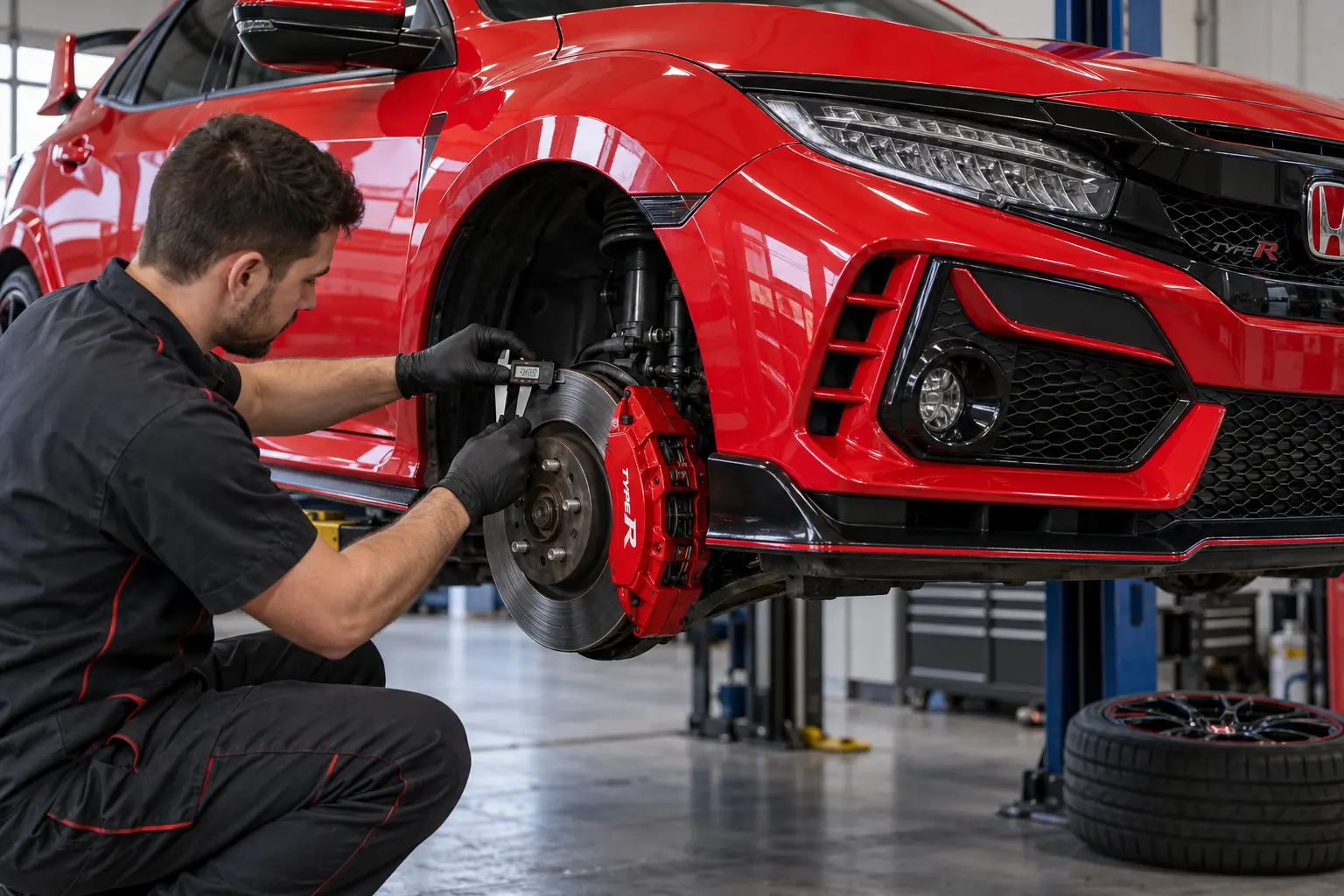
Replacement and checks after the repair
If cylinder failure is confirmed, the replacement must match the vehicle’s brake specification. Ask for the proposed part brand, part number and warranty terms in writing. A repair kit is appropriate only where the manufacturer permits rebuilding and the unit meets the required condition checks. A small leak should not be assumed to make a cylinder suitable for a simple seal repair.
Installation requires clean connections, correct seals and vehicle-specific tightening instructions. The system must use the specified new brake fluid and have trapped air removed. ADVICS stresses these requirements in its master cylinder installation guidance. This is work for a qualified brake technician.
Before collection, ask what checks confirmed pressure retention, absence of leaks, correct pedal behaviour and satisfactory braking operation. Where the manufacturer requires electronic bleeding or other procedures, confirm they were completed. Replacing the part is one stage of the repair, not the final safety check.
If the same symptom remains after replacement, keep the car parked and contact the workshop. Do not accept continuing pedal sinking as something that simply needs bedding in.
What a master cylinder repair quote should include
The exact cylinder, access and bleeding procedure determine the replacement cost. A conventional cylinder and an integrated electronic brake assembly are different repair scopes. Give the workshop your VIN before comparing quotes, and check whether the price covers a fitted repair or only the replacement part.
- The confirmed fault and proposed part. Ask for the diagnosis, compatible part number and brand, and whether a separate reservoir or other damaged components are needed.
- Labour, fluid and bleeding. The quote should account for installation, the specified brake fluid and any model-specific electronic bleeding procedure.
- Final checks and warranty terms. Confirm what will be checked before handover and what the parts and workmanship warranty covers.
- The payable total. Check VAT and whether diagnosis, recovery or additional repairs are included or charged separately.
A quote for brake repairs should explain how the proposed work addresses your pedal problem. Share your model and symptoms first, and check that the estimate includes diagnosis rather than assuming every soft pedal needs a new cylinder.
Keeping the braking system maintained
Follow your vehicle’s brake-fluid and inspection schedule rather than a universal mileage or age rule. Keep service records and tell the workshop about any previous hydraulic repair. Only the specified fluid should be used, and cleanliness matters whenever the system is opened.
Routine maintenance does not guarantee that a master cylinder will never fail. Respond to a new pedal change when it appears, even if the car was serviced recently. Do not postpone a brake assessment because the next scheduled service is still months away.
Questions about master cylinder symptoms
Can a master cylinder fail without a visible leak?
Yes. Internal seal bypass can prevent the cylinder from maintaining pressure without creating an external puddle. A workshop must still rule out other hydraulic faults. A dry driveway is not a safety check.
Does a spongy pedal mean the cylinder is bad?
No. Air in the hydraulic system can cause a spongy pedal. The inspection should consider leaks, recent work and bleeding before deciding whether the cylinder needs replacement.
Will topping up brake fluid fix the problem?
No. It does not repair a leak or a pressure-retention fault. A low or falling level needs investigation. Do not continue driving with an abnormal pedal because the reservoir has been topped up.
Does dark brake fluid prove the seals have failed?
No. Colour alone cannot identify which component has failed. The service history, correct fluid specification and hydraulic findings are needed before making a repair decision.
Can I drive if the pedal sinks but the car still stops?
Do not drive with unreliable braking. Keep the vehicle parked and arrange professional assessment and suitable transport. One successful stop does not show that the system will perform safely on the next journey.
Why does the pedal still sink after replacement?
The workshop needs to reassess the system. Trapped air, a leak, another hydraulic fault or an installation problem may remain. Keep the car parked if braking is unreliable. Ask which checks confirmed the original cylinder fault and what the technician will check next.
Can a fault-code scan confirm master cylinder failure?
A scan can help identify electronic brake-system faults, but it does not replace checks for leakage and hydraulic pressure retention. Ask how the codes, pedal behaviour and physical inspection support the diagnosis. A code alone is not a reason to replace the cylinder.
Does a pedal change when starting the car prove failure?
No. Brake assistance and electronic controls affect pedal behaviour, and test conditions vary by vehicle. Unexpected excessive travel or continuing sinking needs assessment using the manufacturer’s procedure.
Get help with a changing brake pedal
Tell My Car Repair your car model, warning messages and what has changed. If braking is unreliable, keep the car parked and ask about assessment and recovery before arranging a workshop visit.